
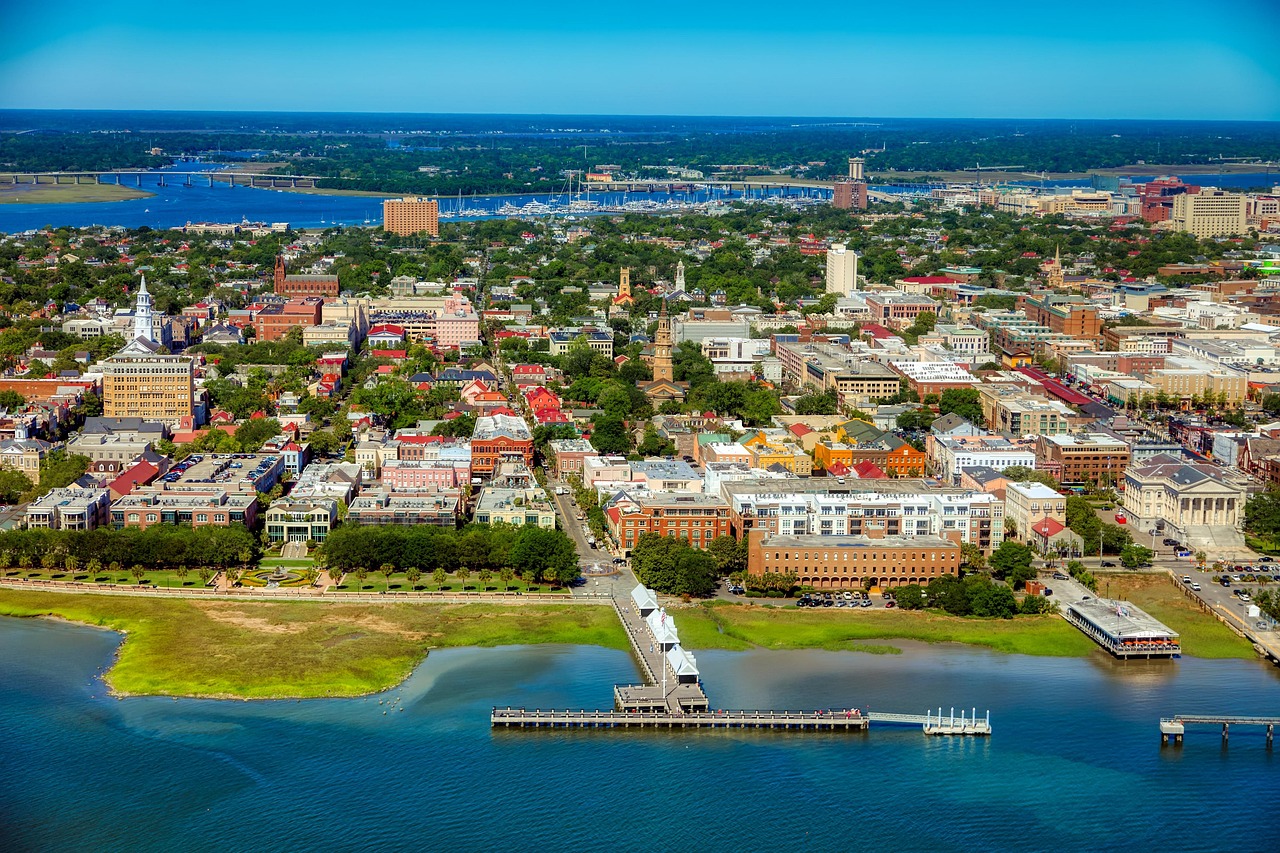
Charleston, South Carolina, is preparing to rewrite the rules for how it manages tourism, and residents have one of their final opportunities to influence what that future will look like.
The city’s current Tourism Management Plan dates to 2015. The new initiative, known as The Charleston Standard, is being developed as part of a broader effort to rethink tourism around a simple but potentially transformative principle: residents first. The city has described the process as a shift away from simply promoting Charleston as a destination and toward actively managing the consequences of having millions of visitors each year.
That distinction matters. Charleston is not trying to decide whether tourism should exist. Tourism is deeply embedded in the region’s economy. Instead, officials are asking a more difficult question: How can Charleston continue benefiting from tourism without allowing visitor activity to overwhelm neighborhoods, infrastructure and everyday life?
The answer could shape Charleston’s tourism policy for years to come.
Residents Get a Final Opportunity to Weigh In
The city scheduled October 8 as the final tourism-focused Peninsula Plan Open Studio session. Residents can drop in between 3 p.m. and 6 p.m. at the Charleston Civic Design Center on Calhoun Street to review the work in progress and speak with city and project staff. The associated community survey also closes October 8.
A complete draft of the plan is expected to be presented in November, while a Tourism Commission workshop scheduled for October 19 will focus on updates to the plan and recommendations developed with Bloomberg Associates.
This means the current stage is more than a routine public meeting. It represents an important transition from gathering opinions to deciding which ideas can become actual policies.
For residents, the question is therefore not simply whether they support tourism. It is whether the final plan adequately addresses the problems they experience because of tourism.
Charleston Has Been Managing Tourism for Nearly 50 Years
Charleston has unusual experience in tourism planning.
The city says it was the first city in the United States to adopt a tourism management plan, doing so in 1978. The current process represents the fourth major revision, following the most recent update in 2015.
The 2015 plan already recognized many of the challenges that remain relevant today, including congestion, parking, visitor orientation, tourism enforcement, cruise impacts and the protection of quality of life in historic residential neighborhoods.
But Charleston has changed considerably since 2015.
The tourism economy has grown, visitor spending has increased, transportation patterns have evolved, short-term rentals have become a major policy issue and residential development pressures have intensified.
The city therefore faces a familiar problem in destination management: a plan written for one tourism environment may become inadequate when the destination itself changes.
Tourism Is Too Important for Charleston to Simply Restrict
There is a strong economic argument for maintaining a healthy visitor industry.
The Greater Charleston Area recorded an estimated $14.35 billion in tourism economic impact in 2025, according to the region’s tourism research. Tourism represented about 23.6% of regional sales.
The region also recorded approximately 7.9 million overnight visitors in 2025. Tourism supported roughly 55,500 jobs, illustrating how extensively the visitor economy reaches beyond hotels and attractions.
Importantly, Charleston’s recent tourism growth has not simply been driven by rapidly increasing visitor numbers. Visitor volume remained relatively stable while spending per visitor increased substantially.
That creates an important opportunity for policymakers.
If Charleston can generate more economic value from visitors without continually increasing the number of people arriving in the most crowded areas, it may be possible to move toward a more sustainable tourism model.
In other words, the future may not have to be about attracting more tourists. It may be about managing tourism better.
The Real Issue: Tourism’s Everyday Costs
The economic statistics tell only part of the story.
For residents, tourism can mean crowded streets, traffic, parking difficulties, noise, pressure on public spaces and increased demand for city services. Charleston’s own tourism-management materials explicitly identify traffic, parking, housing pressure, noise and infrastructure demands among the impacts residents experience.
The challenge is particularly visible on the historic peninsula.
Charleston’s historic architecture, restaurants, waterfront, shopping districts and cultural attractions are concentrated in a relatively compact area. That concentration is one of the city’s greatest tourism strengths—but also one of its management problems.
Millions of visitors do not distribute themselves evenly across a metropolitan area.
Many want to experience the same famous streets, historic buildings, restaurants and attractions. Consequently, the economic benefits of tourism can be spread widely while the physical pressures remain concentrated in particular neighborhoods.
The City Wants Tourism to Reach Beyond the Peninsula
One of the most important ideas emerging from the planning process is geographic diversification.
City officials have discussed encouraging visitors to explore destinations outside the traditional historic core, including Daniel Island, Johns Island and James Island.
This approach could potentially reduce pressure on the peninsula while allowing more communities and businesses to participate in the visitor economy.
The idea is not to move tourism problems from one neighborhood to another. Instead, successful dispersal would require investment in transportation, attractions, public spaces, signage and visitor information in areas capable of handling additional visitors.
The city’s five guiding principles explicitly include “spreading the love beyond the Peninsula.”
That could eventually change how visitors think about Charleston.
Rather than treating the historic peninsula as the destination and everything else as secondary, the city could develop a broader network of experiences throughout the community.
Data Could Become One of the Biggest Changes
Another major theme is data.
The city says it wants to take greater ownership of tourism data and track where visitors go, how they travel, how much they spend and where tourism-related money flows. Officials also intend to share tourism information with the public on an annual basis.
That may sound technical, but it could have significant policy consequences.
Tourism management is difficult when officials do not know precisely where the problems occur.
For example, knowing that Charleston receives millions of visitors is useful. Knowing which neighborhoods experience the highest concentrations, at what times, through which transportation modes and with what impact on local services is much more useful.
Better data could help the city answer questions such as:
- Where are visitors creating the greatest congestion?
- Which areas have enough infrastructure to accommodate additional tourism?
- Which neighborhoods are experiencing tourism-related pressure?
- What types of visitors generate the greatest local economic benefit?
- How much public spending is required to manage tourism?
- Where should tourism-related revenue be reinvested?
This could move tourism policy away from broad arguments and toward measurable outcomes.
Enforcement Is Another Piece of the Puzzle
A tourism plan cannot succeed simply by making recommendations. The city also needs the ability to enforce them.
Charleston already has a Tourism Management Division responsible for enforcing tourism ordinances, certifying tour guides and tour vehicles, issuing bus permits and managing other tourism-related regulations.
The new framework explicitly identifies stronger enforcement and management tools as one of its five principles.
That could become especially important as the city deals with tour buses, short-term rentals, tourism vehicles, pedestrian congestion and other activities that affect residential neighborhoods.
Historic Charleston Foundation has also argued for clearer enforcement and visitor education, including proposals involving large coach tour buses and infrastructure improvements for tour operators.
The larger issue is consistency.
Residents are more likely to support tourism regulations if they believe rules are understandable, fairly applied and actually enforced.
Short-Term Rentals Are Part of the Larger Tourism Question
Charleston’s tourism conversation also overlaps with its housing debate.
Short-term rentals can provide income for property owners and additional accommodation for visitors. But they can also affect neighborhood character, housing availability, noise and the number of properties functioning primarily as visitor accommodations.
The city has already been working on changes to its short-term-rental ordinance, including clarification of occupancy rules. City officials have emphasized that the goal is to address practical enforcement and quality-of-life concerns rather than simply impose new restrictions.
This illustrates why tourism management cannot be separated completely from housing policy.
A visitor may see a short-term rental simply as a place to stay. A resident may see the same property as part of a neighborhood’s housing supply.
The new tourism plan will therefore have to operate alongside Charleston’s broader housing and development policies.
Tourism Revenue Needs to Be Connected to Tourism Impacts
One of the most politically important questions will be money.
If visitors generate substantial economic activity and tax revenue, residents will naturally ask how much of that money is being used to address the costs created by tourism.
Charleston’s Responsible Tourism Initiative includes new revenue opportunities as one of its five principles. The city says new business-license fees for hotels and short-term rentals are projected to generate an additional $2 million annually for addressing tourism impacts and improving livability.
Historic Charleston Foundation has separately supported examining accommodation and hospitality tax structures and improving transparency around how tourism-related revenues are collected and spent.
That raises a fundamental policy question:
Should tourism pay a greater share of the infrastructure and management costs associated with tourism?
There is no universally accepted answer, but the debate is likely to become more important as Charleston attempts to maintain its economic advantages while addressing resident concerns.
The Peninsula Plan Makes This Bigger Than a Tourism Document
The new Tourism Management Plan is not being developed in isolation.
It is closely connected to the broader Charleston Peninsula Plan, a community-driven planning effort addressing transportation, flooding, housing, public space, tourism, economic development and quality of life.
That connection is significant.
Tourism affects transportation. Transportation affects housing and development. Development affects historic character. Housing affects workforce availability. Public-space decisions affect both residents and visitors.
These issues cannot easily be separated into individual policy boxes.
The Peninsula Plan’s own guiding principles include a “Resident-First Economy,” emphasizing an economy that supports residents and local businesses while maintaining the peninsula as a regional center of culture and commerce.
The tourism plan therefore has an opportunity to become part of a much broader strategy for Charleston’s future.
The Goal Should Be Value, Not Simply Volume
One of the most promising aspects of Charleston’s tourism situation is that economic growth does not necessarily require unlimited visitor growth.
The region’s recent numbers demonstrate that visitor spending can rise even when visitor numbers change only modestly. In 2025, Charleston recorded record tourism economic impact while the number of overnight visitors remained around 7.9 million.
That suggests a different approach to destination management.
Instead of asking:
How do we attract more people?
Charleston can ask:
How do we attract the right visitors, encourage longer and more valuable stays, distribute activity more effectively and make sure the economic benefits reach local communities?
That could include encouraging travel during less crowded periods, promoting neighborhoods outside the historic core, supporting locally owned businesses and improving visitor transportation.
It could also mean accepting that some forms of tourism may be less desirable if their economic benefits are small compared with their impact on residents.
A More Responsible Tourism Model
Charleston’s challenge is not unique.
Historic destinations around the world are increasingly moving from conventional destination marketing toward destination stewardship—the idea that tourism organizations and governments have a responsibility to protect the places that visitors come to experience.
Charleston has particularly strong reasons to adopt such a model.
Its historic architecture is fragile. Its peninsula is physically constrained. Its neighborhoods are not theme parks; they are places where people live. Its economy benefits enormously from tourism, but its attractiveness also creates the very pressures that can eventually damage the visitor experience.
If residents increasingly avoid their own downtown because it feels too crowded, that is not only a quality-of-life problem. It can eventually become a tourism problem as well.
A destination that loses its local character risks losing part of what made it attractive in the first place.
What Success Could Look Like
The success of Charleston’s new tourism plan should not be measured only by visitor numbers.
A more sophisticated scorecard could include:
- Resident satisfaction with tourism
- Visitor spending per trip
- Tourism-related employment and wages
- Traffic and congestion levels
- Public transportation usage
- Short-term-rental compliance
- Tourism-related tax revenue
- Investment in infrastructure
- Geographic distribution of visitors
- Visitor activity during shoulder seasons
- Preservation of historic and cultural assets
- Housing availability and neighborhood stability
- Enforcement performance
This would allow Charleston to determine whether tourism is actually becoming more sustainable rather than simply becoming larger.
The Hardest Part Comes After the Plan Is Approved
Writing a tourism plan is relatively easy compared with implementing one.
The difficult decisions will come afterward.
City officials will have to decide which recommendations receive funding, which regulations change, which tourism activities are restricted, where infrastructure investments are made and how tourism revenue is allocated.
They will also have to continue listening to residents after the public-engagement process ends.
The city’s decision to emphasize annual tourism data could be especially important here. If residents can see whether policies are working, they can participate in a more informed debate about what should happen next.
Charleston’s Tourism Future Is Really About the City’s Future
Charleston does not face a choice between tourism and no tourism.
The city is already a major international destination, and tourism is deeply connected to its economy, employment, restaurants, hotels, cultural institutions and small businesses.
The real choice is between managing tourism deliberately or allowing tourism growth and its side effects to shape the city by default.
The new Charleston Standard offers an opportunity to make that decision consciously.
Putting residents first does not have to mean putting visitors last. It can mean recognizing that the best tourism destination is one where residents can still enjoy their streets, businesses can prosper, historic places can be protected and visitors can experience an authentic community rather than an increasingly crowded attraction.
Charleston’s final round of public input is therefore about more than a document.
It is about deciding what kind of city Charleston wants to be as its popularity continues to grow.
5 Most Commonly Asked Questions
1. Why is Charleston updating its Tourism Management Plan?
Charleston’s current Tourism Management Plan was last updated in 2015. Since then, the city’s visitor economy, housing pressures, transportation needs and tourism-related challenges have evolved. The new plan is intended to better balance tourism’s economic benefits with residents’ quality of life.
2. What is the Charleston Standard?
The Charleston Standard is the city’s reimagined Tourism Management Plan. It is being developed around five major principles: putting residents first, using city-controlled data, spreading tourism beyond the peninsula, strengthening enforcement and management tools, and identifying new revenue opportunities to address tourism impacts.
3. When can Charleston residents provide feedback?
The final tourism-focused Peninsula Plan Open Studio is scheduled for October 8, 2026, from 3 p.m. to 6 p.m. at the Charleston Civic Design Center, 85 Calhoun Street. The city’s tourism survey also closes October 8.
4. Does Charleston want fewer tourists?
The city has not framed the initiative as an effort to stop tourism. Instead, officials say they want to manage the visitors who already come to Charleston while balancing the needs of residents, visitors and businesses. One proposed strategy is to encourage more tourism outside the historic peninsula.
5. How important is tourism to Charleston’s economy?
Tourism is one of the region’s most important economic engines. The Greater Charleston Area recorded an estimated $14.35 billion in tourism economic impact in 2025, representing about 23.6% of regional sales. Tourism also supported roughly 55,500 jobs.
Sources Live5 WCSC