
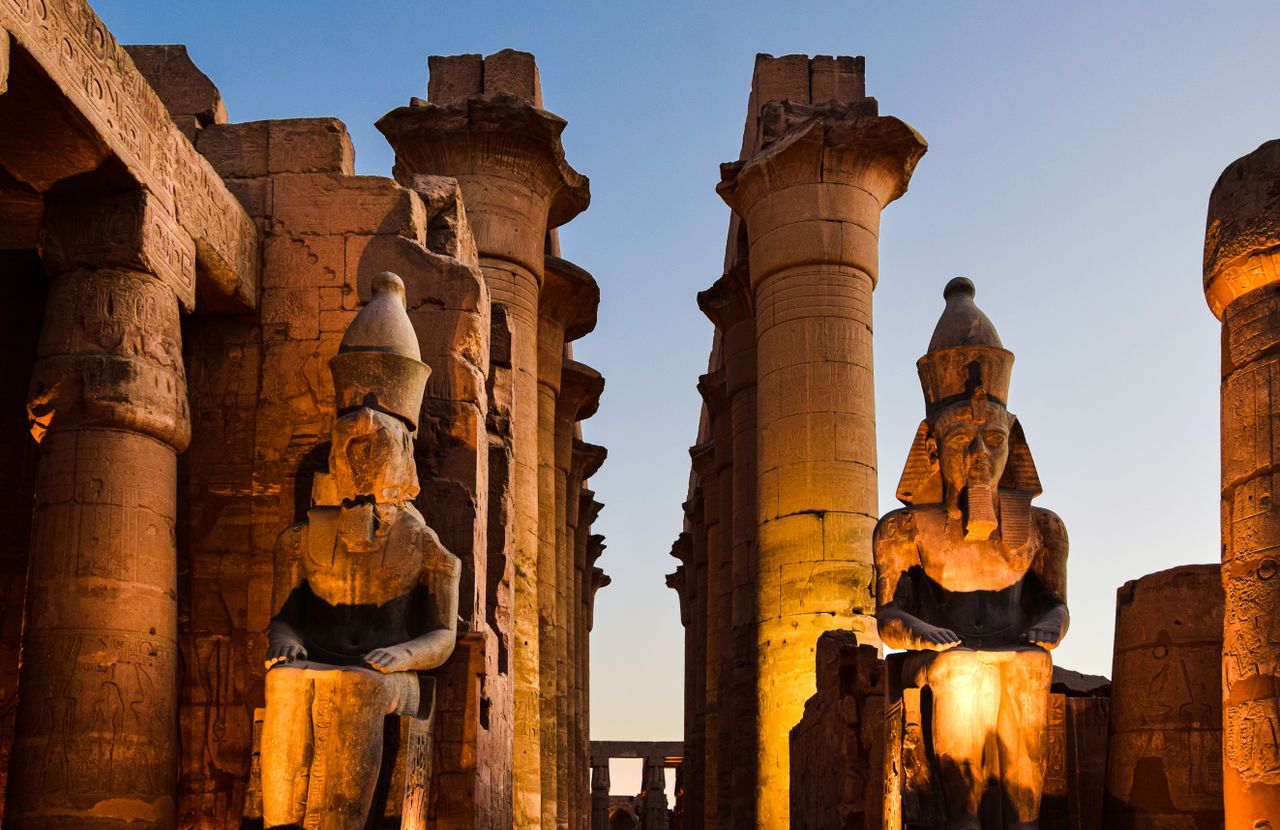
Luxor has spent centuries attracting people who wanted to experience the remains of ancient Egypt. Now the city is being asked to attract another type of international visitor: patients traveling across borders for medical treatment.
Egyptian authorities are developing medical tourism as a strategic growth sector, with Luxor emerging as one of the most visible locations in the country’s plans. The idea is straightforward but ambitious: combine specialized healthcare with Egypt’s established tourism industry so international patients can receive treatment while accessing accommodation, transportation, cultural attractions and other visitor services.
A September 21, 2026 report in The Japan Times, based on Bloomberg reporting, says Egypt is seeking a larger share of a global medical-tourism market estimated by Grand View Research at about $34 billion in 2025. The strategy is intended to help Egypt compete with established regional destinations including Turkey and the United Arab Emirates.
Luxor has a particularly unusual advantage in this plan. It is already a major international tourism destination, famous for Karnak Temple, Luxor Temple, the Valley of the Kings and other monuments associated with ancient Thebes. Egypt’s official tourism portal describes Luxor as an “open-air museum” divided by the Nile into its East and West Banks.
The new strategy therefore isn’t asking Luxor to become a tourist destination from scratch.
It is attempting to add healthcare to an existing tourism economy.
A Medical Tourism Idea With 19th-Century Roots
Egypt’s medical-tourism ambitions are presented as a modern project, but the country’s connection between health and travel has a much older history.
During the 19th century, European travelers spent extended periods in Luxor because its dry, warm climate was believed at the time to be beneficial for certain illnesses, particularly respiratory conditions.
Travel writer Lucie Duff Gordon was among the Europeans who lived in Luxor for long periods. The city also attracted well-known visitors, including Florence Nightingale and Arthur Conan Doyle and his wife, according to the Bloomberg report. British travel company Thomas Cook, a major operator of Nile cruises, even established a hospital in Luxor serving foreigners and local residents.
That history provides an interesting foundation for today’s strategy, but it is important to distinguish historical medical beliefs from modern clinical medicine.
There is no reason to interpret 19th-century claims about Luxor’s climate as evidence that simply staying in the city treats illness. Modern medical tourism is instead based on hospitals, qualified medical professionals, diagnostic services, surgery, technology and regulated healthcare.
The historical connection is useful primarily as part of Luxor’s identity as a place that has long welcomed international visitors seeking a combination of climate, hospitality and healthcare.
Egypt Wants a Larger Share of a Growing Global Market
Medical tourism has developed into a significant international industry.
Grand View Research estimates the global medical-tourism market was worth $34 billion in 2025 and projects $38.6 billion in 2026, rising to $126.2 billion by 2035. Its estimates include a wide range of services and destinations, so the figures should be regarded as market-research estimates rather than a universally accepted measure of every cross-border medical transaction.
People travel internationally for healthcare for many reasons.
Cost can be an important factor. Other patients seek shorter waiting times, particular specialists, procedures not readily available in their home country, or doctors and hospitals with particular expertise.
Medical tourism can also overlap with dental tourism, cosmetic procedures, fertility treatment, rehabilitation and preventive health services.
The result is a highly competitive international market.
Turkey has built a particularly large medical-tourism industry, while the United Arab Emirates has focused heavily on premium healthcare and international patients.
Egypt is therefore entering a market in which price alone is unlikely to be enough to attract patients.
Luxor Is Being Positioned as More Than a Hospital Destination
The central idea behind the Egyptian model is integration.
Ahmed El-Sobky, chairman of the Egypt Healthcare Authority, told Bloomberg that Egypt can combine medical and traditional tourism, allowing international patients to receive advanced healthcare while experiencing cultural and entertainment attractions.
This means a medical trip could theoretically contain several components:
A patient travels to Egypt for a procedure or consultation.
A hospital coordinates treatment and follow-up.
A companion stays in a nearby hotel.
The patient spends the medically appropriate recovery period in suitable accommodation.
Once cleared for normal activity, companions or patients may participate in selected tourism experiences.
Transportation, translation, visa assistance and other services can be incorporated into the journey.
That is quite different from a traditional hospital model in which the patient arrives, receives care and immediately returns home.
The tourism element is intended to make the entire international-patient journey easier to manage.
Six Luxor Hospitals Are Part of the Current Push
The Egypt Healthcare Authority has developed an international-patient network in Luxor alongside facilities in other tourism destinations.
Bloomberg reports that six hospitals in Luxor offer specialized healthcare facilities and hotel-style suites, including services connected to obstetrics, pediatrics and radiology.
The EHA’s current Luxor listings include:
El Karnak International Hospital, described by the authority as one of the governorate’s hospitals with the widest range of specialties, including outpatient and surgical services, radiology and laboratory departments and hotel suites.
Luxor International Medical Complex, which provides multiple specialties and operates a 24-hour emergency department, although EHA currently describes it as still being in development.
Isis Specialized Hospital, which focuses on women, obstetrics and postnatal monitoring.
Pediatric Specialized Hospital, specializing in children’s and neonatal services.
Horus Specialized Hospital, a large multispecialty hospital serving patients in Armant.
Tiba Specialized Hospital in Esna, which has multiple specialties and a 24-hour emergency service.
The growing network is important because medical tourism cannot operate successfully on one flagship hospital alone.
International patients need diagnostics, specialists, emergency backup, laboratories, pharmacies, nursing care and follow-up arrangements.
Accreditation Is Becoming Part of Egypt’s Strategy
International patients have a major concern that ordinary tourists generally do not have: they need confidence in the quality and safety of the healthcare facility before spending large amounts of money and traveling thousands of miles.
Egypt is therefore placing greater emphasis on accreditation.
In May 2026, the General Authority for Healthcare Accreditation and Regulation announced the initial accreditation of the Luxor International Medical Complex under nationally recognized standards aligned with international accreditation principles. The authority said the accreditation supports integrated, high-quality healthcare in southern Egypt and the facility’s role in medical tourism.
The Egypt Healthcare Authority also says its medical-tourism facilities operate under national and international accreditation frameworks, including GAHAR and Joint Commission International accreditation among the credentials it highlights.
For prospective patients, however, accreditation should always be checked for the specific hospital and specific service rather than assumed from a national tourism campaign.
Accreditation can be an important quality indicator, but it does not guarantee a particular medical outcome. The CDC likewise advises medical tourists to research both the treating clinician and the facility and notes that accreditation does not guarantee a successful procedure.
International Patient Numbers Have Increased Sharply
Egypt’s medical-tourism program remains relatively young, but the available figures show a significant increase in foreign patients using participating healthcare facilities.
EHA data shared with Bloomberg indicate that its facilities treated 13,370 foreign patients in 2025, compared with 2,075 in 2022. The patients represented approximately 124 nationalities spanning Arab, African, Asian, European and American markets.
That is more than a sixfold increase in three years.
The 2026 figures suggest that growth is continuing. EHA chairman Ahmed El-Sobky said almost 8,000 foreign patients had been registered through July 2026. Medical-visit revenue was expected to rise to about $6 million in 2026, from $3.8 million in 2025.
Those revenue numbers also demonstrate how early the industry remains.
The international-patient volume is increasing, but medical tourism is still a relatively small contributor to Egypt’s overall tourism economy.
Why the Tourism Infrastructure Matters
Egypt already has something that many emerging medical-tourism destinations need to build from scratch: a large tourism industry.
The country reported approximately 19 million international tourists in 2025, a 21% increase from 2024 according to official figures. In the first half of 2026, tourism revenues reached approximately $8 billion, according to a government document presented to the House of Representatives.
That creates an extensive ecosystem of hotels, restaurants, tour operators, domestic transportation, airports, guides and travel services.
Medical tourists and their companions can potentially use many of those existing services.
This may be especially useful in Luxor, where international tourism is already built around Nile cruises, hotels, archaeological tours and cultural experiences.
The city doesn’t need to create an entirely separate hospitality economy for medical travelers.
Instead, it can adapt an established one.
The New National Health Tourism Platform
One of Egypt’s most significant developments in 2026 has been the launch of a dedicated national digital platform for health tourism.
The Ministry of Health and Population launched the National Platform for Health Tourism at the Grand Egyptian Museum in August.
According to the Egyptian State Information Service, the system is designed to guide international patients through different parts of the healthcare journey, beginning with planning and booking and extending to medical services and follow-up. It also incorporates visa procedures and coordination relating to entry into Egypt.
The platform is important because arranging medical treatment abroad is much more complicated than booking a normal holiday.
A patient may need to provide medical records before arrival, obtain an initial opinion, choose a specialist, arrange transportation, determine visa requirements, organize accommodation for a companion and plan follow-up care.
A centralized system could reduce some of that administrative friction.
It also gives Egypt an opportunity to establish a more consistent international-patient experience rather than leaving every hospital to develop its own system.
Egypt Is Building the System Around Digital Access
The digital platform is part of a wider modernization strategy.
In April 2026, Egypt’s health and tourism ministries agreed to develop a joint medical-tourism strategy covering healthcare quality, pricing, hotel clinics, hygiene and sterilization standards and rapid-response systems for tourists. The two ministries also discussed a unified digital system for pricing medical services in cooperation with insurance companies.
Transparent pricing is particularly important in medical tourism.
International patients may struggle to compare treatment costs between countries because a quoted medical price does not necessarily include:
Hospital fees.
Surgeon’s fees.
Anesthesia.
Diagnostic testing.
Medication.
Accommodation.
Transportation.
Follow-up appointments.
Treatment of complications.
Insurance.
A national framework that makes these components clearer could make Egypt easier to evaluate internationally.
What Medical Procedures Is Egypt Targeting?
The planned expansion is not limited to one specialty.
According to Bloomberg reporting, Egypt’s future medical-tourism facilities are expected to focus on areas including:
Cardiovascular and vascular surgery.
Bariatric surgery.
Cosmetic and aesthetic procedures.
In-vitro fertilization and other assisted reproductive services.
Advanced dental care.
These categories reflect significant areas of international medical travel globally.
Dental and cosmetic care are particularly common because patients may pay privately and compare prices between countries.
More complex medical fields such as cardiovascular surgery require much greater infrastructure, specialist availability, intensive care capacity and follow-up coordination.
That makes the planned expansion much more demanding than simply marketing Egypt as a low-cost destination.
Egypt Plans a Large Expansion of Medical Facilities
The EHA says it intends to add 5,000 medical facilities and sites over six years, with public-private partnerships expected to play an important role.
The plan illustrates the scale of the government’s ambition.
The EHA currently operates nearly 400 medical facilities nationwide, including hospitals, laboratories and clinics, according to Bloomberg.
The proposed expansion could therefore create a much larger network for international patients.
But the success of the plan will depend on more than the number of facilities.
Medical tourism requires trained specialists, nurses, technicians, infection-control systems, emergency capacity, modern equipment, reliable diagnostics and effective communication with patients.
Adding buildings without sufficient healthcare professionals or quality controls would not create a competitive international medical system.
Medical Tourism and the Egyptian Healthcare System
The expansion also creates a domestic policy question.
Egypt has more than 100 million residents and continues to work on expanding healthcare access. Egypt’s Universal Health Insurance system has already expanded into Luxor, South Sinai, Ismailia, Port Said, Suez and Aswan as part of its phased rollout.
Medical tourism can bring foreign revenue into the country.
But there is a potential tension if international patients attract a disproportionate share of highly sought-after surgeons, specialists, nurses or hospital capacity.
Bloomberg’s report notes concerns raised about whether medical-tourism expansion could worsen domestic inequalities if high-demand staff were drawn away from public facilities without adequate safeguards.
This does not mean that medical tourism necessarily harms the local system.
The outcome depends heavily on regulation, investment and how revenue and human resources are distributed.
Egypt’s ability to convert international healthcare demand into broader improvements in hospitals, training, equipment and infrastructure will therefore be an important measure of the sector’s long-term impact.
Medical Tourism Has Risks That a Normal Holiday Does Not
Combining healthcare with tourism sounds attractive, but medical travel carries risks that ordinary tourism does not.
The U.S. Centers for Disease Control and Prevention warns that international medical procedures can involve risks associated with infection, quality of care, communication, follow-up treatment and travel itself.
Surgery followed by a long flight can also increase concerns about blood clots. The CDC advises medical travelers to discuss the timing of travel after procedures with their healthcare provider because restrictions can vary according to the operation and the patient’s circumstances.
Follow-up care is another major issue.
A patient who develops a complication after returning home may need another doctor to understand exactly what was done abroad and what medications or devices were used.
The CDC therefore recommends obtaining copies of overseas medical records and planning follow-up care before traveling.
The “Treatment Plus Vacation” Model Has Limits
Marketing medical tourism as a holiday experience can make a destination attractive, but it should not obscure the medical realities.
Someone undergoing major surgery cannot necessarily visit the Valley of the Kings, take a long Nile excursion or spend hours walking through archaeological sites immediately afterward.
Recovery requirements can be substantial.
Even less invasive procedures may involve restrictions on exercise, swimming, sun exposure or long-distance travel.
The tourism component therefore needs to be structured around the patient’s medical condition rather than the other way around.
This distinction is especially important for Egypt because Luxor’s biggest attractions are physically demanding environments, often involving heat, stairs, walking and extensive outdoor exposure.
Luxor Offers a Different Proposition From Cairo
Cairo remains Egypt’s primary political, commercial and transportation center and is home to many major hospitals and the country’s largest international airport.
Luxor offers something different.
It is a smaller tourism-oriented city surrounded by some of the world’s most famous archaeological sites.
That makes it particularly suitable for a medical-tourism model based on recovery, hospitality and cultural experiences.
The city lies on the Nile and includes the East Bank, where Luxor and Karnak temples are located, and the West Bank, which contains the Valley of the Kings, Valley of the Queens, Hatshepsut’s temple and other parts of ancient Thebes.
Nile cruises also commonly operate between Luxor and Aswan, with the official Egyptian tourism portal describing itineraries that generally take four to five days and include visits to major archaeological sites.
For a medically fit companion or a patient who has completed recovery, that tourism infrastructure provides considerable flexibility.
For someone immediately post-operation, however, medical restrictions remain the priority.
The Advantage of Keeping Patients Longer
Traditional leisure tourism often focuses on maximizing attractions within a short period.
Medical tourism can produce a different pattern.
Patients may need to stay for several days or weeks depending on treatment.
Companions may also remain in the destination while a patient receives care.
That potentially means more accommodation nights and spending on services.
From an economic-development perspective, longer stays can be valuable because the visitor spends money over an extended period rather than arriving for a one- or two-night sightseeing trip.
That is one reason health tourism can be attractive to destinations already equipped with hotels and visitor services.
Competition With Turkey and the UAE Will Be Intense
Egypt’s ambitions have to be considered in the context of established regional competitors.
Turkey has developed a large international-patient industry, particularly around cosmetic surgery, dental care, hair restoration and other elective procedures. Grand View Research estimates Turkey accounted for 13.5% of global medical-tourism market revenue in 2025.
The United Arab Emirates has positioned itself around high-end healthcare, modern infrastructure and premium hospitality.
Egypt therefore has to define a distinctive proposition.
Its potential combination includes relatively broad healthcare capacity, established tourism infrastructure, ancient heritage, Nile travel, regional accessibility and a large domestic medical workforce.
The challenge is converting those advantages into consistently high standards for international patients.
An international patient choosing between destinations is likely to consider much more than the price of a procedure.
Quality, accreditation, specialist qualifications, infection control, language support, emergency capacity, legal protections and follow-up arrangements can all influence the decision.
Egypt’s Tourism Boom Gives the Strategy a Stronger Foundation
The medical-tourism initiative arrives at a time when Egypt’s broader tourism sector is expanding.
The country recorded nearly 19 million international visitors in 2025, according to official figures, and the government says tourism revenue reached approximately $8 billion during the first half of 2026. Hotel capacity is also expanding, with around 6,000 additional rooms reported during that period.
This matters because medical tourism works best when the surrounding travel infrastructure is already functioning.
Patients need flights.
Companions need hotels.
Hospitals need reliable transportation.
International visitors need translation services.
Families need restaurants and other everyday services.
Egypt’s established tourism industry can provide much of this infrastructure.
The Digital Patient Journey Could Become a Competitive Advantage
The National Platform for Health Tourism may eventually be one of the most important parts of Egypt’s strategy.
International patients often face a fragmented journey.
They might find a doctor through an online search, communicate through email, arrange a visa separately, book flights independently and negotiate with a hospital before arriving in a country they have never visited.
Each step introduces uncertainty.
A national platform could eventually combine those functions into a more coordinated journey.
Egypt says its system is designed to connect patients with healthcare providers, appointments, visas, transportation and follow-up services.
The value will ultimately depend on how well the system works in practice.
A digital platform can make healthcare more accessible, but it cannot substitute for clinical quality.
Language and Cultural Support Will Matter
International patients can face communication difficulties even when treatment is technically excellent.
Medical terminology is complicated in any language.
A patient needs to understand diagnosis, consent, medication instructions, possible complications and follow-up requirements.
The CDC specifically identifies communication as a potential risk in medical tourism and recommends planning how communication with clinicians and care teams will be handled before travel.
Egypt’s large international tourism sector gives it experience dealing with foreign travelers, but medical communication requires a higher level of precision.
Translation errors that might be tolerable on a restaurant menu are unacceptable when describing a medication or surgical procedure.
What the Luxor Model Could Mean for Tourism
The potential significance of Egypt’s medical-tourism strategy extends beyond hospitals.
It could diversify Luxor’s economy by adding a type of visitor who stays longer and may travel outside the conventional sightseeing season.
It could encourage new hotel products designed for longer stays and recovery.
It could create demand for medical interpreters, patient coordinators, specialized transportation and rehabilitation services.
It could generate new business for restaurants, pharmacies and other local suppliers.
It could also encourage private investment in diagnostic centers and specialist clinics.
At the same time, those developments will need careful management so that the medical-tourism industry complements rather than displaces services available to local residents.
A New Chapter for a Very Old Tourism City
Luxor is an unusual place to be at the center of a modern healthcare strategy.
The city became internationally famous because people came to see tombs, temples and monuments that are thousands of years old.
Now Egypt wants some visitors to come for another reason entirely.
The medical-tourism strategy is still developing. The number of foreign patients is increasing, new digital infrastructure has been launched and the government is planning substantial expansion. Yet Egypt is competing with destinations that already have mature international-patient systems.
The long-term outcome will depend on whether Egypt can turn its advantages—Luxor’s heritage, tourism infrastructure, healthcare facilities and geographic position—into a consistently reliable patient experience.
The most important test will not be how attractive the package looks on a tourism brochure.
It will be whether patients receive safe, high-quality care, understand what they are agreeing to, have access to appropriate follow-up and see transparent pricing and professional standards throughout the journey.
If those systems develop successfully, Luxor could become a distinctive example of how cultural tourism and healthcare travel can exist within the same destination.
The ancient city may be preparing to serve a very modern kind of traveler.
5 Frequently Asked Questions About Medical Tourism in Luxor, Egypt
1. Why is Luxor becoming a medical tourism destination?
Egypt is using Luxor’s existing tourism infrastructure, international reputation and expanding healthcare facilities to develop medical tourism. The city already attracts visitors to sites including Karnak Temple, Luxor Temple and the Valley of the Kings, while EHA facilities are being developed to accommodate international patients.
2. What medical treatments are being targeted by Egypt’s medical tourism strategy?
The planned expansion includes areas such as cardiovascular and vascular surgery, bariatric surgery, cosmetic procedures, assisted reproductive services including IVF, and advanced dental care. Luxor already has hospitals providing services across multiple specialties, including obstetrics, pediatrics and radiology.
3. How many foreign medical patients does Egypt receive?
Egypt Healthcare Authority facilities received approximately 13,370 foreign patients in 2025, compared with 2,075 in 2022. The patients represented about 124 nationalities. EHA chairman Ahmed El-Sobky said nearly 8,000 foreign patients had been registered through July 2026.
4. Is medical tourism in Egypt safe?
Medical tourism always involves potential risks, regardless of the country. The CDC recommends researching the treating doctor and facility, checking accreditation and qualifications, discussing the trip with a healthcare professional before departure, arranging appropriate insurance and planning follow-up care. Surgery can also create additional risks associated with flying during recovery.
5. Can medical tourists visit Luxor’s attractions while receiving treatment?
Potentially, but it depends entirely on the medical procedure and the patient’s recovery. Luxor has extensive cultural attractions, Nile cruises and hotels, but major procedures can require rest and restrictions on walking, exercise, swimming, heat exposure and air travel. Tourism activities should therefore be planned around medical advice rather than treated as an automatic part of a treatment package.
Luxor’s emergence as a medical-tourism hub illustrates how modern healthcare travel is becoming increasingly integrated with destination management. Egypt is not simply trying to sell medical procedures abroad; it is building a system that connects hospitals, digital services, accommodation, transportation and tourism. The next stage will be determining whether that integration can deliver internationally competitive healthcare while also strengthening the country’s broader health system and tourism economy.
Sources WRAL