
A long-overdue recognition of language, identity and educational choice
The introduction of a Ukrainian GCSE is about far more than adding another language to the British school timetable. For children who fled Russia’s invasion, being able to study their own language is also about identity, dignity and the right to preserve their cultural roots while building a new life abroad.
The UK Government has apologised to Ukrainian refugee children who were encouraged to study Russian at school because no Ukrainian GCSE was available. At the same time, it has announced £340,000 in funding for examination board AQA to develop a new Ukrainian-language qualification, expected to become available in September 2028.
The decision is a significant development for Ukrainian families who have spent years campaigning for formal recognition of their language in British education. It also highlights a wider issue facing education systems: when schools fail to recognise the languages and backgrounds of displaced children, even well-intentioned decisions can leave young people feeling excluded or misunderstood.
What happened to Ukrainian refugee pupils in British schools?
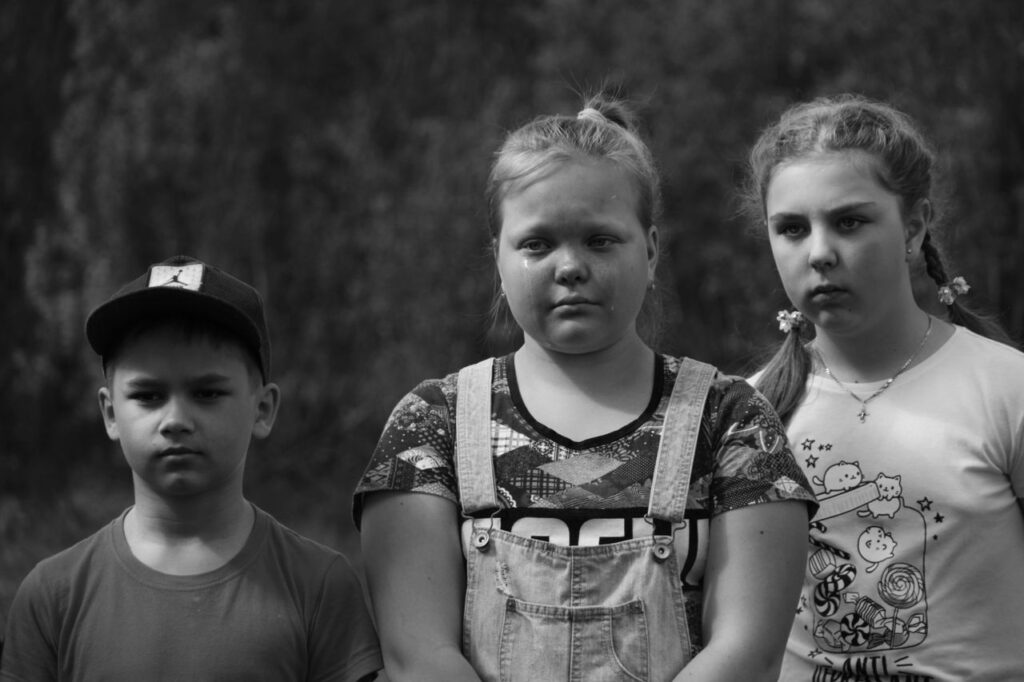
Following Russia’s full-scale invasion of Ukraine in February 2022, hundreds of thousands of Ukrainians sought safety in other countries, including the United Kingdom. Many of those arriving were children who suddenly had to adjust to unfamiliar schools, a different curriculum and a new language of instruction.
British schools and local authorities made substantial efforts to accommodate Ukrainian pupils. However, one important gap became increasingly apparent: students who already spoke Ukrainian could not take a GCSE examination in their home language.
Some schools suggested that Ukrainian pupils consider Russian GCSE instead. From an administrative perspective, this may have appeared to be a practical alternative because Russian was an established examination subject.
But for many Ukrainian children, the suggestion was deeply upsetting.
The two languages have a complicated historical and political relationship. Russian has been widely spoken in parts of Ukraine, and some Ukrainians are bilingual. Nevertheless, the invasion has intensified the significance of language as an expression of national identity and independence. For children whose families have experienced displacement, injury or loss, being directed towards Russian can carry an emotional meaning that teachers may not fully appreciate.
The issue was raised by Ukrainian officials, community organisations and families who argued that pupils should not have to choose a language associated by many with the invading state simply because their own language was missing from the examination system.
The Government’s apology and the new GCSE announcement
Schools minister Georgia Gould apologised to Ukrainian pupils who had been placed in this position. She acknowledged that students had been pushed towards studying Russian and said it was important that they should have access to a Ukrainian GCSE.
The Government announced £340,000 in funding for AQA, one of the UK’s major examination boards, to develop the new qualification.
The planned timetable is:
- September 2028: Expected first teaching of the Ukrainian GCSE.
- Summer 2029: Expected first examinations.
- Development period: AQA will work with language and subject specialists, alongside Ukrainian education authorities, to design the qualification.
The announcement applies to young people in England, Wales and Northern Ireland. The qualification is intended to be open to all pupils, not exclusively those of Ukrainian heritage.
It is an important distinction. The GCSE is being introduced partly to address the needs of displaced Ukrainian children, but its potential audience is much broader. British pupils interested in languages, European culture and international relations will also be able to study Ukrainian.
The qualification is being developed in cooperation with the Ukrainian Ministry of Education and Science and forms part of the wider UK–Ukraine 100-Year Partnership.
Why studying Ukrainian matters beyond the classroom
Language is not simply a collection of vocabulary, grammar rules and pronunciation exercises. It is closely connected to family relationships, cultural traditions, literature, history and personal identity.
For refugee children, maintaining their first language can be particularly important. They may be learning English, adapting to a new school system and making friends in a different country while trying to preserve their connection with relatives and communities back home.
A recognised GCSE offers a way to make that connection part of formal education rather than treating it as an extracurricular interest.
Preserving cultural identity
Children who leave their home country because of war may experience a sudden interruption to ordinary life. Familiar surroundings, friendships, neighbourhoods and educational routines can disappear almost overnight.
Language can provide a sense of continuity. Speaking, reading and writing Ukrainian allows young people to remain connected to family members, Ukrainian books, music, news and cultural traditions.
A qualification that recognises their language skills can also send a powerful message: their existing knowledge has educational value.
Supporting confidence and belonging
Refugee pupils often face the challenge of establishing themselves in a new environment while managing the emotional effects of displacement.
When schools recognise a child’s home language, they can help that student feel that their background is respected rather than overlooked.
This does not mean that children should be separated from wider school life or expected to remain within their own cultural communities. Instead, it means recognising that integration and cultural identity can coexist.
A Ukrainian GCSE could help pupils feel that they do not have to abandon one part of themselves to succeed in another country.
Recognising existing knowledge as an academic strength
A Ukrainian child who has spent years studying in Ukraine may already have advanced reading, writing and speaking skills in Ukrainian. Without a formal qualification, those abilities may not be fully reflected in the examination choices available at a British school.
A GCSE provides a recognised framework through which students can demonstrate their proficiency.
It may also help them communicate their language abilities when applying for further education, training or employment.
Why the Russian GCSE suggestion caused such strong reactions
The controversy cannot be understood simply as a disagreement about which foreign language pupils should study.
For many Ukrainians, the Russian invasion has made language an especially sensitive issue. The war has involved not only military attacks and territorial occupation but also disputes over Ukrainian identity, education and cultural expression.
Ukrainian officials and cultural advocates have repeatedly raised concerns about efforts to suppress Ukrainian language and culture in Russian-occupied areas.
Against that background, asking a Ukrainian refugee child to study Russian may feel very different from suggesting that a British pupil learn an unrelated foreign language.
It is also important to avoid assuming that every Ukrainian has the same relationship with Russian. Many Ukrainians speak both languages, and some have Russian as their first language. Language preferences can vary by region, family history and personal experience.
The central problem was not that Russian should never be studied. It was that Ukrainian pupils lacked an equivalent opportunity to take an examination in their own language.
The new qualification addresses that imbalance by giving students a genuine choice.
A long campaign by Ukrainian families and community organisations
The new GCSE follows years of lobbying by Ukrainian organisations and education advocates in the UK.
Inna Hryhorovych, head of St Mary’s Trust, has campaigned for a Ukrainian GCSE since Russia’s annexation of Crimea in 2014. The campaign therefore predates the full-scale invasion of 2022.
That history matters. The absence of a Ukrainian GCSE was not a problem that suddenly appeared when refugees arrived. It was a longstanding gap that became much more urgent when large numbers of Ukrainian children entered British schools.
Community organisations have played an important role in bringing the issue to policymakers, explaining the educational consequences and giving affected families a platform.
The announcement also demonstrates why minority-language and diaspora communities need to be included in discussions about national education policy. Parents, teachers and community groups often identify practical problems that may not be immediately visible to central government or examination authorities.
The campaign’s next possible objective is an A-level qualification in Ukrainian. Such a development would create a more complete pathway for students who wish to continue studying the language after GCSE.
For now, the Government is concentrating on establishing the GCSE and ensuring that it is academically credible and sustainable.
What will the Ukrainian GCSE actually involve?
The new qualification is being developed by AQA, so its detailed specification, examination materials and assessment arrangements still need to be completed and approved.
However, the Government has confirmed that the qualification will follow the broad approach used for other modern foreign language GCSEs.
Students are expected to be assessed in four core areas:
1. Listening
Pupils will need to understand spoken Ukrainian in different contexts. This may include conversations, announcements, interviews and other spoken material.
Listening assessments help establish whether students can understand everyday communication as well as more developed language.
2. Speaking
Students will be expected to communicate orally, express opinions and respond to questions.
This is particularly important for heritage speakers, who may understand Ukrainian well but have varying levels of formal speaking experience.
3. Reading
Reading assessments will examine students’ ability to understand written Ukrainian, identify important information and interpret different types of text.
The eventual course could provide opportunities to engage with cultural material, although the final content will depend on AQA’s specification.
4. Writing
Pupils will demonstrate their ability to communicate in written Ukrainian, using appropriate vocabulary, grammar and sentence structures.
Formal writing is an important part of recognising language proficiency because conversational fluency does not always mean that a student has developed the literacy skills expected at GCSE level.
The final assessment arrangements will be published once the qualification has been developed and approved.
The challenge of designing an examination for heritage speakers
One of the most important questions facing AQA is how to create a fair qualification for students with different levels of Ukrainian-language experience.
Some pupils will have completed most of their education in Ukraine. Others may have been born in the UK or spent much of their childhood speaking Ukrainian at home while receiving their formal education in English.
There will also be students who understand Ukrainian conversations but have had fewer opportunities to develop advanced writing or reading skills.
These differences create a challenge for examination designers.
A strong qualification must be demanding enough to represent meaningful academic achievement while remaining accessible to pupils whose language backgrounds differ.
AQA will need to consider:
- The range of vocabulary and grammar expected at GCSE level.
- How to assess students who speak Ukrainian fluently but have weaker formal literacy.
- The balance between everyday communication and more advanced language.
- The inclusion of appropriate cultural and historical material.
- The availability of qualified teachers and examination assessors.
- Whether schools and private candidates can access the qualification fairly.
The aim should not be to create an easier examination simply because some candidates are heritage speakers. Rather, it should recognise different learning pathways while maintaining consistent academic standards.
The wider challenges facing Ukrainian refugee children
The GCSE announcement is welcome, but it addresses only one part of the educational experience of displaced children.
Moving to another country during childhood can affect academic progress, friendships, family life and emotional wellbeing. Some pupils have experienced separation from relatives, the loss of their homes or prolonged uncertainty about whether they can return.
They may also have to learn English while continuing to study subjects such as mathematics, science and history.
Research and guidance from the University of Birmingham on Ukrainian refugee children in UK schools has highlighted the importance of cultural sensitivity, protection against bullying and careful conversations about the war. It also points to the need for schools to provide welcoming environments that recognise the experiences of displaced pupils.
The new GCSE should therefore be seen as one part of a broader support system.
Schools also need to consider:
English-language support: Pupils need sufficient help to access the mainstream curriculum and communicate confidently with teachers and classmates.
Emotional and psychological support: Staff should be aware that some children may have experienced traumatic events. Support should be sensitive and should not pressure pupils to discuss painful experiences.
Protection against discrimination: Schools should respond appropriately to bullying or hostility based on nationality, language or political conflict.
Family engagement: Parents and guardians can provide valuable information about a child’s previous education, language skills and individual needs.
Continuity of learning: Where possible, schools should help pupils avoid unnecessary gaps in education and prepare them for future qualifications.
A new language examination cannot solve all these challenges, but it can contribute to a school environment in which Ukrainian children feel recognised and included.
Why the qualification could benefit British pupils too
Although the GCSE is particularly important for Ukrainian families, making it available to all students could create wider educational benefits.
Learning Ukrainian gives British pupils an opportunity to explore a language with a rich literary, historical and cultural tradition.
It can also deepen understanding of Eastern Europe, a region whose political and economic importance has become increasingly visible since Russia’s invasion.
Students who learn Ukrainian may develop an interest in international relations, diplomacy, journalism, translation, education, humanitarian work and business.
The qualification could also encourage cultural exchange between British and Ukrainian schools.
The UK–Ukraine Schools Partnership has expanded to include more than 300 schools across the two countries, supporting collaboration, cultural understanding and shared educational projects. The Ukrainian GCSE could complement those connections by giving language learning a more formal academic route.
Schools minister Georgia Gould has also encouraged British pupils to consider taking the qualification as a gesture of solidarity and an opportunity to learn about Ukrainian culture.
This is a useful reminder that language education should not be viewed only as a requirement for students who need to preserve their heritage. It can also help young people understand societies beyond their own.
The practical question: Will schools actually offer Ukrainian GCSE?
Announcing a qualification is not the same as making it readily available in every school.
The success of the new GCSE will depend on whether schools can provide the teaching, materials and examination arrangements needed to support it.
Some schools may already have Ukrainian-speaking pupils, parents or community volunteers who can help establish language provision. Others may need to work with external teachers, supplementary schools or specialist education organisations.
Teacher recruitment could be a particularly important challenge. A qualification needs educators who understand both the language and the requirements of the British examination system.
There will also need to be suitable textbooks, digital resources, practice assessments and guidance for schools.
AQA’s role is to develop and deliver the qualification, but its long-term success will depend on cooperation among the examination board, government, schools, Ukrainian education authorities and local communities.
The Government should also monitor how many schools offer the subject and whether pupils outside major Ukrainian communities can access it.
Without adequate teaching provision, the qualification risks becoming available in principle but difficult to take in practice.
What does this mean for the future of language education in Britain?
The Ukrainian GCSE raises a broader question about how the British education system recognises languages spoken by children at home.
Many pupils grow up in multilingual households. They may speak languages such as Arabic, Polish, Urdu, Bengali, Mandarin, Romanian or Portuguese with family members while using English at school.
These languages are valuable cultural and intellectual resources. However, students do not always have equal opportunities to turn their existing language abilities into recognised qualifications.
The Ukrainian case may encourage renewed discussion about whether examination choices adequately reflect the linguistic diversity of modern Britain.
There are practical considerations. Developing a GCSE requires specialist expertise, teaching resources, quality assurance and enough demand to make the qualification sustainable.
Nevertheless, the experience of Ukrainian pupils shows why demand should not be judged only by the number of students who currently have access to a particular course. A qualification can also serve a wider public purpose by supporting cultural preservation, educational inclusion and international understanding.
The challenge for policymakers is to balance practical constraints with the principle that a student’s home language should not be treated as academically irrelevant.
The significance of the UK–Ukraine 100-Year Partnership
The Ukrainian GCSE is also part of a wider relationship between the UK and Ukraine.
The two countries have developed educational, cultural, political and security cooperation, with the 100-Year Partnership intended to support long-term ties.
Education is an important part of that relationship because connections between young people can last well beyond the immediate political circumstances that created them.
The partnership’s school programme encourages collaboration between British and Ukrainian schools, including projects that develop reading, cultural understanding and language skills.
A Ukrainian GCSE adds a concrete educational dimension to this cooperation. It gives young people a formal opportunity to study a language that is central to Ukraine’s national identity.
It also sends a message to Ukrainian families that their contribution to British society is recognised and that their children should have opportunities to succeed without losing their cultural connections.
What happens next?
The immediate priority is for AQA to complete the development of the qualification and secure the necessary approval.
The planned first teaching date is September 2028, followed by the first examinations in summer 2029.
Between now and then, several issues will need attention:
- Finalising the syllabus: AQA must establish the language skills, grammar, vocabulary and cultural content students will study.
- Developing assessment materials: Listening, speaking, reading and writing examinations must be designed and tested.
- Preparing teachers: Schools will need access to suitable training and guidance.
- Building learning resources: Textbooks, digital materials and practice assessments should be available before teaching begins.
- Ensuring access: Students should be able to take the qualification even if their school does not have a large Ukrainian-speaking population.
The qualification’s success should ultimately be measured not simply by the number of examination entries, but by whether Ukrainian pupils can access meaningful language education and whether other students are encouraged to engage with the language.
Conclusion: A GCSE that recognises more than language skills
The UK’s apology to Ukrainian refugee children is an acknowledgement that the absence of a Ukrainian GCSE created an unfair situation for some pupils. The new qualification offers a practical way to address that problem, but its significance reaches beyond examination choices.
For children who have experienced war and displacement, language can represent family, memory, belonging and national identity. Giving them the opportunity to study Ukrainian as a recognised school subject helps affirm that those connections matter.
The decision also offers an opportunity for British schools to think more carefully about the languages their pupils bring with them and the role those languages can play in education.
The planned 2028 launch is still some time away, and important work remains to make the qualification accessible and academically strong. Nevertheless, the announcement represents a meaningful step towards a more inclusive approach to language education.
For the Ukrainian pupils who were previously told that Russian was their only practical option, the message is especially important: they should not have to choose between their education and their identity.
Frequently Asked Questions (FAQs)
1. Why did the UK Government apologise to Ukrainian refugee children?
The Government apologised because some Ukrainian pupils in British schools were encouraged to study Russian GCSE when no Ukrainian-language GCSE was available. Many families and students considered this inappropriate and distressing, particularly given the circumstances in which they had fled Russia’s invasion of Ukraine. Schools minister Georgia Gould acknowledged that pupils had been put in that position and said they should have access to a Ukrainian qualification.
2. When will the new Ukrainian GCSE be available?
The qualification is expected to begin teaching in September 2028, with the first examinations scheduled for summer 2029. AQA is developing the course with £340,000 in Government funding. The timetable is subject to the qualification’s development and approval.
3. Who will be allowed to take the Ukrainian GCSE?
The qualification is intended to be open to all pupils, not just Ukrainian refugees or children with Ukrainian heritage. It will be particularly valuable for Ukrainian-speaking students who want formal recognition of their language skills, but British pupils and others interested in learning Ukrainian will also be able to take it.
4. What subjects or skills will the Ukrainian GCSE examination cover?
The qualification is expected to assess four main language skills: listening, speaking, reading and writing. It will also recognise the cultural and historical contexts that shape the Ukrainian language. AQA will publish the detailed syllabus and examination requirements as development progresses.
5. Why is a Ukrainian GCSE important for refugee children?
A Ukrainian GCSE can help refugee children maintain their home language, preserve their cultural identity and gain formal recognition for skills they may already possess. It can also improve their educational opportunities and strengthen their sense of belonging in British schools. More broadly, it demonstrates that children can integrate into a new society while continuing to value their language, heritage and family connections.
Sources The Guardian