
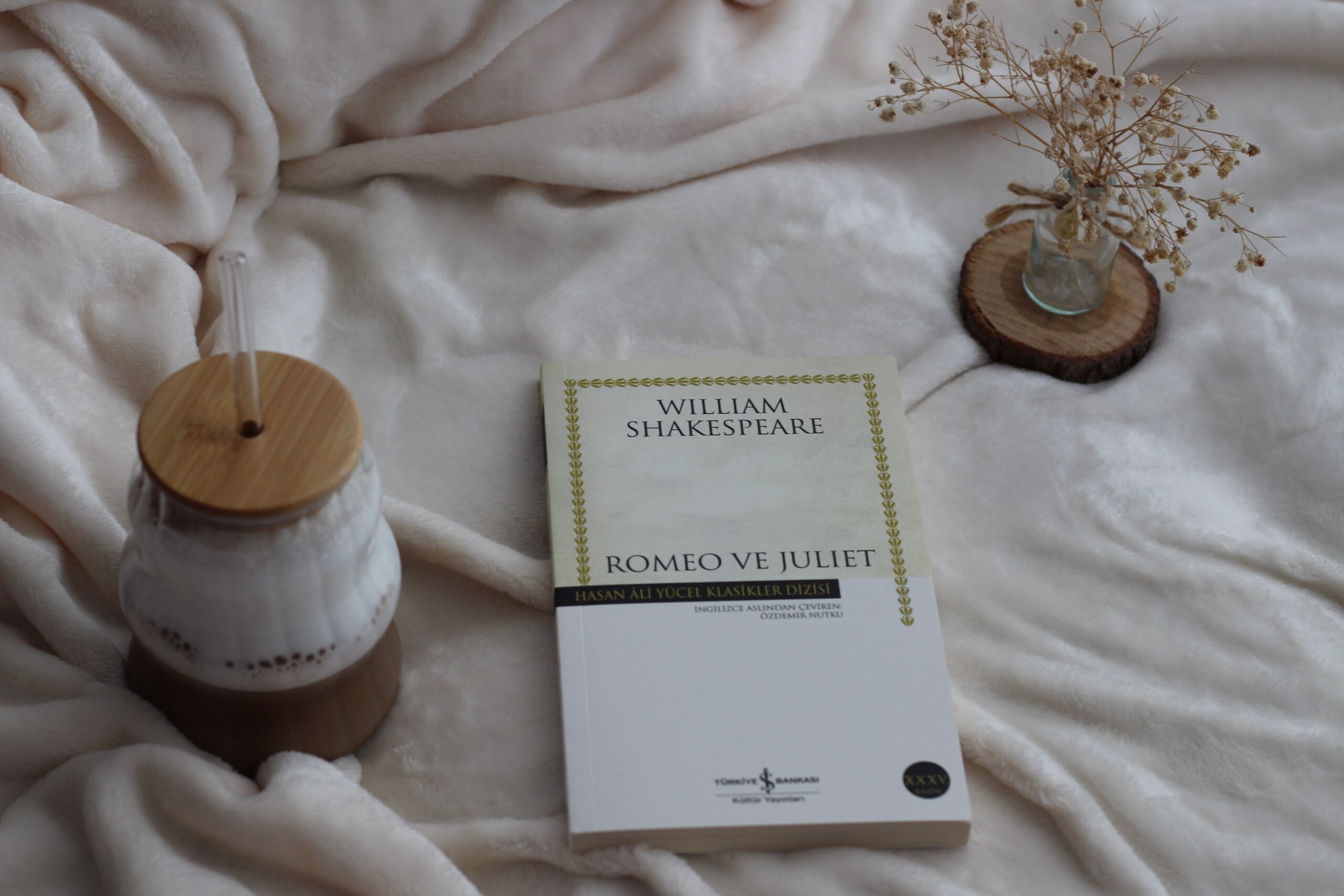
What happens when every word in Shakespeare is replaced—but somehow Shakespeare remains? That paradox sits at the heart of Daniel Hahn’s fascinating new book, If This Be Magic: The Unlikely Art of Shakespeare in Translation, a lively exploration of what it really means to carry the world’s most famous playwright from one language into another.
Translation is often treated as a technical exercise: understand the original, find equivalent words, and put them into a different language.
Shakespeare makes that approach look almost laughably inadequate.
His plays depend on puns, rhythm, rhyme, cultural references, ambiguity, pronunciation, social registers and the musical texture of English itself. Remove those elements and you risk removing Shakespeare. Preserve them too literally and you can produce something that sounds artificial in the new language.
Hahn’s central argument is both simple and provocative: a translation does not have to preserve Shakespeare’s words to preserve Shakespeare.
His 416-page book, published in 2026, examines Shakespearean translations across languages including Chinese, Dutch, Turkish, Māori, Japanese, Arabic, Greek, Hungarian and many others.

Why Shakespeare Is Such a Nightmare for Translators
Most literary translation involves difficult decisions.
Shakespeare multiplies those decisions.
A translator may have to ask:
- Should the passage remain in verse?
- Should rhyme be preserved?
- Should a pun be recreated or abandoned?
- Should an idiom be translated literally?
- Should a joke remain recognizable or simply remain funny?
- How should a historical reference be explained?
- What happens when a character’s name has an accidental meaning in another language?
- Can Shakespeare’s rhythm survive in a language with completely different sentence structures?
These aren’t merely questions of vocabulary.
They are questions of effect.
Hahn’s approach is therefore less concerned with finding a supposedly perfect equivalent and more interested in discovering what a successful translation makes the audience experience.
Translation Is Not Photocopying
One of the most useful ideas in Hahn’s book is the rejection of translation as simple copying.
A literal translation can preserve the dictionary meaning of a sentence while destroying its humor, rhythm or emotional force.
Imagine Shakespeare writes a pun based on two English words that sound alike.
If the translator simply converts both words into their dictionary equivalents, the pun may disappear completely.
The sentence is technically accurate.
The Shakespeare is gone.
That is why Hahn treats translators as creative artists rather than linguistic technicians.
They sometimes have to invent in order to remain faithful.
“Faithful to the Laugh”
Comedy presents one of translation’s clearest dilemmas.
Suppose an English joke relies on a pun that has no equivalent in French, Japanese or Arabic.
What should the translator do?
One option is to explain the joke.
That preserves information but kills the comedy.
Another option is to invent an entirely different joke that produces a comparable response.
Hahn embraces the second approach.
The goal is not necessarily to preserve the same words.
It is to remain faithful to the laugh.
That principle applies well beyond comedy.
A translator may need to preserve:
- shock rather than vocabulary;
- tenderness rather than syntax;
- rhythm rather than rhyme;
- ambiguity rather than literal meaning;
- or anger rather than individual words.
Translation becomes an exercise in recreating an experience.
Shakespeare’s Puns Become Linguistic Minefields
Shakespeare’s language is packed with wordplay.
That creates a nightmare when a joke depends on a relationship between English words that doesn’t exist elsewhere.
Hahn discusses examples in which translators have had to search for completely different linguistic routes to recreate Shakespeare’s effect. One example involves Hamlet and the association between “Brutus” and “brute.” A Korean translator reportedly found a different Korean wordplay that could produce a comparable comic sting.
This is a perfect illustration of why translation isn’t simply substitution.
The translator isn’t asking:
“What does this word mean?”
The more important question is:
“What is this word doing?”
When a Character’s Name Becomes a Problem
Even names can become obstacles.
A name that sounds perfectly ordinary in English may accidentally mean something completely different in another language.
Hahn discusses the problem of Prince Hal’s name in Hungarian, where “Hal” means “fish.” That unintended association can distract audiences from the character.
A translator may therefore choose to modify the name.
At first glance, changing a character’s name seems like betrayal.
But if keeping the name creates an accidental joke or association that Shakespeare never intended, changing it may actually be the more faithful decision.
Translation sometimes requires losing something deliberately to preserve something more important.
Lady Macbeth Cannot Always Ask the Same Question
One of Hahn’s most memorable examples concerns Lady Macbeth.
When she challenges Macbeth’s masculinity, the original wording carries an enormous amount of cultural and rhetorical baggage.
In Māori, the direct equivalent of “Are you a man?” does not necessarily produce the same implication.
Translator Te Haumihiata Mason therefore uses an expression roughly equivalent to questioning whether Macbeth has “balls.” The result is much closer to what Lady Macbeth is actually doing: aggressively challenging his masculinity.
The vocabulary changes.
The dramatic force survives.
And that distinction is crucial.
Verse or Prose? The Translator’s First Big Decision
One of the earliest questions facing a Shakespeare translator is whether to preserve verse.
It sounds obvious.
Shakespeare wrote poetry, so shouldn’t Shakespeare in another language also be poetry?
Not necessarily.
Different languages have different rhythms.
A form of meter that sounds natural and powerful in English may sound forced or theatrical in another language.
A translator who mechanically reproduces Shakespeare’s meter can end up making the dialogue sound less natural than the original.
As Hahn’s exploration demonstrates, translating the form can sometimes sacrifice the voice.
In other cases, abandoning the form entirely may destroy something fundamental.
There is no universal solution.
Rhythm Is Meaning
Shakespeare’s rhythm isn’t decoration.
It can communicate character and emotion.
A character who suddenly breaks a regular rhythm may sound agitated, uncertain or emotionally overwhelmed.
Short words can accelerate a speech.
Longer words can slow it down.
Repeated sounds can create emphasis.
Silence can become part of the rhythm.
This means that a translator must listen as well as read.
The written text is only one part of Shakespeare.
His plays were designed to be spoken.
The Problem of Shakespearean English
There is another complication: Shakespeare wasn’t writing ordinary modern English.
He was writing in an English that is recognizable to contemporary readers but sufficiently distant to contain unfamiliar vocabulary, grammar and cultural assumptions.
That raises a strange question:
Should Shakespeare be translated into the equivalent of modern everyday language?
If so, how modern?
A 2026 audience?
A 1950s audience?
Teenagers?
A regional dialect?
A formal literary language?
Every choice creates a different Shakespeare.
Should Shakespeare Sound Old?
This is one of the great tensions in translation.
If Shakespeare’s language sounds archaic in English, should the translation sound archaic in another language?
Doing so might communicate historical distance.
But it might also make the characters sound unnaturally formal.
A translator could instead use contemporary language, making Shakespeare immediately accessible.
But then the historical texture changes.
The translator must decide which aspect matters more:
historical distance or dramatic immediacy.
Neither answer is automatically correct.
The “Untranslatable” Word Problem
People often talk about certain words as “untranslatable.”
Hahn pushes back against that idea.
Almost anything can technically be translated.
The real issue is what must be sacrificed.
A word may contain:
- literal meaning;
- emotional meaning;
- cultural meaning;
- sound associations;
- historical associations;
- grammatical information;
- and social implications.
No single replacement can necessarily preserve everything.
So the translator chooses.
Translation isn’t about eliminating loss.
It is about deciding which loss is acceptable.
Why Shakespeare Is Still So Global
Shakespeare’s extraordinary international reach creates the very problem Hahn explores.
The plays have traveled across cultures for centuries.
Hamlet can be performed in Japanese.
King Lear can exist in Yiddish.
The Tempest can be performed in Korean.
Twelfth Night can be reconstructed through dozens of linguistic traditions.
Hahn’s research spans an enormous range of languages and shows how translators repeatedly reinvent Shakespeare while keeping his dramatic identity recognizable.
That suggests something important.
Shakespeare’s universality may not depend on preserving the original language.
It may depend on the ability of different cultures to make Shakespeare their own.

The Translator Becomes a Second Playwright
This is perhaps the most provocative implication of Hahn’s work.
A translator doesn’t simply transfer Shakespeare.
The translator makes hundreds of artistic decisions.
They determine:
- how characters speak;
- how jokes land;
- how rhythm works;
- which metaphors survive;
- which cultural references remain;
- and how the audience understands the emotional world.
The translator is therefore a kind of invisible collaborator.
The audience may never know their name.
But without them, Shakespeare might never reach that audience at all.
Why Some “Translations” Are Not Really Translations
Hahn is particularly skeptical of versions that are presented as translations even when the person producing the new text doesn’t actually understand the source language.
The problem is obvious.
If Shakespeare’s English is itself being interpreted through another person’s supposedly “literal” translation, then the final writer may be polishing an interpretation rather than translating Shakespeare.
This can create elegant English.
It can even create beautiful English.
But elegance is not the same thing as translation.
The distinction matters because Shakespeare’s complexity exists precisely in the details that a supposedly neutral intermediary can erase.
Translation Can Reveal Shakespeare’s Hidden Possibilities
Paradoxically, translating Shakespeare can sometimes help English-speaking readers understand the original better.
Why?
Because a translator is forced to make decisions that native readers can often ignore.
Consider an English pun.
An English reader may laugh and move on.
The translator has to stop and ask:
Why does this work?
What sounds similar?
What cultural assumption makes it funny?
Is the word formal or vulgar?
Is the character exploiting an ambiguity?
What happens if that ambiguity doesn’t exist in another language?
Translation analysis can therefore expose the machinery inside Shakespeare’s language.
Shakespeare Becomes a Global Laboratory for Language
Hahn’s book is ultimately about much more than Shakespeare.
It is about what languages can and cannot do.
It asks questions such as:
- Can humor survive without the original pun?
- Can rhythm survive a change in grammar?
- Can emotional intensity survive a change in vocabulary?
- Can a metaphor travel across cultures?
- Can a historical joke work centuries later?
- Can a character remain recognizably themselves in another language?
Shakespeare becomes the perfect laboratory because his writing puts so much pressure on language.
Why the Title “If This Be Magic” Matters
The title comes from The Winter’s Tale, where Leontes encounters what appears to be a statue of his supposedly dead wife, Hermione.
The apparent statue unexpectedly comes alive.
For Hahn, that becomes an ideal metaphor for translation.
A translation might initially look like a copy of an original.
But the best translations don’t feel dead.
They have their own rhythm, personality and energy.
They are not identical to the original.
They are alive in another language.
Hahn has also noted an echo of translator Gregory Rabassa’s If This Be Treason in his title.
Translation Is an Act of Cultural Negotiation
A translator is constantly negotiating between two worlds.
Too much loyalty to the source culture can make the text inaccessible.
Too much adaptation can erase the source.
The sweet spot is difficult to define.
It depends on the audience.
A Shakespeare performed for schoolchildren may need different choices from one performed for academics.
A stage translation may prioritize speech and rhythm.
A printed edition may prioritize literary precision.
A translation intended for a local theater company may embrace local humor.
There is no single “correct” Shakespeare.
There are many possible Shakespeares.
Why This Matters in the Age of AI Translation
Hahn’s subject has an especially interesting resonance in the era of artificial intelligence.
Modern AI systems can translate enormous amounts of text almost instantly.
But speed doesn’t eliminate the fundamental problems of translation.
An AI can recognize that a sentence contains a pun.
The harder question is:
What should replace the pun?
Should it preserve the meaning?
The sound?
The joke?
The cultural reference?
The emotional effect?
Those are artistic decisions.
And Shakespeare demonstrates exactly why translation cannot always be reduced to word substitution.
Human Judgment Still Matters
Machine translation is increasingly impressive at handling straightforward communication.
But literature is different.
Literary translation requires interpretation.
A translator has to understand why a character says something, what social position they occupy, what the audience is supposed to feel and how the language creates that effect.
That is particularly difficult with Shakespeare.
A technically accurate translation can still be dramatically terrible.
Conversely, a translation that changes the words dramatically can be artistically brilliant.
The difference lies in judgment.
The Future of Shakespeare May Be More Multilingual
For centuries, Shakespeare was often treated as the property of English literature.
Hahn’s work suggests a different vision.
Shakespeare now belongs to a much larger linguistic world.
A Japanese Hamlet is not merely English literature translated into Japanese.
A Māori Macbeth is not simply an English play with different vocabulary.
These works become part of the literary culture of their new languages.
That is not dilution.
It is expansion.
Final Thoughts
Daniel Hahn’s If This Be Magic presents a deceptively simple question:
If every word changes, is it still Shakespeare?
The answer, according to Hahn’s exploration, is yes—but only if we stop thinking of translation as copying.
A successful translation may change the words, rhythm, jokes, metaphors and even names.
What it must preserve is something deeper:
the dramatic life of the work.
That is why translating Shakespeare is so difficult—and why it is so fascinating.
The Bard’s language may be four centuries old, but every new translation forces us to ask what actually makes a work of literature itself.
Perhaps Shakespeare survives not because his words are untouchable, but because they are remarkably adaptable.
His plays can travel.
His jokes can mutate.
His metaphors can change shape.
His rhythms can be rebuilt.
And somewhere inside all those transformations, audiences still recognize the pulse of Shakespeare.
That may be the real magic of translation.
5 Frequently Asked Questions
1. What is If This Be Magic by Daniel Hahn about?
If This Be Magic: The Unlikely Art of Shakespeare in Translation explores how Shakespeare’s plays and poetry are translated into different languages. Hahn examines the problems of preserving wordplay, humor, rhythm, verse, cultural references and emotional meaning while making Shakespeare work naturally for new audiences.
2. Why is Shakespeare particularly difficult to translate?
Shakespeare combines multiple layers of language at once: puns, rhyme, meter, idioms, metaphors, historical references and different social registers. A literal translation can preserve dictionary meanings while destroying the humor, rhythm or dramatic effect that makes the original powerful.
3. Should Shakespeare translations preserve the original words and rhythm?
Not necessarily. Hahn argues that translators sometimes need to change words, jokes, names or even poetic structures to recreate the effect of the original. A translation that preserves every word but loses the joke or emotional force may be less faithful than one that substantially changes the wording.
4. Can Shakespeare really be translated into every language?
Shakespeare has been translated into a huge number of languages, including Japanese, Māori, Arabic, Hungarian, Greek, Danish, Welsh, Turkish and many others. The challenge isn’t simply whether translation is technically possible, but what aspects of Shakespeare can be preserved and what must be reinvented.
5. Why are human translators still important when AI can translate Shakespeare?
AI can assist with vocabulary, grammar and large-scale language conversion, but literary translation requires interpretation and artistic judgment. Shakespeare’s puns, cultural references, rhythm and dramatic intentions often have no direct equivalent. A human translator must decide what effect deserves to survive when the original linguistic mechanism cannot.

Sources The Irish Times