
Literature has always offered a way to enter lives different from our own. A novel can take readers into a family struggling with the aftermath of a terrorist attack, a traditional community where women are expected to remain silent, a crowded Italian market where a father’s life changes after an accident, or a Balkan landscape haunted by war, memory and songs.
The latest wave of translated fiction highlights precisely this power.
In a November 8, 2026, review for The Irish Times, literary translator and critic Frank Wynne examines four works by writers from Indonesia, Italy, Russia and the former Yugoslavia. The books are Night of a Thousand Hells by Intan Paramaditha, Invernale by Dario Voltolini, My Dreadful Body by Egana Djabbarova and Inshallah, Madonna, Inshallah by Miljenko Jergović.
Although their settings, narrative styles and subjects are very different, they share a fascination with the fragile boundaries between individual lives and the forces that shape them. Terrorism, family expectations, physical illness, cultural identity, historical violence and collective memory all play important roles.
Beyond their literary qualities, these books reveal something significant about contemporary publishing: readers increasingly have opportunities to encounter stories that were originally written in languages and cultural environments that rarely receive the same attention as English-language literature.
Here is a closer look at the four works, their authors, their wider themes and why translated fiction deserves a more prominent place on international bookshelves.
1. Night of a Thousand Hells: The Devastating Family Consequences of Terrorism
<em>Night of a Thousand Hells</em> by Indonesian writer Intan Paramaditha is perhaps the most immediately unsettling of the four books.
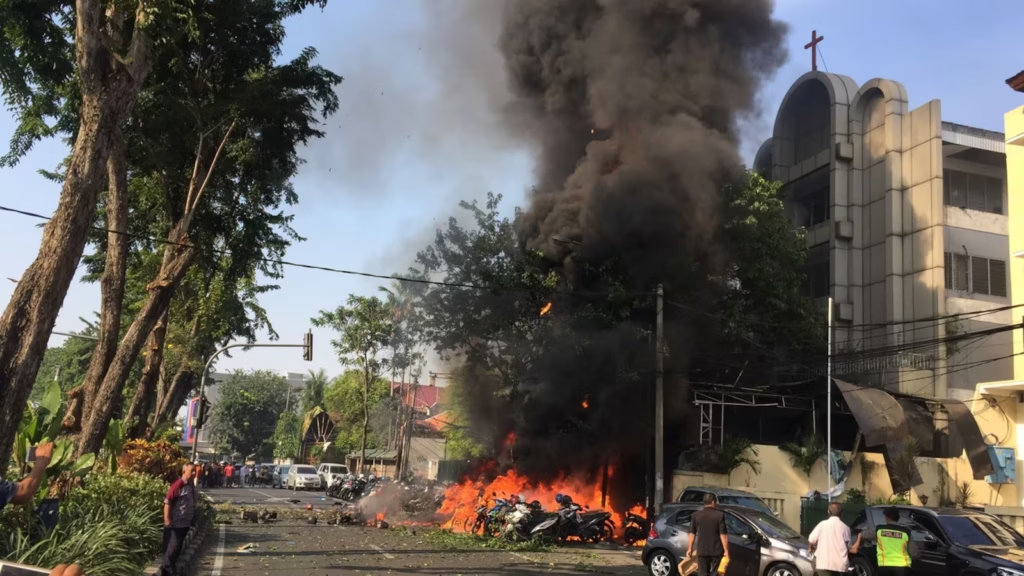
Published in English by Europa Editions in October 2026, the novel is translated by Stephen Epstein and Tiffany Tsao. It begins with an extraordinary family tragedy: three days before Ramadan, a series of terrorist attacks takes place at several places of worship in a remote Indonesian town.
A woman receives an alert and turns on the television, only to discover that her youngest sister is among the dead. The shock becomes even more devastating when she learns that her sister and her husband were the suicide bombers.
Rather than presenting the incident as a conventional crime thriller, Paramaditha uses it as the starting point for a complex exploration of family relationships, religious extremism, gender expectations and personal responsibility.
Three sisters, three different destinies
The story revolves around three sisters: Mutiara, Maya and Annisa.
Their grandmother, Victoria, has assigned them symbolic identities that appear to determine their futures:
- Mutiara, the Caretaker: She remains at home, caring for her dying mother and later her terminally ill father.
- Maya, the Traveller: She leaves Indonesia for New York, seeking independence, intellectual freedom, adventure and relationships outside traditional expectations.
- Annisa, the Bride: The youngest sister embraces marriage and motherhood before becoming involved in a devastating act of violence.
Their different lives create a complicated picture of womanhood, family responsibility and freedom.
Mutiara represents the burden of remaining behind to care for relatives. Maya represents the desire to escape the limitations of home and pursue an independent existence. Annisa’s transformation into a terrorist exposes the danger of assuming that a person’s outwardly conventional life tells the complete story of their inner world.
When the attack occurs, Mutiara and Maya must confront an uncomfortable question: how could someone they loved become responsible for such an atrocity?
Their search for answers takes them into family secrets, forgotten histories and relationships that were never fully understood.
Terrorism beyond headlines and statistics
One of the novel’s most important contributions is its examination of terrorism through the perspective of the people left behind.
News reports often focus on the attackers, victims, casualty figures, security failures and political consequences. Families of perpetrators receive considerably less attention.
Paramaditha reverses this perspective.
The surviving sisters are forced to confront grief and shame while trying to understand whether they overlooked warning signs or misunderstood their youngest sibling.
The novel does not excuse violence or suggest that family members are responsible for another person’s crimes. Instead, it explores the emotional confusion that follows when a loved one commits an act that appears impossible to reconcile with the family’s memories.
This is an important distinction. Understanding the personal and social conditions surrounding radicalization is not the same as justifying terrorism.
The novel invites readers to consider how extremist movements can affect ordinary households and how ideological violence can destroy relationships across generations.
Indonesian folklore, Islamic mysticism and feminist gothic fiction
Paramaditha’s approach is unusual because she combines contemporary political themes with supernatural and folkloric storytelling.
Indonesian folklore, Islamic mysticism, gothic horror, dark humour and elements of fairy tales appear throughout the narrative.
The story also plays with familiar literary structures, including echoes of Shakespeare’s King Lear and the Cinderella tradition.
Grandmother Victoria’s stories about weretigers and shapeshifters provide another layer of meaning. Transformation becomes more than a supernatural device: it reflects the ways people are shaped by family expectations, cultural pressures and experiences they cannot easily control.
The novel also introduces Rosalinda, a transgender woman who was raised alongside the sisters as the child of a household servant. Her perspective expands the book’s examination of identity, family belonging and the limitations imposed by conventional ideas about gender.
The result is a work that refuses to fit neatly into one literary category. It is simultaneously a family drama, political novel, feminist gothic story and exploration of religious extremism.
A novel inspired by a real Indonesian tragedy
The book’s subject has a connection to an actual event.
In May 2018, a family carried out coordinated suicide bombings in Surabaya, Indonesia. The attacks targeted churches and involved members of the same family, including children.
The event shocked the country and generated difficult questions about family-based radicalization, extremist networks and the involvement of women and children in terrorist violence.
Paramaditha has discussed the 2018 attacks as an inspiration for the novel. Her interest extends beyond the act itself to the public reactions that followed, including the tendency to separate perpetrators from the wider society rather than examine the complicated conditions surrounding extremism.
This real-world background gives the fictional story additional weight without making it a direct reconstruction of the attacks.
Night of a Thousand Hells has also attracted significant literary attention. It was included in the 2026 National Book Award longlist and subsequently recognized as a finalist for Translated Literature, according to the author’s published information.
The book demonstrates how fiction can address political violence without reducing its characters to symbols or turning a complicated tragedy into a simplistic moral lesson.
2. Invernale: A Moving Tribute to a Father and the Slow Reality of Death
If Night of a Thousand Hells explores sudden and devastating violence, Dario Voltolini’s Invernale examines a different form of tragedy: the gradual disappearance of a loved one through illness.
Originally published in Italian in 2024, the novella received significant recognition in Italy, including a place among the finalists for the prestigious Premio Strega.
Its English translation, by Brian Shannon, was published by New Cross Press in 2026.
The story is set in Turin during the late 1970s and follows Gino, a skilled butcher working at the historic Porta Palazzo market.
Gino is highly experienced in his profession. His work involves cutting, preparing and handling animal meat with precision. He understands the physical demands of his trade and takes considerable pride in his ability.
His relationship with his work is not presented simply as a means of earning money. Butchery is part of his identity and his understanding of the world.
Then a seemingly ordinary accident changes everything.
A small accident with enormous consequences
During a busy working day, Gino is caught in the movement and confusion of the market. His cleaver slips and cuts deeply into his thumb.
Doctors manage to reattach the injured digit, but it never fully recovers its previous strength or mobility.
The accident appears manageable at first. Yet the blood exposure associated with his work leads to an infection that will take years to diagnose.
The consequences are devastating.
Gino gradually develops a serious illness, and the story follows his movement from the energetic environment of the market to the quiet, clinical atmosphere of hospitals and specialist medical institutions.
Eventually, he receives treatment at an oncology centre in Paris.
What begins as a story about a working man’s injury becomes an account of physical decline, medical uncertainty and the emotional experience of watching a parent approach death.
The body, work and personal identity
One of the novella’s strongest ideas is the relationship between physical ability and identity.
Gino’s body has always been central to his profession. His hands, strength, concentration and physical coordination allow him to perform work requiring precision and confidence.
When illness begins to take those abilities away, he loses more than his health.
He is gradually separated from the environment in which he has built his life.
This raises a universal question: how does someone preserve a sense of identity when the physical abilities that once defined them begin to disappear?
The book is particularly relevant to people who have experienced serious illness within their families. Medical treatment can extend life and provide hope, but it also introduces uncertainty, exhaustion and the possibility that ordinary routines may never return.
Voltolini avoids turning the story into a conventional medical drama. Instead, he concentrates on small details: sounds, gestures, movements, silences and memories.
These ordinary experiences become increasingly significant as Gino’s health deteriorates.
A son’s portrait of his father
The novella is also deeply personal.
The narrator is Dario, Gino’s son, and the story functions partly as a memoir-like tribute to his father.
Their relationship is expressed through shared experiences, including hunting and watching football.
Such details prevent Gino from becoming merely a character defined by his illness. He remains a father, worker, sports enthusiast and individual with a distinct personality.
This approach gives the narrative its emotional force.
The reader sees the difference between the father as he was before the illness and the increasingly fragile man he becomes.
The story also explores the emotional experience of the family members who must adjust to a changing relationship with someone they love.
Why the title matters
The Italian title Invernale evokes winter.
Winter is associated with coldness, decline, stillness and the gradual disappearance of vitality. It is an effective metaphor for the progression of illness and the emotional atmosphere surrounding death.
Yet the title can also suggest a season of reflection.
As Gino’s life approaches its end, memories become more important. The narrator’s act of remembering becomes a way of preserving something that physical death cannot completely erase.
The novella is therefore not only about dying. It is also about the responsibilities of memory and the love that remains after someone is gone.
3. My Dreadful Body: A Woman’s Struggle Against Patriarchy, Illness and Cultural Expectations
Egana Djabbarova’s My Dreadful Body takes readers into the complicated intersection of physical illness, cultural identity and gender expectations.
Originally written in Russian, the book is translated into English by Lisa C. Hayden and published by Linden Editions in the United Kingdom, with a US edition from New Vessel Press.
It is a short but powerful work that challenges conventional ideas about the female body and the social expectations placed upon women.
The narrative follows a young woman born into an Azerbaijani family in Russia.
Growing up between different cultural environments, she struggles with questions of identity and belonging. At school, her appearance, accent and clothing make her an outsider. Within her family and community, traditional expectations place considerable emphasis on how a woman should look and behave.
Her difficulties become more complicated when she develops a neurological condition that affects her movement and speech.
Growing up between cultures
The protagonist’s experience is shaped by her position between Azerbaijani family traditions and Russian society.
She does not feel completely accepted in either environment.
At school, she faces ridicule because of her appearance and cultural background. Within her family, she encounters expectations surrounding femininity, marriage and appropriate behaviour.
This creates a divided sense of identity.
She must negotiate the expectations of a community that sees her as different while also questioning traditions that appear to restrict her independence.
The book demonstrates how cultural identity can become complicated when someone grows up between different languages, social systems and inherited expectations.
The female body as a social battleground
The book is structured around different parts of the human body.
Chapters examine subjects such as the eyes, hair, mouth, shoulders, hands, tongue, legs, throat and belly.
This structure is significant because each body part carries a different social and cultural meaning.
For example, the protagonist’s eyebrows become a symbol of traditional expectations surrounding beauty and marriage.
Her hair becomes connected to ancestry and family memory. Long hair is valued in her community, while cutting it short represents a rejection of inherited expectations.
The mouth and tongue become particularly important because they represent speech and the ability to express opinions.
In the world she grows up in, women are expected to remain restrained. Speaking openly, challenging authority or expressing anger can be regarded as inappropriate.
By examining these different parts of the body, Djabbarova shows how social expectations can influence even the most personal aspects of physical existence.
The body becomes a record of family history, cultural pressure, discrimination and resistance.
Living with dystonia
The protagonist also experiences a debilitating neurological disorder.
The condition is identified as generalized dystonia, a movement disorder that can cause involuntary muscle contractions and abnormal postures. Depending on the affected areas, it can also interfere with speaking, walking and other everyday activities.
Her symptoms initially create medical uncertainty and require repeated examinations.
Eventually, she undergoes treatment involving a deep brain stimulation device.
Deep brain stimulation is a medical procedure in which electrodes are implanted in specific areas of the brain and connected to a device that delivers electrical impulses.
It is used to manage certain movement disorders, including some forms of dystonia, although its suitability and effectiveness vary between patients.
For the protagonist, the experience of illness changes how she understands herself.
Her body, previously judged according to external standards of beauty and femininity, becomes something she must learn to understand through pain, medical treatment and personal experience.
Illness and unexpected liberation
One of the book’s most interesting arguments is that illness can sometimes disrupt oppressive expectations.
The protagonist’s condition makes her less suitable for the traditional role of a beautiful, marriageable daughter.
Although this brings suffering and exclusion, it also creates distance from certain expectations that previously controlled her life.
She begins to recognize that her worth does not depend on physical appearance, marriageability or obedience.
Writing becomes another form of resistance.
The book challenges the idea that women’s voices should be controlled or that their bodies exist primarily to satisfy family and social expectations.
This is not an argument that illness is beneficial or desirable. Rather, it shows how people can find unexpected forms of agency even within difficult circumstances.
The importance of the translator
Lisa C. Hayden’s English translation is particularly important because the book operates across several cultural and linguistic environments.
Although the original is written in Russian, Azerbaijani and Turkish expressions also appear in the narrative.
These linguistic elements reflect the protagonist’s fragmented cultural experience.
A translator must therefore do more than produce grammatically accurate English. The translation must preserve the sense of cultural difference, the emotional weight of particular expressions and the tensions between languages.
Hayden’s work helps English-language readers encounter the protagonist’s world without removing the linguistic complexity that makes it distinctive.
The book’s recognition on the 2026 National Book Award longlist for Translated Literature further demonstrates its international literary significance.
Djabbarova’s own life adds another dimension to the work. Born into an Azerbaijani family in Yekaterinburg, Russia, she is a poet, essayist and scholar. She left Russia in 2024 following concerns connected to her LGBTQ activism and opposition to the war in Ukraine and has since lived in Germany.
Her experiences underline the importance of literature as a space where identity, displacement and resistance can be explored.
4. Inshallah, Madonna, Inshallah: Balkan Folk Songs Become Stories of War, Love and Memory
The fourth work, Inshallah, Madonna, Inshallah, by Bosnian and Croatian writer Miljenko Jergović, takes a different literary approach.
Rather than following one continuous narrative, the collection brings together 19 stories inspired by traditional Bosnian and Dalmatian folk songs.
Translated from Croatian by Ellen Elias-Bursać and Mirza Purić, the English edition was published by Archipelago Books in October 2026.
The collection draws on the musical and cultural traditions of the Balkans, where songs have long preserved stories of love, separation, conflict, religious identity and death.
Folk songs as historical memory
Folk music is more than entertainment in many societies.
Songs can preserve stories that are not recorded in official histories. They can communicate the experiences of ordinary people, remember lost communities and transmit cultural traditions across generations.
The Balkans have a particularly rich musical heritage.
Bosnian sevdalinka, for example, is a traditional urban folk-song genre associated with emotional storytelling, longing and love. Dalmatian klapa is a form of traditional group singing, often involving close vocal harmonies.
Both traditions provide Jergović with material for his literary imagination.
He takes the emotional foundations of these songs and transforms them into fictional narratives.
A brief lyric may become the starting point for a story involving a forgotten historical figure, a family tragedy or an extraordinary encounter.
The resulting collection moves between folklore, history, fantasy and social observation.
Stories shaped by war and religious divisions
Jergović is particularly interested in the historical experiences of the Balkans.
The region has endured centuries of imperial domination, political instability, ethnic conflict and religious tension.
The breakup of Yugoslavia in the early 1990s and the subsequent wars left deep scars across the region.
Jergović’s writing frequently explores the relationship between personal experience and collective historical trauma.
In Inshallah, Madonna, Inshallah, the stories revisit these themes through imaginative and sometimes surreal narratives.
One story, titled Halal, follows a young man named Salko who waits to be discovered after being executed by a firing squad.
His family does not know where his body has been buried.
His conversion to Islam becomes part of the circumstances surrounding his death, exposing the way religious identity and political violence can become intertwined.
The story illustrates how conflict does not end when the fighting stops. It continues through missing relatives, hidden graves, unresolved grief and memories that cannot easily be reconciled.
A collection that moves beyond simple historical explanation
Jergović does not write conventional historical fiction in which every event is explained through dates, political leaders and military developments.
Instead, he uses folklore and imagination to explore the emotional experiences of individuals.
His stories can be humorous, brutal, strange, lyrical and deeply melancholic.
Some characters seem to move between reality and legend. Others are trapped by family histories or political circumstances they cannot control.
This approach allows readers to understand the Balkans not simply as a region associated with war but as a place of complex cultural traditions and ordinary human experiences.
The importance of preserving musical traditions
The book also raises questions about cultural preservation.
Traditional songs can disappear as communities change, languages evolve and younger generations adopt different forms of entertainment.
By transforming folk songs into contemporary fiction, Jergović creates another way of preserving their emotional and cultural significance.
The translator’s role is especially important.
Ellen Elias-Bursać and Mirza Purić must convey not only the literal meaning of the Croatian text but also the rhythm, imagery and emotional qualities that emerge from its musical foundations.
Their translation helps readers who may know little about Balkan musical traditions appreciate the atmosphere and cultural references behind the stories.
5. What Connects These Four Books?
At first glance, the four works appear to have little in common.
One explores terrorism in Indonesia, another follows a dying Italian father, a third examines illness and gender expectations in an Azerbaijani community, while the fourth draws on Balkan folklore and historical memory.
Yet several important themes connect them.
Family is both a source of belonging and conflict
Family relationships shape all four works.
In Night of a Thousand Hells, the sisters must confront the consequences of Annisa’s actions and reconsider their understanding of their family history.
In Invernale, a son’s memories become a tribute to a father whose illness gradually changes their relationship.
In My Dreadful Body, family traditions influence how a young woman understands her body, identity and future.
In Jergović’s stories, individual lives are frequently shaped by family history, inherited memory and the collective experiences of earlier generations.
These books suggest that family is rarely a simple source of comfort. It can provide identity and support while also imposing expectations, creating secrets and transmitting painful histories.
The body carries personal and historical experiences
The human body is another central theme.
Gino’s body in Invernale is damaged by injury and illness.
The protagonist of My Dreadful Body experiences her body as a site of pain, cultural judgement and resistance.
In Night of a Thousand Hells, physical violence becomes inseparable from the destruction of family relationships.
Jergović’s characters are also vulnerable to the violence of history, including execution, conflict and death.
These stories remind readers that political and social events are never entirely abstract. They eventually affect individual bodies, families and communities.
Memory is a form of survival
Memory is particularly important in the two works dealing with family loss and historical violence.
In Invernale, remembering Gino preserves the character of a father whose physical presence is gradually disappearing.
In Inshallah, Madonna, Inshallah, folk songs keep the experiences of earlier generations alive.
In Paramaditha’s novel, the sisters must reconstruct their family’s past to understand a tragedy that has transformed their lives.
In Djabbarova’s book, the protagonist examines inherited traditions and personal memories to understand the relationship between her body and her cultural identity.
Together, the works suggest that remembering is not simply looking backwards. It is a way of understanding the present and determining what should be carried into the future.
Women, identity and the struggle for independence
Gender is particularly significant in Paramaditha’s and Djabbarova’s books.
Both writers examine how women are expected to occupy specific roles within families and communities.
Paramaditha contrasts the caretaker, traveller and bride, showing how different forms of womanhood are shaped by family responsibilities and social expectations.
Djabbarova examines the pressure placed on women to remain beautiful, obedient and suitable for marriage.
Neither book offers a simplistic answer to the question of freedom.
Instead, both show that independence can involve difficult choices, conflicting responsibilities and the need to challenge deeply rooted traditions.
6. Why Fiction in Translation Matters More Than Ever
The publication of these four books highlights the growing importance of international literature in English-language markets.
For many years, readers in the United Kingdom, Ireland, the United States and other English-speaking countries have relied heavily on books originally written in English.
Although translated literature has always had an important audience, it remains a relatively small part of the overall publishing market.
This limits the diversity of stories that reach international readers.
Translation helps overcome that barrier.
It allows a reader in Ireland to encounter contemporary Indonesian fiction, an American reader to discover a Russian-language writer from an Azerbaijani family, and a British reader to experience Balkan cultural traditions through fiction.
The translator is a creative partner
Literary translation is not simply the replacement of words in one language with words in another.
A translator must understand cultural references, humour, rhythm, symbolism, historical context and the emotional meaning of particular expressions.
Consider the challenges presented by these four books.
Stephen Epstein and Tiffany Tsao must preserve the shifting voices and mixture of folklore, horror and mysticism in Paramaditha’s novel.
Brian Shannon must reproduce the precise and restrained prose through which Voltolini captures the physical world of the market and the emotional experience of illness.
Lisa C. Hayden must navigate the multilingual and culturally complex environment of Djabbarova’s writing.
Ellen Elias-Bursać and Mirza Purić must bring the musical qualities and cultural references of Balkan storytelling into English.
In each case, the translator contributes significantly to the final reading experience.
The author creates the original literary world, but the translator makes it possible for that world to travel.
Independent publishers play an important role
Smaller and specialist publishers are particularly important to translated literature.
Europa Editions, New Cross Press, Linden Editions, New Vessel Press and Archipelago Books demonstrate how independent and specialist publishing can bring internationally significant writers to new audiences.
Such publishers often take risks on books that may not have the immediate commercial appeal of mainstream English-language fiction.
They invest in translation, editing, rights acquisition and marketing, helping works from different literary traditions reach readers.
Without this investment, many important voices would remain inaccessible to international audiences.
Literary awards help translated books find readers
Awards also play an important role in bringing attention to international literature.
The National Book Award for Translated Literature recognizes outstanding books translated into English and highlights the importance of translators in the publishing process.
The International Booker Prize, established in its current form in 2016, similarly recognizes both authors and translators.
Other awards, including the Premio Strega in Italy, help identify significant literary achievements in their original publishing markets.
Recognition does not guarantee that every award-winning book will become commercially successful. However, it can encourage publishers, booksellers, libraries and readers to pay attention to works that might otherwise receive limited exposure.
7. How Readers Can Discover More International Fiction
Readers interested in these four books can use several approaches to explore translated literature more widely.
Start with a region that interests you. Readers fascinated by Southeast Asian history and culture might explore Indonesian, Vietnamese, Thai or Malaysian fiction. Those interested in European history might turn to Balkan, Italian, Polish or Ukrainian writers.
Follow translators as well as authors. A translator whose work you enjoy may introduce you to writers from countries and literary traditions you have never explored.
Explore independent publishers. Specialist publishers frequently focus on international fiction and provide useful catalogues for readers seeking something beyond mainstream bestsellers.
Pay attention to literary awards. The National Book Award for Translated Literature, International Booker Prize and other international awards offer starting points for discovering contemporary writers.
Read beyond familiar genres. Translated literature includes crime fiction, romance, science fiction, historical novels, experimental writing, memoir-like fiction and poetry. It should not be treated as one narrow literary category.
The most rewarding discoveries often come from books that challenge a reader’s expectations about language, culture and storytelling.
Conclusion: Four Books, Four Countries and a Shared Understanding of Human Experience
The four books reviewed by Frank Wynne in The Irish Times demonstrate the extraordinary range of contemporary fiction in translation.
Intan Paramaditha explores the devastation of terrorism through the fractured relationships of three sisters. Dario Voltolini offers a deeply personal portrait of a father facing illness and death. Egana Djabbarova examines the relationship between physical suffering, cultural identity and women’s independence. Miljenko Jergović transforms Balkan folk traditions into stories about love, history, violence and memory.
Their subjects are often painful, but their literary achievements extend beyond tragedy.
They show how fiction can help readers understand experiences that may be geographically distant but emotionally familiar.
The loss of a parent, the pressure of family expectations, the struggle to belong, the consequences of political violence and the desire to preserve memories are not limited to one country or language.
That is ultimately the value of translated literature. It expands the boundaries of what readers can experience without requiring them to leave their own homes.
As international publishing becomes more diverse, these works deserve attention not merely as books from other countries but as important contributions to contemporary world literature.
Have you read any of these four books, or do you have a favourite novel originally written in another language? Share your recommendations and help more readers discover the stories that translation brings to life.
Frequently Asked Questions (FAQs)
1. What are the four translated books featured in The Irish Times review?
The four books are Night of a Thousand Hells by Intan Paramaditha, translated by Stephen Epstein and Tiffany Tsao; Invernale by Dario Voltolini, translated by Brian Shannon; My Dreadful Body by Egana Djabbarova, translated by Lisa C. Hayden; and Inshallah, Madonna, Inshallah by Miljenko Jergović, translated by Ellen Elias-Bursać and Mirza Purić.
2. What is Night of a Thousand Hells about?
Night of a Thousand Hells follows three Indonesian sisters whose lives are transformed when their youngest sister, Annisa, becomes involved in a suicide bombing alongside her husband. The novel examines terrorism, family responsibility, grief, religious extremism, Indonesian folklore and women’s identities. It is a feminist gothic work that combines contemporary political themes with supernatural and mythological storytelling.
3. Is Invernale by Dario Voltolini based on a true story?
Invernale is a literary work that combines fiction and memoir-like elements, drawing on the author’s personal relationship with his father. It follows Gino, a butcher in 1970s Turin, whose life changes after a workplace accident and a serious illness. The book is a tribute to fatherhood, memory, physical decline and the emotional experience of losing a loved one. It was a finalist for Italy’s Premio Strega in 2024.
4. What themes does My Dreadful Body explore?
My Dreadful Body explores female identity, cultural belonging, illness, patriarchy and the social expectations imposed on women’s bodies. Its protagonist grows up in an Azerbaijani family in Russia and experiences discrimination, traditional gender expectations and generalized dystonia, a neurological movement disorder. Through a narrative organized around different parts of the body, the author examines how physical experiences can become connected to memory, identity and personal freedom.
5. Why is fiction in translation important?
Fiction in translation gives readers access to cultures, histories and experiences that may otherwise remain unfamiliar. It introduces international writers to new audiences, supports cultural understanding and expands the range of literary voices available in English. Translators also play an essential creative role by preserving the meaning, style, cultural references and emotional qualities of original works. Without literary translation, many important stories would never reach readers beyond their original language communities.
Sources The Irish Times