
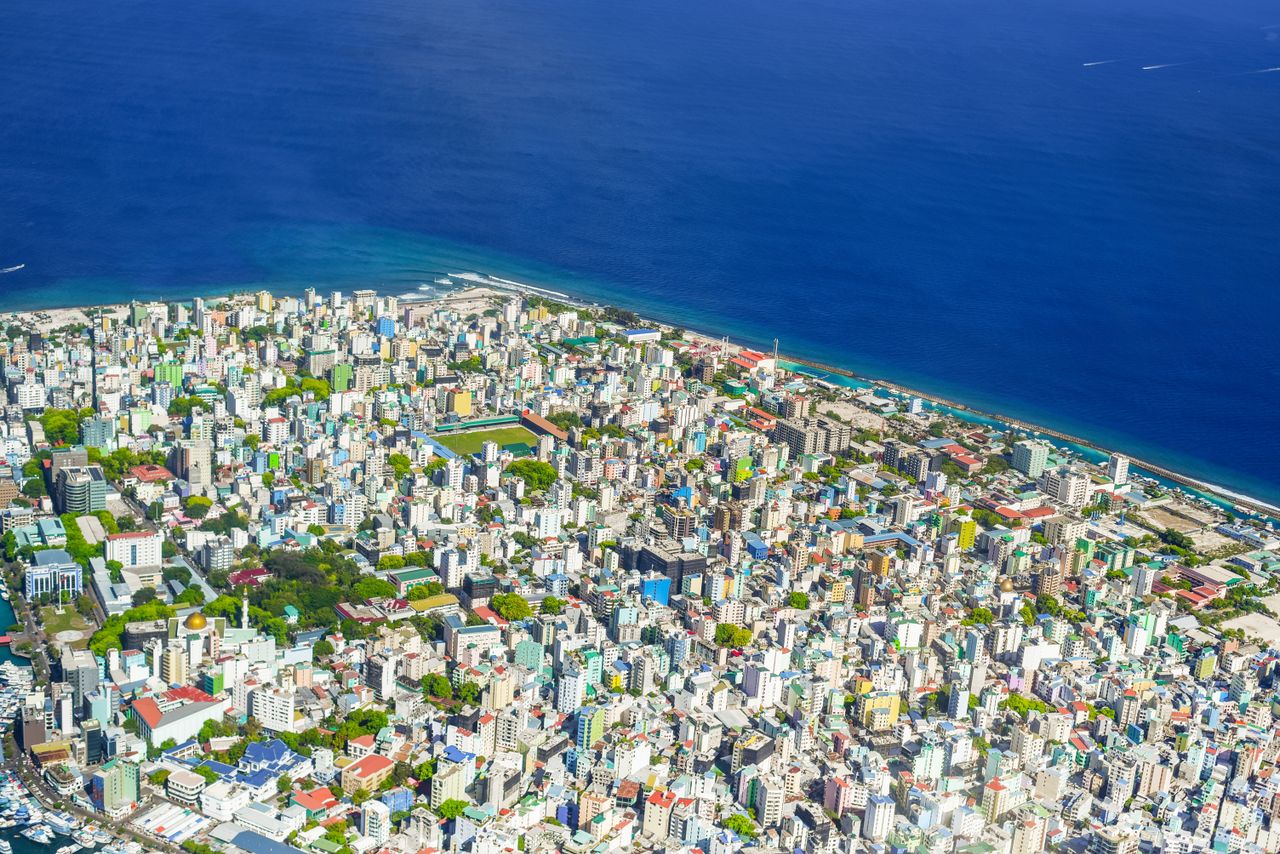
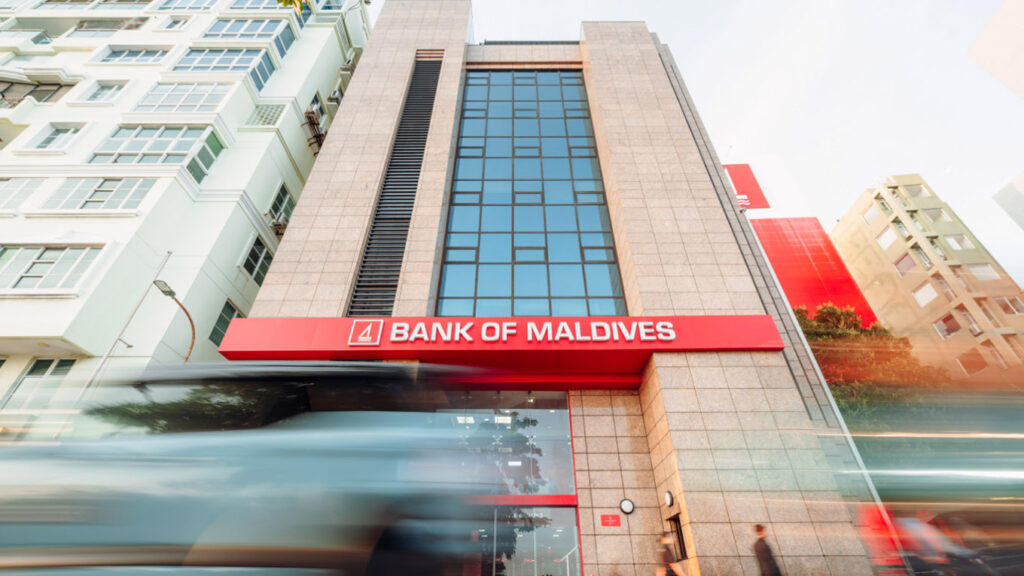
The controversy began with reports that the Bank of Maldives (BML), the island nation’s largest financial institution, had started returning payments associated with Russian tourists on October 18, 2026.
According to the Russian Union of Travel Industry (RST), tour operators encountered difficulties when transferring money to pay for hotel reservations. Some payments were reportedly returned even when the money came from foreign legal entities acting as intermediaries rather than directly from Russian companies.
The scale of the disruption is significant for an industry that depends heavily on advance payments. The Moscow Times reported that delayed or returned transactions were estimated to total approximately $2 million.
Russian travel companies say the situation has created additional banking costs and uncertainty over whether hotels will receive payment before guests arrive.
The RST appealed to Russia’s ambassador responsible for Sri Lanka and the Maldives, as well as a senior official at the Russian Ministry of Economic Development, requesting consultations with Maldivian authorities.
Artur Muradyan, an RST board member, said travel industry participants needed clarity about the reasons behind the payment problems and how hotel services could be paid for reliably.
Dmitry Arutyunov, an executive at Russian tour operator ART-TOUR, described the financial consequences. Companies were reportedly paying repeated transaction fees while hotel invoices remained unsettled. In some cases, tourists arriving at their resorts were allegedly asked to pay again or risk being denied accommodation.
These reports have raised concerns about the reliability of travel payments between Russia and the Maldives, particularly during the busy winter holiday season.
However, an important development followed the initial reports: the Bank of Maldives publicly rejected claims that it had introduced a general restriction on Russia-related payments.
In a statement on November 9, BML spokesperson Mohamed Saeed said the bank had not changed its arrangements for transactions involving Russia. He explained that international correspondent banks process foreign-currency transactions, particularly those involving US dollars, and may independently reject payments under their own compliance policies.
This means the reported payment failures and the bank’s official explanation are not necessarily mutually exclusive. Individual transactions may be returned even when the bank has not introduced a blanket prohibition. The precise causes of the affected payments remain a central question.
Why Russia Is Such an Important Market for the Maldives
The payment dispute matters because Russian travellers represent one of the Maldives’ largest international tourism markets.
The Maldives is an archipelago in the Indian Ocean, southwest of Sri Lanka and India. Its tourism industry is built around luxury resorts, private island accommodation, diving, snorkelling, water sports and beach holidays.
Russia has become an increasingly important source of visitors.
According to Maldives tourism statistics, the country welcomed 278,761 Russian visitors in 2025, an increase of approximately 23.8% compared with 2024.
Russian visitors also remained the Maldives’ second-largest source market in 2026, behind China.
By early September 2026, the official tourism sector had recorded more than 209,000 arrivals from Russia, representing approximately 14.6% of total arrivals. The Russian market continued to grow during the year, although the pace varied between months.
For January through October 2026, The Moscow Times reported approximately 258,100 Russian arrivals, representing 14.3% of total foreign visitors.
These figures demonstrate why the payment dispute has attracted attention from both Russian travel companies and Maldivian tourism businesses.
Russia is not simply a small supplementary market. It supplies a substantial number of guests to resorts, guesthouses, hotels and other tourism operators.
Why Russian tourists are attractive to Maldivian resorts
Russian visitors are particularly important to the Maldives’ premium tourism segment.
The average package booking price reported by The Moscow Times was approximately 585,600 rubles, equivalent to around $7,000 at the exchange rate used in its report.
Although this is an industry-reported average rather than a price paid by every traveller, it illustrates the commercial importance of the market.
Many Russian visitors choose higher-end accommodation, all-inclusive packages, private villas and extended stays.
For resort operators, reliable payments from international travel agencies are essential. Hotels often depend on deposits and advance payments to manage reservations, staffing, food supplies, transport arrangements and other operating expenses.
A payment failure can therefore create problems beyond the immediate hotel bill.
The Banking Complication: Why Can Payments Be Rejected?
To understand the dispute, it is important to distinguish between a bank refusing a transaction and a payment being rejected somewhere in the international banking network.
International payments rarely move directly from one bank to another without intermediaries.
When a Russian travel company sends money to a Maldivian hotel, the transaction may involve several institutions:
- The Russian travel agency or its payment provider initiates the transfer.
- The sending bank processes the payment instruction.
- One or more correspondent banks may handle the international currency transfer.
- The receiving bank in the Maldives processes the incoming funds.
- The hotel or accommodation provider receives the payment.
A problem at any stage can delay or prevent the money from reaching its destination.
What is a correspondent bank?
A correspondent bank is a financial institution that provides services to another bank, allowing it to conduct transactions in currencies or markets where it does not have direct access.
For example, a Maldivian bank may use an overseas correspondent bank to settle US-dollar transfers.
The correspondent institution has its own compliance responsibilities. It may examine the sending bank, receiving bank, companies involved, beneficial owners and purpose of the payment.
If a transaction raises concerns under its sanctions or risk policies, it may be rejected or returned.
The European Commission’s guidance on correspondent banking and sanctions compliance explains that these relationships require enhanced due diligence because they can create risks involving indirect payments and attempts to circumvent restrictions.
This helps explain the Bank of Maldives’ November 9 statement.
BML said international correspondent banks retain discretion over foreign-currency transactions and that the Maldivian institution must comply with their decisions.
Consequently, a Russian travel agency might experience a failed transfer even if the receiving bank has not adopted a new blanket policy against Russian customers.
Why the US dollar matters
The US dollar is one of the world’s most important currencies for international tourism and hotel transactions.
Many resorts, airlines, travel agencies and international suppliers use dollars for pricing and settlement.
However, dollar payments often depend on banks with access to the US financial system. Those institutions must comply with applicable regulations and sanctions requirements.
A transaction involving a Russian company, a Russian bank or a person subject to restrictions may receive additional scrutiny.
Even when a transaction is legally permissible, financial institutions may apply internal risk controls that result in delays or refusals.
This is one reason why international payment problems can affect ordinary commercial activity without necessarily representing a new government decision to prohibit tourism.
How Western Sanctions Changed Russia’s International Payment System
The Maldives payment dispute cannot be fully understood without considering the wider changes to Russia’s financial system since 2022.
Following Russia’s full-scale invasion of Ukraine in February 2022, Western governments introduced extensive financial sanctions. International payment companies and banks also changed their operations involving Russia.
Visa and Mastercard suspended Russian operations
In March 2022, Visa and Mastercard announced that they would suspend their operations in Russia.
As a result, cards issued by Russian banks using those networks stopped working for international transactions, even though domestic transactions could continue through Russia’s national payment infrastructure.
This created a major inconvenience for Russians travelling abroad.
A Russian-issued Visa or Mastercard could continue functioning inside Russia but could not be relied upon for ordinary overseas purchases.
The Bank of Russia advised travellers to consider alternative payment arrangements when travelling internationally.
Restrictions on Russian banks
International sanctions have also affected the ability of certain Russian financial institutions to conduct transactions through the global banking system.
Some Russian banks have been excluded from SWIFT, the financial messaging network used by banks to exchange payment instructions.
SWIFT itself does not transfer money. Instead, it provides a secure communication system that helps financial institutions coordinate international payments.
When a bank loses access to important international banking relationships, transferring funds across borders becomes more complicated.
The European Union has also imposed transaction restrictions on numerous Russian financial institutions.
These measures do not mean that every payment involving a Russian citizen is automatically illegal. Sanctions generally apply to specified institutions, individuals, entities and activities, depending on the relevant jurisdiction and restrictions.
Nevertheless, banks must assess whether a transaction involves prohibited parties or activities.
Why third-country transactions can also face scrutiny
The problem becomes more complicated when payments involve companies outside Russia.
A Russian tour operator might use an intermediary registered in another country to pay a Maldivian resort.
Although the intermediary is not Russian, the transaction may still involve Russian customers, ownership, funding or commercial activity.
Banks may therefore examine the ultimate beneficial owners and the underlying purpose of the payment rather than simply looking at the country from which the money originates.
This appears particularly relevant to the current dispute, because the RST reported that some payments were rejected even when foreign legal entities were involved.
It does not establish that every intermediary payment was prohibited or that all such transactions are being rejected. It does show why the identity of the sender alone may not be enough to determine whether a transfer will succeed.
What the Bank of Maldives Says: A Crucial Difference in the Reporting
One of the most important developments in this story is the conflicting information surrounding BML’s position.
Initial reports cited Russian media coverage indicating that the bank had restricted transactions associated with Russia. The Moscow Times reported that payments had been returned from October 18 and that the Russian travel industry was seeking government intervention.
Some reports also quoted information attributed to the bank suggesting that Russia-related transfers were restricted.
However, on November 9, BML spokesperson Mohamed Saeed issued a public clarification.
He said the bank had not suspended transfers to or from Russia and had not introduced a specific policy prohibiting transactions originating from or connected with the country.
Instead, BML explained that foreign-currency transfers, particularly US-dollar payments, depend on international correspondent banks. Those institutions apply their own compliance requirements and may reject transactions involving parties or beneficial owners that do not meet their policies.
The bank also expressed concern that inaccurate reporting could damage the Maldives’ tourism industry and wider economy.
This clarification deserves particular attention because it changes how the dispute should be understood.
There are two separate questions:
- Are Russian-related hotel payments being returned? Russian travel industry representatives say that some are.
- Has BML introduced a general ban on Russian payments? BML says it has not.
Both statements can be true at the same time.
The unresolved issue is why specific transfers are being rejected, which correspondent banks are involved, what compliance criteria are being applied and whether the affected travel companies can use reliable alternative settlement arrangements.
Until these questions are answered, it would be premature to describe the situation as a confirmed blanket ban on Russian tourists or all Russian-related payments.
Russian Tour Operators Face Financial and Operational Risks
For travel companies, the most immediate problem is uncertainty.
Tour operators commonly arrange accommodation well before their customers arrive. They may purchase rooms in advance, negotiate discounted rates with resorts or make deposits under contractual agreements.
When payments are returned, these arrangements become difficult to manage.
Repeated transaction fees
Every failed international transfer can create additional expenses.
Depending on the banks and payment providers involved, a company may lose money through transfer charges, currency conversion costs, intermediary fees and administrative expenses.
If a payment is returned and then sent again through another route, the company may incur additional costs without receiving any corresponding service.
These expenses can reduce the profitability of travel packages.
Hotels may refuse to recognise unpaid reservations
Hotels and resorts need confirmation that bookings have been paid for according to their agreements.
If a payment does not arrive, the hotel may treat the reservation as unpaid.
This creates a potentially uncomfortable situation for travellers who have already paid their Russian travel agency.
A customer may reasonably believe that the holiday is fully paid for, while the resort’s accounting department sees an outstanding invoice.
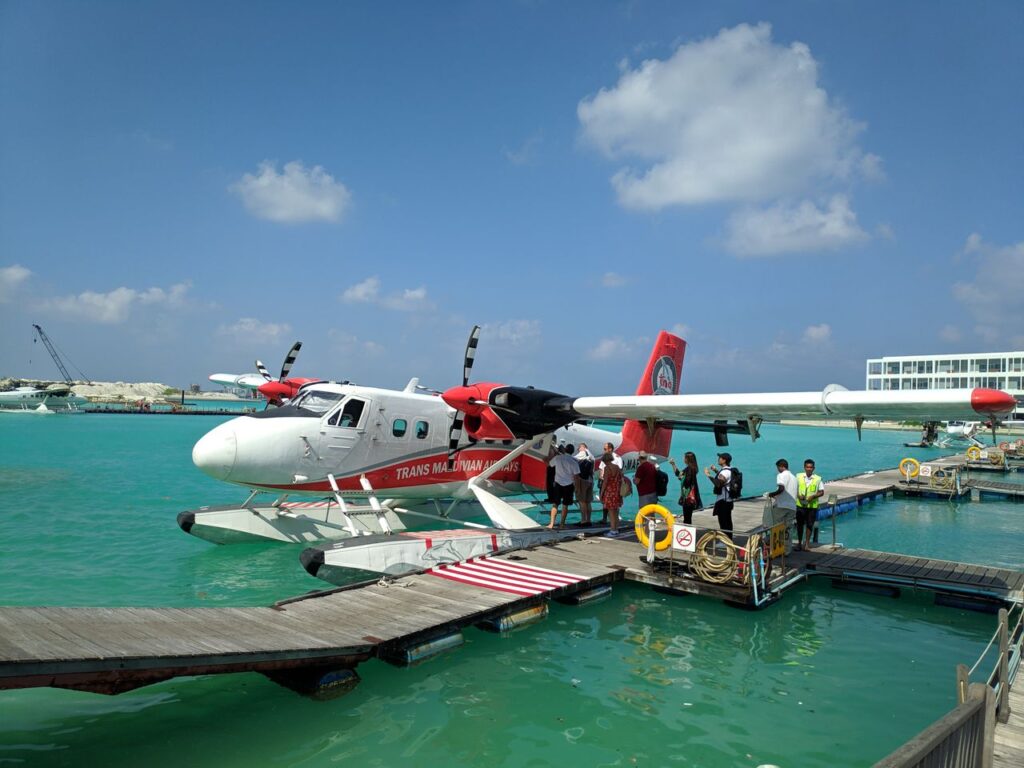
The RST has reported cases in which tourists were asked to pay again when they arrived or faced the possibility of being denied accommodation.
This is particularly concerning for families and travellers who may not have thousands of dollars available for an unexpected second payment.
Refund and legal disputes
Payment failures can also create disputes between travel agencies, customers and accommodation providers.
Questions may arise over who is responsible for the failed transfer, whether a booking remains valid, how quickly refunds must be issued and whether the customer can recover additional expenses.
Travel contracts should ideally specify what happens when an international payment is delayed or rejected.
Without clear arrangements, a banking issue can quickly become a consumer-protection problem.
Marketing and investment decisions
Russian tour operators have also warned that continued payment uncertainty could force them to reconsider their investments and promotional activities in the Maldives.
Travel companies spend money developing holiday packages, negotiating hotel contracts, organising advertising campaigns and building relationships with local suppliers.
If reliable settlement becomes difficult, those investments may no longer make commercial sense.
The result could be fewer packages, reduced marketing expenditure and a gradual shift of customers towards competing destinations.
Why the Maldives Cannot Afford to Lose Russian Tourists
Tourism is not simply one industry among many in the Maldives. It is a central pillar of the country’s economy.
The archipelago has limited land, a relatively small domestic market and significant dependence on international visitor spending.
Tourism supports accommodation, restaurants, airlines, airport operations, boat transfers, food suppliers, construction, retail and a wide range of other services.
According to Maldives national accounts, tourism generated approximately 24.2 billion Maldivian rufiyaa in nominal gross value added in 2025. The World Bank has also described tourism as contributing approximately one-fifth of the country’s GDP.
A major source of resort revenue
Russian visitors are valuable to the Maldives because many travel to the country specifically for resort holidays.
The resort model is built around substantial spending on accommodation, food, drinks, transport and recreational activities.
A single guest may generate revenue across several businesses, including the airline carrying them to the Maldives, the resort providing accommodation and the local operators arranging excursions.
When an important source market experiences payment problems, the consequences can spread through this network.
The danger of relying too heavily on a few markets
The Maldives’ tourism industry benefits from visitors arriving from China, Russia, the United Kingdom, Italy, Germany, India and other countries.
However, dependence on a small number of major markets creates risks.
Changes in airline capacity, economic conditions, political relationships, currency movements or payment restrictions can affect visitor numbers.
Diversification is therefore important.
The Maldives has been working to develop tourism links with Russia and other Commonwealth of Independent States markets, including Kazakhstan and neighbouring countries.
In September 2026, Maldivian tourism organisations promoted the destination through a roadshow in Moscow, St Petersburg and Almaty.
That marketing activity illustrates the importance the industry places on maintaining Russian-speaking visitor markets.
If payment problems continue, the country risks undermining some of the commercial relationships it has been actively developing.
Could the Dispute Affect the Maldives’ Winter Holiday Season?
Timing is an important part of this story.
The Maldives is particularly attractive during the Northern Hemisphere winter, when travellers from Russia and Europe seek warm weather and beach holidays.
December, January and February are traditionally important travel months, although the Maldives welcomes visitors throughout the year.
For Russian travellers, the destination offers an escape from cold winter conditions, with tropical temperatures, warm seas and a large selection of luxury resorts.
The payment controversy emerged shortly before this important travel period.
If the problem is resolved quickly, its impact may remain limited to a number of affected tour operators and transactions.
If it continues, however, the consequences could become more serious.
Travel companies may become reluctant to accept new bookings if they cannot guarantee that hotels will receive payment.
Some customers may choose destinations where their travel agencies have established payment arrangements.
Resorts could also face uncertainty over expected revenue, particularly if they have committed rooms to tour operators through advance contracts.
However, it is important not to overstate the immediate impact. The available reporting does not establish that Russian arrivals have stopped or that the Maldives has become inaccessible to Russian tourists.
The dispute concerns payment settlement, not a general prohibition on visiting the country.
What Are the Possible Solutions?
Resolving the dispute will require cooperation between financial institutions, tourism businesses and government authorities.
There is no single solution that can guarantee every international transfer will succeed, particularly when correspondent banks operate under their own compliance obligations.
Nevertheless, several practical measures could reduce the disruption.
1. Direct consultations between Russia and the Maldives
The RST has already asked Russian officials and diplomatic representatives to arrange consultations with Maldivian authorities.
Such discussions could help establish whether the problem is caused by particular sending banks, intermediary institutions, transaction structures or compliance requirements.
The objective should be to identify lawful and reliable payment channels for legitimate tourism services.
2. Clear guidance from the Bank of Maldives
BML’s public clarification is an important first step, but the industry needs more detailed operational information.
Travel companies would benefit from understanding which types of transactions are being returned, what documentation may be required and whether particular correspondent-bank routes are unavailable.
Banks cannot necessarily disclose confidential compliance information about individual transactions. Nevertheless, general guidance could reduce uncertainty and prevent unnecessary failed transfers.
3. Stronger payment arrangements between hotels and tour operators
Hotels and travel agencies could review their payment agreements to clarify responsibilities when international transfers fail.
Possible improvements include earlier payment deadlines, more transparent confirmation procedures and agreed contingency arrangements.
Resorts could also establish clearer procedures for guests whose bookings have been paid for through a recognised travel company but whose hotel payment is still being processed.
4. More payment options
Tour operators may investigate alternative payment providers, currencies or banking arrangements where legally permitted.
However, alternative channels must not be used to conceal the identity of parties or circumvent sanctions.
Any solution needs to comply with applicable financial regulations and anti-money-laundering requirements.
5. Better protection for travellers
Customers should receive clear confirmation of whether their accommodation has actually been paid for.
Travel agencies should also provide practical assistance if a payment dispute arises, rather than leaving guests to negotiate directly with hotels after arrival.
Transparent booking documents, receipts and emergency contact arrangements could reduce the risk of travellers being caught between financial institutions and accommodation providers.
What This Means for Russian Travellers Planning a Maldives Holiday
For individual travellers, the most important point is that the reported banking difficulties do not automatically mean that Russian tourists cannot visit the Maldives.
The Maldives remains a major international tourism destination, and the payment dispute does not amount to a general travel ban.
However, travellers should take additional care when arranging accommodation through Russian tour operators.
Before departure, customers should:
- Obtain written confirmation that their hotel or resort reservation is valid.
- Ask the travel agency whether the accommodation payment has been successfully received by the hotel.
- Keep copies of booking confirmations, payment receipts and travel contracts.
- Confirm who is responsible if a bank transfer is delayed or returned.
- Check the resort’s cancellation and refund conditions.
- Carry a suitable alternative payment method for emergencies, taking account of the restrictions affecting Russian-issued cards.
- Avoid making a second payment without first obtaining written clarification and documentation.
Travellers should also remember that a bank transfer, a card payment and a hotel reservation are separate transactions. A successful payment to a travel agency does not necessarily prove that the hotel has received its money.
The safest approach is to confirm the status of the reservation directly through the travel provider and, where appropriate, the accommodation provider before travelling.
Could Other Countries Face Similar Tourism Payment Problems?
The Maldives dispute illustrates a wider vulnerability in international tourism.
Modern travel depends on financial networks connecting customers, travel agencies, banks, airlines, hotels and payment processors across different countries.
When those networks are affected by sanctions, regulatory changes, compliance concerns or banking relationships, tourism businesses can experience disruption even when flights continue operating and borders remain open.
This is particularly relevant to destinations that depend on international visitors from countries facing financial restrictions.
Hotels may want to welcome customers, and travellers may have sufficient money to pay for their holidays, but the institutions responsible for moving the funds may be unable or unwilling to process the transactions.
The issue is not limited to Russia. International tourism businesses must increasingly consider payment-system reliability as part of their commercial risk management.
The lesson for destinations is clear: attracting visitors is only one part of tourism development. Countries must also maintain reliable, transparent and legally compliant systems for receiving international payments.
The Bigger Picture: Tourism Depends on Financial Connectivity
The Maldives has spent years building its reputation as one of the world’s leading luxury holiday destinations. Its relationship with the Russian travel market is an important part of that success.
The current payment dispute demonstrates how vulnerable tourism can become when financial connectivity breaks down.
For Russian travel agencies, the immediate priority is to ensure that hotel payments are completed without repeated fees, delays or uncertainty.
For Maldivian tourism businesses, the priority is to protect a valuable source of visitors and prevent financial complications from damaging customer confidence.
For the Bank of Maldives, the challenge is to explain how international compliance requirements affect individual transactions while maintaining reliable banking services.
And for governments, the issue highlights the need for practical diplomatic engagement that respects financial regulations while supporting legitimate commercial activity.
The bank’s November 9 clarification has added an important qualification to the original reports: there is no confirmed blanket suspension of Russia-related payments under BML’s stated policy. Yet the payment returns reported by Russian travel companies remain a real commercial concern that requires investigation and resolution.
Ultimately, the Maldives does not simply need more tourists. It needs a dependable system that allows legitimate visitors, travel companies and hotels to complete transactions with confidence.
In an increasingly interconnected tourism economy, a beautiful beach may attract the holidaymaker—but reliable banking is what helps make the holiday possible.
Frequently Asked Questions (FAQs)
1. Why is the Bank of Maldives reportedly rejecting payments linked to Russian tourists?
Russian travel industry representatives say that payments for hotel reservations began being returned on October 18, 2026. The Bank of Maldives subsequently rejected claims that it had introduced a blanket restriction on Russian-related transactions. It explained that international correspondent banks processing foreign-currency transfers may independently reject transactions under their compliance policies. The precise reasons for the affected payments have not been publicly established.
2. Can Russian tourists still travel to the Maldives?
Yes. The reported payment difficulties do not amount to a general travel ban on Russian citizens. The Maldives continues to receive Russian visitors, and Russia remains one of its largest tourism markets. However, travellers should confirm that their accommodation is properly paid for and that their reservations are secure before departure.
3. How much money has reportedly been affected by the payment problem?
The Moscow Times reported that delayed or returned payments associated with Russian tourists were estimated at approximately $2 million. This figure was reported by the Russian travel industry and should be understood as an estimate, not an independently audited total.
4. Why are international payments involving Russia more complicated since 2022?
Following Russia’s invasion of Ukraine in 2022, Western governments imposed extensive financial sanctions, while Visa and Mastercard suspended their Russian operations. Some Russian banks were also restricted from international banking networks, including SWIFT. These developments have made cross-border transactions more complicated. Banks and correspondent institutions must screen payments for sanctions exposure, ownership and other compliance risks.
5. What should Russian travellers do if their Maldives hotel payment is rejected?
Travellers should contact their tour operator immediately, request written confirmation of the booking and ask whether the hotel has actually received payment. They should retain receipts, contracts and booking documents, and clarify who is responsible for resolving any failed transfer. If asked to pay again at the resort, they should request written evidence of the outstanding balance and contact their travel agency before making another payment.
Sources The Moscow Times