
A Caribbean Island Finding Its Own Identity
For years, St. Vincent and the Grenadines has been associated with secluded beaches, luxury sailing holidays and exclusive private islands such as Mustique. But the main island of St. Vincent is increasingly attracting attention for a different reason: it offers a combination of authentic Caribbean culture, distinctive local cuisine, natural landscapes and growing luxury accommodation.
The country’s tourism industry is entering an important period of expansion. International hotel brands are investing in new properties, private-pool villas are attracting travellers seeking privacy, and restaurants are placing traditional Vincentian food at the centre of the visitor experience.
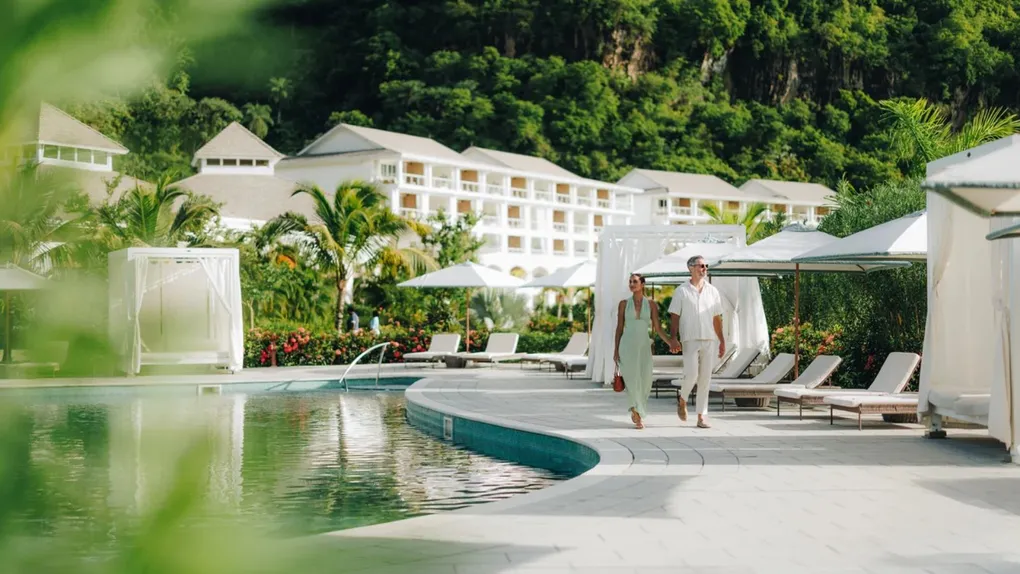
One of the most visible developments is the expansion of Sandals Saint Vincent and the Grenadines in Buccament Bay. On November 1, 2026, the resort introduced 20 new private-pool villas, adding another layer of luxury to a property that opened in March 2024.
The investment comes as the destination records stronger overnight tourism. St. Vincent and the Grenadines welcomed a record 120,599 stayover visitors in 2025, according to figures reported by the country’s tourism authorities. Stayover arrivals continued growing in 2026, increasing by 8.4% during January–August compared with the same period in 2025.
The story is about more than new hotel rooms. It reflects a broader effort to position St. Vincent as a destination in its own right rather than simply a gateway to the Grenadines.
For travellers, that means opportunities to discover a Caribbean island where luxury hospitality meets local food, Indigenous and African heritage, rainforest adventures and a more intimate island atmosphere.
1. St. Vincent and the Grenadines Is Experiencing a Tourism Boom
St. Vincent and the Grenadines is a small Eastern Caribbean nation consisting of the main island of St. Vincent and a chain of smaller islands and cays.
Despite its relatively small population of approximately 100,000 people, the country has been attracting increasing numbers of international travellers.
In 2025, stayover arrivals reached 120,599, representing a 17.4% increase over the 102,766 recorded in 2024.
The momentum continued in 2026.
According to the St. Vincent and the Grenadines Tourism Authority, the country welcomed 86,647 stayover visitors between January and August 2026, an increase of 8.4% compared with the corresponding period in 2025.
August was particularly encouraging. The country recorded 11,862 visitor arrivals during the month, an increase of 13.2% year on year. Stayover visitors reached 9,712, while yacht arrivals increased by 20.3% to 2,115.
These figures suggest that demand is expanding across several tourism segments, including traditional overnight holidays and sailing-based travel.
However, it is important to distinguish between visitor categories. Stayover arrivals, cruise passengers, same-day visitors and yacht arrivals represent different types of tourism activity and have different economic impacts.
For a small island economy, overnight visitors are especially valuable because they generally spend money on accommodation, restaurants, transport, tours and other services over several days.
The country’s challenge now is to turn rising arrivals into consistent economic benefits for local communities.
2. Sandals Saint Vincent Expands Its Luxury Accommodation
One of the biggest developments in St. Vincent’s tourism industry is the expansion of Sandals Saint Vincent and the Grenadines.
The resort opened in March 2024 in Buccament Bay, introducing a major international all-inclusive hospitality brand to the island.
Its original development included 301 rooms and suites across approximately 50 acres.
The property was designed to provide an upscale Caribbean holiday experience, combining beachfront accommodation, swimming pools, restaurants, bars and water-based activities.
In November 2026, the resort added 20 Rondoval Butler Villas, each featuring a private pool.
The new accommodation represents its second expansion since opening, following the introduction of Butler Villa Suites with plunge pools.
What makes the new private villas attractive?
The new villas target travellers who want the convenience of an all-inclusive resort without sacrificing personal space.
The accommodation ranges from approximately 1,000 to more than 2,000 square feet.
The 20 new units include:
- 17 Rondoval Butler Villas.
- Three Rondoval Butler Sky Villas.
- Private swimming pools.
- Outdoor soaking tubs.
- Butler service.
- In-room dining.
- Stocked bars.
- Spacious bathrooms and luxury interiors.
The Sky Villas also feature private rooftop areas, soaking tubs and telescope-guided stargazing.
This type of accommodation appeals particularly to couples, honeymooners and affluent travellers who prioritise privacy.
The expansion also demonstrates a wider trend in Caribbean hospitality: luxury is increasingly being defined by space, exclusivity and personalised experiences rather than simply traditional hotel amenities.
Why private villas are becoming more important
Private-pool villas give resorts an opportunity to attract higher-spending customers.
They can also appeal to travellers who want to celebrate special occasions, enjoy romantic holidays or spend more time within their accommodation.
For destinations such as St. Vincent, this creates an opportunity to compete in the premium Caribbean market without relying exclusively on the enormous hotel developments found in more established tourism centres.
However, the long-term success of this strategy depends on maintaining service quality, protecting the surrounding environment and ensuring that local businesses benefit from the additional visitor spending.
3. Local Food Is Becoming a Major Tourism Attraction
Luxury accommodation may attract visitors to St. Vincent, but food is increasingly becoming part of the reason they choose to stay.
One of the most interesting examples is Buccan, the communal-style restaurant at Sandals Saint Vincent.
Its concept draws inspiration from traditional Vincentian river cooking, where people gather near rivers and cook food over open fires.
The restaurant features an open kitchen, seasonal dishes and shared platters prepared using traditional cooking techniques.
Guests sit together and share meals, creating an experience that is different from the conventional hotel restaurant.
The concept is particularly interesting because it transforms food into a cultural activity.
Visitors are not simply ordering dinner. They are being introduced to a tradition connected to local social life and heritage.
Garifuna heritage and Vincentian cuisine
The food served at Buccan draws on the culinary traditions of the Garifuna people, whose heritage reflects Indigenous Caribbean and African influences.
The Garifuna have a distinctive history, language, music and cultural identity across parts of the Caribbean and Central America.
Food is an important part of that heritage.
Traditional ingredients and cooking methods provide an opportunity for visitors to understand how Caribbean communities developed their food cultures through Indigenous knowledge, African influences and interactions with other peoples.
This gives St. Vincent an opportunity to promote cultural tourism alongside beach holidays.
Beyond the resort restaurant
Vincentian food also appears in the resort’s wider dining programme.
Other experiences include Caribbean-inspired breakfast options, local dishes, seafood and ingredients associated with the islands.
The resort’s Three Jewels rum bar celebrates the country’s 32 islands and cays through a selection of 32 rums.
The Beach House shop also stocks products associated with local producers, including cocoa, rum and Grenadine sea salt.
A weekly market allows local artisans to sell products directly to guests.
These activities help introduce visitors to the island’s producers and creative economy.
For tourism destinations, this kind of connection is important. It gives travellers reasons to explore local culture rather than spending their entire holiday inside an international hotel brand.
4. Can Tourism Growth Benefit Local Farmers and Fishermen?
One of the most important questions surrounding St. Vincent’s resort expansion is whether local producers will receive a meaningful share of the economic benefits.
Large resorts purchase substantial quantities of food and other supplies.
This creates an opportunity for farmers, fishermen, food processors and agricultural businesses.
Before Sandals opened, the government highlighted the possibility that the resort could create demand for approximately 700,000 pounds of local produce, including pineapples and seafood.
However, supplying a large international resort is not straightforward.
Hotels need consistent quantities of ingredients, reliable delivery schedules, food-safety standards and predictable quality.
Small farms and fishing businesses may struggle to meet those requirements individually.
Building stronger links between hotels and agriculture
One approach is to create local agricultural aggregators.
These organisations help connect smaller producers with large buyers by coordinating supply, collecting produce and ensuring that delivery requirements are met.
This can reduce the administrative and logistical burden on individual farmers.
It also gives hotels a more dependable source of local ingredients.
The Sandals development agreement for the planned Beaches property includes commitments to purchase local produce and seafood, subject to availability and quality.
However, the amount of produce the resort actually purchases locally is not publicly established in the reporting on the expansion.
This distinction is important.
A hotel can promote local food on its menus without necessarily sourcing most of its ingredients from local farmers.
For St. Vincent, the next step should be to develop measurable partnerships between tourism operators and local agricultural businesses.
Why this matters for the wider economy
When hotels purchase food locally, the economic benefits can spread beyond the hospitality sector.
Farmers receive additional customers, fishermen gain new markets, food processors can expand production, and transport companies may receive more business.
More importantly, local food sourcing can help preserve traditional agricultural knowledge and strengthen the country’s food security.
Tourism should not simply bring international money into a hotel. It should create opportunities throughout the domestic economy.
5. The Planned Beaches Resort Could Transform Mount Wynne
Sandals’ expansion plans extend beyond Buccament Bay.
The company has also announced plans for a family-focused Beaches resort at Mount Wynne.
The development agreement was signed in October 2025 with the government of then-Prime Minister Ralph Gonsalves.
The project is expected to introduce a different type of accommodation to the island.
While Sandals focuses on adults-only holidays, Beaches is designed primarily for family travel.
This could help St. Vincent attract a broader range of visitors, including families with children and multigenerational holiday groups.
Employment and investment opportunities
Sandals executive chairman Adam Stewart previously indicated that the planned resort could employ approximately 2,000 Vincentians at full capacity.
If achieved, that would represent a significant employment opportunity for a country with a population of around 100,000.
Potential employment areas include:
- Hotel operations.
- Food and beverage services.
- Housekeeping.
- Maintenance.
- Landscaping.
- Transportation.
- Entertainment.
- Administration.
- Security.
- Recreation and childcare.
The project could also create indirect opportunities for local suppliers and service providers.
However, the construction timeline has shifted.
Large-scale construction is now expected around 2029 rather than beginning on the earlier anticipated schedule.
This means the project should be viewed as a longer-term development opportunity rather than an immediate source of new hotel capacity.
The government and local communities will also need to consider environmental protection, infrastructure requirements and the distribution of economic benefits.
6. St. Vincent Is More Than a Luxury Resort Destination
One of the biggest opportunities for St. Vincent is its ability to offer experiences that differ from the more familiar Caribbean holiday formula.
The main island has mountains, rainforests, volcanic landscapes, waterfalls, historic communities and cultural attractions.
These features provide opportunities for adventure tourism, nature tourism and heritage travel.
La Soufrière Volcano
La Soufrière is one of the island’s most distinctive natural landmarks.
The active volcano dominates the northern part of St. Vincent and offers dramatic scenery.
Its surroundings include volcanic landscapes, forests and hiking routes.
The volcano last erupted in 2020–2021, causing major disruption and forcing evacuations.
Visitors interested in hiking should use authorised local guides and follow current safety advice, as volcanic conditions and access restrictions can change.
Vermont Nature Trail
The Vermont Nature Trail offers opportunities to explore the island’s tropical rainforest environment.
The area is known for its biodiversity and birdlife, including the endangered St. Vincent parrot, the country’s national bird.
Nature-based excursions can attract travellers interested in wildlife, photography and outdoor activities.
Kingstown
Kingstown is the country’s capital and commercial centre.
It provides a more everyday view of Vincentian life than the island’s luxury resorts.
Visitors can explore historic churches, markets, shops and colonial-era architecture.
The city is also a useful starting point for excursions to other parts of the island.
Dark View Falls
Dark View Falls is one of St. Vincent’s well-known natural attractions.
The waterfalls are surrounded by tropical vegetation and provide opportunities for sightseeing and nature photography.
Local guides can help visitors understand the surrounding environment and the island’s natural history.
Fort Charlotte
Fort Charlotte overlooks Kingstown and the surrounding coastline.
The historic fort offers panoramic views and provides insight into the island’s colonial military history.
These attractions help demonstrate why St. Vincent should be marketed as more than a place to stay at an all-inclusive resort.
7. The Grenadines Offer a Different Kind of Caribbean Holiday
St. Vincent is the main island of the country, but the wider destination includes a chain of smaller islands and cays collectively known as the Grenadines.
These islands provide some of the region’s most attractive sailing, snorkelling and luxury travel experiences.
Bequia
Bequia is known for its relaxed atmosphere, sailing culture and beautiful beaches.
Port Elizabeth is the island’s main settlement and provides access to restaurants, shops and waterfront activities.
The island appeals to travellers who prefer smaller hotels, guesthouses and locally operated businesses.
Mustique
Mustique is internationally recognised for its private villas and exclusive atmosphere.
The island has attracted wealthy travellers and famous personalities seeking privacy.
Its reputation has helped establish the wider Grenadines as a luxury destination.
However, St. Vincent’s tourism strategy offers a different proposition: a more accessible combination of cultural experiences, nature and luxury accommodation.
Canouan
Canouan is known for upscale resorts, beaches and sailing.
It appeals to travellers looking for premium accommodation and relatively secluded surroundings.
Tobago Cays Marine Park
The Tobago Cays are among the country’s most celebrated natural attractions.
The protected marine area is known for clear water, coral reefs, sea turtles and sailing opportunities.
Visitors can enjoy snorkelling, swimming and boat excursions.
The marine park is especially important because it demonstrates how environmental protection can become part of a destination’s tourism appeal.
Its long-term attractiveness depends on responsible boating, reef protection, waste management and careful visitor behaviour.
8. Argyle International Airport Has Changed St. Vincent’s Tourism Potential
Transportation has historically been one of the challenges facing St. Vincent.
The opening of Argyle International Airport in 2017 significantly improved the country’s ability to receive international visitors.
The airport replaced the smaller E. T. Joshua Airport, which had limitations for larger aircraft and long-distance international services.
Argyle International Airport has helped improve connections with markets in North America, the United Kingdom and the wider Caribbean.
Air connectivity is essential for a destination seeking to expand its overnight tourism industry.
Even an attractive island can struggle to attract visitors if flights are expensive, inconvenient or unreliable.
Why airline connections matter
Direct flights can reduce travel time and make holidays easier to plan.
They also help hotels attract international customers through tour operators and travel agencies.
St. Vincent’s growing accommodation sector will need continued investment in airline partnerships and regional connections.
For travellers arriving at Argyle International Airport, transfers to Buccament Bay take approximately 50 minutes by road, depending on traffic and conditions.
Visitors planning to explore the Grenadines should also consider ferry services, water taxis, sailing excursions and inter-island flights.
The logistics of island-hopping can be part of the experience, but they require advance planning.
9. Tourism Growth Is Creating New Opportunities for Local Employment
Tourism is a major contributor to St. Vincent and the Grenadines’ economy.
The sector supports employment in accommodation, food services, retail, transportation, entertainment and recreation.
The arrival of international hotel brands can create jobs directly through resort operations.
It can also support businesses that supply hotels with food, beverages, furniture, maintenance services and other products.
The World Bank has highlighted tourism’s contribution to employment growth in wholesale and retail trade, accommodation and food services.
These sectors are particularly important because women account for a substantial share of workers in many tourism-related activities.
The importance of training
As the tourism industry grows, local workers will need opportunities to develop new skills.
Important areas include:
- Hospitality management.
- Culinary arts.
- Food safety.
- Customer service.
- Foreign languages.
- Digital marketing.
- Marine tourism.
- Tour guiding.
- Hotel technology.
- Environmental management.
Training can help Vincentians move into supervisory and management positions rather than remaining concentrated in entry-level roles.
This is especially important when international hotel brands expand.
The long-term success of tourism investment should be measured not only by the number of jobs created but also by the quality of employment, wages, career progression and opportunities for local ownership.
10. The Challenges Behind St. Vincent’s Tourism Expansion
Although visitor numbers are increasing, St. Vincent faces several challenges that could affect the long-term sustainability of its tourism industry.
Climate change and natural disasters
The Caribbean is exposed to hurricanes, heavy rainfall, coastal erosion and other natural hazards.
St. Vincent has also experienced major volcanic activity.
The 2021 eruption of La Soufrière disrupted communities and economic activity.
Hurricane Beryl in 2024 caused significant damage across parts of the region, including St. Vincent and the Grenadines.
These events demonstrate how quickly natural disasters can affect tourism infrastructure, transport, agriculture and livelihoods.
Hotels and tourism operators need strong emergency plans, resilient buildings, reliable water and electricity supplies, and insurance arrangements.
Pressure on infrastructure
An increase in visitors places additional demand on roads, utilities, waste collection, water systems and public services.
Small island destinations may have limited capacity to expand infrastructure quickly.
If visitor numbers grow faster than public services, residents and tourists can experience congestion, shortages and declining service quality.
Dependence on imported goods
Luxury resorts often require large quantities of imported food, beverages, furniture, equipment and other supplies.
This can reduce the amount of tourism revenue that remains within the domestic economy.
Strengthening local agriculture and manufacturing can help retain more economic value.
Environmental protection
Coastal development, boat traffic, waste disposal and increased visitor activity can put pressure on sensitive ecosystems.
Coral reefs, beaches and marine habitats are among the destination’s most important tourism assets.
If they are damaged, the country risks undermining the very attractions that bring visitors to its shores.
Sustainable development therefore needs to be built into tourism planning from the beginning.
11. Can St. Vincent Compete With the Caribbean’s Established Tourism Destinations?
St. Vincent operates in a competitive regional market.
Popular Caribbean destinations such as Barbados, Saint Lucia, Antigua and Barbuda, Grenada and the Dominican Republic have established international tourism industries.
They offer extensive hotel capacity, airline connections and recognised holiday brands.
St. Vincent does not necessarily need to compete with all of them on visitor volume.
Instead, it can differentiate itself through a combination of experiences.
Authenticity and cultural identity
St. Vincent can promote its Garifuna heritage, traditional food, music, local markets and historic communities.
These experiences provide something more distinctive than a standard beach holiday.
Luxury without overwhelming scale
Private villas and boutique accommodation can attract high-spending visitors who value privacy.
The country can develop a premium tourism market while maintaining a more intimate destination identity.
Nature and adventure tourism
Rainforests, waterfalls, volcanic landscapes, marine parks and sailing opportunities create a diverse tourism offering.
This can attract visitors interested in outdoor activities and environmental experiences.
A wider range of visitor markets
The country can also develop family holidays, wellness tourism, culinary travel, diving, yachting and cultural events.
Diversification is important because it reduces dependence on any single category of visitor.
12. What the Future of St. Vincent Tourism Could Look Like
The coming years will be important for the country’s tourism development.
The expansion of Sandals Saint Vincent, the planned Beaches resort and improved air connections provide opportunities for growth.
However, the most successful strategy will be one that links international investment with local economic development.
Several priorities deserve attention.
Strengthen local supply chains. Hotels should build long-term purchasing relationships with farmers, fishers and local food producers.
Expand tourism training. Local workers should have access to professional development and management opportunities.
Improve transport infrastructure. Reliable roads, airport services, ferries and inter-island connections are essential for a destination spread across multiple islands.
Protect natural resources. Marine parks, beaches, rainforests and volcanic landscapes need effective conservation and visitor management.
Support locally owned businesses. Restaurants, guesthouses, tour operators, artisans and transport companies should have opportunities to participate in tourism growth.
Measure the economic impact of investment. Employment, local purchasing, tax contributions and community benefits should be assessed alongside visitor numbers and hotel capacity.
The goal should not simply be to attract more tourists. It should be to create a tourism economy that is profitable, resilient and beneficial to the people who live there.
Conclusion: St. Vincent’s Biggest Tourism Asset Is Its Authentic Caribbean Identity
St. Vincent and the Grenadines is entering a new chapter in its tourism development.
The expansion of Sandals Saint Vincent demonstrates growing confidence in the island’s luxury hospitality market. The addition of private-pool villas provides another reason for affluent travellers to consider the destination.
But the country’s appeal extends far beyond resort accommodation.
Its food culture, Garifuna heritage, rainforest landscapes, waterfalls, sailing opportunities and surrounding Grenadine islands provide a distinctive tourism experience.
The growing focus on local cuisine is particularly promising because it creates a connection between hospitality and the country’s cultural identity.
However, the benefits of tourism expansion must reach beyond international hotel brands.
Local farmers, fishermen, workers, transport operators, artisans and small businesses need opportunities to participate in the industry’s growth.
St. Vincent also needs to protect its environment and strengthen its resilience to hurricanes, volcanic activity and climate-related risks.
If it can balance luxury investment with cultural preservation, local economic participation and environmental protection, St. Vincent has the potential to become one of the Caribbean’s most distinctive tourism destinations.
Its future may not depend on becoming the Caribbean’s biggest holiday destination. It may depend on becoming one of its most memorable.
Frequently Asked Questions (FAQs)
1. Is St. Vincent and the Grenadines becoming a popular tourist destination?
Yes. St. Vincent and the Grenadines recorded a record 120,599 stayover visitors in 2025, representing a 17.4% increase over 2024. Stayover arrivals continued rising during the first eight months of 2026, reaching 86,647, an increase of 8.4% year on year. Improved air connectivity, new resorts, luxury accommodation and growing interest in Caribbean cultural experiences are supporting the destination’s tourism development.
2. What is the best time to visit St. Vincent and the Grenadines?
The generally preferred travel period is December through April, when the Caribbean typically experiences drier conditions and more comfortable weather. This is also the peak tourism season, so accommodation and flights can be more expensive. May through November can offer fewer crowds and potentially lower prices, but travellers should consider the Atlantic hurricane season, which runs from June through November.
3. What is Sandals Saint Vincent and the Grenadines known for?
Sandals Saint Vincent and the Grenadines is an adults-only, all-inclusive luxury resort in Buccament Bay. It is known for its beachfront setting, restaurants, swimming pools, water activities, overwater accommodation and private-pool villas. Its November 2026 expansion added 20 Rondoval Butler Villas, including three Sky Villas with private rooftop features.
4. What are the best things to do in St. Vincent?
Visitors can explore La Soufrière volcano, hike through rainforest trails, visit Dark View Falls, discover historic Fort Charlotte and explore Kingstown. Travellers can also experience local food, visit cultural communities, enjoy beaches and take sailing or snorkelling trips to the Grenadines, including Bequia and the Tobago Cays Marine Park. Access to certain natural attractions may depend on current weather and safety conditions.
5. Is St. Vincent and the Grenadines expensive for tourists?
It can be expensive, particularly for travellers choosing luxury resorts, private villas, yacht charters and premium island-hopping experiences. However, the country also offers guesthouses, smaller hotels, local restaurants and independently operated tours that can provide more affordable alternatives. Travellers can manage costs by comparing accommodation options, booking flights early and planning transport between islands in advance.
Sources Seattle Times