
The Caribbean Is More Than a Beautiful Holiday Destination
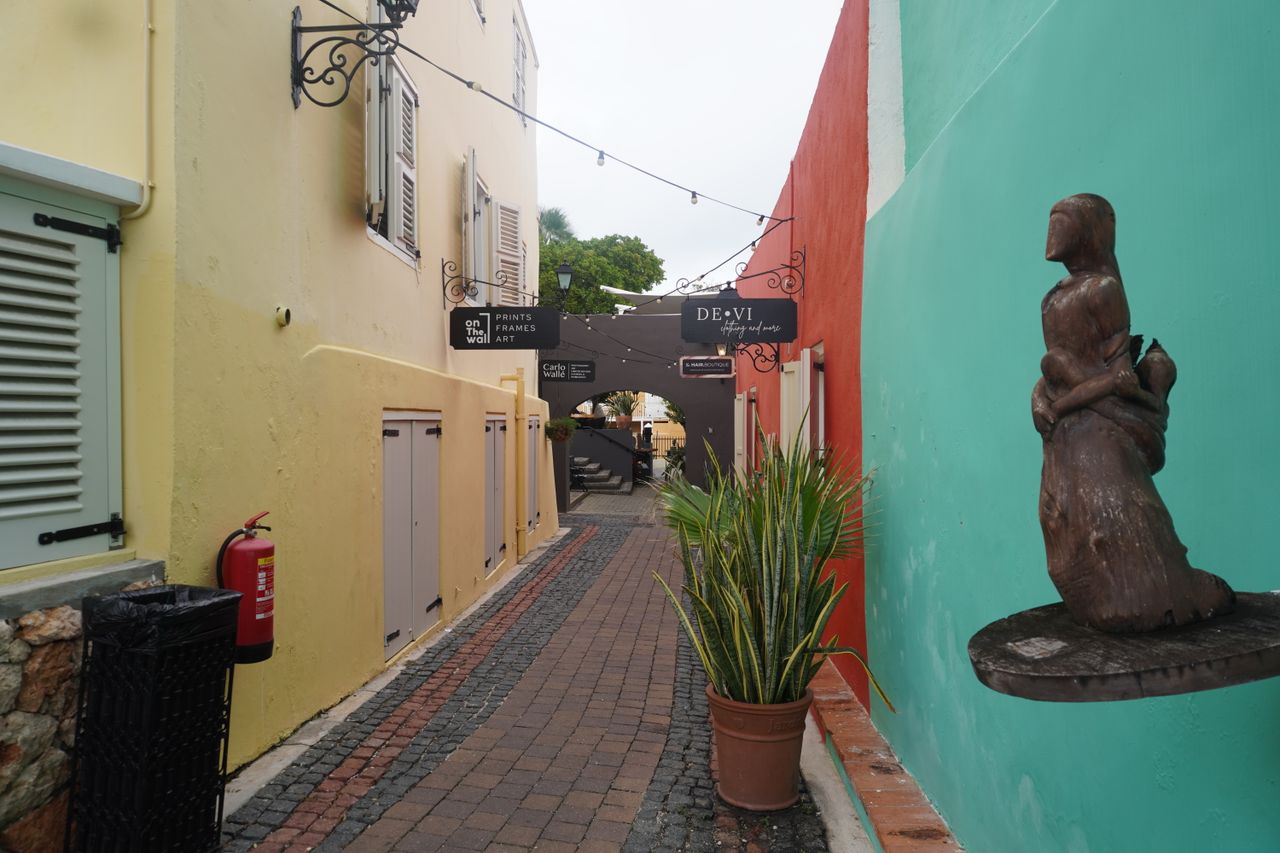
The Caribbean is often sold to the world through a familiar collection of images: turquoise water, white beaches, palm trees, colourful cocktails and smiling hospitality workers. But behind that postcard-perfect picture are societies shaped by colonialism, slavery, migration, cultural resistance, economic inequality and extraordinary creative energy.
A growing movement of Caribbean artists is challenging the idea that the region exists simply as a holiday destination. Through painting, sculpture, ceramics, photography and contemporary installations, they are reclaiming the right to define their own identities—and asking visitors to look beyond the beaches.
The debate came into focus at the 2026 FUZE Caribbean Art Fair in the Bahamas, where artists and curators explored themes of identity, belonging and cultural representation.
The Guardian’s November 18, 2026 feature, Am I Caribbean, or am I a tourist? How art helped me find the answer, examined this issue through the experiences of a writer with Antiguan and Jamaican heritage visiting the event. The writer reflected on the complicated relationship between Caribbean identity, diaspora, tourism and the way outsiders perceive the region.
The article raises a question that reaches far beyond the art world: Who gets to decide what the Caribbean means?
For Caribbean artists, the answer increasingly lies in telling their own stories.
1. The Tourist Image of the Caribbean: Paradise for Visitors, Home for Millions
The Caribbean has one of the world’s most recognisable tourism identities.
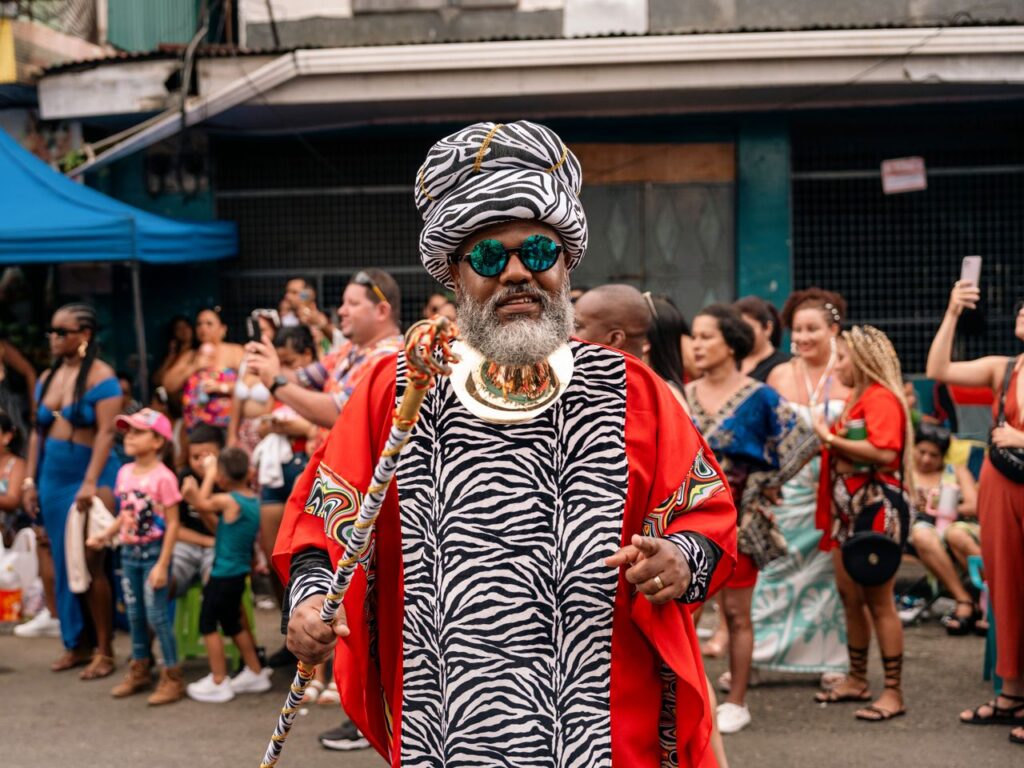
International advertising frequently presents its islands as places of escape from everyday life. Beaches, luxury resorts, cruise ships, tropical cocktails and sunshine dominate the imagery used to attract visitors.
There is nothing inherently wrong with celebrating the region’s natural beauty. The problem emerges when these images become the only story told about Caribbean societies.
A destination marketed exclusively as a tropical paradise can make its residents almost invisible as people with complex histories, political opinions, ambitions and everyday concerns.
Local communities risk being presented mainly as hotel employees, entertainers, tour guides, craft sellers or providers of hospitality.
Bahamian artist and curator John Cox has argued that artists across the region constantly engage with the expectations of outsiders who view Caribbean destinations primarily as places of relaxation and service.
This perspective creates what is commonly called the tourist gaze: a way of looking at a destination that prioritises the visitor’s expectations over the experiences of the people who live there.
For example, an international visitor might see a colourful market, buy a souvenir and leave with a pleasant memory. A local craft worker may see the same market as a workplace shaped by competition, changing consumer preferences, imported goods and the struggle to preserve traditional skills.
Both experiences are real, but they are not the same.
Caribbean artists are increasingly using their work to expose the gap between the destination imagined by tourists and the societies that exist beyond resort boundaries.
2. FUZE Caribbean Art Fair 2026: Bringing Regional Artists to the International Stage
One of the important platforms for this cultural conversation is the FUZE Caribbean Art Fair in Nassau, Bahamas.
The fourth edition took place from October 21 to 25, 2026, at Baha Mar. It brought together more than 100 artists from the Caribbean and beyond, with more than 20 galleries, museums and cultural institutions representing over 10 Caribbean countries, alongside participants from the wider Americas, Africa and the United Kingdom.
The 2026 theme was “Coming Home.”
The theme explored the desire to reconnect with histories, communities, cultural roots and shared experiences. It was particularly relevant to Caribbean societies, where migration and movement between islands and international cities have helped shape generations of families.
The fair provided opportunities for artists, collectors, curators, galleries and cultural organisations to meet and exchange ideas.
Its significance goes beyond selling artwork.
For Caribbean artists, international visibility can be difficult to achieve. Established art markets in London, New York, Paris and other major cultural centres often have greater financial resources, institutional networks and media exposure.
A regional platform such as FUZE helps create a meeting point where Caribbean artists can present their work on their own terms.
It also challenges the assumption that important contemporary art must come from established European or North American cultural capitals.
The Caribbean has its own intellectual, historical and artistic traditions, and FUZE helps bring those contributions into wider international discussions.
3. Anina Major: Using Ceramics to Challenge the Commercialisation of Bahamian Identity
One of the most striking examples of artistic resistance discussed in the Guardian feature involves Bahamian artist Anina Major.
Her work explores the relationship between traditional craft, cultural identity and the expectations created by tourism.
A particularly revealing example is her use of ceramic forms inspired by traditional woven baskets.
The Bahamas is known for its straw markets, where vendors sell bags, baskets and other handmade goods made from materials including silver-top palm and palmetto.
These markets have historically provided economic opportunities for local women and craft workers.
However, the commercial environment has changed. The availability of imported souvenirs and mass-produced products can make it harder for traditional craftspeople to compete.
Some products sold in tourist markets may look Bahamian to visitors without necessarily being locally made.
This raises an important question: when does a traditional craft stop representing a living cultural practice and become simply a product designed to satisfy tourist demand?
Major’s ceramic sculptures reinterpret the familiar basket form. Rather than presenting perfectly finished, functional objects, some of her forms appear collapsed, crumpled and unstable.
The result challenges the idea that Bahamian identity should be presented as an attractive, easily packaged cultural product.
Her work suggests that identity is not something that can be woven into a souvenir and sold without considering the social and economic conditions behind it.
It also demonstrates how contemporary artists can use traditional materials and visual references to question the systems that shape cultural representation.
4. Antonius Roberts: Why Caribbean Art Should Not Be Forced Into Western Expectations
Another important figure in the discussion is Antonius Roberts, one of the Bahamas’ prominent artists and cultural advocates.
Roberts has spent decades developing an artistic language influenced by Caribbean landscapes, cultural traditions and natural materials.
His work includes wood, stone, goat skins and recycled materials, reflecting an interest in the relationship between creativity, the environment and traditional knowledge.
One particularly revealing part of his experience concerns his time studying in the United States.
He was encouraged to stop producing work that was described as too bright when using vivid colours.
Roberts challenged this expectation.
For him, the Caribbean’s bright colours are not an artificial attempt to create an exotic image. They are part of the actual visual experience of living in a region characterised by intense tropical sunlight, vivid vegetation, colourful buildings and luminous coastal landscapes.
This raises a wider question about the international art world.
Why should Black artists be expected to work within a particular visual style?
Why should Caribbean art be judged according to expectations developed in cultural environments that may not understand the region’s own aesthetic traditions?
Roberts’ response is an assertion of artistic independence.
Caribbean artists should not have to make their work darker, more politically familiar or more closely aligned with external expectations to be considered serious.
Their artistic language should be allowed to reflect the full range of their experiences.
Roberts has also contributed to the development of the Bahamian arts sector through galleries, competitions and cultural institutions. His involvement in building opportunities for younger artists is an important part of his legacy.
5. The Caribbean’s Colonial Past and the Rise of the Tourism Economy
The debate about tourism and artistic identity cannot be understood without examining Caribbean history.
The region was profoundly shaped by European colonial expansion, plantation economies and the transatlantic slave trade.
For centuries, European powers controlled islands and territories across the Caribbean, extracting wealth through sugar, tobacco, coffee and other commodities.
Millions of Africans were forcibly transported to the Americas and subjected to slavery. Indigenous communities were displaced, populations transformed and societies developed under systems of racial hierarchy and economic exploitation.
These historical experiences helped shape the languages, religions, music, food, political institutions and cultural identities of the modern Caribbean.
After emancipation and the gradual achievement of political independence across much of the region, many Caribbean economies continued to face structural challenges.
Agricultural exports remained important in some territories, but tourism increasingly became a major source of foreign income and employment during the 20th century.
The Bahamas became an important example of this transformation.
Its proximity to the United States, particularly Florida, made it attractive to American holidaymakers. Improved air travel, cruise services and resort investment helped establish the country as an international tourism destination.
The visual marketing of the Caribbean changed alongside this economic transformation.
Postcards, travel brochures, films and advertisements increasingly presented the region as an idyllic escape.
This imagery helped generate visitor demand, but it also encouraged a simplified understanding of Caribbean societies.
The region became associated with leisure, luxury and natural beauty, while its colonial history, political struggles and cultural complexity received less attention.
Contemporary Caribbean artists are now revisiting these historical narratives and asking how the past continues to influence the present.
6. Cruise Tourism and the Question of Who Controls the Visitor Experience
Tourism is economically important to many Caribbean countries, but the structure of the industry can create tensions over who benefits and who controls the visitor experience.
Cruise tourism is a particularly important part of the debate.
Cruise passengers often arrive at destinations for relatively short periods. Their experiences may be organised around excursions, shopping districts, private attractions and activities approved or promoted through cruise operators.
This can make it difficult for smaller independent cultural organisations, artists and community businesses to reach visitors.
Bahamian artist Antonius Roberts has criticised the influence of the cruise industry, describing its power in terms of a new form of colonial control.
His criticism focuses on the way commercial tourism can determine what visitors see and experience.
A cruise passenger may spend several hours in a destination without encountering its political history, environmental problems or independent artistic community.
Instead, the visitor may experience a carefully managed version of local culture designed to be entertaining, comfortable and commercially attractive.
This does not mean every cruise visitor has a superficial experience or that cruise tourism provides no benefits.
The industry creates jobs, supports transport services and generates business for some local suppliers. However, the distribution of economic benefits and the influence of large external operators deserve serious examination.
The economic importance of tourism in the Bahamas
The Bahamas’ dependence on tourism helps explain why this debate is so important.
An International Monetary Fund assessment published in January 2026 reported that approximately 90% of tourism expenditure, equivalent to around 28% of gross domestic product, came from stayover visitors.
It also noted that the Bahamas received around 40% of Caribbean cruise sea arrivals, reflecting strong demand and investment in cruise infrastructure.
The figures reveal an important distinction between different types of tourism.
Stayover visitors generally spend more time in hotels, restaurants, shops and local businesses. Cruise passengers may spend fewer hours at a destination, with a larger portion of their holiday spending handled through cruise companies or privately operated facilities.
The economic impact therefore depends not simply on how many people arrive but also on how much value remains within local communities.
For artists, cultural organisations and independent businesses, the challenge is to ensure that tourism creates opportunities for genuine engagement rather than reducing local culture to a commercial performance.
7. Art as a Form of Resistance Against Cultural Stereotypes
Art has always been an important way for societies to preserve memory, question authority and express collective identity.
In the Caribbean, these functions carry particular historical significance.
The region’s artistic traditions have been shaped by African, Indigenous, European, Asian and other cultural influences.
Music, painting, sculpture, textiles, dance, storytelling and craft practices have developed through centuries of cultural exchange and adaptation.
Contemporary Caribbean artists draw on this history while addressing present-day concerns.
Some explore colonial memory and the legacy of slavery. Others examine migration, race, gender, class, environmental change and the contradictions of modern tourism.
Their work does not necessarily reject the beauty of the Caribbean landscape.
Instead, it refuses to allow beauty to become the only story.
A painting of a turquoise sea can represent natural beauty, but it can also raise questions about coastal development, climate vulnerability, fishing communities and access to land.
A sculpture made from traditional materials can celebrate cultural heritage while questioning whether traditional knowledge is being protected or commercially appropriated.
This ability to communicate multiple meanings is one of contemporary art’s greatest strengths.
It allows artists to speak about difficult subjects without reducing their work to political slogans or simple explanations.
8. The Caribbean Diaspora: What Does It Mean to Belong?
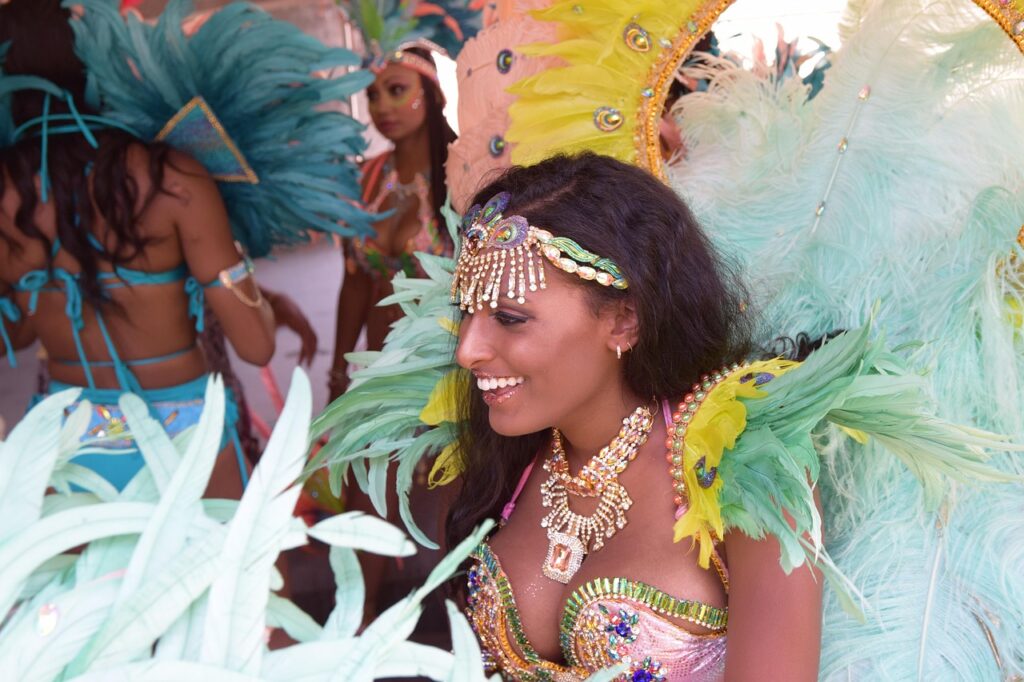
One of the most powerful themes in the Guardian feature is the uncertainty experienced by people with Caribbean heritage who grow up or live outside the region.
The writer, who has Antiguan and Jamaican roots, describes the complicated feeling of travelling to the Bahamas and questioning whether they are experiencing the region as someone who belongs or as another visitor.
This is not an unusual experience for members of the Caribbean diaspora.
Millions of people with Caribbean ancestry live in countries such as the United Kingdom, the United States, Canada and other parts of Europe.
Their families may have left the Caribbean for education, employment, safety or better economic opportunities.
Some maintain strong connections with their countries of origin through relatives, language, food, music and regular visits.
Others grow up with a cultural identity shaped by both Caribbean heritage and the society in which they were raised.
The result is a form of belonging that does not always fit neatly into geographical boundaries.
The tension between leaving and returning
For some Caribbean people, moving abroad can create a complicated relationship with home.
Those who leave may be viewed as outsiders when they return, particularly if their language, accent, habits or perspectives have changed.
At the same time, people who remain in the Caribbean may feel that members of the diaspora do not fully understand the everyday realities of living there.
These tensions can affect identity across generations.
A person may feel deeply connected to Jamaica, Antigua, the Bahamas or another Caribbean country while also recognising that their experience differs from that of someone who has lived there throughout their life.
Art offers an alternative way to understand this relationship.
It does not require identity to be a fixed category. Instead, it allows different experiences, memories and cultural influences to exist together.
This is particularly relevant to Caribbean societies, which have been shaped by centuries of movement, displacement and cultural exchange.
9. Jamaica Kincaid and the Problem of the Caribbean Paradise Image
The writing of Antiguan-American author <escape>Jamaica Kincaid</escape> provides an important literary background to the debate.
Kincaid has explored colonialism, tourism, power and the relationship between visitors and the places they enter.
Her writing challenges the assumption that the Caribbean should be understood simply through its beauty.
In her work, the tourist experience can become an uncomfortable subject because it exposes the unequal relationship between the person who visits and the person whose home is being visited.
A tourist may see a beautiful destination as a temporary escape from everyday life.
A local resident experiences the same place as a home, workplace and community with its own economic and political realities.
This difference in perspective matters.
The paradise image can create expectations that local people should always be welcoming, cheerful and available to serve visitors.
It can also encourage the idea that the region exists primarily for external consumption.
Kincaid’s writing is influential because it questions these assumptions rather than accepting them as harmless tourism advertising.
Contemporary artists are continuing this conversation through visual forms.
Their work asks audiences to consider not only what they see but also what they have been taught to expect.
10. Bahamian Folk Art and Contemporary Creativity: Connecting the Past With the Future
Caribbean contemporary art does not exist separately from traditional artistic practices.
The region’s cultural heritage includes a wide variety of craft traditions, folk art, music, performance and storytelling.
In the Bahamas, folk artist Amos Ferguson is an important figure in the country’s artistic history.
His colourful paintings drew on everyday life, religion, Bahamian culture and imaginative storytelling.
His work demonstrates that Caribbean artistic expression has long been capable of combining local experience with distinctive visual creativity.
The National Art Gallery of The Bahamas also plays an important role in preserving and presenting the country’s artistic heritage.
Its exhibitions provide opportunities to examine the relationship between historical traditions and contemporary artistic practices.
The gallery’s 2026 exhibition programme included projects such as Salt and Sand by Edrin Symonette, alongside other exhibitions examining identity, cultural relationships and Bahamian experience.
Symonette’s work explores connections between the human body and the natural environment, suggesting that people and landscapes cannot always be separated into distinct categories.
This approach is especially relevant in island societies, where the sea, land, weather and natural resources influence everyday life.
The gallery environment also helps connect artists with researchers, students, collectors and international visitors.
Such institutions are essential because cultural development requires more than individual artistic talent. It also depends on education, exhibition spaces, funding, archives and professional networks.
11. A New Generation of Caribbean Artists Is Expanding the Conversation
The next generation of Bahamian artists is continuing to challenge conventional ideas about regional identity.
Curator John Cox has highlighted artists including Cydne Coleby, April Bey and Tavares Strachan.
Their practices explore different aspects of contemporary life, using combinations of materials, images and references to the past and future.
This variety is important because there is no single visual language that represents the Caribbean.
Some artists work with painting and traditional materials. Others explore installation, digital media, conceptual art, photography or interdisciplinary practices.
Their subjects may include migration, technology, gender, race, environmental change and the relationship between local communities and global systems.
This diversity challenges the assumption that Caribbean art must always contain palm trees, beaches, bright colours or recognisable cultural symbols.
Artists should be free to create work that reflects their own concerns, even when those concerns do not match international expectations of what Caribbean art should look like.
Why supporting younger artists matters
Established artists such as Antonius Roberts and cultural leaders such as John Cox have contributed to developing the infrastructure needed for younger generations.
This includes galleries, competitions, curatorial opportunities and platforms for public engagement.
Without these structures, talented artists may struggle to build sustainable careers in their home countries.
Many may feel pressure to move abroad to access better funding, training and international exposure.
A strong regional arts ecosystem can help reduce this imbalance by creating opportunities for artists to develop their work while maintaining connections with their communities.
It can also help the Caribbean become a more influential participant in global cultural conversations.
12. Caribbean Art and Climate Change: The Environment Is More Than Scenery
The relationship between art and the environment is another important dimension of Caribbean cultural expression.
Island nations are particularly exposed to climate-related threats, including rising sea levels, coastal erosion, coral reef degradation and stronger storm impacts.
These issues are not abstract subjects for Caribbean communities.
They affect housing, fishing, tourism infrastructure, food security, cultural heritage and the long-term viability of coastal settlements.
For this reason, the natural environment can carry political and historical meanings in contemporary Caribbean art.
A representation of a beach may also refer to a threatened coastline.
An artwork using shells, wood or recycled materials may raise questions about environmental change and the relationship between human activity and natural resources.
Artists can also challenge the way tourism development sometimes places pressure on fragile coastal ecosystems.
Large resorts, cruise infrastructure and poorly managed construction can create environmental costs if development is not properly planned.
The tourism industry depends on the natural beauty of the Caribbean, but protecting that beauty requires long-term environmental responsibility.
Art can make these challenges visible in ways that statistics and policy reports sometimes cannot.
It can encourage audiences to see the landscape as a living environment rather than simply a holiday backdrop.
13. The Economic Challenge: How Can Caribbean Artists Build Sustainable Careers?
Cultural recognition is important, but artists also need practical opportunities to earn a living.
In many Caribbean countries, the local market for contemporary art is relatively small.
Artists may depend on collectors, galleries, tourism-related sales, commissions, public funding and international exhibitions.
This can create financial uncertainty, particularly for younger artists.
Several challenges affect the development of a sustainable regional art economy.
Limited access to international markets
Artists outside major global cultural centres may struggle to establish relationships with international galleries and collectors.
Regional fairs can help bridge this gap by bringing international participants directly into the Caribbean.
The pressure to create tourist-friendly products
Some artists and craft workers may face pressure to produce work that visitors can easily recognise and purchase.
This is not necessarily negative. Commercial craft production can provide valuable employment and preserve traditional skills.
The problem occurs when the market leaves little room for experimental, critical or politically challenging work.
The need for stronger cultural institutions
Museums, galleries, universities and arts organisations provide essential support.
They help artists develop professionally, preserve historical collections, conduct research and connect with international networks.
Digital platforms and global visibility
Online galleries, social media and digital exhibitions create new opportunities for Caribbean artists.
However, visibility alone does not guarantee sustainable income.
Artists also need access to professional representation, fair contracts, intellectual property protection and reliable payment systems.
A stronger Caribbean art economy will require collaboration between governments, cultural institutions, private investors, universities and international partners.
14. How Visitors Can Support Caribbean Artists Without Reducing Culture to a Souvenir
The debate about tourism does not mean visitors should avoid Caribbean art or cultural experiences.
On the contrary, engaging with local artists can create valuable connections and support creative communities.
The important question is how visitors participate.
Travellers can make more meaningful choices by:
- Visiting independent galleries and museums rather than relying exclusively on resort activities.
- Buying directly from local artists and recognised craft producers.
- Asking about the materials, techniques and history behind artworks.
- Supporting locally organised exhibitions, workshops and cultural events.
- Learning about the social and historical context of the places they visit.
- Respecting artists’ decisions about how their work may be photographed, reproduced or used.
- Avoiding assumptions that every artwork must represent a traditional or stereotypical version of Caribbean life.
Visitors should also recognise that local artists are not obliged to provide a simplified explanation of their identity or culture.
A genuine cultural experience involves listening as well as looking.
The most meaningful souvenir may not be a mass-produced object but a deeper understanding of the community and its history.
15. Why Caribbean Art Matters to the Rest of the World
The importance of Caribbean art extends far beyond the region.
Caribbean people and their descendants have helped shape cultural life in Britain, North America, Europe and other parts of the world.
Their influence can be seen in music, literature, fashion, food, political movements, visual art and academic thought.
Caribbean cultural traditions have influenced global music through reggae, calypso, soca, dancehall and other musical forms.
Writers, intellectuals and artists have also contributed to international debates about colonialism, migration, race, identity and cultural freedom.
The region’s history provides important lessons about how societies are formed through movement, conflict, cultural exchange and resistance.
The work of Caribbean artists can therefore speak to audiences far beyond the islands.
Questions about belonging, displacement, tourism, environmental change and cultural representation are global issues.
The Caribbean offers distinctive perspectives on these subjects because its societies have experienced many of these forces over several centuries.
As John Cox has argued, the region’s intelligence, creativity and contribution to global developments are too often underestimated.
Greater international recognition of Caribbean art is not simply about increasing the visibility of individual artists. It is also about recognising the region as an important source of ideas and cultural knowledge.
Conclusion: The Caribbean Must Be Allowed to Tell Its Own Story
The Caribbean is beautiful, but it is much more than a beautiful place.
It is a region of complex histories, diverse societies, creative traditions and evolving identities. Its people have shaped global culture while continuing to negotiate the consequences of colonialism, migration, economic inequality and environmental change.
The 2026 FUZE Caribbean Art Fair demonstrated how artists can challenge the narrow images that have dominated international perceptions of the region.
Through the work of Anina Major, Antonius Roberts, Edrin Symonette and a new generation of creative voices, the Bahamas is contributing to a wider conversation about who controls cultural representation.
The debate also raises difficult questions about tourism, diaspora and belonging. Someone with Caribbean heritage who lives abroad may feel connected to the region while questioning whether they have the right to speak for it. A visitor may admire its culture while recognising that their experience is different from that of local residents.
Art does not necessarily resolve these contradictions. Its value lies partly in allowing them to exist.
Perhaps the most important lesson is that the Caribbean should not be required to fit into one convenient definition.
It can be a home, a heritage, a political history, a cultural movement, a place of migration and a source of artistic inspiration—all at the same time.
The region’s artists are not simply painting a different picture for tourists. They are speaking to the world about the complexity of who they are.
And that story deserves to be heard.
Frequently Asked Questions (FAQs)
1. What is Caribbean contemporary art?
Caribbean contemporary art refers to modern artistic practices produced by artists from the Caribbean and its diaspora. It includes painting, sculpture, photography, installation, ceramics, digital media and performance. Common themes include colonial history, slavery, cultural identity, migration, race, gender, environmental change and the relationship between the Caribbean and the wider world.
2. What is the FUZE Caribbean Art Fair?
FUZE Caribbean Art Fair is an international art event held in Nassau, Bahamas, bringing together Caribbean artists, galleries, museums, cultural institutions, collectors and visitors. Its fourth edition took place from October 21 to 25, 2026, at Baha Mar under the theme “Coming Home.” It provides a platform for regional artists to gain international exposure and explore questions of cultural identity and belonging.
3. Why are Caribbean artists criticising the tourism industry’s influence on culture?
Some Caribbean artists argue that tourism marketing presents the region as an uncomplicated tropical paradise, overlooking its complex history and contemporary social realities. Commercial pressures can also encourage traditional crafts and cultural performances to be adapted mainly for visitors. Artists want local communities to retain control over how their cultures are represented and ensure that tourism does not reduce cultural identity to a commercial product.
4. Who are some important Bahamian artists featured in discussions about Caribbean identity?
Important figures include Antonius Roberts, known for his work with natural materials and his contributions to Bahamian cultural institutions; Anina Major, whose ceramic sculptures examine traditional craft and cultural representation; and Edrin Symonette, whose work explores connections between people and the natural environment. Curator John Cox has also played an important role in promoting Bahamian and wider Caribbean art. Younger artists such as Cydne Coleby, April Bey and Tavares Strachan are contributing new perspectives.
5. How can tourists support Caribbean artists and local culture?
Visitors can support Caribbean artists by visiting independent galleries, attending local exhibitions, purchasing authentic work directly from artists and learning about the cultural background of traditional crafts. They can also support community-led cultural activities and choose locally operated experiences. Most importantly, visitors should approach Caribbean culture with curiosity and respect rather than expecting every artistic expression to match familiar tourist stereotypes.
Sources The Guardian