
A New Price for Visitors to Kyoto
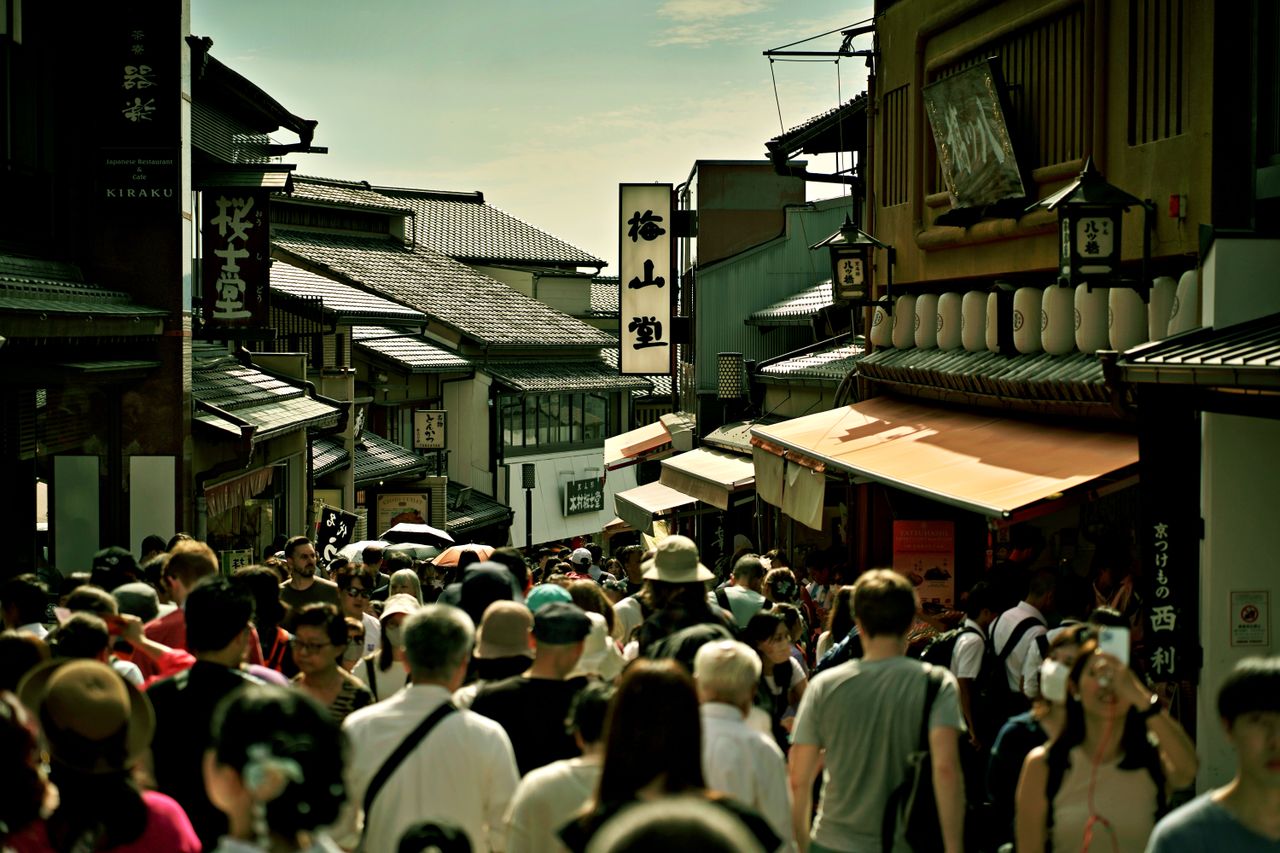
Kyoto’s crowded buses have become a symbol of a much bigger problem: when millions of visitors arrive in a historic city built around narrow streets and limited transport capacity, everyday life can become difficult for the people who call it home.
Now, the Japanese city is considering a proposal that could make tourists and other non-residents pay more than local residents to use public buses. The idea is part of a wider effort to manage overtourism, protect public transport for residents and ensure that visitors contribute more towards the infrastructure they use.
Under a draft ordinance unveiled by Kyoto’s municipal government on 17 November 2026, the standard adult fare on designated city bus routes would increase from ¥230 to ¥360 for people who do not qualify for the resident discount. Registered Kyoto residents would instead pay ¥200.
If approved and implemented as planned, the arrangement would represent a significant change in how a major Japanese city charges people for using public transport. It would also make Kyoto one of the first cities in Japan to introduce a resident-priority pricing system for municipal buses.
The proposal raises an important question for one of Japan’s most celebrated destinations: should tourists pay a premium for access to public services when their numbers are placing additional pressure on the city?
What Is Kyoto’s Proposed Dual Bus Fare System?
The proposal is relatively straightforward. Instead of charging everyone the same standard fare, Kyoto wants to introduce different prices for residents and non-residents.
| Passenger category | Current standard fare | Proposed fare |
|---|---|---|
| Kyoto residents | ¥230 | ¥200 |
| Non-residents | ¥230 | ¥360 |
The proposed non-resident fare is approximately 57% higher than the existing ¥230 fare. Residents, meanwhile, would receive a reduction of ¥30.
The distinction is important: the higher fare is not exclusively a tourist surcharge. It would generally apply to people who do not qualify as Kyoto residents, including visitors from other Japanese cities and international travellers.
According to Kyoto’s official transportation bureau, the purpose is to make ordinary bus travel relatively cheaper for residents while securing additional revenue to address overcrowding, rising operating costs and tourism-related pressures.
The city has described the scheme as a pilot project aimed at balancing tourism with the everyday needs of its population.
When could the new fares begin?
The city is targeting implementation during fiscal year 2027, which begins in April 2027 in Japan.
However, the proposal is not yet a fully implemented fare system. The municipal assembly must consider the necessary ordinance, and the city must complete discussions with national authorities and obtain approval for the fare changes.
The final arrangements, including how different types of tickets will be treated, are still subject to further decisions.
For travellers planning a visit in 2027, it is therefore sensible to check the latest Kyoto City Transportation Bureau announcements rather than assume the proposed prices are already in force.
Why Has Kyoto Reached This Point?
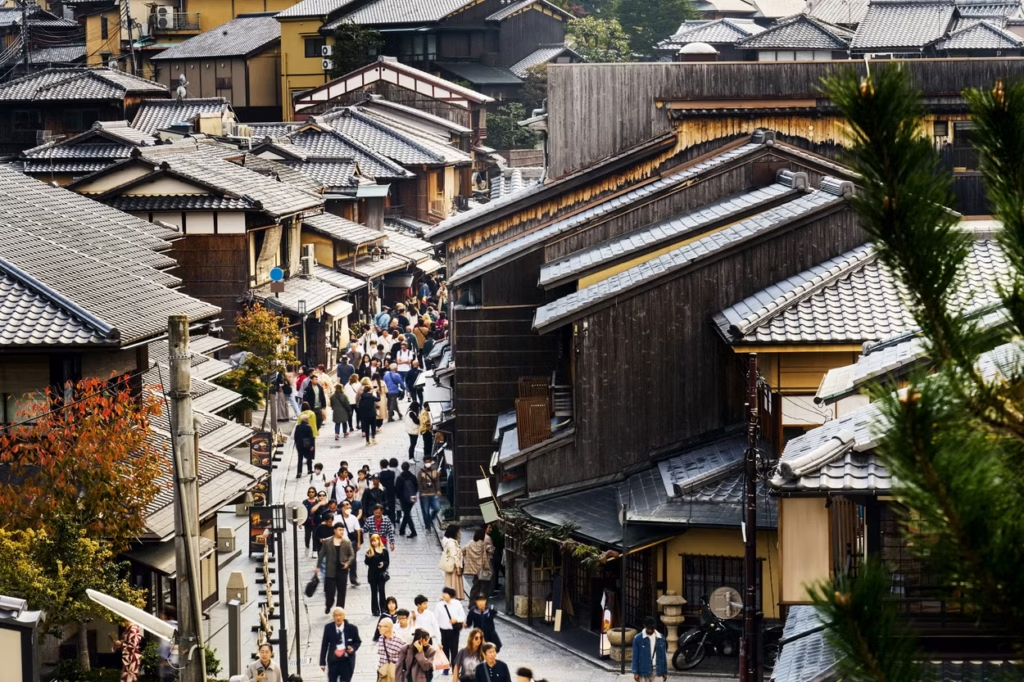
Kyoto is one of Japan’s most recognisable cultural destinations. Its historic temples, traditional gardens, wooden streets, seasonal scenery and distinctive neighbourhoods attract visitors from around the world.
The city also has an important domestic tourism market. Japanese travellers visit for holidays, cultural experiences, shopping, business, festivals and family trips.
That popularity brings considerable economic benefits, but it also places pressure on infrastructure that residents depend on every day.
Record visitor activity in 2025
Kyoto recorded approximately 62.79 million visitor trips in 2025, according to figures cited in reporting on the proposal.
The total included approximately 50.11 million domestic visitors and 12.68 million foreign visitors. International arrivals reached a record level, with major source markets including China, the United States, Taiwan, Australia and South Korea.
One important qualification is that these figures should not be interpreted as 62.79 million unique tourists or 62.79 million foreign visitors. Kyoto’s official tourism survey includes people travelling into the city from outside Kyoto for a range of purposes, not only sightseeing. Business, shopping, entertainment, events and visits to friends or relatives can also be included.
Nevertheless, the figures illustrate the scale of activity that the city must accommodate.
Crowded buses are affecting residents
One of the most visible consequences of tourism growth is congestion on popular bus routes.
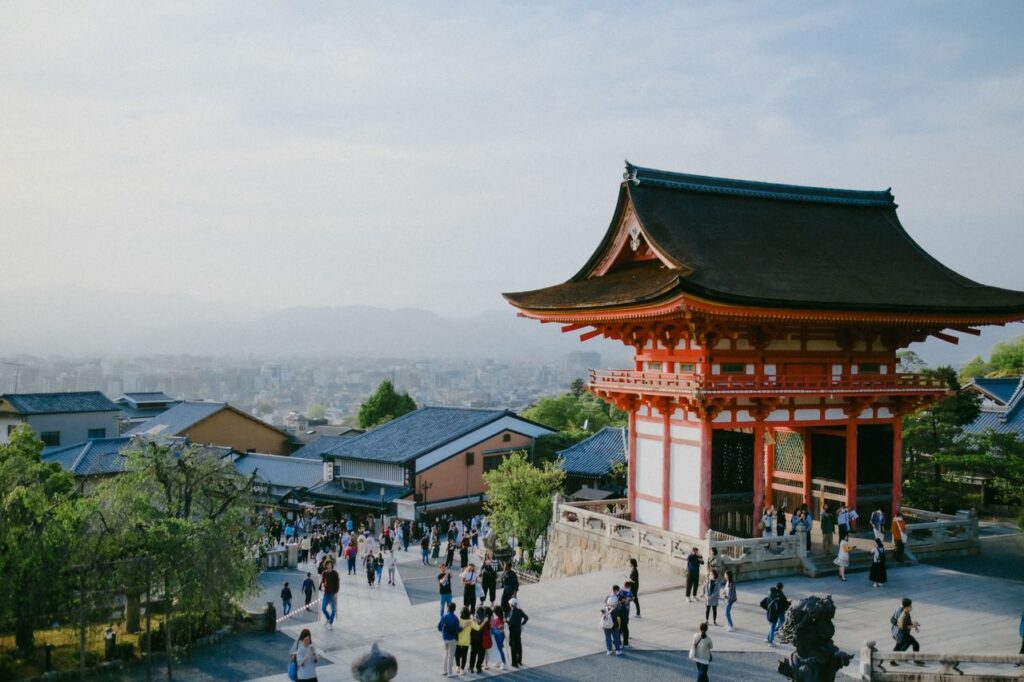
Visitors frequently use city buses to reach well-known attractions such as Kiyomizu-dera Temple, Gion, Kinkaku-ji and Arashiyama.
These are also ordinary transport services used by residents travelling to work, school, hospitals, shops and other everyday destinations.
During busy periods, passengers may encounter long queues, crowded vehicles and delays. Some residents have complained that they cannot board buses because tourist groups have filled the available space.
Large suitcases make the problem more difficult. A bus with limited standing and luggage space can quickly become uncomfortable when many visitors board with bulky baggage.
The issue is not simply that tourists use public transport. It is that visitor demand can become concentrated on particular routes, stops and times of day.
For a resident who depends on a bus to reach work or an appointment, that congestion is a practical problem rather than an inconvenience associated with a holiday.
Why Kyoto’s Bus Network Is Particularly Vulnerable
Kyoto’s urban layout helps explain why public transport pressure has become such a sensitive issue.
Unlike some modern cities designed around extensive underground networks, Kyoto’s transport system relies on a combination of railways, subway lines and buses.
Buses are particularly useful for reaching attractions that are not directly connected to railway or subway stations.
However, the historic city has narrow streets, busy intersections and neighbourhoods where expanding road infrastructure is difficult.
This creates a capacity problem. Simply adding more vehicles may not solve congestion if buses are competing for road space with private cars, delivery vehicles, taxis and other traffic.
Traffic delays can also affect the reliability of bus schedules. When one vehicle becomes delayed, passengers may accumulate at stops, making subsequent services even more crowded.
The problem is therefore connected to several factors:
- Concentration of visitors around major sightseeing districts.
- Limited road capacity in historic neighbourhoods.
- Heavy dependence on buses for access to certain attractions.
- Large luggage brought onto public transport.
- Traffic congestion that reduces service reliability.
- Competing transport needs between residents and visitors.
Kyoto’s challenge is to make its existing transport network work better without damaging the historic character that attracts visitors in the first place.
How Will Kyoto Identify Residents and Tourists?
Introducing two different fares requires a reliable way to determine who qualifies for the resident discount.
Kyoto’s transportation authorities plan to use a digital identification system connecting residents’ national identification cards with compatible transport IC cards or other eligible payment methods.
The system is designed to allow a passenger to tap their registered transport card when boarding. The resident fare can then be applied automatically.
The intention is to avoid requiring bus drivers to manually inspect identification documents every time a passenger boards.
This is important because additional checks at the point of payment could slow down boarding and make existing congestion worse.
What if a resident pays in cash?
Under the current proposal, cash payments and ordinary paper coupons would not qualify for the resident discount because verifying eligibility for every cash-paying passenger could delay operations.
The city is encouraging residents to register their identification details with compatible payment methods.
However, it has also acknowledged that not everyone has a My Number identification card. Officials say they are examining alternative registration arrangements for eligible residents who do not have one.
The city is also considering whether contactless credit-card payments can be incorporated into the system.
What about commuters who live outside Kyoto?
This is one of the most important questions surrounding the policy.
Kyoto is not only a tourist destination. It is also a regional centre for employment, education, healthcare and shopping.
Many people travel into the city regularly from neighbouring municipalities. They may use city buses every working day without being registered residents of Kyoto.
Charging these passengers the same higher fare as occasional tourists could create an unfair financial burden.
Kyoto’s transportation bureau has therefore indicated that commuter passes are expected to remain at their existing prices. It is also examining usage-based discounts for people who travel frequently but do not purchase monthly passes.
A points-based programme called Moe-po is among the mechanisms being considered.
These arrangements will be important in determining whether the scheme genuinely prioritises residents without unnecessarily penalising people who depend on Kyoto’s transport network for everyday life.
Kyoto Is Expanding Its Overtourism Strategy Beyond Bus Fares
The proposed fare increase is not an isolated measure. It forms part of a broader strategy to make tourism more financially sustainable and reduce pressure on local communities.
Kyoto has been exploring several ways to ensure that visitors contribute to the cost of maintaining the city and protecting its cultural attractions.
Higher accommodation taxes
Kyoto increased its accommodation tax on 1 March 2026.
The tax is charged per person, per night, based on the accommodation price. The revised structure is:
| Accommodation charge per person, per night | Accommodation tax |
|---|---|
| Below ¥6,000 | ¥200 |
| ¥6,000 to below ¥20,000 | ¥400 |
| ¥20,000 to below ¥50,000 | ¥1,000 |
| ¥50,000 to below ¥100,000 | ¥4,000 |
| ¥100,000 or more | ¥10,000 |
The higher brackets represent a substantial increase compared with the previous system, under which the maximum tax was ¥1,000 per person per night.
The revised tax is intended to generate additional resources for tourism management, cultural preservation and improvements that benefit residents and visitors.
For travellers, this means accommodation costs should be checked carefully. The tax may be collected separately by the hotel or accommodation provider and may not be included in the advertised room price.
Dual pricing at Nijo Castle
Kyoto is also planning different admission prices for residents and non-residents at Nijo Castle, a UNESCO World Heritage site.
Under the proposed arrangement, admission to the castle grounds and Ninomaru Palace would change as follows:
| Visitor category | Current price | Proposed price |
|---|---|---|
| Kyoto residents | ¥1,300 | ¥1,000 |
| Non-residents | ¥1,300 | ¥2,000 |
The new pricing is planned for fiscal year 2027, with a proposed start around June 2027.
The additional revenue is intended to support the preservation and maintenance of the historic property.
This is a significant development because it extends the resident-priority approach beyond transport and into cultural attractions.
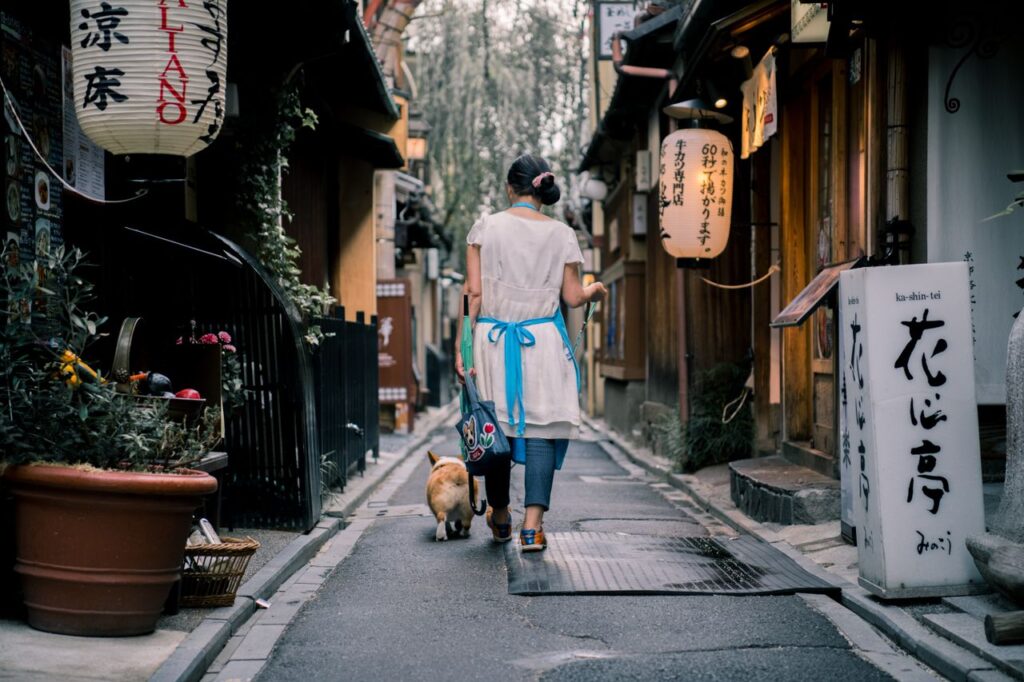
Managing visitor behaviour in Gion
Overtourism is not only about numbers. It is also about how visitors behave.
Kyoto’s Gion district is internationally associated with geiko and maiko, traditional Japanese performing artists whose work is connected to the city’s cultural heritage.
The popularity of the district has attracted visitors hoping to photograph these performers. Some have reportedly crossed private property boundaries, followed individuals or taken photographs without permission.
Local authorities and community representatives have responded with restrictions and stronger reminders about respectful behaviour.
The message is clear: visitors are welcome, but cultural traditions and residents’ privacy must be respected.
Could Higher Bus Fares Actually Reduce Overtourism?
This is the central question facing Kyoto’s proposal.
A higher fare may help generate additional money for transport services and tourism-management programmes. It may also encourage some visitors to reconsider how they move around the city.
However, the effect on passenger numbers is uncertain.
A ¥130 increase may be noticeable to budget-conscious travellers, especially families or people making several bus journeys each day. But for many international visitors who have already paid for flights, accommodation and sightseeing activities, the difference may not be large enough to change their travel plans.
The more important benefit could be financial rather than behavioural.
If additional fare revenue helps improve bus capacity, manage congestion, maintain services and support local infrastructure, the policy could contribute to a better transport experience for everyone.
There is also a risk that higher fares alone will simply make visitors pay more without significantly reducing overcrowding.
For that reason, the policy will need to be evaluated against measurable outcomes, including:
- Whether residents find it easier to board buses.
- Whether average bus journey times improve.
- Whether queues at popular stops become shorter.
- Whether additional revenue is used effectively.
- Whether frequent non-resident commuters receive adequate protection.
- Whether tourists shift towards rail, subway or alternative transport.
A successful policy should improve the quality of daily life, not merely increase the cost of visiting.
Why Public Transport Alternatives Matter
One of the most practical ways to reduce pressure on Kyoto’s buses is to encourage visitors to use the wider transport network.
The city’s official tourism guidance already recommends combining trains, subway services and buses rather than relying on buses for every journey.
Use trains and the subway where possible
Several major sightseeing areas can be reached through railway or subway connections.
For example, travellers heading towards the Higashiyama and Gion areas can use rail connections around Tofukuji and the Keihan network.
Visitors travelling to Nijo Castle can use the JR Sagano Line and transfer to the Tozai Subway Line.
Using rail services where practical can reduce pressure on buses operating along crowded central roads.
Consider limited express sightseeing buses
Kyoto has introduced additional services designed to connect major sightseeing areas.
The EX100 and EX101 limited express sightseeing buses, for example, are intended to help visitors reach popular attractions more conveniently.
These services can provide another option for travellers, although fares and accepted tickets may differ from ordinary city buses.
Leave large suitcases behind
Kyoto’s Hands Free Kyoto programme encourages visitors to store or transfer luggage rather than carry large suitcases onto crowded public transport.
Available services include luggage delivery between Kyoto Station and accommodation, baggage storage facilities and station coin lockers.
This may seem like a small change, but it can make a meaningful difference when buses are already full.
Tourists should consider arranging luggage delivery after arriving at Kyoto Station, particularly when travelling during peak periods.
Explore beyond the busiest districts
Another important strategy is to spread visitors across a wider range of destinations.
Kyoto’s tourism authorities have promoted less crowded areas such as Fushimi, Ohara, Takao, Yamashina, Nishikyo and Keihoku.
These districts offer different experiences, from historic temples and natural scenery to traditional neighbourhoods and local food culture.
Distributing tourism more evenly can reduce pressure on famous attractions while allowing smaller communities and businesses to benefit from visitor spending.
What Does the Proposal Mean for International Tourists?
For international travellers, the proposed system introduces an additional consideration when budgeting for a Kyoto holiday.
The difference between the current ¥230 fare and the proposed ¥360 fare is ¥130 per journey.
For a single traveller taking four bus journeys in a day, the difference would be ¥520. For a family or group making repeated trips, the additional cost could become more noticeable.
However, tourists should not assume that every bus, railway or private transport service in Kyoto will automatically adopt the same pricing arrangement.
The proposal concerns municipal bus fares. Different operators, transport passes and ticket products may have separate conditions.
The city is still examining how products such as one-day passes and multi-ride tickets will be treated.
Travellers should therefore check the official transport information before purchasing passes for visits in 2027.
Will tourists stop visiting Kyoto?
It is unlikely that a relatively modest bus fare increase by itself will dramatically reduce Kyoto’s international appeal.
The city remains one of Japan’s most distinctive cultural destinations. Its temples, gardens, traditional architecture, cuisine and seasonal landscapes are major attractions.
For many visitors, the cost of a bus journey is only one small part of the overall travel budget.
The greater issue is whether visitors will feel that the additional charges are fair and whether the money helps improve the destination.
Transparent communication and visible improvements to public services will be essential to maintaining public confidence.
The Debate Over Tourist Surcharges and Fairness
Charging non-residents more than residents for public transport raises questions about fairness.
Supporters argue that residents should receive priority because they depend on buses for everyday activities. They also point out that tourism creates additional demand and costs that local taxpayers and public authorities must manage.
From this perspective, visitors paying a higher fare is a reasonable way to distribute some of the financial burden.
Critics may argue that public transport should be accessible on equal terms, particularly when non-residents include workers, students and people visiting family or attending medical appointments.
There is also a practical question about how to define a resident. Someone who lives in Kyoto but has not updated their official registration may be treated differently from someone whose address is formally recorded in the city.
Kyoto’s plans for commuters and frequent users will therefore be important.
The debate also reflects a wider international trend. Popular destinations are increasingly considering tourist taxes, reservation systems, visitor limits, higher attraction prices and restrictions on access to sensitive neighbourhoods.
The underlying challenge is the same: how can destinations benefit from tourism without allowing visitor demand to overwhelm the communities and infrastructure that make them attractive?
Lessons for Other Popular Tourism Destinations
Kyoto’s proposal could become an important case study for cities dealing with overtourism.
Destinations around the world face similar pressures when visitor numbers rise faster than infrastructure capacity.
Venice has introduced a visitor access fee on selected peak days for certain day-trippers. Amsterdam has used tourism taxes and measures to manage visitor pressure. Barcelona has also pursued policies aimed at reducing the negative effects of mass tourism on residential neighbourhoods.
These approaches differ, but they share a common principle: tourism needs to contribute to the long-term health of the destination.
Kyoto’s dual bus fare proposal goes a step further by linking the price of a public service to a passenger’s residential status.
If successful, it could encourage other municipalities to consider similar systems. But its effectiveness will depend on whether the city can demonstrate that the additional revenue produces meaningful benefits.
It will also need to balance tourism management with accessibility, privacy, administrative simplicity and the needs of people who travel into Kyoto regularly for reasons other than sightseeing.
Conclusion: Kyoto Wants Tourism to Benefit Residents, Not Just Visitors
Kyoto’s proposed bus fare changes reflect a growing recognition that successful tourism cannot be measured by visitor numbers alone.
The city has built an international reputation around its cultural heritage, historic streets and distinctive traditions. But those attractions exist within a living community, where residents need reliable transport, manageable streets and access to everyday public services.
The proposal to charge non-residents ¥360 while reducing the fare to ¥200 for registered residents is an attempt to rebalance those priorities.
Whether it works will depend on more than the final ticket price. Kyoto must ensure that the new system is fair to commuters, easy to use, financially transparent and accompanied by practical improvements to public transport.
For travellers, the message is not that Kyoto is closing its doors. It is that visiting a popular destination comes with a responsibility to respect the people and places that make it special.
The future of tourism in Kyoto may depend on finding that balance: welcoming the world while preserving a city that remains comfortable and liveable for its own residents.
Frequently Asked Questions (FAQs)
1. How much will tourists pay for Kyoto city buses under the proposed new system?
Under the draft proposal announced in November 2026, non-residents would pay ¥360 for an ordinary adult bus journey on designated municipal routes, compared with the current ¥230 fare. Registered Kyoto residents would pay ¥200. The proposal still requires the necessary approvals before implementation.
2. When will Kyoto introduce higher bus fares for tourists?
Kyoto is aiming to introduce the resident-priority fare system during fiscal year 2027, which begins in April 2027. The final start date depends on the municipal legislative process and approval of the fare changes by national authorities.
3. Do the higher fares apply only to foreign tourists?
No. The proposed higher fare is generally for people who do not qualify as registered Kyoto residents. This includes Japanese visitors from other cities as well as international tourists. The city is considering special arrangements for frequent commuters and other regular users from outside Kyoto.
4. Why is Kyoto increasing bus fares for non-residents?
The main reasons are overcrowding on popular bus routes, disruption to residents’ daily travel and the rising costs of operating transport services. The city also wants to generate resources for managing tourism-related pressure and improving the balance between visitor activity and local quality of life.
5. How can tourists avoid crowded buses in Kyoto?
Visitors can use the city’s subway and railway services where practical, take designated sightseeing buses, travel outside peak periods and explore less crowded neighbourhoods. Kyoto also recommends using luggage delivery and storage services through its Hands Free Kyoto programme instead of carrying large suitcases onto public buses.
Sources The Independent