

A murder mystery can transport readers across borders without requiring a passport. From haunted Japanese mansions and Dakar crime scenes to Icelandic oddities, Brazilian underworlds and Chinese railway journeys, translated crime fiction is giving readers a much bigger world of suspects, detectives and secrets to explore.
Crime fiction has always been an international language.
The basic ingredients are familiar almost everywhere: someone dies, something disappears, a secret needs uncovering, and somebody—professional detective or accidental investigator—starts asking uncomfortable questions.
But the way different cultures tell those stories can be dramatically different.
The current wave of translated crime fiction demonstrates just how broad the genre has become. A recent selection of 12 books highlights mysteries ranging from Japanese locked-room puzzles and Scandinavian psychological fiction to Senegalese literary crime, Brazilian thrillers and historical European mysteries. (News Tribune)
These books aren’t simply English-language mysteries wearing foreign scenery.
They bring different ideas about justice, family, memory, class, history and identity.
And that is precisely what makes them worth reading.
Why Crime Fiction Works So Well in Translation
Crime fiction is often described as universal because murder, deception and investigation exist in every society.
Yet the meaning of crime is never completely universal.
A detective novel set in Tokyo can approach evidence and social obligation differently from one set in Milan. A mystery rooted in Dakar may explore colonial history and language alongside the crime itself. A Scandinavian thriller may focus more heavily on psychological damage, while a Brazilian crime novel may use violence to expose inequality.
Translation allows those differences to travel.
Readers don’t simply discover who committed the crime.
They discover how another culture imagines crime itself.
A Global History of the Detective Novel
The modern detective story is often traced to Edgar Allan Poe’s “The Murders in the Rue Morgue,” first published in 1841.
Poe established many conventions that became central to the genre: the seemingly impossible crime, the brilliant investigator and the idea that apparently contradictory clues can be assembled into a logical explanation.
Arthur Conan Doyle later transformed those conventions into popular culture through Sherlock Holmes.
Agatha Christie refined the puzzle-box mystery.
But the detective novel did not remain an English-language invention.
It spread across Europe, Asia, Latin America and eventually almost every major literary market.
Today, international crime fiction has become one of the most reliable ways for English-language readers to encounter literature from other countries.
The Scandinavian Crime Revolution
For many Western readers, translated crime fiction first became synonymous with Scandinavian noir.
Writers including Stieg Larsson, Maj Sjöwall, Per Wahlöö, Henning Mankell and others helped establish Nordic crime as a major international publishing phenomenon.
Their novels demonstrated that crime fiction could be simultaneously entertaining and politically serious.
Murder investigations could explore:
- inequality;
- immigration;
- corruption;
- gender;
- political institutions;
- social isolation;
- and the failures of the welfare state.
The success of Scandinavian crime also helped publishers and readers become more receptive to translated mysteries from other regions.
Japan’s Love Affair With the Puzzle
Japan has developed an exceptionally rich mystery tradition, particularly around the honkaku school of detective fiction.
These novels emphasize elaborate puzzles, impossible crimes and carefully constructed clues.
Yukito Ayatsuji’s The Clock House Murders, translated by Ho-Ling Wong, belongs firmly in that tradition.
The story traps a group of paranormal investigators inside a haunted mansion where people begin dying one by one. Detective Shimada Kiyoshi must work from outside to determine what is happening. (News Tribune)
The setup combines supernatural atmosphere with classic detective mechanics.
And that contradiction is part of the fun.
Is the house actually haunted?
Or is somebody using the appearance of the supernatural to disguise something much more human?
“The Clock House Murders”: The Classic Locked-Room Appeal
Locked-room mysteries remain popular because they create an irresistible challenge.
If nobody could have entered the room, how did the murder happen?
If everyone has an alibi, who is lying?
If the victim was apparently alone, who could possibly have killed them?
These puzzles invite readers to become detectives themselves.
The best examples provide enough information to solve the mystery while simultaneously encouraging readers to overlook the obvious.
That tradition is alive and well in contemporary Japanese crime fiction.
Dakar Through a Crime Story
Ken Bugul’s Felix Faure Street, translated by Julie Huntington, takes readers in an entirely different direction.
The novel opens after a gruesome murder on a troubled street in Dakar.
But its importance goes beyond the mechanics of a whodunit.
The book was originally written in French while being deeply influenced by the Wolof language and West African cultural context. The author’s pen name, Ken Bugul, itself carries cultural significance. (News Tribune)
That makes the novel a particularly interesting example of what translation can accomplish.
The reader encounters not only another country’s crime story, but also a literary work shaped by multiple languages.
Translation Is More Than Swapping Words
This is where translated crime fiction becomes particularly fascinating.
A translator doesn’t simply replace French words with English words.
They have to decide how to preserve:
- humor;
- rhythm;
- cultural references;
- social hierarchies;
- idioms;
- slang;
- wordplay;
- regional speech;
- and assumptions that may be obvious to native readers but invisible to outsiders.
A good translation therefore creates an illusion.
The English reader should feel as though the book was written naturally for them while still sensing that the story comes from somewhere else.
That is an extraordinarily difficult balancing act.
“Still Life”: Crime Without One Big Mystery
Malin Persson Giolito’s Still Life, translated by Rachel Willson-Broyles, takes another approach.
Rather than constructing one enormous puzzle, the Swedish writer presents 10 stories involving people who become entangled with the law.
The result expands the definition of crime fiction.
Crime doesn’t always begin with a body in a locked room.
Sometimes it emerges from:
- family conflict;
- addiction;
- desperation;
- fear;
- abuse;
- or an ordinary person’s attempt to protect someone they love.
That can make crime fiction feel less like a puzzle and more like a study of human behavior. (News Tribune)
“Ninan”: Crime, Punishment and Exile
Michel Jean’s Ninan, translated by Susan Ouriou, focuses on Élie, an Innu man who is released after serving 10 years in prison for killing his violent alcoholic father.
Returning home does not provide the fresh start he expects.
Instead, he finds himself unwelcome in his community and eventually heads to Montreal.
The book turns the aftermath of crime into its central concern.
What happens after punishment?
Can someone rebuild a life after prison?
And what does justice mean when the circumstances surrounding a crime involve violence, family trauma and social marginalization?
These are questions that a conventional detective puzzle might never ask.
“My Grandfather, the Master Detective”: A Gentler Mystery
Masateru Konishi’s My Grandfather, the Master Detective, translated by Kawai, offers a striking tonal contrast.
The novel combines mystery with Japanese healing fiction.
A grandfather living with Lewy body dementia teams up with his granddaughter, who brings him mysteries to solve during her visits. The grandfather was once a member of a mystery club, giving him the experience necessary to tackle the puzzles. (News Tribune)
The concept transforms the detective story into something warmer.
Instead of focusing solely on death and deception, the novel explores memory, family and the relationship between generations.
It demonstrates that mystery fiction doesn’t always have to be dark.
Sometimes the puzzle is an excuse to bring people together.
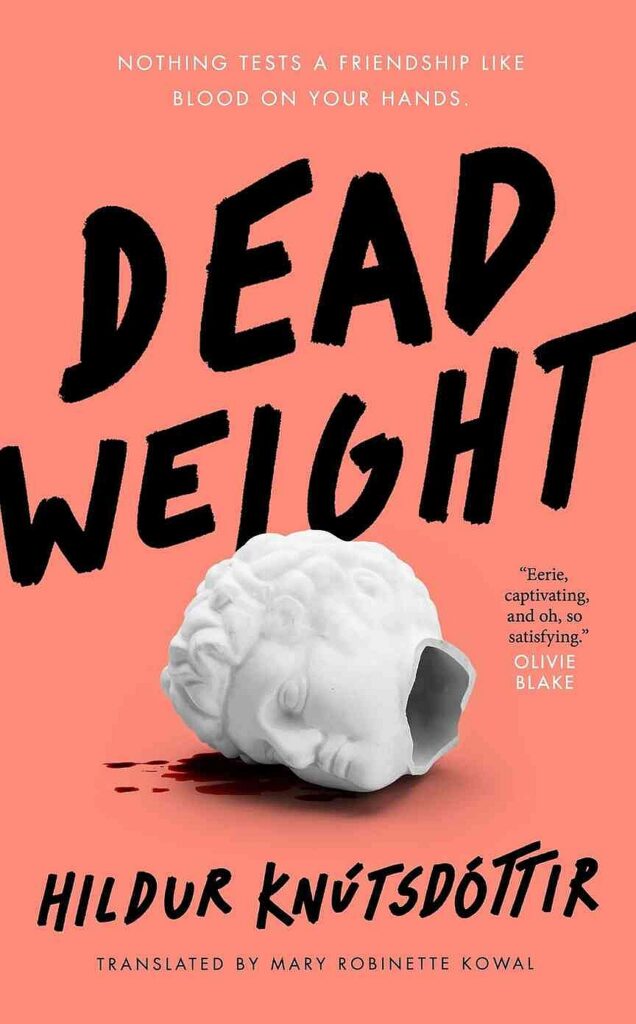
Icelandic Weirdness in “Dead Weight”
Hildur Knútsdóttir’s Dead Weight, translated by Mary Robinette Kowal, starts with an irresistibly strange premise.
A lonely working woman comes home and discovers a cat sleeping on her couch.
The problem?
She doesn’t own a cat.
The mystery becomes even stranger when she learns that another woman is looking for her missing cat.
From there, the story develops into something much more unsettling. (News Tribune)
The novel illustrates another strength of international crime fiction: authors don’t have to follow one rigid definition of the genre.
Mystery can overlap with horror.
Detective fiction can become psychological suspense.
A missing pet can become the beginning of something much darker.
Brazil’s Dark Side Comes to Dinner
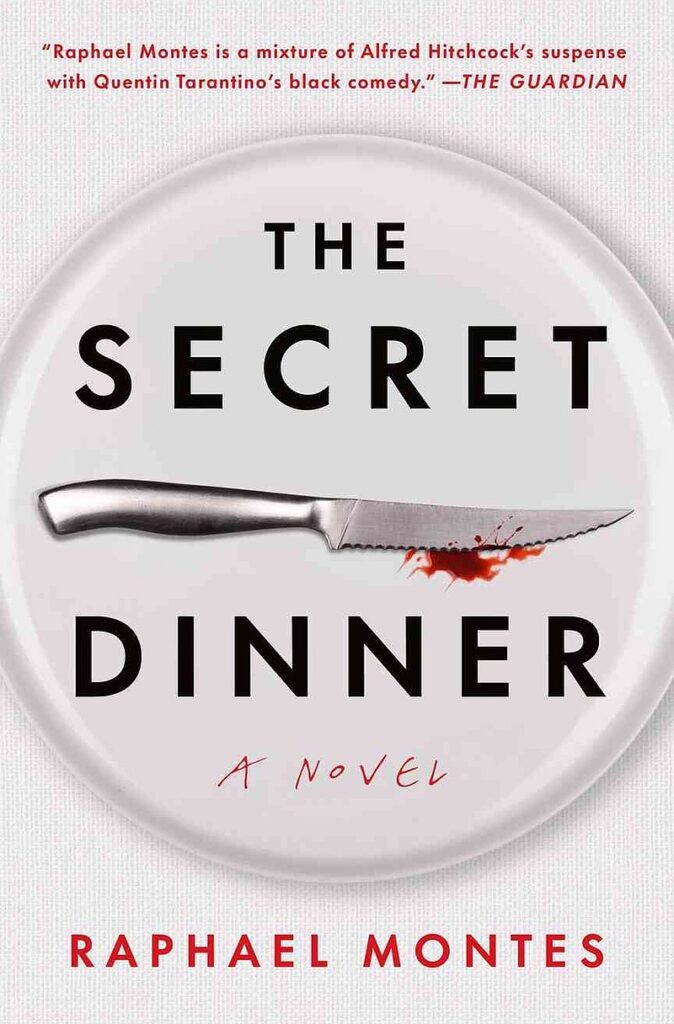
Raphael Montes’ The Secret Dinner, translated by Zoe Perry, offers perhaps the most immediately outrageous premise in the collection.
Four financially struggling friends become involved in an underground scheme involving exclusive dinner parties for wealthy residents of Rio de Janeiro.
Then, at the beginning of the novel, a blood-covered man walks into a police station and confesses to a crime whose explanation has not yet been revealed.
That opening creates an obvious question:
What on earth happened?
The answer, presumably, is complicated.
And that is exactly what readers of thrillers want. (News Tribune)
“Centroeuropa”: A Historical Mystery
Vicente Luis Mora’s Centroeuropa, translated by Rahul Bery, moves the genre into early-19th-century Europe.
A recently widowed man attempts to establish a new life in a distant village.
Then he discovers frozen corpses beneath the earth.
And instead of finding one body, he finds another.
The discovery turns an apparently ordinary historical setting into a speculative mystery.
This is an example of how translated crime fiction can cross genres:
historical fiction + mystery + speculative fiction.
That combination can be far more unpredictable than a conventional detective story.
“The Camino”: A Mystery Along a Famous Pilgrimage
Anya Niewierra’s The Camino, translated by Eileen Stevens, uses one of Europe’s most recognizable travel routes as the setting for a psychological mystery.
A woman whose husband has died by suicide decides to walk the Camino de Santiago, following the path he once traveled.
But the journey gradually forces her to reconsider what she thought she knew about her husband.
Travel becomes investigation.
The physical journey becomes a search for truth.
And the landscape itself becomes part of the mystery. (News Tribune)
This is a particularly effective structure because the reader experiences two journeys simultaneously:
Where is she going?
and
Who was her husband really?
“The Final Problem”: Sherlock Holmes Comes Back
Arturo Pérez-Reverte’s The Final Problem, translated by Frances Riddle, takes a playful approach to detective fiction.
The story is set in 1960 on a Greek island cut off from the outside world by a storm.
An actor who once portrayed Sherlock Holmes is forced to become a detective when a possible murder occurs.
That premise allows Pérez-Reverte to play with the mythology of Holmes while constructing a mystery of his own.
The character is not Holmes.
He simply played Holmes.
But now he has to behave like the fictional detective he once portrayed.
That creates an entertaining collision between literature, performance and reality. (News Tribune)
“Broken Truths”: Murder and Literary History in Milan
Alessandro Robecchi’s Broken Truths, translated by Gregory Conti, takes readers to modern Milan.
A retired film director begins researching a comeback movie based on the death of Italian crime novelist Augusto De Angelis, who was active during the 1930s.
Then the widow living next door is murdered.
Suddenly the director’s historical investigation becomes connected to a contemporary crime.
The book therefore creates a mystery inside a mystery:
What happened decades ago, and why does it matter now?
That structure also demonstrates how crime fiction can use literary history as raw material.
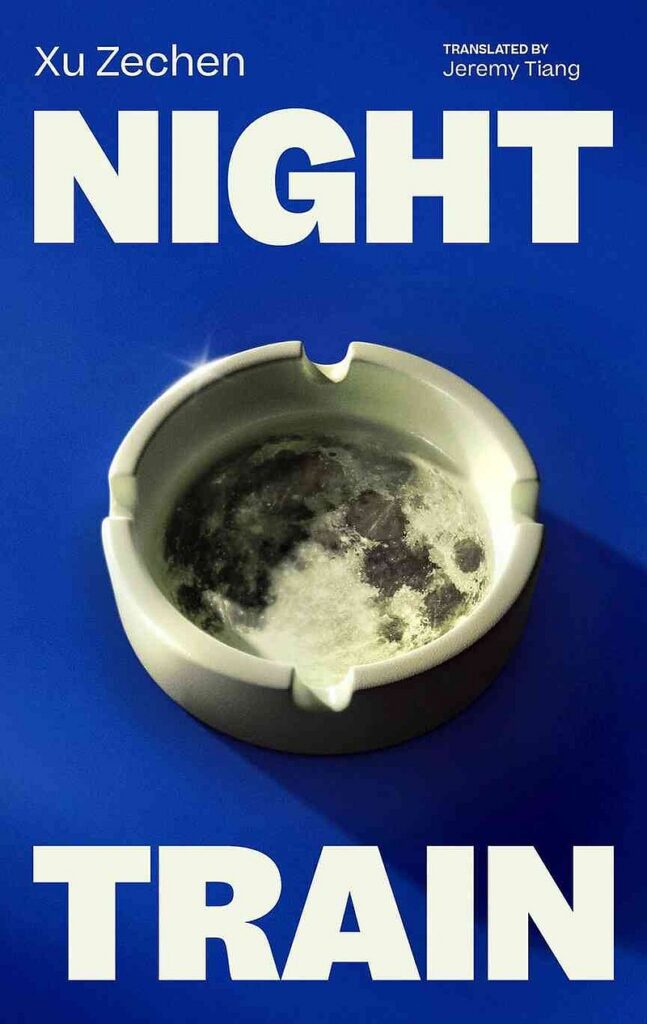
“Night Train”: A Journey That Changes Everything
Xu Zechen’s Night Train, translated by Jeremy Tiang, begins with a young graduate student who wants money from his father to fund a train journey before returning to university.
The father refuses.
Then the son arrives home late at night claiming he has killed someone.
He takes the money and leaves.
When he eventually returns, however, everyone believes he really is a murderer.
The premise raises a fascinating question about perception:
What if everyone believes you committed a crime—even if the truth is more complicated?
The train journey becomes more than transportation.
It becomes a vehicle for identity, suspicion and transformation. (News Tribune)
What These 12 Books Have in Common
At first glance, the books seem wildly different.
One features a haunted mansion.
Another follows an Innu man after prison.
Another revolves around a mysterious cat.
Another involves wealthy Brazilian dinner parties.
Another puts a former Sherlock Holmes actor on a Greek island.
But together they reveal several major trends in modern translated crime fiction.
1. Crime is increasingly global
The genre no longer belongs to any single literary tradition.
2. Translation is becoming more visible
Publishers are investing in bringing international authors to English-language readers.
3. Genre boundaries are disappearing
Mystery now comfortably overlaps with horror, historical fiction, literary fiction, family drama and psychological suspense.
4. Local culture matters
The best translated mysteries don’t simply transplant an English-style detective into another country.
They allow the setting to influence the story itself.
5. The detective isn’t always the hero
Sometimes the real subject is trauma, memory, family, migration or social inequality.
Why Readers Should Look Beyond English-Language Crime Fiction
English-language crime fiction is enormous.
There is no shortage of excellent American and British mysteries.
But reading exclusively within one language creates a subtle limitation.
You become accustomed to a particular set of assumptions about:
- detectives;
- police;
- justice;
- crime;
- suspects;
- social institutions;
- and narrative structure.
Translated fiction disrupts those assumptions.
It forces readers to encounter unfamiliar approaches.
That is one reason translated literature can be so refreshing.
Crime Fiction as Cultural Tourism
There is another benefit.
Crime novels can function as a form of literary tourism.
You can walk through:
Dakar.
Tokyo.
Milan.
Beijing.
Rio de Janeiro.
Iceland.
The Camino de Santiago.
You may never physically visit those places, but you encounter their streets, institutions, histories and social tensions through fiction.
And unlike a conventional travel guide, crime fiction gives you something a guidebook cannot:
a reason to care about what happens there.
The Translator Deserves Equal Attention
One of the most overlooked figures in international publishing is the translator.
Readers often remember the author’s name.
They may forget the translator’s.
Yet the translator is responsible for constructing the bridge between two literary cultures.
The 12 books highlighted in this selection involve translators working from Japanese, French, Swedish, Innu/French, Icelandic, Portuguese, Spanish, Dutch, Italian and Chinese literary traditions. (News Tribune)
That’s a remarkable amount of linguistic and cultural variety in one reading list.
Without translators, most English-speaking readers would never encounter these stories.
Why Publishers Are Investing in Translation
The growth of translated crime fiction also reflects changes in publishing.
Readers increasingly seek international perspectives.
Streaming television has helped popularize foreign-language storytelling.
Scandinavian television dramas, Korean thrillers, Japanese mysteries and European crime series have demonstrated that audiences don’t need stories to originate in English to become global hits.
Books are following the same path.
A successful translated novel can now find readers across multiple markets.
The Future of International Crime Fiction
The next stage may be even more global.
Readers are becoming increasingly comfortable switching between cultures.
Digital publishing makes international recommendations easier to discover.
Book clubs can build entire reading programs around a particular country or region.
Publishers are also increasingly looking for distinctive voices rather than simply reproducing familiar genre formulas.
That creates an opportunity for crime fiction from parts of the world that have historically received less attention in English.
Final Thoughts
The murder mystery may have started in a Parisian apartment with Edgar Allan Poe, but the genre has traveled a very long way since then.
Today’s translated crime fiction can take readers into haunted Japanese mansions, Dakar streets, Swedish communities, Innu territories, Icelandic homes, Brazilian underground societies, Spanish literary puzzles, Italian cities and Chinese railway journeys.
That is the real attraction of reading crime in translation.
The mystery changes—but so does the world around it.
A good detective novel asks:
Who did it?
A great translated detective novel asks another question:
What does this crime reveal about the society in which it happened?
For readers looking beyond the familiar shelves of English-language mysteries, these books offer exactly that opportunity.
They deliver suspense, puzzles and surprises—but also something harder to find:
a passport to other literary cultures.
5 Frequently Asked Questions
1. Why should I read crime novels in translation?
Translated crime fiction offers familiar genre pleasures while introducing different cultures, settings, social issues and storytelling traditions. It can broaden your understanding of how different societies approach crime, justice and mystery.
2. What countries are represented in this selection?
The 12-book selection spans a wide range of literary cultures, including Japan, Senegal, Sweden, Canada, Iceland, Brazil, Spain, the Netherlands, Italy and China. (News Tribune)
3. Are translated mysteries difficult to read?
Not necessarily. Modern literary translations are generally written to feel natural and accessible in English while preserving important elements of the original work. The best translations allow readers to experience a foreign literary tradition without making the prose feel artificially unfamiliar.
4. Which translated mystery should beginners start with?
Readers who enjoy classic detective puzzles may want to begin with The Clock House Murders or The Final Problem. Those interested in psychological suspense might prefer The Camino or Dead Weight, while readers seeking literary and social themes could explore Ninan or Felix Faure Street. The original selection deliberately covers several different styles rather than one narrow definition of crime fiction. (News Tribune)
5. Why are translators so important to international crime fiction?
Translators do far more than convert individual words. They must recreate tone, humor, cultural references, dialogue, idioms and social context for a new readership. In translated crime fiction, even small choices can affect how clues, character voices and crucial pieces of evidence are understood. The translators credited across this selection are therefore an essential part of bringing these international mysteries to English-language readers.
Sources New Tribune

