

Real-time language translation has long been a technological ambition—promised in science fiction but difficult to achieve in everyday life. With its latest major upgrade, Timekettle’s in-ear AI translation technology is pushing that promise closer to reality. The company’s newest system claims faster processing, improved accuracy, more natural speech flow, and broader language support—raising fresh questions about how AI translation may reshape travel, work, education, and cross-cultural interaction.
While the technology is impressive, it also highlights ongoing trade-offs between speed, nuance, privacy, and human understanding.
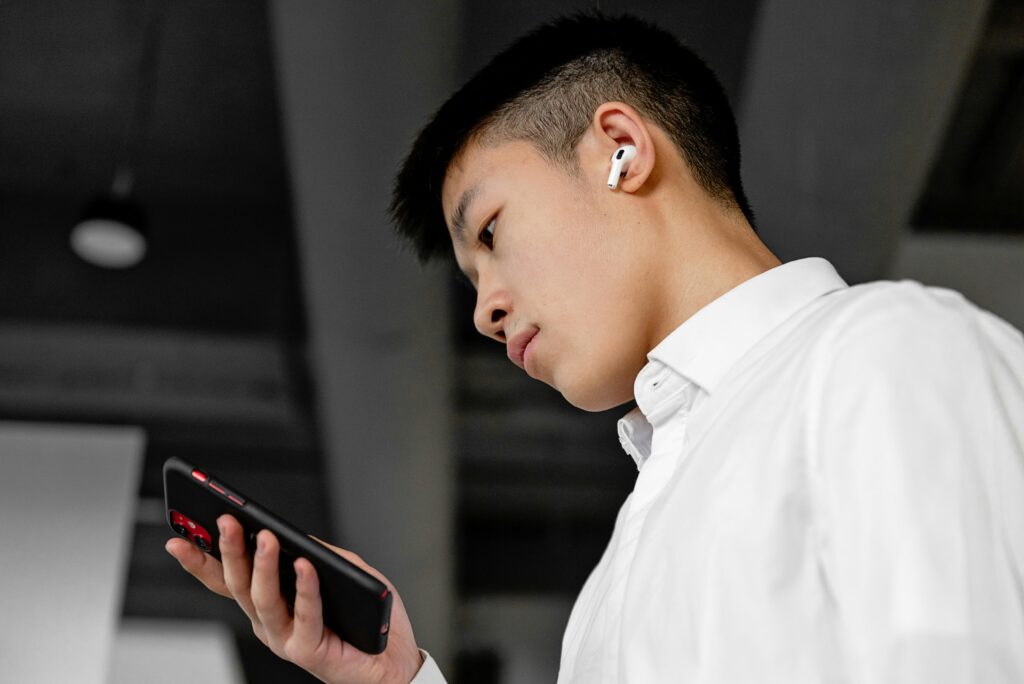
What Is Timekettle’s In-Ear AI Translation Technology?
Timekettle produces wireless earbuds designed to translate spoken language in real time. Unlike traditional translation apps that require phones or pauses between sentences, these earbuds aim to support continuous, near-simultaneous conversation.
Key features include:
- Two-way spoken translation
- Hands-free operation
- AI-powered speech recognition and synthesis
- Cloud and on-device processing
The recent upgrade focuses on reducing lag, improving natural conversation flow, and expanding supported languages and dialects.
What’s New in the Latest Upgrade?
Faster and Smoother Translation
One of the most significant improvements is reduced latency. Conversations now feel more fluid, with fewer awkward pauses that previously disrupted natural dialogue.
Improved Accuracy and Context Handling
The upgraded AI model better handles:
- Accents and regional variations
- Informal speech and idioms
- Conversational interruptions
This makes the technology more usable in real-world scenarios rather than controlled demonstrations.
Expanded Language Support
The system now supports more languages and regional dialects, making it more practical for international travelers, business users, and multilingual communities.
Better Noise Handling
Enhanced noise filtering allows the earbuds to function more reliably in busy environments such as airports, conferences, and city streets.
How the Technology Works (In Simple Terms)
- Speech is captured by microphones in the earbuds
- AI converts spoken language into text
- Machine translation generates an equivalent message in the target language
- AI-generated speech plays the translation into the listener’s ear
This entire process happens in seconds—sometimes fractions of a second—depending on connection quality and processing mode.
Real-World Applications
Travel and Tourism
Travelers can:
- Communicate with locals more easily
- Navigate transportation and services
- Reduce reliance on phrasebooks or screens
Business and Professional Settings
The technology enables:
- Multilingual meetings
- Cross-border collaboration
- Faster negotiation and relationship-building
Education and Cultural Exchange
Students and educators can engage across languages with fewer barriers, supporting international programs and cultural learning.
Healthcare and Emergency Contexts
In controlled settings, such tools may assist with basic communication—though they are not replacements for professional interpreters in high-risk scenarios.

What the Technology Still Can’t Do Well
Despite advances, limitations remain:
Nuance and Emotional Subtlety
AI translation still struggles with:
- Humor and sarcasm
- Cultural references
- Emotional tone
Complex or Technical Language
Specialized vocabulary—medical, legal, or academic—can reduce accuracy.
Dependence on Connectivity
Cloud-based features require stable internet access, limiting usefulness in remote areas.
Privacy and Ethical Considerations
Data Handling
Real-time translation involves capturing and processing spoken conversations, raising concerns about:
- Audio data storage
- Cloud processing transparency
- User consent
Users must trust that conversations are not retained or misused.
Social Impact
Widespread adoption of AI translation may:
- Reduce motivation to learn languages
- Shift power dynamics in multilingual spaces
- Create overreliance on imperfect systems
These effects remain under discussion among linguists and technologists.
Will AI Translation Replace Human Interpreters?
Not anytime soon.
Human interpreters provide:
- Cultural mediation
- Ethical judgment
- Emotional intelligence
- Accountability
AI tools like Timekettle’s are best understood as assistive technologies, not replacements—especially in healthcare, diplomacy, and legal contexts.
The Future of Wearable Translation
Timekettle’s upgrade signals broader trends:
- More wearable AI interfaces
- Increasingly invisible technology
- Language translation embedded into daily life
As AI improves, translation may become as seamless as noise cancellation—always present, rarely noticed.
Frequently Asked Questions (FAQs)
How accurate is Timekettle’s real-time translation?
Accuracy is high for everyday conversation but decreases with slang, technical language, or emotional nuance.
Does it work offline?
Some features may work offline with limited language packs, but full functionality usually requires internet access.
Is it suitable for professional interpreting?
No. It is useful for casual and semi-formal communication but not for high-stakes or sensitive interactions.
How many languages are supported?
The latest upgrade supports dozens of languages and dialects, with ongoing expansion planned.
Is my conversation data stored?
Data policies vary by mode and region. Users should review privacy settings carefully.
Can two people talk naturally at the same time?
Conversation flow has improved, but overlapping speech can still cause issues.
Who benefits most from this technology?
Travelers, international professionals, students, and multilingual families benefit most.
Conclusion
Timekettle’s upgraded in-ear AI translation technology represents a major step toward frictionless global communication. By making translation faster, more natural, and more wearable, it brings us closer to a world where language barriers are less restrictive.
Yet even as the technology improves, it remains a tool—not a substitute—for cultural understanding, empathy, and human connection. The future of translation will not eliminate language differences, but it may help us navigate them with greater ease and confidence.
Sources Gizmodo

