
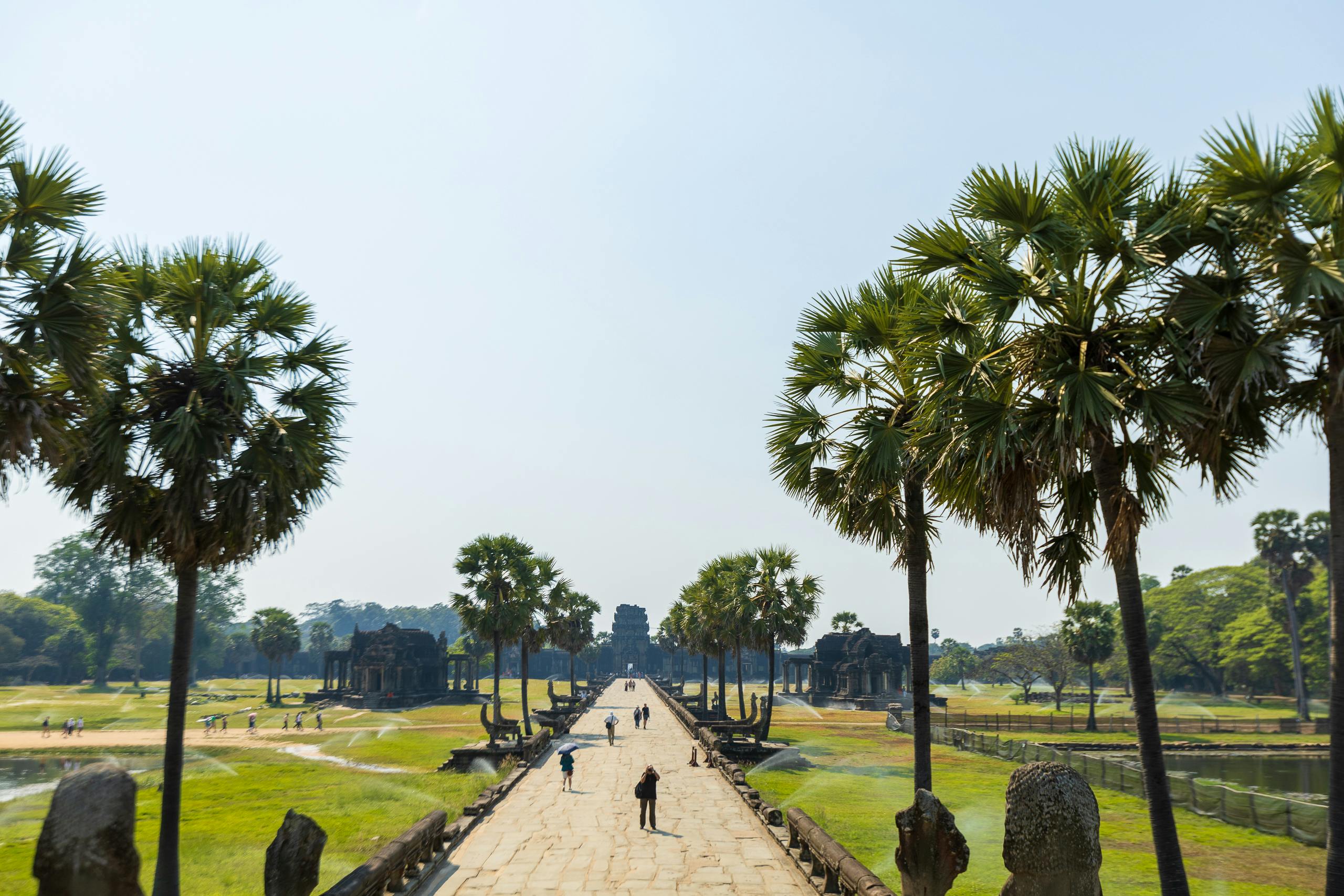
Cambodia has spent decades rebuilding its image as a peaceful, welcoming destination defined by Angkor Wat, rich culture, and resilient communities. Yet just as tourism begins to recover from pandemic-era collapse, the country faces a new and deeply damaging challenge: a global reputation increasingly shaped by border tensions and the rise of criminal scam operations operating near its frontiers.
The impact goes far beyond headlines. It affects livelihoods, foreign investment, diplomatic relations, and how Cambodia is perceived by the world—often unfairly and without nuance.

1. Tourism is vital to Cambodia’s economy
Before global travel disruptions, tourism was one of Cambodia’s most important economic pillars.
The sector:
- Employed millions directly and indirectly
- Supported small businesses, artisans, guides, and hospitality workers
- Fueled development in Siem Reap, Phnom Penh, coastal regions, and border towns
For many Cambodians, tourism is not optional income—it is survival.
Any shock to visitor confidence ripples quickly through the economy.
2. Border tensions amplify traveler anxiety
Cambodia shares long, complex borders with Thailand, Laos, and Vietnam. While most disputes are localized and rarely affect tourist areas, news of border tensions can have an outsized psychological effect on travelers.
For international tourists:
- Headlines blur distinctions between border zones and tourist centers
- Regional instability is often perceived as nationwide risk
- Travel advisories tend to err on the side of caution
Even when incidents are isolated, perception alone can reduce bookings and airline routes.
3. The scam hub stigma: a modern reputational crisis
Perhaps more damaging than border disputes is Cambodia’s association—fair or not—with online scam operations.
Over recent years, criminal networks operating across Southeast Asia have:
- Established scam centers in poorly regulated border regions
- Exploited migrant labor through coercion and trafficking
- Used Cambodia’s image as a cover for illicit activity
International media coverage often paints with a broad brush, creating the impression that scams are a defining national feature rather than a criminal problem Cambodia is actively battling.
4. Why scam hubs flourish near borders
Border regions are particularly vulnerable to organized crime due to:
- Jurisdictional complexity
- Limited local enforcement capacity
- High levels of cross-border movement
- Economic desperation
These conditions exist across many countries—not just Cambodia—but reputational damage is unevenly distributed.
5. The human cost behind the headlines
Lost amid discussions of scams and security are the victims themselves.
These include:
- Trafficked workers forced to operate scams
- Local residents whose communities are stigmatized
- Tourism workers losing income due to canceled trips
The narrative often ignores that Cambodia is simultaneously a victim of transnational crime and a frontline battleground against it.
6. Government response: progress and limitations
Cambodia has taken steps to address the issue:
- Law enforcement crackdowns on scam centers
- Cooperation with neighboring countries
- Public commitments to anti-trafficking efforts
- Increased scrutiny of suspicious developments
However, progress is uneven. Limited resources, corruption risks, and the international nature of these crimes make enforcement difficult.
The challenge is not denial—but capacity.

7. How the stigma affects tourism specifically
The damage to tourism manifests in subtle but powerful ways:
- Travelers confuse border crime with safety in major cities
- Group tours and cruise operators quietly reroute itineraries
- Insurance and tour operators raise risk assessments
- Travel influencers avoid destinations perceived as “controversial”
Once a reputation hardens, reversing it takes years—not months.
8. Cambodia beyond the headlines
The reality most visitors experience is starkly different:
- Tourist areas remain largely safe and welcoming
- Hospitality culture remains strong
- Major attractions are far from border crime zones
- Visitors are rarely exposed to scam activity firsthand
The disconnect between lived experience and international perception is one of Cambodia’s greatest challenges.
9. Regional cooperation is the only real solution
Scam operations do not respect borders.
Effective solutions require:
- Joint policing and intelligence sharing
- Labor protections for migrant workers
- Financial tracking across jurisdictions
- Coordinated messaging to prevent misinformation
No single country can solve this alone—and Cambodia should not be singled out for a regional problem.
10. What responsible travelers should understand
Tourists play a role in shaping narratives.
Informed travelers can:
- Distinguish between border regions and tourist centers
- Support ethical tourism businesses
- Avoid spreading sensationalized or inaccurate claims
- Recognize Cambodia’s efforts rather than dismiss them
Tourism grounded in awareness helps counter stigma.
Conclusion: A fragile moment for Cambodia’s image
Cambodia stands at a critical juncture.
Border tensions and scam hub stigma threaten to undo years of progress in tourism and development—not because the country is unsafe, but because perception has outpaced reality.
The challenge ahead is not only enforcement, but storytelling: ensuring that Cambodia is seen not as a cautionary tale, but as a nation confronting complex regional problems while remaining open, resilient, and welcoming.
How the world responds will shape not just Cambodia’s tourism industry—but its place in the regional future.
Frequently Asked Questions (FAQ)
1. Is Cambodia unsafe for tourists?
No. Most tourist areas are safe, and incidents linked to scams occur primarily in specific border zones.
2. Are tourists targeted by scam operations in Cambodia?
Rarely. Most scams target foreigners online or involve trafficked workers, not visitors.
3. Why do scam hubs affect tourism if tourists aren’t involved?
Perception matters. Headlines can influence travel decisions even when risks are unrelated.
4. Are border tensions widespread?
No. They are usually localized and do not affect major tourist destinations.
5. Is Cambodia doing anything to stop scam operations?
Yes. Authorities have conducted raids, arrests, and increased cooperation with neighboring countries.
6. Why are border regions more vulnerable?
Weak enforcement, cross-border movement, and economic hardship create opportunities for crime.
7. Does this affect all of Cambodia equally?
No. Tourist hubs like Siem Reap and Phnom Penh are largely unaffected operationally.
8. How can travelers support Cambodia responsibly?
Choose ethical operators, stay informed, and avoid spreading exaggerated claims.
9. Is this problem unique to Cambodia?
No. Similar scam networks operate across Southeast Asia and beyond.
10. Will Cambodia’s tourism recover?
Yes, but rebuilding trust and reputation will take time and sustained effort.

Sources CNBC

