
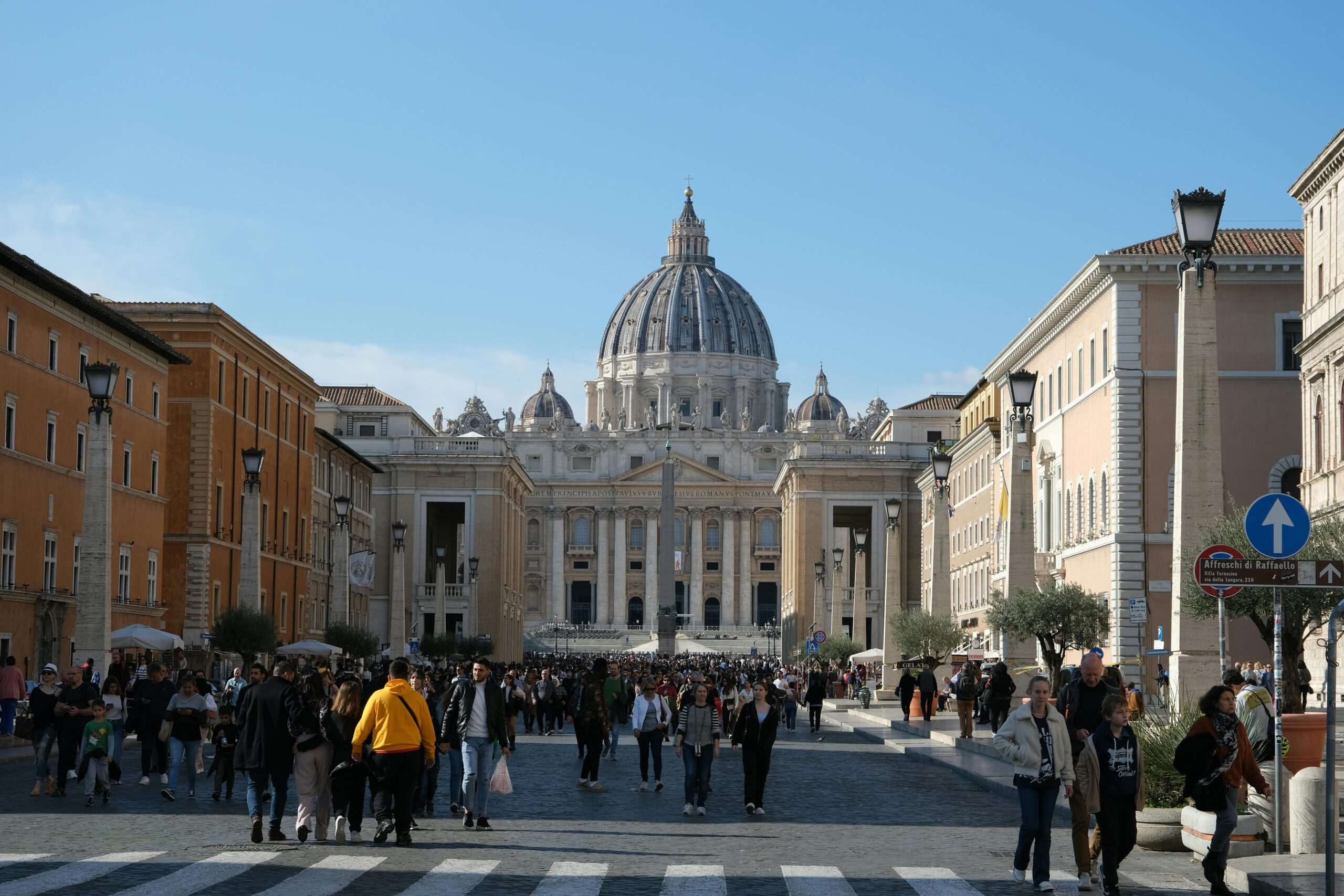
In a landmark fusion of faith and technology, the Vatican has announced that it will use artificial intelligence to translate Mass into 60 languages at St. Peter’s Basilica. The move represents one of the most visible examples yet of AI entering a sacred space — not as a replacement for tradition, but as a tool to expand access to it.
For centuries, Catholic liturgy was primarily conducted in Latin. In recent decades, Mass has been celebrated in local languages around the world. Now, AI-powered translation promises to bring real-time linguistic inclusion to one of Christianity’s most globally symbolic venues.
But beyond convenience, this development raises broader questions about technology, theology, inclusivity, and the evolving relationship between religion and innovation.
A Global Church Meets a Global Technology
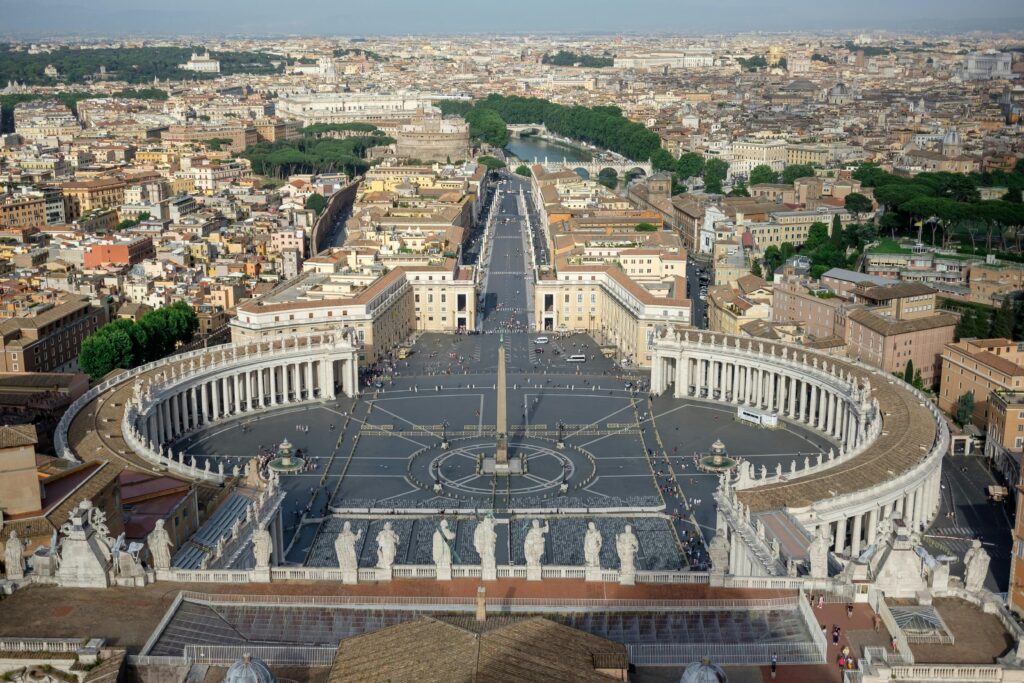
The Catholic Church serves more than 1.3 billion adherents worldwide. Pilgrims from every continent gather at St. Peter’s Basilica for papal audiences, feast days, and special Masses.
Until now, language access during large gatherings depended on:
- Printed missals
- Pre-translated program booklets
- Human interpreters
- Radio translation services
AI translation will now offer near-instantaneous rendering of homilies, scripture readings, and liturgical responses into dozens of languages, accessible via personal devices or Basilica-provided systems.
The goal is simple: no pilgrim should feel linguistically excluded from worship.
How the AI Translation System Works
While specific technical details may vary, systems of this scale typically involve:
- Speech-to-text recognition capturing the celebrant’s voice in real time.
- Neural machine translation models trained on religious texts and liturgical vocabulary.
- Text-to-speech or caption output delivered via headsets, screens, or mobile apps.
Crucially, liturgical language differs from everyday speech. The AI must handle:
- Biblical phrasing
- Theological terminology
- Formal ecclesiastical tone
- Ritual repetition
This requires specialized training datasets to ensure doctrinal accuracy.
Why Religious Context Is Uniquely Challenging for AI
Translating religious content is not like translating casual conversation.
Challenges include:
- Preserving sacred tone and reverence
- Avoiding doctrinal misinterpretation
- Managing archaic language forms
- Ensuring gender and theological neutrality where required
Even subtle errors can alter meaning significantly. For example, a mistranslation in a scriptural passage could shift theological nuance.
To mitigate risk, human oversight and pre-event testing are likely central to the implementation.
Inclusion as a Core Motivation
The Vatican has increasingly emphasized global inclusion.
Pilgrims visiting Rome come from:
- Africa
- Asia
- Latin America
- Eastern Europe
- Indigenous communities
Real-time AI translation supports:
- Migrant communities
- Tourists unfamiliar with Italian or Latin
- Multilingual congregations
- Hearing-impaired worshippers via captioning
In this sense, AI becomes a pastoral tool — serving unity through comprehension.
Technology and Tradition: A Delicate Balance
The Catholic Church has historically engaged cautiously with technological change, yet it has also adapted over centuries — from the printing press to radio broadcasts to live-streamed services during the pandemic.
AI translation represents:
- Continuity with a mission of evangelization
- Recognition of digital-era realities
- A practical solution for global gatherings
However, church leaders must balance innovation with reverence. Worship is not a tech demonstration; it is a spiritual act.

Privacy and Data Concerns
Using AI in a sacred setting introduces questions about:
- Audio data storage
- Voice capture policies
- Data retention
- Third-party technology partnerships
Transparency around how speech is processed and stored will be essential to maintaining trust among worshippers.
Could AI Spread Beyond St. Peter’s?
If successful, AI translation could expand to:
- Papal visits abroad
- Major Catholic conferences
- World Youth Day gatherings
- Diocesan events in multilingual regions
Smaller parishes in diverse urban areas might also adopt similar tools, particularly in cities with immigrant communities.
Broader Implications for Interfaith Dialogue
The Vatican’s adoption of AI may influence other religious institutions.
Faith communities across traditions — Islam, Judaism, Buddhism, Protestant Christianity — also serve multilingual congregations.
AI-assisted translation could enhance:
- Interfaith conferences
- Global religious broadcasts
- Cross-cultural theological exchange
Technology may foster greater global spiritual dialogue.
The Risk of Over-Reliance
Despite its promise, AI translation is not infallible.
Risks include:
- Misinterpretation of idioms
- Technical glitches during live services
- Overdependence on automated systems
Human interpreters may still play a critical role, especially during high-profile events.
A Symbolic Step in the Digital Age
The Vatican’s move signals more than operational convenience. It symbolizes the Church’s recognition that digital tools are now part of the human experience.
By embracing AI translation, St. Peter’s Basilica becomes not just a monument of history, but a living institution adapting to global realities.
Language has always been central to faith. Now, technology helps carry that language farther.
Frequently Asked Questions (FAQ)
1. Why is the Vatican using AI for translation?
To make Mass accessible to pilgrims from diverse linguistic backgrounds.
2. How many languages will be supported?
Approximately 60 languages.
3. Will AI replace human interpreters?
Not entirely; human oversight is likely to remain essential.
4. Is this the first time AI has been used in church services?
It is one of the highest-profile implementations at a major global religious site.
5. How accurate is AI translation for religious texts?
Accuracy is improving but requires specialized training for theological precision.
6. Will the service be available on personal devices?
Likely via apps or provided devices within the Basilica.
7. Are there privacy concerns?
Yes, especially regarding audio data processing and storage.
8. Could other churches adopt this technology?
Yes, particularly in multilingual communities.
9. Does this change the liturgy itself?
No, it changes accessibility, not the content of worship.
10. What is the broader significance?
It reflects how religious institutions are integrating AI to serve global communities.

Sources Euro News

