
A quiet revolution is happening in the Andes — and it’s chirping
Some revolutions don’t come with noise, protests, or headlines.
Some arrive as a notification:
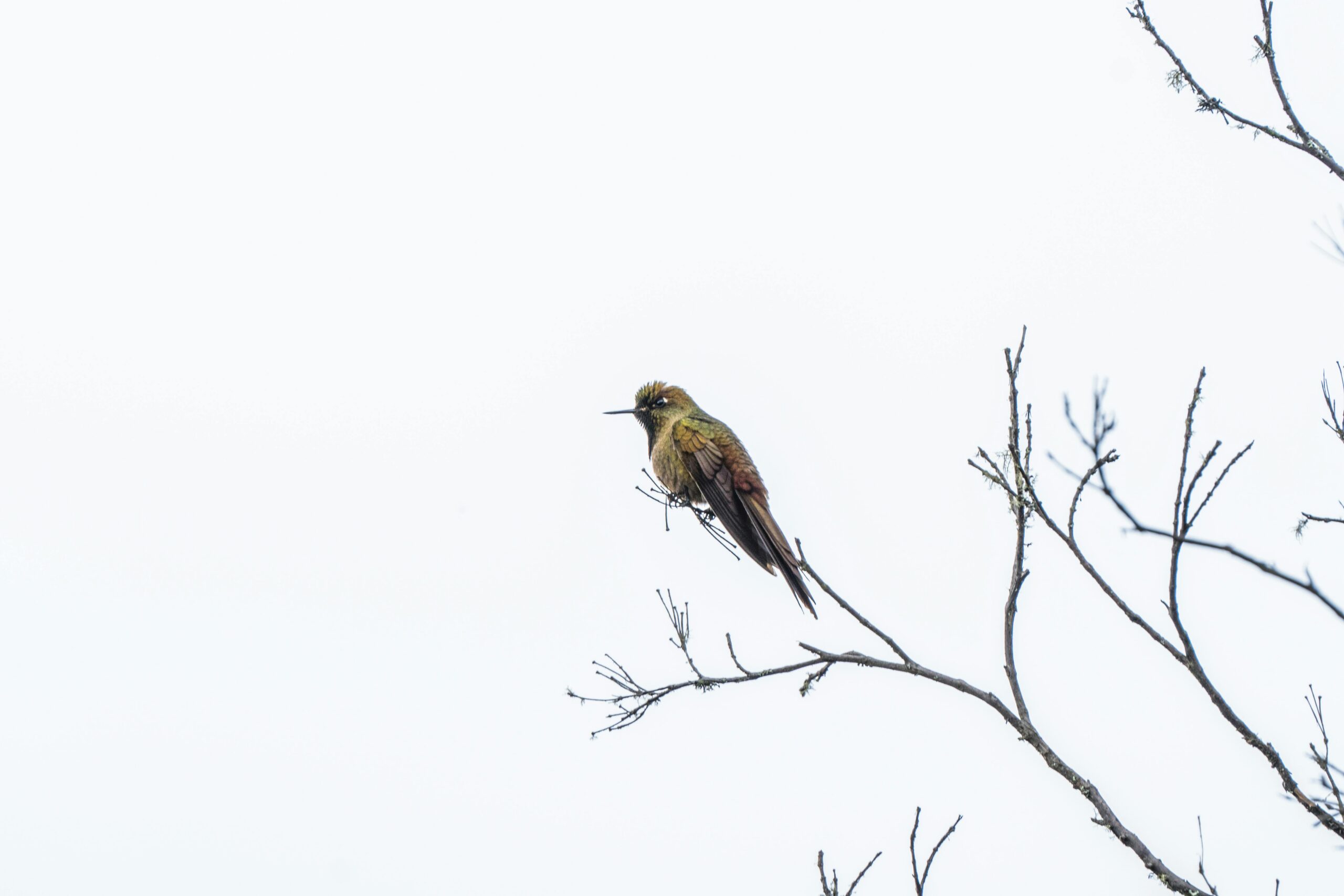
“Bird detected: Rufous-tailed Hummingbird.”
In Colombia, one of the most biodiverse countries on Earth, birdwatching is no longer just a hobby. It’s becoming a digital-native conservation economy, powered by smartphone apps like Merlin Bird ID and eBird.
And tourism? It’s evolving into something sharper, smarter, and strangely poetic: data-driven nature travel.
🌎 Why Colombia became the global birding capital
Let’s be blunt: Colombia is unfairly rich in birds.
- Over 1,900+ bird species (the highest in the world)
- Three major mountain ranges (Andes splitting into ecological “islands”)
- Amazon rainforest, Pacific coast, Llanos savannas—all in one country
That means one thing for birders:
You don’t travel far. You travel dimensionally.
A single region can host dozens of endemics you won’t find anywhere else on Earth.
But biodiversity alone didn’t trigger the boom.
What changed everything was access + safety + technology.
After the 2016 peace deal, previously inaccessible rural regions opened up. Suddenly, forests that were once “off-limits” became premium eco-tourism zones.
📱 The app layer: when birding went digital
Here’s the real disruption:
1. Merlin Bird ID = instant field intelligence
Instead of memorizing bird calls for years, users can now:
- Record a sound
- Snap a photo
- Get near-instant species suggestions
It’s basically “Shazam for birds,” but smarter over time.
2. eBird = global citizen science machine
Every sighting becomes:
- A timestamp
- A geotag
- A global biodiversity record
Millions of data points feed into:
- migration tracking
- habitat mapping
- climate change research
Birdwatching stopped being passive. It became scientific infrastructure.
And Colombia is one of its fastest-growing data regions.
💰 Birding tourism: a new rural economy model
In places like Valle del Cauca and the Andean foothills, birding lodges are doing something quietly radical:
They’re replacing extractive land use with “watching-based income.”
Instead of:
- logging forests
- expanding cattle land
- mining ecosystems
You get:
- guides
- small lodges
- restricted group tours
- conservation-linked revenue
One lodge may only accept 6–10 visitors per day.
That’s not inefficiency. That’s ecosystem economics.
Because birds don’t scale like factories. They scale like trust.
🌿 Conservation incentive loop (this is the key insight)
Here’s the flywheel:
- Forest stays intact
- Birds remain diverse
- Birders arrive
- Money flows into local households
- Communities protect forest
- Repeat
It’s not perfect. But it’s one of the few tourism models where:
The product literally disappears if you destroy it.
No forest = no birds = no business.
That’s a brutally honest market mechanism.
⚠️ The uncomfortable questions nobody can ignore
Let’s not romanticize this too hard.
Experts raise real concerns:
1. Over-tourism risk (slow but real)
If birding becomes “trendy luxury eco-tourism,” prices rise and locals can be pushed out.
2. Behavioral disturbance
Too many visitors can:
- stress nesting birds
- alter feeding patterns
- disrupt migration corridors
3. Data bias problem
Apps like eBird skew toward:
- foreign users
- high-access locations
- well-funded tourism routes
Meaning: biodiversity maps may reflect tourism routes more than ecology reality.
🧠 The AI angle most people miss
Birding apps are quietly becoming machine learning ecosystems.
Every upload trains:
- species recognition models
- acoustic classifiers
- habitat prediction systems
In Colombia specifically, researchers are experimenting with AI tools for:
- automatic species detection from audio
- habitat risk modeling
- biodiversity forecasting systems
So the tourist with a phone isn’t just observing nature.
They’re feeding a global AI conservation network.
No drama. Just data.
🏞️ Local impact: pride, identity, and post-conflict landscapes
There’s a deeper cultural shift happening:
Birding is helping rural Colombia:
- rebuild identity after conflict
- shift from violence narrative → biodiversity narrative
- create pride in local ecosystems
Guides aren’t just employees. They’re becoming:
- ecological translators
- cultural storytellers
- conservation entrepreneurs
🔮 Where this is going next
The trajectory is clear:
- AR birding overlays (still emerging)
- AI-powered route planning for birders
- real-time migration prediction dashboards
- eco-tourism carbon tracking
- “citizen biodiversity credits”
Future birders might not just see birds.
They’ll navigate them like live systems on a map.
❓ FAQ: What people usually want to know
1. Why is Colombia so important for birdwatching?
Because it has the highest bird species diversity on Earth, across mountains, forests, and coastlines.
2. What are Merlin and eBird used for?
Merlin helps identify birds using AI. eBird records sightings and contributes to global biodiversity science.
3. Is birdwatching tourism actually good for conservation?
It can be—when managed well. It creates economic value for keeping forests intact, but requires strict visitor control.
4. Do locals benefit from this tourism?
Yes, especially rural communities that run lodges, guide services, and transport networks. But equity varies by region.
5. Can anyone use these apps?
Yes. They’re free and widely used by both beginners and professional ornithologists.
6. Is this tourism sustainable long-term?
Conditionally yes—but only if:
- visitor numbers are controlled
- habitats remain protected
- local communities retain control
🌿 Final thought
Colombia didn’t just become a birding hotspot.
It became a test case for something bigger:
Can technology, tourism, and ecology share the same operating system without crashing nature?
Right now, the answer is cautiously optimistic.
But ecosystems don’t scale on optimism.
They scale on discipline.
And birds—quiet, ancient, indifferent—are still the final auditors of that system.
Sources The New York Times

