
For most tourist destinations, attracting more visitors is the dream.
More visitors mean more money, more jobs, more businesses, and more economic activity.
But on a tiny island off Scotland’s west coast, success arrived so suddenly that residents decided they needed a weekly escape from the very tourists they had worked so hard to attract.
The Isle of Ulva, a remote island in Scotland’s Inner Hebrides with a population of just 16 people, has announced that it will close to visitors every Sunday during the summer season. The move comes after a dramatic surge in tourism that transformed the quiet island into one of Scotland’s most talked-about destinations almost overnight.
At first glance, the decision sounds unusual.
Why would a struggling rural community turn away tourists?
The answer reveals a much larger story about overtourism, community survival, quality of life, and the growing global debate over how much tourism is too much.
The Island That Suddenly Became Famous
For generations, Ulva existed largely outside the global tourism spotlight.
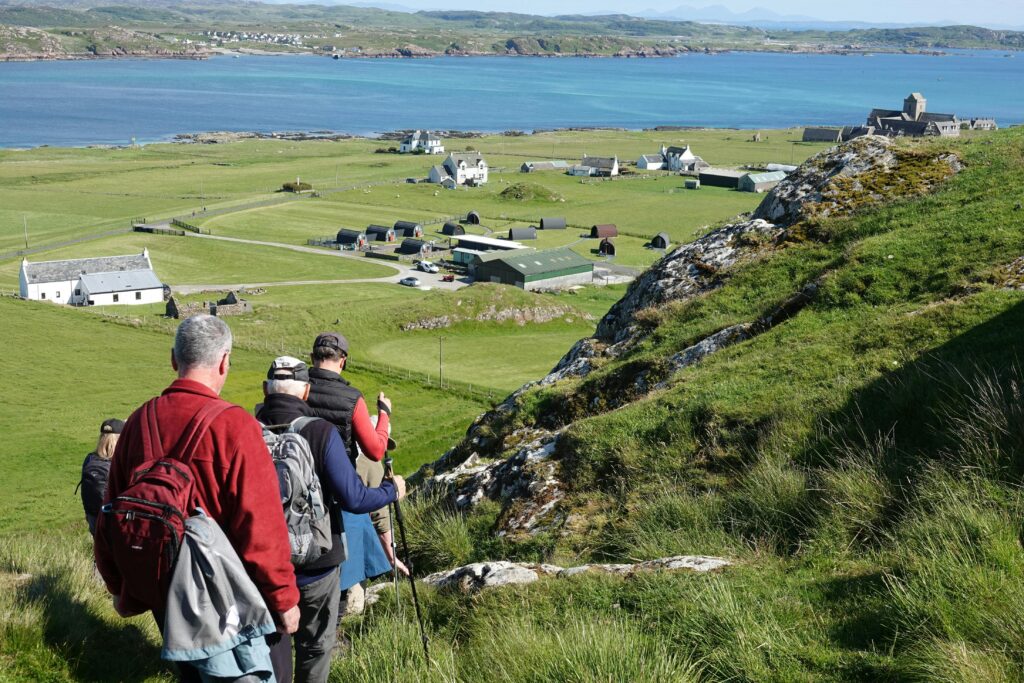
Located just off the coast of the larger Isle of Mull, the island covers roughly seven miles in length and remains one of the most sparsely populated inhabited islands in Scotland. There are no traffic lights, no major commercial centers, and very little modern infrastructure. Much of its appeal comes from its rugged landscapes, wildlife, walking trails, and sense of isolation.
Then television arrived.
A BBC Scotland series called Banjo and Ro’s Grand Island Hotel followed Australian interior designer Banjo Beale and his husband Ro Christopher as they transformed the historic Ulva House into a boutique hotel destination.
The show introduced millions of viewers to an island that many people had never previously heard of.
The result was immediate.
Visitor numbers surged.
Ferry demand increased.
Restaurants became busier.
Parking areas filled up.
The island suddenly found itself dealing with a problem many rural communities never expect: too much attention.
A Community of 16 People Cannot Operate Like a Major Resort
One detail makes Ulva’s situation especially remarkable.
Only 16 people live there.
That number includes adults and children.
Unlike large tourist destinations with extensive infrastructure, Ulva operates on an incredibly small scale.
The ferry crossing itself is short and simple.
Many island services depend on only a handful of workers.
When visitor numbers rise dramatically, the burden falls directly on residents.
Every extra tourist affects transportation, food service, maintenance, waste management, parking logistics, and emergency planning.
For larger cities, a sudden influx of visitors might be an inconvenience.
For a community of 16 people, it can fundamentally alter daily life.
That reality played a major role in the Sunday closure decision. Island operators explained that residents, ferry staff, hospitality workers, and local businesses needed time to recharge and prepare for the coming week.
The Return of the “Day of Rest”
There is also a cultural dimension to the decision.
Historically, many Scottish island communities observed Sundays differently from the rest of the week.
Parts of the Hebrides have long traditions of reduced commercial activity on Sundays, influenced by Presbyterian religious practices and community customs.
In some islands, Sunday ferry services were once limited or unavailable altogether.
The idea that one day each week should be reserved for rest is deeply embedded in parts of Scotland’s island culture.
While Ulva’s decision is primarily practical rather than religious, it reflects a broader belief that communities should not exist solely to serve visitors around the clock.
In an era where many tourism economies operate 24 hours a day, seven days a week, that philosophy feels almost radical.
Overtourism Is No Longer Just a Big-City Problem
When people hear the word “overtourism,” they often think of places like:
- Venice
- Barcelona
- Amsterdam
- Dubrovnik
- Santorini
These destinations have spent years struggling with overcrowding, rising housing costs, environmental pressure, and conflicts between residents and visitors.
But Ulva demonstrates that overtourism can affect even the smallest communities.
In fact, tiny destinations may be more vulnerable.
A city with hundreds of thousands of residents can absorb large visitor numbers.
An island with 16 residents cannot.
The ratio between visitors and locals becomes extreme very quickly.
A few hundred extra tourists might barely register in a major city.
For Ulva, it can completely reshape daily life.
Tourism Saved the Island — And Created New Challenges
The story becomes even more complicated when viewed through Ulva’s history.
Like many Scottish islands, Ulva experienced severe population decline over the last two centuries.
At one point, the island supported hundreds of residents.
Historical records suggest its population once approached 800 people before economic changes, land clearances, migration, and agricultural restructuring dramatically reduced resident numbers.
For decades, many Scottish islands struggled with:
- Population loss
- Aging demographics
- Economic decline
- School closures
- Reduced services
- Limited employment opportunities
Tourism became one of the few viable economic lifelines.
That means tourism is simultaneously helping preserve island communities while also creating new pressures.
This is the paradox facing many remote destinations.
Without visitors, communities decline.
With too many visitors, communities become overwhelmed.
Finding the balance is increasingly difficult.
The Community Buyout That Changed Everything
Another important part of Ulva’s story is ownership.
In 2018, the island was purchased through a community buyout supported by the Scottish Land Fund.
The acquisition ended centuries of private ownership and gave local residents greater control over the island’s future.
Community ownership has become an important movement across parts of rural Scotland.
Supporters argue that local control allows communities to prioritize long-term sustainability rather than short-term profit.
Ulva’s Sunday closure illustrates that philosophy in action.
Rather than maximizing visitor numbers at all costs, residents chose to protect community well-being.
From a purely business perspective, closing one day per week may seem counterintuitive.
From a community perspective, it may be essential.
The Hidden Infrastructure Problem
One issue often overlooked in tourism discussions is infrastructure.
The surge in visitors has already created parking challenges on neighboring Mull, where most tourists begin their journey to Ulva.
Local authorities have reported unprecedented parking demand near ferry access points and warned visitors against illegal roadside parking that could create safety and accessibility problems.
This highlights a broader reality:
Tourism impacts extend far beyond the destination itself.
Roads.
Parking.
Waste systems.
Water supplies.
Emergency services.
Transportation networks.
All experience pressure when visitor numbers increase.
For remote islands with limited budgets, upgrading infrastructure is often difficult and expensive.
Why Travelers Increasingly Seek Places Like Ulva
Ironically, the very qualities that attract tourists are often what tourism threatens to change.
Visitors are drawn to Ulva because it feels different from modern urban life.
It offers:
- Silence
- Natural beauty
- Simplicity
- Slower living
- Authentic community life
Yet large-scale tourism can gradually erode those same qualities.
This phenomenon is sometimes called the “tourism paradox.”
People travel to experience authenticity.
Too many visitors can make authenticity harder to preserve.
The challenge for destinations like Ulva is maintaining the character that made them attractive in the first place.
Could More Destinations Follow?
Around the world, many destinations are experimenting with new tourism management strategies.
Some cities have introduced visitor caps.
Others limit cruise ships.
Some require advance reservations.
Others charge tourist taxes.
A growing number of communities are questioning whether constant growth should remain the primary goal of tourism policy.
Ulva’s Sunday closure may seem like a small local decision.
In reality, it reflects a global shift.
More destinations are beginning to ask not how to attract the maximum number of tourists, but how to create tourism that remains sustainable for residents.
That conversation is likely to become even more important as social media, streaming television, and viral online content continue transforming obscure locations into international attractions almost overnight.
A Lesson Bigger Than One Island
The Isle of Ulva’s decision is not really about closing on Sundays.
It is about something larger.
For decades, tourism success was measured almost entirely by visitor numbers.
More visitors meant success.
Fewer visitors meant failure.
But communities increasingly recognize that endless growth is not always sustainable.
Ulva’s residents are not rejecting tourism.
They are setting boundaries around it.
In doing so, they may be offering a glimpse into the future of travel—one where local quality of life matters as much as visitor demand.
And in an age of overtourism, that may become one of the most important tourism lessons of all.
Frequently Asked Questions (FAQ)
Where is the Isle of Ulva?
The Isle of Ulva is a small island in the Inner Hebrides off the west coast of Scotland, located near the larger Isle of Mull.
Why is Ulva closed to tourists on Sundays?
Island residents and businesses introduced Sunday closures during the summer to allow workers, ferry operators, restaurant staff, and locals time to rest and recharge after a major increase in tourism.
How many people live on Ulva?
The island currently has around 16 residents, making it one of Scotland’s smallest inhabited island communities.
What caused the tourism boom?
Much of the increased attention followed the BBC Scotland television series Banjo and Ro’s Grand Island Hotel, which showcased renovations at Ulva House and introduced the island to a wider audience.
Can tourists still visit Ulva?
Yes. Visitors can still access the island during the rest of the week. The Sunday closure applies during the summer season and mainly affects ferry access.
What is overtourism?
Overtourism occurs when visitor numbers become so high that they negatively affect local residents, infrastructure, the environment, or the visitor experience itself.
Was Ulva always sparsely populated?
No. Historically, the island had a much larger population, with hundreds of residents living there before economic changes and population decline transformed the community.
What is a community buyout?
A community buyout occurs when local residents collectively purchase land or property to manage it themselves. Ulva underwent a community buyout in 2018 with support from the Scottish Land Fund.
Could other destinations adopt similar visitor restrictions?
Yes. Many destinations worldwide are experimenting with visitor limits, tourist taxes, reservation systems, and seasonal restrictions as they seek more sustainable tourism models.
What can tourists learn from Ulva’s decision?
The decision highlights the importance of respecting local communities, understanding tourism’s impact, and recognizing that sustainable travel benefits both visitors and residents.
Sources BBC

