
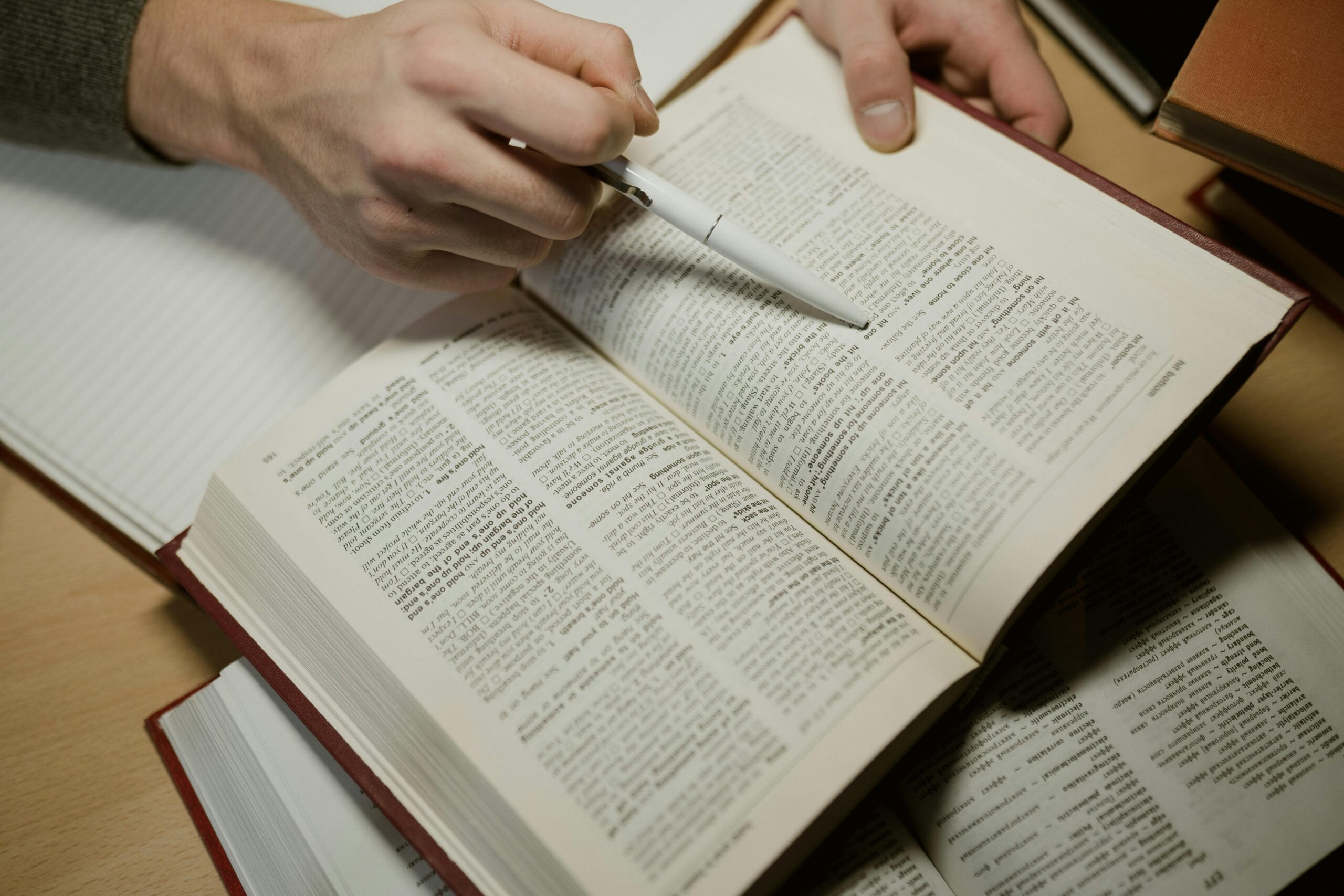
For centuries, translation has been considered both an art and a science.
The best translators do far more than convert words from one language into another. They interpret meaning, navigate cultural nuances, preserve tone, understand context, and make judgment calls that require years of linguistic expertise.
Today, however, the profession is undergoing one of the most dramatic transformations in its history.
Artificial intelligence has made translation faster, cheaper, and more accessible than ever before. Tools powered by large language models can translate documents, websites, videos, emails, and conversations in seconds. What once required hours of specialized work can now be completed almost instantly.
Yet as AI becomes increasingly capable, a growing debate has emerged within the language industry: Is artificial intelligence making translation more efficient—or is it gradually de-skilling the profession itself?
The answer appears to be both.
The Rise of AI-Powered Translation
Machine translation is not a new technology.
Early systems appeared decades ago, but their results were often clumsy and unreliable. Literal translations frequently produced awkward sentences, grammatical errors, and cultural misunderstandings.
The arrival of neural machine translation in the 2010s changed everything.
Systems developed by major technology companies began using deep learning techniques to analyze massive amounts of multilingual text. Rather than translating word by word, these systems learned patterns, context, and relationships between languages.
The emergence of generative AI and large language models accelerated this progress even further.
Modern AI translation systems can:
- Translate entire books
- Generate subtitles
- Localize websites
- Convert speech into multiple languages
- Adapt tone and writing style
- Summarize multilingual content
For businesses operating globally, these capabilities offer enormous productivity gains.
The Shift From Translation to Post-Editing
One of the most significant changes in the industry is the growing replacement of traditional translation with post-editing.
Instead of translating from scratch, many professionals now receive AI-generated drafts and are asked to correct mistakes.
This changes the nature of the job dramatically.
Traditional translators typically:
- Analyze source material deeply
- Make linguistic decisions throughout the process
- Create original target-language content
- Exercise continuous judgment
Post-editors often:
- Review machine output
- Fix inaccuracies
- Adjust terminology
- Correct awkward phrasing
- Verify factual consistency
While these tasks still require expertise, many translators argue that the work has become more reactive than creative.
How AI Is Changing Professional Skill Development
One concern frequently raised by industry veterans is the impact on newer translators.
Historically, translators developed expertise through years of hands-on practice.
By translating thousands of documents manually, professionals learned:
- Grammar mastery
- Stylistic variation
- Domain-specific terminology
- Cultural adaptation
- Problem-solving techniques
When AI performs much of the initial translation work, younger professionals may have fewer opportunities to build these foundational skills.
Some experts worry that future translators may become highly skilled editors of machine output without ever developing the deeper linguistic instincts traditionally associated with the profession.
This phenomenon is often referred to as “deskilling”—the gradual reduction of human expertise as tasks become automated.
Why Translation Is More Than Language Conversion
A common misconception is that translation involves replacing words with equivalent words in another language.
In reality, language is deeply connected to culture.
Consider phrases such as:
- Humor and jokes
- Political references
- Historical expressions
- Regional slang
- Religious concepts
- Legal terminology
Direct translation often fails because the intended meaning depends heavily on context.
For example, marketing slogans that work perfectly in one country may appear confusing, offensive, or meaningless elsewhere.
Human translators frequently adapt messages rather than simply translating them.
This process, known as localization, remains one of the areas where human expertise continues to outperform automated systems.
The Economic Pressures Facing Translators
AI is not merely changing how translation is performed.
It is also changing how translation is valued.
Many clients now assume that AI has made translation nearly effortless.
As a result, some language professionals report:
- Lower rates
- Shorter deadlines
- Increased workloads
- Reduced project budgets
- Greater competition
In some sectors, clients expect human translators to review machine-generated content at prices that do not reflect the expertise required to identify subtle errors.
This creates tension between technological efficiency and professional compensation.
The Hidden Risks of Machine Translation
Despite remarkable progress, AI translation remains imperfect.
Several challenges persist.
Context Errors
AI sometimes misinterprets ambiguous language.
Words with multiple meanings may be translated incorrectly if contextual clues are insufficient.
Cultural Misunderstandings
Machines may struggle with culturally specific references that require local knowledge.
Specialized Terminology
Technical fields such as medicine, law, engineering, and finance often require precise vocabulary.
Minor translation mistakes in these sectors can have serious consequences.
Hallucinations
Generative AI systems occasionally produce content that appears fluent but is factually incorrect.
In translation, this can result in information being altered rather than accurately conveyed.
Because AI-generated errors often sound convincing, they can be difficult for non-experts to detect.
Why Human Translators Still Matter
Predictions about the complete replacement of translators have existed for decades.
Yet demand for skilled language professionals continues to persist.
Human translators remain essential in situations involving:
- Legal contracts
- Court proceedings
- Medical documentation
- Literary works
- Diplomatic communications
- High-stakes business negotiations
In these contexts, precision, accountability, and cultural understanding often matter more than speed.
A machine may generate a translation quickly.
A human expert ensures the translation is correct.
The New Role of the Translator
Rather than disappearing, the profession may be evolving.
Many translators are becoming:
- Language consultants
- Localization specialists
- AI reviewers
- Cultural advisors
- Content strategists
- Multilingual communication experts
In this model, AI handles routine tasks while humans focus on higher-level judgment and quality assurance.
The shift resembles transformations seen in other knowledge professions where technology automates repetitive work but increases the importance of oversight and expertise.

The Impact on Minority and Indigenous Languages
One often-overlooked aspect of AI translation involves less commonly spoken languages.
Large AI systems perform best when trained on enormous datasets.
Major languages such as:
- English
- Spanish
- French
- Mandarin
- German
benefit from vast amounts of available digital content.
Minority and Indigenous languages often do not.
As a result, translation quality can vary dramatically across language pairs.
This creates a risk that technological progress may disproportionately benefit widely spoken languages while leaving smaller linguistic communities behind.
At the same time, AI also offers opportunities to preserve endangered languages by creating educational tools, dictionaries, and language-learning resources.
The outcome will depend largely on how these technologies are developed and deployed.
AI and the Future of Localization
The future of translation extends beyond text.
Modern localization increasingly includes:
- Video dubbing
- Voice cloning
- Real-time speech translation
- Multilingual customer support
- Interactive AI assistants
Companies are already experimenting with systems that can automatically translate and recreate spoken content while preserving the original speaker’s voice characteristics.
This could dramatically reduce barriers to global communication.
However, it also raises questions about authenticity, consent, and cultural representation.
The Human Advantage: Judgment
The most valuable skill in the AI era may not be translation itself.
It may be judgment.
AI excels at pattern recognition.
Humans excel at understanding intent.
When translating a legal agreement, a novel, a political speech, or a healthcare document, understanding why something is being said often matters as much as understanding what is being said.
This is where human expertise remains difficult to automate.
Language is ultimately a human activity shaped by culture, emotion, history, and social context.
No matter how sophisticated AI becomes, those dimensions remain challenging to replicate fully.
The Bigger Picture
The translation industry is not disappearing.
It is being redefined.
Artificial intelligence has unquestionably increased productivity, reduced costs, and expanded access to multilingual communication. Tasks that once required teams of translators can now be completed in minutes.
Yet efficiency comes with trade-offs.
As AI takes over more of the mechanical aspects of translation, professionals face new challenges related to skill development, compensation, quality control, and professional identity.
The future will likely belong neither to machines alone nor to humans working without technology.
Instead, it will belong to translators who learn how to combine linguistic expertise with AI-powered tools while preserving the uniquely human abilities that machines still struggle to replicate.
Translation may be changing.
But the need for human understanding across languages and cultures remains as important as ever.
Frequently Asked Questions (FAQ)
1. Is AI replacing human translators?
Not entirely. AI is automating many routine translation tasks, but human translators remain essential for high-stakes, creative, legal, medical, and culturally sensitive work. Most experts expect AI to augment rather than completely replace professional translators.
2. What does “de-skilling” mean in translation?
De-skilling refers to the reduction of traditional expertise as more work shifts from human translation to reviewing and editing AI-generated content. Some professionals worry that newer translators may develop weaker foundational language skills because they spend less time translating independently.
3. What skills will translators need in the AI era?
Future language professionals will likely need a combination of linguistic expertise, AI literacy, cultural knowledge, localization skills, quality assurance capabilities, and subject-matter specialization. The ability to evaluate and improve AI-generated content may become just as important as traditional translation skills.
Sources Financial Times

