
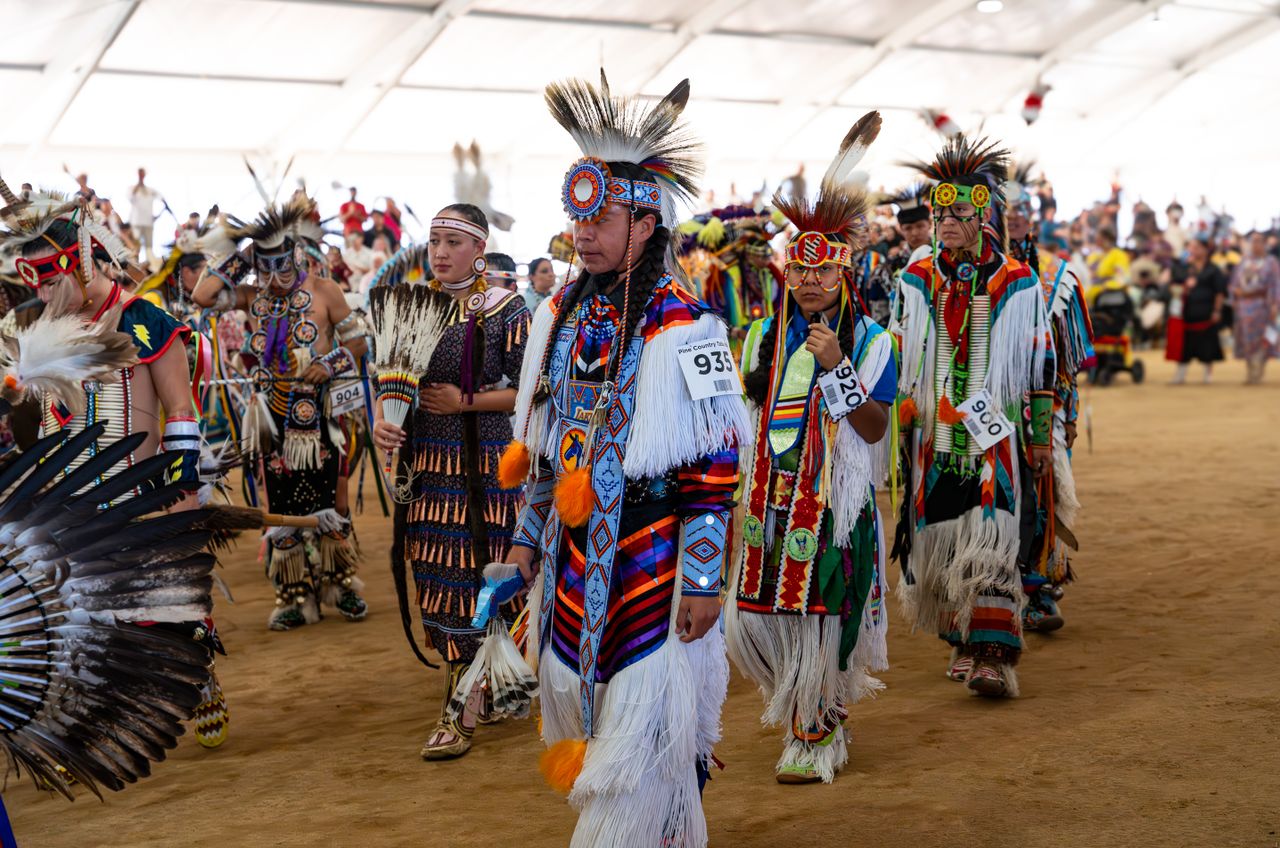
For thousands of years, Indigenous languages have carried the histories, traditions, and identities of Native American communities. These languages preserve knowledge about land, family relationships, ceremonies, storytelling, and ways of understanding the world that cannot always be fully translated into other languages.
However, many Native American languages today face a serious threat: declining numbers of fluent speakers. In some communities, only a small number of elders still speak their ancestral language fluently, creating concerns that entire linguistic traditions could disappear within a generation.
Now, a new generation of technology is offering a surprising tool for preservation. Artificial intelligence systems, including interactive robots capable of speaking endangered languages, are being developed to help document, teach, and revitalize Indigenous languages.
While technology cannot replace human speakers or cultural communities, researchers believe AI could become an important partner in protecting some of humanity’s most vulnerable languages.

Why Native American Languages Are at Risk
Before European colonization, hundreds of Indigenous languages were spoken across North America.
These languages represented diverse cultural systems, including:
- Oral histories
- Traditional ecological knowledge
- Spiritual practices
- Family structures
- Community laws
- Place-based knowledge
Unlike many widely spoken languages, numerous Native American languages were primarily transmitted through speaking and listening rather than written records.
Over time, several historical forces contributed to language decline.
The Impact of Language Suppression
One of the most significant factors was government and institutional pressure that discouraged Indigenous language use.
For generations, many Native American children were sent to boarding schools where they were often punished for speaking their native languages.
These policies caused:
- Interrupted language transmission
- Loss of fluent speakers
- Cultural disconnection
- Declining use among younger generations
The effects continue to influence language communities today.
The Role of Elders in Language Survival
In many Indigenous communities, elders are the primary holders of language knowledge.
They preserve:
- Correct pronunciation
- Traditional expressions
- Stories
- Songs
- Cultural meanings
- Historical context
However, when fluent elders pass away without enough younger speakers learning the language, valuable knowledge can disappear.
This urgency has encouraged communities and researchers to explore new preservation methods.
How AI Robots Can Speak Endangered Languages
AI-powered robots and conversational systems can be trained using language materials collected from communities.
These systems may use:
- Audio recordings
- Dictionaries
- Written materials
- Speech databases
- Lessons created by language experts
- Recordings from fluent speakers
The technology can help generate spoken responses, pronunciation practice, and interactive learning experiences.
Instead of simply storing information in an archive, AI creates a more active way for learners to engage with the language.
Why Robots Are Being Used for Language Preservation
A robot or AI assistant can provide several advantages.
1. Interactive Learning
Traditional language archives often require users to search through recordings or documents.
AI systems can allow learners to ask questions and practice conversations.
For example, a student might:
- Practice greetings
- Learn vocabulary
- Hear pronunciation examples
- Repeat phrases
- Receive feedback
2. Increased Accessibility
Not everyone has daily access to fluent speakers.
AI tools can provide additional learning opportunities for:
- Students
- Families
- Teachers
- Community members
- Researchers
This is especially valuable for geographically dispersed communities.
3. Preserving Speaker Knowledge
AI systems can help organize and preserve recordings from remaining fluent speakers.
This may include:
- Pronunciation patterns
- Common phrases
- Cultural explanations
- Traditional stories
The goal is not to replace speakers but to extend the usefulness of their knowledge.

The Importance of Community Control
Language preservation is deeply connected to cultural ownership.
Indigenous communities emphasize that technology must respect:
- Cultural rights
- Data ownership
- Privacy
- Traditional knowledge protections
A major concern is ensuring that Indigenous languages are not treated simply as data resources.
Successful projects usually involve communities directly in:
- Deciding what information is shared
- Approving technology use
- Designing educational tools
- Managing digital archives
AI Cannot Replace Human Connection
Although AI technology is advancing quickly, language experts stress that a language is more than vocabulary and grammar.
A living language includes:
- Relationships
- Humor
- Cultural references
- Emotional expression
- Community experiences
A robot can help someone practice words, but it cannot replace conversations between grandparents and grandchildren or the cultural environment where a language naturally develops.
The strongest preservation efforts combine technology with human teaching.
Indigenous Language Revitalization Efforts
Technology is only one part of a larger movement to restore Indigenous languages.
Communities are also using:
- Language immersion schools
- Community classes
- Children’s programs
- Digital dictionaries
- Mobile applications
- Online courses
- Cultural camps
Many revitalization programs focus on encouraging children to become fluent speakers.
Artificial Intelligence and the Future of Minority Languages
The use of AI for Native American languages reflects a larger global challenge.
Thousands of languages worldwide are considered endangered.
AI could potentially support:
- Indigenous languages
- Regional dialects
- Minority languages
- Oral traditions
- Low-resource languages
However, many endangered languages lack enough digital information for AI systems to function effectively.
Creating ethical language datasets remains a major challenge.

Challenges Facing AI Language Preservation
Despite its promise, AI-based language preservation faces several obstacles.
Limited Data
Many endangered languages have fewer recordings and fewer written resources compared with global languages.
AI systems require quality data to produce accurate results.
Accuracy Concerns
AI may struggle with:
- Complex grammar structures
- Regional variations
- Cultural meanings
- Traditional expressions
Incorrect translations or pronunciation could unintentionally spread mistakes.
Ethical Issues
Communities must decide:
- Who controls language data?
- Who can access recordings?
- How should sacred knowledge be protected?
- How can technology benefit speakers rather than outside organizations?
The Role of Universities and Researchers
Academic institutions increasingly collaborate with Indigenous communities on language preservation projects.
Researchers contribute expertise in:
- Linguistics
- Artificial intelligence
- Computer science
- Education
- Anthropology
However, modern approaches increasingly recognize that communities themselves must lead preservation efforts.
The people who speak and inherit the language are the most important decision-makers.
Why Language Preservation Matters Beyond One Community
Protecting endangered languages benefits all humanity.
Each language represents a unique way of organizing knowledge.
Languages can contain information about:
- Environmental relationships
- Traditional medicine
- Geography
- History
- Social organization
When a language disappears, humanity loses a unique perspective developed over generations.
A New Digital Era for Ancient Languages
The arrival of AI robots capable of speaking endangered languages represents a remarkable combination of ancient knowledge and modern technology.
For Indigenous communities, these tools offer hope that languages at risk of disappearing can continue reaching younger generations.
The future of language preservation will likely depend on cooperation between:
- Elders
- Students
- Technology developers
- Linguists
- Cultural organizations
- Community leaders
Technology alone cannot save a language. People do.
But when technology is guided by communities and used responsibly, it can become a powerful tool for ensuring that ancient voices continue to be heard.
Frequently Asked Questions (FAQs)
1. Why are Native American languages endangered?
Many Native American languages became endangered due to historical language suppression, including boarding school policies, cultural assimilation, declining numbers of fluent speakers, and reduced transmission between generations.
2. How can AI robots help preserve endangered languages?
AI robots can provide interactive language practice, preserve recordings from fluent speakers, teach pronunciation, and make language-learning resources more accessible.
3. Can artificial intelligence replace human language teachers?
No. AI can support learning, but it cannot replace the cultural knowledge, relationships, and lived experiences provided by human speakers and communities.
4. What challenges does AI face when preserving endangered languages?
Challenges include limited language data, possible translation errors, cultural sensitivity issues, and the need to ensure Indigenous communities maintain control over their language information.
5. Why is preserving endangered languages important?
Languages preserve unique histories, traditions, knowledge systems, and cultural identities. Protecting them helps maintain the diversity of human expression and understanding.

Sources NPR

