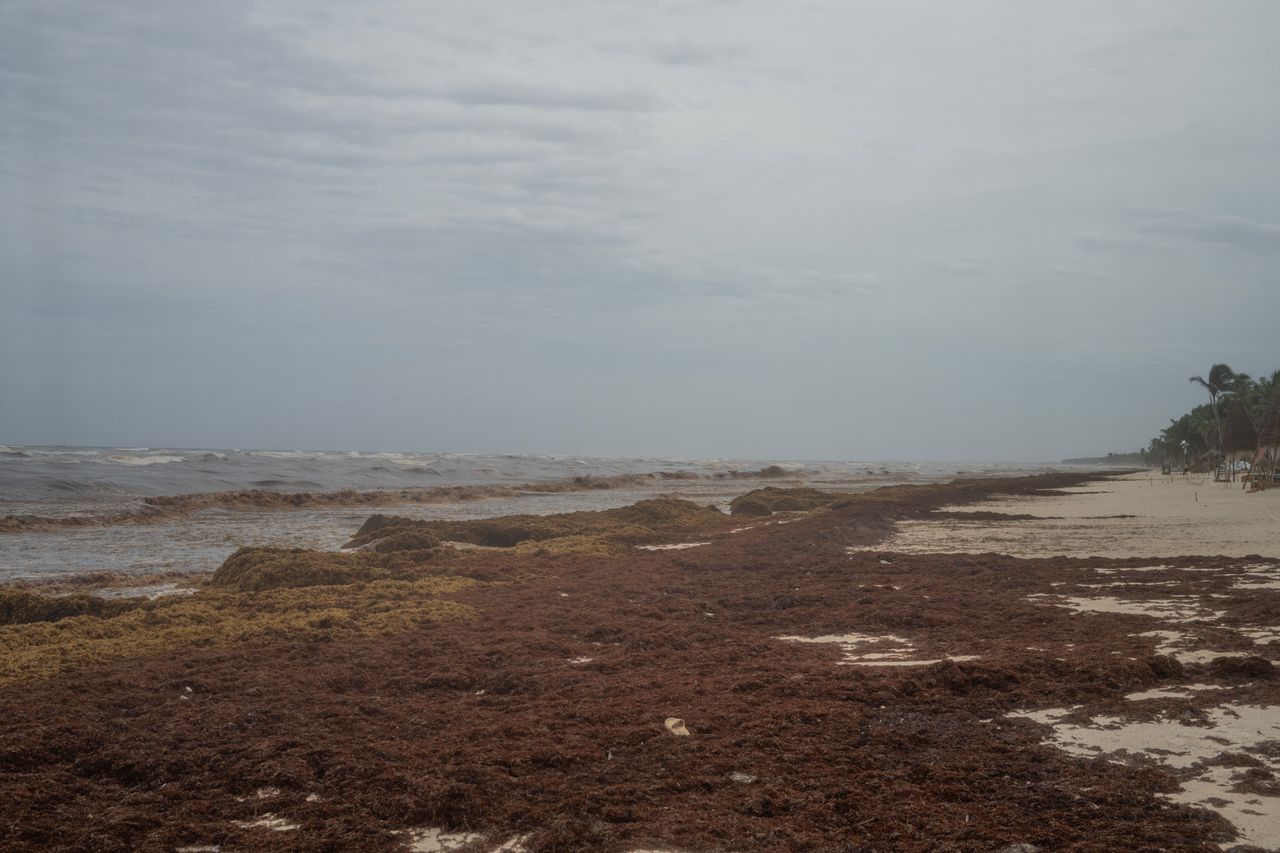
Mexico’s Caribbean coastline has long been celebrated for its turquoise waters, white-sand beaches, coral reefs, and thriving marine ecosystems. Destinations such as Cancún, Playa del Carmen, Tulum, Cozumel, and the Riviera Maya attract millions of international visitors every year, making tourism one of the region’s most important economic drivers.
However, these world-famous beaches are increasingly facing a growing environmental challenge: massive invasions of sargassum, a floating brown seaweed that has arrived in record quantities across parts of the Caribbean in recent years.
While sargassum naturally occurs in the Atlantic Ocean and plays an important ecological role offshore, unusually large accumulations along coastlines can damage ecosystems, disrupt tourism, affect fisheries, and create expensive cleanup operations.
The recurring seaweed influx has become one of the most significant environmental and economic challenges facing Caribbean tourism in the 21st century.

What Is Sargassum?
Sargassum is a genus of floating brown algae that naturally grows in the Atlantic Ocean, particularly within the Sargasso Sea.
Unlike many seaweeds that attach themselves to rocks or the ocean floor, sargassum floats freely on the ocean surface.
In open waters, it provides valuable habitat for:
- Fish
- Sea turtles
- Crabs
- Shrimp
- Seabirds
- Numerous marine microorganisms
These floating ecosystems support biodiversity and serve as important nurseries for marine life.
Problems arise when unusually large quantities drift toward coastal beaches.
Why Are Record Amounts Appearing?
Scientists believe multiple environmental factors are contributing to the growing scale of sargassum blooms.
Possible influences include:
Warmer Ocean Temperatures
Higher sea surface temperatures may encourage faster seaweed growth.
Climate change has increased average ocean temperatures across many tropical regions.
Nutrient Pollution
Runoff containing nitrogen and phosphorus from:
- Agriculture
- Fertilizers
- Wastewater
- River systems
can provide additional nutrients that stimulate algae growth.
Large river systems, including the Amazon and Congo, may transport nutrients into the Atlantic Ocean.
Changing Ocean Currents
Variations in:
- Ocean circulation
- Wind patterns
- Seasonal weather systems
may transport larger floating seaweed mats toward the Caribbean and Gulf of Mexico.
Researchers continue studying the interaction of these complex environmental factors.

Why Sargassum Is a Problem for Beaches
When floating offshore, sargassum is generally beneficial.
Once it washes ashore, conditions change dramatically.
Large accumulations may:
- Produce unpleasant odors as they decompose
- Cover beaches
- Block public access
- Affect swimming
- Reduce the visual appeal of coastlines
- Increase insect activity
For tourism-dependent destinations, beach quality directly influences visitor satisfaction.
Environmental Impacts Beyond Tourism
Sargassum affects more than vacation experiences.
Coral Reefs
Thick seaweed mats can reduce sunlight reaching coral ecosystems and alter water chemistry as they decay.
Healthy coral reefs are vital for marine biodiversity and coastal protection.
Seagrass Meadows
Heavy accumulations may smother underwater vegetation that provides habitat for juvenile fish and other marine species.
Sea Turtles
Sea turtle hatchlings may encounter difficulty reaching the ocean when beaches become covered with dense seaweed.
Adult turtles may also experience altered nesting conditions.
Coastal Water Quality
As sargassum decomposes, it consumes oxygen and releases gases that can affect nearby coastal waters.
This may place additional stress on marine organisms in enclosed bays and lagoons.
Economic Consequences for Tourism
Tourism is one of the primary sources of employment along Mexico’s Caribbean coast.
The industry supports:
- Hotels
- Restaurants
- Tour operators
- Taxi drivers
- Boat excursions
- Dive shops
- Retail businesses
- Local artisans
When beaches become less attractive, businesses may experience:
- Reservation cancellations
- Reduced visitor spending
- Shorter stays
- Lower occupancy rates
Some resorts invest heavily in daily beach cleaning to maintain visitor satisfaction.
The High Cost of Cleanup
Removing sargassum is labor-intensive and expensive.
Cleanup operations often involve:
- Beach maintenance crews
- Specialized collection equipment
- Boats gathering seaweed offshore
- Temporary containment barriers
- Transportation vehicles
- Disposal facilities
Many coastal communities spend millions of dollars annually on removal efforts during peak seasons.
Improper cleanup methods can also damage fragile beach ecosystems, making careful management essential.

Innovative Solutions Being Explored
Scientists, engineers, and entrepreneurs are searching for sustainable ways to manage excess sargassum.
Potential applications include:
Organic Fertilizer
After proper treatment, some processed seaweed may be used to improve soil quality.
Biofuel Production
Researchers are investigating whether sargassum can serve as a renewable source for bioenergy.
Building Materials
Some experimental projects use processed seaweed in bricks, insulation, and biodegradable construction materials.
Industrial Products
Scientists continue studying its potential use in:
- Cosmetics
- Bioplastics
- Animal feed (after safety evaluation)
- Agricultural products
Although promising, many commercial applications remain under development due to challenges such as salt content, heavy metals, and transportation costs.
Technology Is Improving Monitoring
Modern forecasting systems help governments prepare for incoming seaweed events.
These tools include:
- Satellite imagery
- Ocean current models
- Artificial intelligence forecasting
- Drone surveillance
- Remote sensing technologies
Earlier warnings allow tourism operators to organize cleanup efforts more efficiently.
Climate Change and Coastal Resilience
Many scientists believe climate change may continue influencing marine ecosystems in ways that affect sargassum growth.
While the exact relationship remains an active area of research, rising sea temperatures and changing weather patterns are likely to remain important factors.
Improving coastal resilience includes:
- Protecting coral reefs
- Reducing nutrient pollution
- Strengthening environmental monitoring
- Investing in sustainable tourism
- Supporting scientific research
How Travelers Can Respond
Visitors planning trips to the Caribbean can take several practical steps.
They should:
- Check recent beach conditions before departure
- Remain flexible with travel plans
- Explore inland attractions and cultural sites
- Visit nature reserves, archaeological sites, and local communities
- Support businesses that practice sustainable tourism
Many destinations continue offering excellent travel experiences even during periods of increased seaweed activity.
A Shared Environmental Challenge
Sargassum is not simply a tourism issue—it is a complex environmental challenge that affects ecosystems, local economies, scientific research, and coastal communities throughout the Caribbean.
Mexico’s experience illustrates how interconnected the world’s oceans have become. Changes in ocean temperatures, nutrient flows, and marine ecosystems can create consequences that ripple across international borders.
Successfully addressing future sargassum events will require cooperation among governments, researchers, tourism operators, environmental organizations, and local communities. Through improved forecasting, sustainable management, scientific innovation, and environmental conservation, Caribbean destinations can continue protecting both their natural heritage and the millions of livelihoods that depend upon healthy coastal ecosystems.
Frequently Asked Questions (FAQs)
1. What is sargassum?
Sargassum is a naturally occurring floating brown seaweed that provides important habitat for marine life in the open ocean but can create environmental and tourism challenges when it accumulates along coastlines.
2. Why is so much sargassum reaching Mexico’s Caribbean beaches?
Scientists believe warmer ocean temperatures, nutrient-rich runoff, changing ocean currents, and broader environmental changes all contribute to unusually large seaweed blooms and coastal accumulation.
3. Is sargassum dangerous to humans?
Generally, sargassum itself is not considered dangerous. However, decomposing seaweed can produce unpleasant odors, reduce water quality in some areas, and make beaches less enjoyable. Sensitive individuals may experience irritation from gases released during decomposition.
4. How are authorities managing the problem?
Governments and tourism operators use offshore barriers, mechanical collection, manual beach cleanup, satellite monitoring, and scientific forecasting to reduce the impact on beaches and visitors.
5. Can sargassum be turned into useful products?
Researchers are exploring uses such as fertilizer, biofuels, construction materials, bioplastics, and other industrial applications. While promising, many solutions are still being refined to address processing, environmental, and economic challenges.

Sources Reuters