
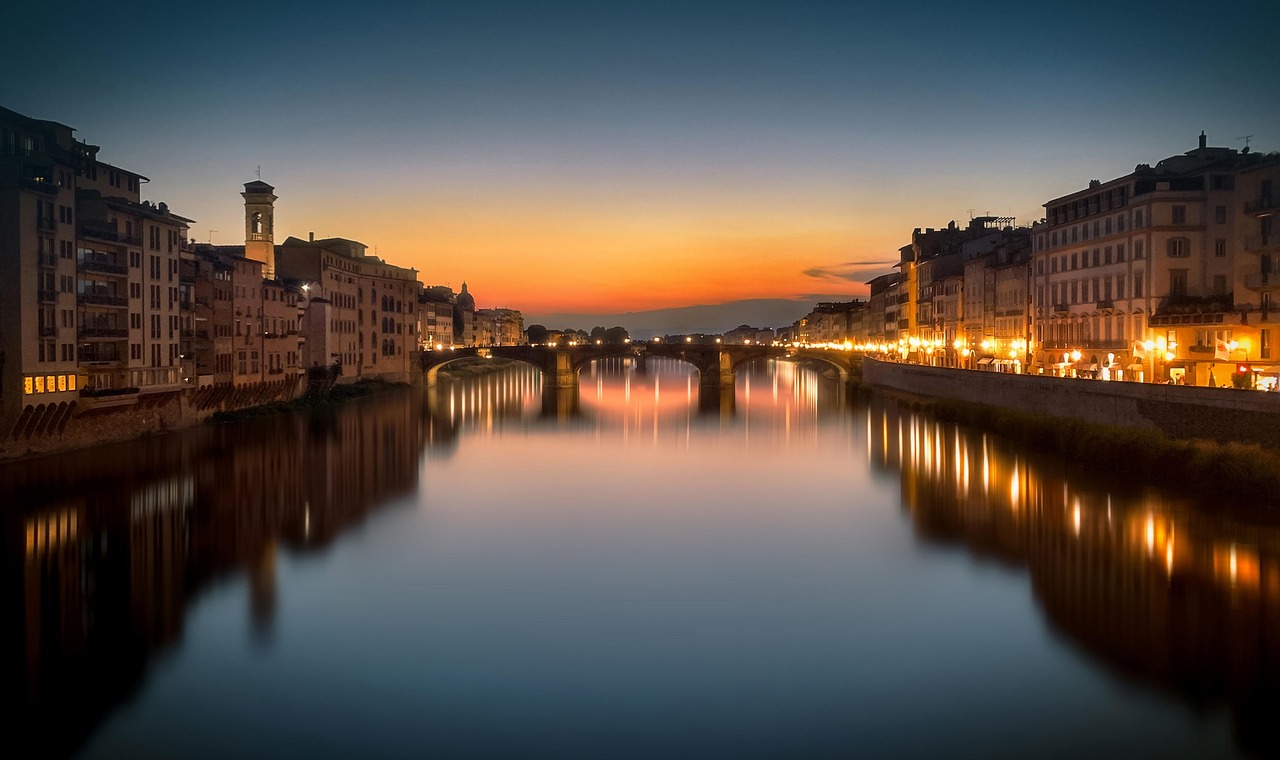
Italy has a travel problem that many destinations would happily accept: there are almost too many places worth seeing.
Rome has ancient ruins and Renaissance churches. Florence has masterpieces of European art. Naples has layers of history beneath its streets. Puglia has distinctive stone villages. The Italian coast offers dramatic cliffs, beaches and islands.
Yet Italy’s extraordinary popularity has created a new challenge for travelers. Some attractions can now feel so crowded that the experience becomes less about appreciating a place and more about navigating queues, tour groups and photo stops.
A recent account by a traveler who has visited all 20 Italian regions offers a useful distinction between attractions that continue to justify their popularity and experiences that may require more patience or a different approach. She considers Rome’s Colosseum, Napoli Sotterranea in Naples and the trulli of Alberobello worthwhile, while advising travelers to reconsider the Trevi Fountain and rushed day trips to Cinque Terre.
But the larger lesson extends beyond those five attractions.
Italy is not a country where travelers necessarily need to avoid famous places. It is a country where travelers need to learn how to visit them intelligently.
Why Italy’s Most Famous Places Can Feel Different Today
The problem with popular attractions is not popularity itself.
The Colosseum is famous because it is extraordinary. Cinque Terre attracts visitors because its villages, cliffs and coastline are genuinely beautiful. The Trevi Fountain became one of Rome’s defining symbols because of its architecture and cultural history.
The difficulty emerges when visitor numbers become concentrated in a small physical area at the same time.
Italy’s tourism industry has been dealing with this challenge across multiple destinations. In 2025, Italy attracted an estimated 185 million travelers, according to travel-industry reporting, creating intense pressure at some of the country’s most recognizable destinations.
The response increasingly involves dispersing visitors geographically and temporally.
Italy’s national tourism platform itself promotes destinations beyond the traditional Rome-Venice-Florence circuit, highlighting places such as Cagliari, Perugia, Genoa, Lecce and Tropea.
That suggests a useful approach for travelers: don’t automatically replace famous destinations; expand the itinerary around them.
The Colosseum: A Classic That Still Earns Its Place
Of the attractions highlighted by the experienced traveler, the Colosseum may be the clearest example of why “touristy” does not necessarily mean “not worth visiting.”
The ancient amphitheater remains one of the world’s most recognizable archaeological monuments and provides a tangible connection to Roman history.
Its scale is difficult to understand from photographs alone.
The structure was designed to accommodate enormous crowds, stage public spectacles and demonstrate the power of the Roman state. Today, visitors enter the same monumental complex as tourists from around the world, although the modern experience is obviously very different from the ancient one.
The challenge is timing.
The Business Insider traveler recommends visiting early or at night to avoid some of the crowds.
That advice illustrates an important principle for Italy: a famous attraction can feel completely different at different times of day.
A traveler who arrives during the busiest part of the afternoon may spend much of the experience surrounded by tour groups. Someone who plans around opening hours, sunset or quieter periods can have considerably more space to appreciate the architecture.
Pair the Colosseum With Less-Crowded Roman History
Another way to improve the experience is to avoid spending an entire day moving between Rome’s busiest attractions.
Ostia Antica, the ancient Roman port outside modern Rome, is one alternative highlighted by Italy travel experts. The archaeological site contains streets, houses, shops, mosaics and public buildings that help explain how ordinary Roman urban life worked.
Rome’s own tourism strategy is also trying to redistribute visitors.
The city’s “Unexpected Itineraries of Rome” programme promotes less familiar areas and routes in an effort to reduce pressure on the historic center.
The result can be a more varied itinerary: one major landmark followed by a less crowded archaeological or neighborhood experience.
Napoli Sotterranea: Discovering the City Beneath the City
Naples offers a completely different tourism experience.
The attraction highlighted by the Business Insider traveler is Napoli Sotterranea, a network of underground spaces beneath the modern city. The experience connects visitors with layers of Naples’ history, including ancient excavation, infrastructure and wartime use.
This is one reason underground attractions can be particularly interesting in Naples.
The city’s history is not confined to museums and monumental buildings. It exists beneath modern streets and buildings, reflecting centuries of construction, destruction, adaptation and reuse.
For travelers, that creates a more immersive form of historical tourism.
Instead of looking at an isolated monument, visitors can see how successive civilizations occupied the same geographical space.
Naples Is More Than Its Underground Tunnels
The broader Naples experience also deserves attention.
The historic center is a UNESCO World Heritage site, and the city combines architecture, food culture, archaeology and everyday urban life.
But Naples is experiencing growing tourism pressure as well. Italy’s sustainable-tourism programme identifies increasing visitor pressure in the historic center as an issue and describes efforts to redistribute visitors toward surrounding hills and lesser-known neighborhoods.
That makes Naples another destination where travelers can improve their experience simply by looking beyond the most concentrated streets.
Alberobello: When a Tourist Attraction Is Also a Living Community
In Puglia, Alberobello offers a completely different type of attraction.
The town is famous for its trulli, traditional limestone buildings characterized by conical roofs. The distinctive architecture has made Alberobello one of southern Italy’s most recognizable destinations.
The Business Insider traveler considers the trulli worth the trip and particularly recommends experiencing the town through an overnight stay rather than treating it as a quick photo stop.
That distinction is important.
Many popular Italian destinations become crowded because visitors arrive in large numbers for short periods. They take photographs, walk a prescribed route and leave.
Staying overnight changes the rhythm.
The town can be experienced in the evening and early morning, outside the peak window when day-trippers are most concentrated.
The Value of Staying Overnight
Overnight tourism can also distribute spending more broadly.
Instead of spending money only on transportation and a quick meal, visitors who stay longer may spend on accommodation, restaurants, shops, guides and local activities.
This is one reason many Italian destinations are increasingly interested in encouraging longer and more geographically distributed stays.
The goal is not necessarily to stop tourism.
It is to turn tourism into a deeper economic relationship with the destination.
The Trevi Fountain: When a Famous Attraction Becomes a Crowding Problem
The Trevi Fountain presents a more complicated case.
The fountain is undeniably one of Rome’s most famous landmarks. Its Baroque design, history and cinematic associations have made it almost obligatory on a first-time Rome itinerary.
Yet its popularity has become part of the problem.
The Business Insider traveler recommends skipping it unless visiting during less crowded periods, pointing specifically to overcrowding and the introduction of access fees in 2026.
The lesson here is not necessarily that travelers should never see the fountain.
Instead, visitors should reconsider the assumption that every famous attraction needs to be experienced at the busiest possible time.
A traveler could see the fountain early in the morning, later in the evening or during a quieter part of the year.
The same landmark can provide a very different experience when the crowd density changes.
Why “Skip It” Is Sometimes the Wrong Advice
Travel advice often turns complicated destinations into simple lists:
Go here.
Skip there.
But Italy does not always work that way.
An attraction that feels disappointing to one traveler may be meaningful to another.
Someone fascinated by Baroque architecture may find the Trevi Fountain essential. A traveler who dislikes crowds may decide that the same attraction is not worth the effort.
Likewise, a visitor interested in Roman history may be happy to spend hours at the Colosseum, while someone more interested in food or nature might prefer another experience.
The better question is therefore not:
“Is this attraction overrated?”
It is:
“Does this attraction match what I want from my trip, and can I visit it under conditions that make the experience worthwhile?”
Cinque Terre: Beautiful, But a Difficult Day Trip
Cinque Terre presents a different problem.
The five Ligurian villages — Monterosso al Mare, Vernazza, Corniglia, Manarola and Riomaggiore — are among Italy’s most recognizable coastal destinations.
Their dramatic setting is a major reason for their popularity.
The problem arises when travelers attempt to experience them as a rushed excursion from Florence.
The Business Insider traveler argues that a day trip can leave visitors spending too much time moving between locations rather than actually experiencing the villages. She recommends slowing down and focusing on one or two instead.
That advice is consistent with a wider trend in Italian travel.
The country’s most popular destinations increasingly reward travelers who stay longer rather than those who attempt to collect as many photographs as possible.
Why Slow Travel Works Particularly Well in Italy
Italy is unusually well suited to slower travel.
The country is not simply a collection of major landmarks.
It is a network of neighborhoods, villages, regional cuisines, train routes, markets, churches, landscapes and local traditions.
Trying to see everything in one trip can therefore produce a paradox: the more destinations you visit, the less time you have to experience Italy.
A three-day itinerary that includes Rome, Florence, Venice and Cinque Terre may look impressive on paper.
In reality, much of the trip could be spent checking into hotels, reaching stations, waiting for trains, carrying luggage and navigating crowded attractions.
A slower itinerary might involve only two destinations.
But it could provide more time for museums, restaurants, neighborhoods and spontaneous discoveries.
Alternatives to Italy’s Most Crowded Coastal Destinations
Travelers who love Italy’s coastline do not necessarily have to choose between the Amalfi Coast and staying home.
The country has many alternatives.
Recent travel recommendations have highlighted Ponza, the Aeolian Islands, Maratea, Ischia, Cilento, Maiori and Minori as options for travelers seeking Mediterranean scenery with different levels of visitor pressure.
Ischia is particularly interesting because it provides beaches, thermal waters, gardens and historical attractions while offering a different atmosphere from Capri.
The Aeolian Islands offer volcanic landscapes and marine experiences, while Cilento provides another coastal option south of the Amalfi Coast.
Maiori and Minori are particularly relevant for travelers determined to experience the Amalfi area but looking for towns with a more local character.
Italy’s Smaller Cities Deserve More Attention
The same principle applies inland.
Italy’s official tourism platform highlights destinations including:
- Cagliari in Sardinia;
- Perugia in Umbria;
- Genoa in Liguria;
- Lecce in Puglia;
- Tropea in Calabria;
- the Itria Valley;
- the Chianti Valley;
- the Gargano;
- Salento; and
- the Pontine Islands.
These destinations are not substitutes because they are “better” than Rome, Florence or Venice.
They are alternatives because they provide different experiences.
A traveler interested in architecture might choose Lecce for its Baroque heritage. Someone interested in food and wine might explore Umbria or the Chianti area. A traveler seeking Mediterranean landscapes might consider Sardinia, Calabria or Puglia.
The Rise of “99% of Italy”
The idea of looking beyond famous landmarks has even become part of Italy’s tourism marketing.
The “99% of Italy” campaign promoted the idea of exploring the country’s lesser-known villages, landscapes and destinations rather than concentrating exclusively on the most famous tourist routes.
The campaign reflects a fundamental reality:
Italy’s tourism problem is not that there are too many tourists everywhere.
It is that visitors are often concentrated in particular locations.
That distinction is critical.
A famous destination may be crowded while another town only a short train or driving journey away has capacity to welcome more visitors.
How Social Media Changed the Italian Travel Experience
Social media has intensified this concentration.
Instagram, TikTok and travel videos can transform a previously obscure viewpoint, restaurant or village into an international attraction almost overnight.
Once a location becomes recognizable online, travelers often arrive expecting to reproduce the same photograph they saw on their phones.
This creates a feedback loop:
viral image → increased demand → more visitors → more social-media content → even more demand.
The effect is particularly visible at scenic coastal destinations and photogenic historic locations.
The result can be a strange contradiction: people travel thousands of miles to experience an apparently authentic place, only to discover hundreds of other people attempting to recreate the same social-media image.
Timing Can Matter as Much as Location
One of the easiest ways to improve an Italian trip is to change the time of the visit.
Instead of asking only:
“Where should I go?”
travelers should ask:
“When should I be there?”
Early morning can transform major attractions.
Evening can change the atmosphere of historic centers.
Shoulder seasons can reduce pressure compared with peak summer.
And visiting a destination on a weekday rather than a weekend can sometimes make a substantial difference.
This is particularly useful for attractions that are difficult to avoid entirely.
If a traveler has always dreamed of seeing the Colosseum or Trevi Fountain, avoiding it simply because it is popular may be unnecessary.
Changing the timing may solve much of the problem.
A Better Italian Itinerary Is Often Less Ambitious
There is a temptation to maximize every trip.
Travelers may think that visiting six destinations is better than visiting three.
But Italy’s geography makes excessive itinerary planning particularly inefficient.
Even destinations that look close together on a map can require substantial travel time because of mountainous terrain, regional rail connections, ferries and road congestion.
A more realistic itinerary might look like:
Rome + Naples
rather than Rome + Florence + Venice + Cinque Terre + Naples.
Or:
Puglia + Matera
rather than trying to combine southern Italy with half a dozen northern destinations.
The objective is not to see fewer things for the sake of seeing fewer things.
It is to create enough time for each destination to become more than a checklist.
How to Decide What to See and What to Skip
Travelers can use a simple framework.
Keep the attraction if it is genuinely important to you
If you have dreamed about seeing the Colosseum since childhood, go.
Crowds do not erase its historical importance.
Change the timing if crowds are the main problem
Early mornings, evenings and shoulder seasons can make famous attractions more manageable.
Replace rushed excursions with overnight stays
Cinque Terre, Alberobello and many other destinations become different experiences when visitors stay rather than arrive and leave within hours.
Look for geographic alternatives
If one destination is overwhelmed, investigate another town offering a similar type of experience.
Choose fewer bases
Every hotel change consumes time.
Staying several nights in one location makes it easier to explore neighborhoods and nearby towns without constantly packing and unpacking.
Responsible Tourism Is Becoming Part of the Experience
The evolution of Italian tourism also raises a broader issue.
Visitors are not merely consumers of a destination. They are participants in its social and economic environment.
Crowded streets, rising accommodation demand, waste, traffic and pressure on historic sites affect residents as well as tourists.
Italy’s sustainable-tourism initiatives increasingly emphasize dispersing visitor flows and promoting lesser-known areas. Florence, Rome and Naples have all developed strategies intended to reduce pressure on their most heavily visited areas.
For travelers, responsible tourism can therefore be practical rather than abstract.
Staying longer, traveling outside peak periods, using public transportation, supporting locally owned businesses and exploring less concentrated destinations can all help distribute tourism spending.
The Real Lesson From Italy’s Most Overrated-or-Underrated Debate
The debate over which Italian attractions are “worth it” can easily become a popularity contest.
But that misses the larger lesson.
Italy’s most famous attractions became famous because they are remarkable.
The challenge is that their popularity has changed the conditions under which people experience them.
The Colosseum can still be extraordinary.
Naples’ underground history can still surprise visitors.
Alberobello’s trulli can still feel distinctive.
The Trevi Fountain can still be beautiful.
Cinque Terre can still be spectacular.
The difference is that travelers increasingly need to think about timing, duration, crowd levels and alternatives.
Instead of asking whether Italy’s famous attractions are worth visiting, travelers should ask how to visit them without turning the entire trip into a race.
That may mean arriving at the Colosseum early, exploring Naples below street level, sleeping in Alberobello, seeing the Trevi Fountain outside peak hours or spending several days rather than several hours in Cinque Terre.
And sometimes it may mean choosing a destination that is not on the standard bucket list at all.
The greatest advantage of traveling through Italy is that there is always another town, another coastline, another archaeological site or another neighborhood waiting beyond the most famous photograph.
Frequently Asked Questions
1. Which Italian attractions are still worth visiting despite the crowds?
The recent traveler’s recommendations include the Colosseum in Rome, Napoli Sotterranea in Naples and the trulli of Alberobello in Puglia. Whether an attraction is worthwhile ultimately depends on the traveler’s interests, timing and tolerance for crowds.
2. Should travelers skip the Trevi Fountain?
Not necessarily. The Trevi Fountain remains one of Rome’s major landmarks, but its popularity can make the experience extremely crowded. The recent recommendation is to avoid it during peak periods or reconsider it if crowded conditions are likely to undermine the experience.
3. Is Cinque Terre worth visiting as a day trip from Florence?
Cinque Terre can be visited as a day trip, but a rushed schedule may leave little time to experience the villages. Travelers who have more flexibility may benefit from staying overnight and concentrating on one or two villages instead of attempting to see all five in a few hours.
4. What are some alternatives to Italy’s most crowded destinations?
Options include Ischia instead of focusing exclusively on Capri, Ponza and the Aeolian Islands as coastal alternatives, Maratea and Cilento for Mediterranean scenery, and Maiori or Minori for travelers visiting the Amalfi area. Inland alternatives include cities such as Perugia, Genoa and Lecce.
5. How can travelers avoid crowds in Italy?
Travel outside the busiest periods, arrive at major attractions early or later in the day, stay overnight rather than relying on rushed excursions, use public transportation where practical, and explore neighborhoods and destinations beyond the main tourist routes. Italy’s own sustainable-tourism initiatives increasingly promote dispersing visitors beyond the most crowded historic centers.
Sources Business Insider