
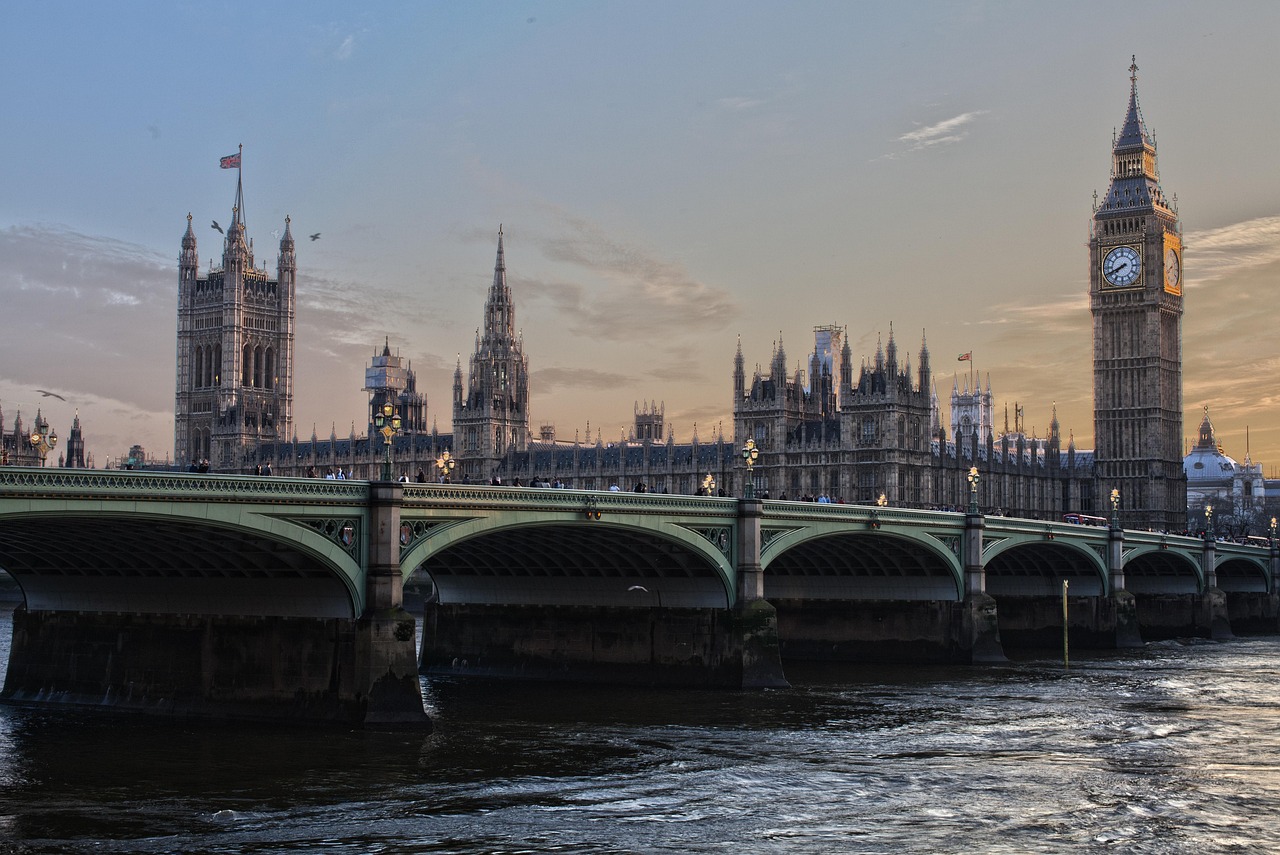
The United Kingdom is moving toward a new model of local taxation that could do more than simply make hotel stays slightly more expensive. England’s planned Overnight Visitor Levy could become a source of predictable revenue that regional mayors use to support infrastructure investment — and potentially to underpin additional borrowing.
The idea represents an important shift in the way local governments think about tourism revenue. Instead of treating a visitor levy purely as a tax collected from tourists and spent on local attractions, policymakers are increasingly discussing whether future revenue streams could help finance transport, public spaces, regeneration projects and other capital investment.
That possibility has attracted attention because borrowing against future income can allow governments to build infrastructure earlier rather than waiting years for enough cash to accumulate.
But it also creates a financial question: how reliable will tourism-tax revenue be over the lifetime of a loan?
What Is the UK’s New Tourism Tax?
The UK government announced in September 2026 that mayors and other strategic local leaders in England would receive powers to introduce an Overnight Visitor Levy.
The levy would be charged on overnight accommodation, with the government deciding that it should be calculated as a percentage of accommodation costs rather than as a flat charge. The intention is to make the tax proportionate: visitors staying in cheaper accommodation would pay less than those staying in more expensive hotels.
The measure is part of a broader programme of devolution intended to give English regions more control over economic development and investment.
Importantly, the levy is not automatically being imposed everywhere in England. Individual mayors and strategic authorities will have to decide whether introducing one makes sense for their areas, following consultation.
The government says the money could support local economic growth, infrastructure and the visitor economy. Local leaders are expected to publish spending plans by March 2028.
That flexibility is significant because tourism varies enormously between English regions.
A destination such as Manchester, Liverpool, York, Cornwall or parts of the Lake District has a different visitor economy from an area with relatively little overnight tourism. A locally controlled levy allows authorities to take those differences into account.
Why Borrowing Against Tourism Revenue Matters
The most interesting part of the debate is not necessarily the tax itself. It is what local authorities could potentially do with the future income.
Suppose a city expects to receive £10 million a year from a visitor levy. Rather than simply spending £10 million annually, it could potentially use the predictable income stream as part of the financial basis for a larger capital investment.
For example, a regional authority might want to build:
- a new public-transport facility;
- improved connections between a railway station and tourist attractions;
- pedestrian and cycling infrastructure;
- public-space improvements;
- conference and events facilities;
- waterfront regeneration;
- tourism-related digital infrastructure; or
- facilities designed to increase visitor capacity.
The basic concept is similar to other forms of public-sector revenue-backed investment: future income can help support today’s capital spending.
Recent analysis by the Institute for Fiscal Studies has highlighted the broader logic behind giving English mayors greater control over revenue. It notes that if authorities retain additional revenue generated by economic growth, that income can potentially help finance borrowing for investment — a concept related to tax-increment financing.
The tourism levy adds another potential revenue stream to this emerging system of fiscal devolution.
Andy Burnham and the Borrowing Argument
The borrowing possibility has been particularly associated with Greater Manchester Mayor Andy Burnham.
According to reporting by City A.M., Burnham and ministers have been presenting the visitor levy as a potential way for mayors to increase borrowing capacity and invest in public assets and infrastructure.
The argument is straightforward.
Tourism creates demand for infrastructure. Hotels, restaurants, attractions and entertainment venues depend on functioning transport networks, clean streets, public spaces and well-maintained destinations. Visitors also generate costs for local authorities.
A levy could therefore capture part of the economic value associated with tourism and recycle it into the infrastructure that supports the visitor economy.
In theory, this creates a feedback loop:
Visitors → tourism revenue → infrastructure investment → better destination → stronger visitor economy.
If the investment succeeds, a region could potentially generate enough additional economic activity to strengthen the revenue base supporting future investment.
England Is Not Starting From Zero
Although England’s new statutory visitor levy is attracting considerable attention, tourism taxes are not an entirely new concept in the UK.
Scotland and Wales have already established legislative frameworks allowing visitor levies.
The House of Commons Library describes visitor levies as charges linked to stays in short-term accommodation and notes that Scotland and Wales have legislated to allow local authorities to introduce them.
Wales has created a framework under which councils can introduce a levy from April 2027. Its legislation uses fixed rates, including different rates for camping and other forms of accommodation.
Scotland has gone further with local implementation.
Edinburgh Provides an Early Test
Edinburgh introduced its Visitor Levy for eligible stays beginning on July 24, 2026.
The Edinburgh scheme charges 5% of the cost of paid overnight accommodation, before VAT, for a maximum of five nights. It applies to a wide range of accommodation, including hotels, guest houses, hostels, self-catering properties and certain short-term lets.
The city estimates that the levy could raise approximately £45 million to £50 million annually by 2028-29.
That makes Edinburgh an important real-world example for English authorities.
It provides an opportunity to observe how much revenue can actually be collected, how businesses administer the system, how visitors respond and how the money affects the local economy.
Those lessons could become particularly valuable if English mayors eventually use tourism revenue to support long-term borrowing.
The Key Question: How Predictable Is Tourism Revenue?
For ordinary government spending, a tax can be relatively straightforward.
Borrowing is different.
A lender wants confidence that revenue will remain available for many years. A city considering debt backed partly by visitor-tax income therefore needs to think beyond today’s tourist numbers.
Tourism can be affected by:
- recessions;
- pandemics;
- geopolitical instability;
- airline capacity;
- exchange rates;
- extreme weather;
- changing travel preferences;
- new competing destinations;
- changes in hotel supply;
- online accommodation trends; and
- changes to the tax itself.
The COVID-19 pandemic demonstrated just how quickly international tourism can collapse.
That makes tourism revenue inherently different from some more stable tax bases.
If an authority borrows against future visitor-tax income and tourism subsequently falls sharply, the debt does not automatically disappear.
Local Authorities Already Borrow for Capital Investment
Borrowing by local authorities is not new.
England operates under a prudential borrowing framework that allows local authorities to borrow for capital expenditure where they can afford to service the debt. Government guidance states that local authorities remain responsible for their own liabilities and that the UK government does not guarantee local-authority borrowing.
The scale is already substantial.
Government statistics show that English local authorities forecast approximately £10.7 billion of prudential borrowing in 2026-27, making borrowing one of the major sources of capital financing.
Consequently, the tourism levy would not create local-government borrowing from scratch.
Instead, the important change would be the potential availability of an additional, tourism-linked revenue stream that could help authorities plan and service investment.
Why Infrastructure Is Central to the Debate
Tourism taxes often become politically controversial when visitors are asked to pay more without seeing where the money goes.
Infrastructure investment provides one possible answer.
Consider a busy tourist destination where thousands of additional visitors arrive every weekend. Those visitors may place pressure on:
- roads;
- buses and trains;
- public toilets;
- waste collection;
- parks;
- pedestrian areas;
- cultural venues;
- policing and public safety;
- environmental management; and
- digital visitor services.
If part of the levy is visibly reinvested in those services, authorities can make a clearer connection between the tax and the visitor experience.
This is one reason the UK government’s policy is explicitly linked to improving local economies, public spaces and attractions.
The Risk of Borrowing Too Aggressively
There is, however, a major distinction between using tourism revenue to fund investment and borrowing heavily because tourism revenue is expected to grow.
The second approach carries substantially greater financial risk.
Hospitality representatives have already expressed concern about the possibility that future governments could change or abolish the tax while authorities remain responsible for debt taken on in anticipation of the revenue.
City A.M. reported that hospitality figures were warning about precisely this risk.
That concern illustrates a fundamental issue with revenue-backed borrowing:
The debt can last much longer than the political policy that created the revenue.
A mayor elected today could introduce a levy. Another administration several years later could change its rate, alter its structure or decide not to continue with it.
Even if the legal framework protects existing obligations, the underlying revenue assumptions could change.
What Happens If Tourism Falls?
A responsible borrowing model would therefore need to account for downturns.
Authorities could potentially structure their finances conservatively by:
- borrowing only against a portion of expected levy income;
- maintaining reserves;
- using conservative tourism forecasts;
- limiting the proportion of debt service funded by the levy;
- stress-testing revenue against severe tourism declines; and
- avoiding projects whose financial viability depends entirely on continuously rising visitor numbers.
The precise rules surrounding English visitor-levy borrowing will matter enormously.
The government has announced the power to introduce the levy, but many detailed implementation questions still need to be resolved through legislation, regulations and local decisions.
How Much Money Could Tourism Taxes Generate?
The potential sums vary considerably depending on the rate, accommodation prices, visitor numbers and number of nights charged.
Previous analysis has produced a wide range of estimates.
The House of Commons Library cited estimates suggesting that a £1-per-person-per-night charge could generate around £420 million annually across England, while other estimates have produced similar figures.
More recent modelling has produced different totals because the proposed English system is percentage-based rather than necessarily a simple £1-per-night charge.
The TaxPayers’ Alliance’s tax-policy analysis, for example, estimated that a 5% levy applied across England could raise roughly £600 million annually under its modelling assumptions.
These figures should not be treated as guaranteed revenue.
Actual collections would depend on which authorities introduce the levy, the rates they select, exemptions, accommodation occupancy, visitor behaviour and the final legislation.
The Hospitality Industry Faces Another Cost
The other side of the argument is the effect on hotels and other accommodation businesses.
Under the proposed English system, accommodation providers would be responsible for collecting and paying the levy to the relevant strategic authority.
That means businesses would face additional administrative responsibilities.
Industry representatives have also raised concerns that an accommodation levy could make British holidays more expensive and potentially affect demand.
The government’s decision to use a percentage of accommodation costs is intended to make the charge more proportional, particularly protecting lower-cost accommodation from a relatively high flat fee.
Whether that design succeeds in practice will depend partly on how sensitive visitors are to changes in accommodation prices.
Could the Tax Pay for Transport?
Transport is one of the areas where tourism-tax revenue could have a particularly visible impact.
Visitors often arrive through major railway stations, airports and coach terminals before travelling to hotels and attractions.
Improving those connections can benefit tourists and residents simultaneously.
A visitor levy could therefore potentially contribute to:
- late-night buses;
- improved rail connections;
- pedestrian infrastructure;
- tourist shuttle services;
- cycling infrastructure;
- station improvements; and
- transport links between attractions and accommodation districts.
A parliamentary committee has already heard regional leaders discuss using potential levy revenue for measures such as night buses, street cleaning and festival support.
This demonstrates how the debate is extending beyond traditional tourism promotion toward broader urban infrastructure.
Tourism Tax Could Become Part of a Bigger Devolution Model
Perhaps the most important development is that the overnight visitor levy is arriving alongside other changes to England’s local-government finances.
The Institute for Fiscal Studies reports that the government plans to assign larger shares of business-rate revenue to mayoral strategic authorities from April 2027 and introduce a share of income-tax revenue from April 2028.
That means English mayors are potentially gaining access to several new forms of revenue-linked financial capacity at the same time.
The visitor levy could therefore become one component of a much broader system in which regional governments have greater financial incentives to promote economic growth.
This is a significant change from a model in which local authorities rely heavily on grants from central government.
Could This Encourage Better Tourism Planning?
There is another potential consequence.
If local authorities know that a stronger visitor economy produces more revenue for their own region, they may have greater incentives to invest in tourism infrastructure.
That could mean moving away from simply asking:
“How can we attract more tourists?”
toward a more sophisticated question:
“What type of tourism produces sustainable economic benefits for the region?”
That distinction matters.
More visitors are not necessarily better if they overwhelm public spaces, damage historic sites, increase congestion or produce relatively little local economic value.
A revenue system could encourage destinations to focus on higher-value tourism, longer stays, off-season travel and better geographical distribution of visitors.
But There Is a Risk of Becoming Too Dependent on Tourism
The opposite problem is also possible.
A region that becomes heavily dependent on visitor revenue may become more vulnerable to fluctuations in tourism.
That is particularly important for areas where tourism represents a large proportion of local economic activity.
A balanced local-government financing system therefore needs multiple sources of revenue rather than relying too heavily on one sector.
Tourism taxes can complement broader fiscal resources, but they cannot eliminate the fundamental volatility of tourism.
A New Financial Tool With Long-Term Consequences
The UK’s emerging visitor-levy system is therefore about much more than adding a small charge to hotel bills.
It could become part of a new financial architecture for English regions.
The immediate objective is to give mayors and strategic authorities another source of money for local priorities. The longer-term possibility is more ambitious: using predictable tourism income to help finance borrowing for infrastructure that can improve a destination’s economy.
That model could potentially accelerate investment in transport, public spaces, cultural facilities and tourism infrastructure.
But borrowing transforms the equation.
Once future tourism revenue is committed to servicing debt, today’s policy decision becomes tomorrow’s financial obligation.
The success of the model will therefore depend not simply on how much money a visitor levy raises, but on how cautiously authorities forecast that revenue, how transparently they spend it and whether the resulting investments produce benefits for both visitors and residents.
England is effectively testing whether a tourism tax can become more than a charge on travellers — whether it can become a long-term investment tool for regional economies.
The answer will depend on the details of the legislation, the choices made by individual mayors and, ultimately, the resilience of Britain’s visitor economy.
Frequently Asked Questions
1. What is the UK’s Overnight Visitor Levy?
The Overnight Visitor Levy is a planned charge on overnight accommodation in England. The government announced in September 2026 that mayors and other strategic local authorities would be given powers to introduce such a levy. It is intended to be calculated as a percentage of accommodation costs rather than as a flat national charge.
2. Can English mayors borrow against tourism-tax revenue?
The government’s announcement has created the possibility of using the future revenue stream to support investment and borrowing. Reports citing Andy Burnham and ministers indicate that borrowing against expected visitor-levy income is being discussed as a way to finance infrastructure. However, the precise legal and financial mechanisms will depend on the final framework and local-government borrowing arrangements.
3. Who will pay the tourism tax?
The levy is expected to apply to people staying in paid overnight accommodation, with accommodation providers responsible for collecting and remitting it. The proposed English system is designed as a percentage of accommodation costs, meaning the amount paid would vary according to the price of the stay.
4. What could the tourism-tax money be used for?
The government says the revenue can support local economic growth, infrastructure, public spaces, attractions and the visitor economy. Potential uses include transport improvements, regeneration, events, street improvements and facilities that make destinations more attractive to visitors and residents.
5. What are the main risks of borrowing against tourism-tax revenue?
The principal risk is that tourism income can fluctuate. Recessions, travel disruptions, economic shocks or changes in visitor behaviour could reduce levy revenue while the debt would still need to be serviced. There is also a policy risk if future governments or local administrations change the tax. For that reason, borrowing based on visitor revenue would need conservative forecasts, adequate reserves and careful stress-testing.
Sources Bloomberg