
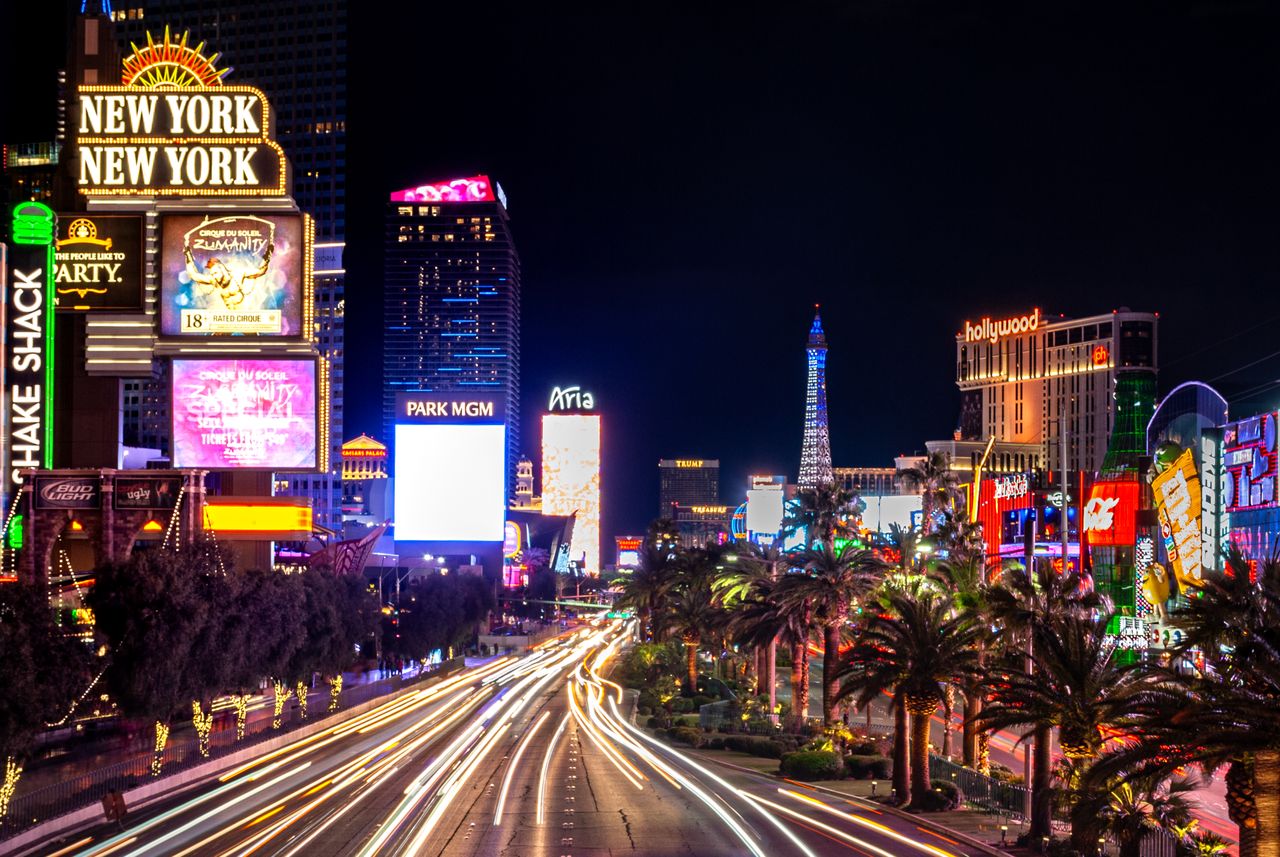
Las Vegas has spent much of 2025 and 2026 trying to answer an uncomfortable question:
Can America’s entertainment capital keep attracting millions of visitors when a trip to the Strip is becoming more expensive?
For a city whose business model depends heavily on people choosing to spend money on hotels, restaurants, shows, casinos, shopping and entertainment, that question matters.
The latest numbers provide some encouraging evidence.
Las Vegas welcomed approximately 3.17 million visitors in July 2026, an increase of 2.7% from July 2025. Hotel occupancy rose 1.1 percentage points to 77.2%, while average daily room rates increased 1.8% to $157.45. Revenue per available room, or RevPAR, climbed 3.2% to $121.55.
The improvement is particularly notable because July 2025 was a difficult comparison point: visitation had fallen about 12% year over year at the time.
Yet the recovery remains incomplete.
Las Vegas finished 2025 with about 38.5 million visitors, down 7.5% from 2024 and still roughly 10% below the 42.5 million visitors recorded in 2019. Through the first seven months of 2026, visitor volume was only about 0.5% above the same period of 2025.
At the same time, airfares to Las Vegas have risen sharply, Canadian visitation remains well below historical levels, and the city’s traditional younger customer base is shrinking.
So what exactly is happening in Las Vegas?
The answer may be more interesting than either “Vegas is back” or “Vegas is struggling.”
The city is changing.
July Delivered a Welcome Improvement
July is not normally the month when Las Vegas expects its strongest leisure performance.
The desert heat can be punishing, and summer has traditionally been one of the softer periods for the destination.
That makes the July 2026 numbers encouraging.
Visitor volume reached 3,171,600, up from approximately 3.09 million a year earlier. Hotel occupancy reached 77.2%, compared with 76.1% in July 2025. Occupied room nights increased 2.3% to approximately 3.6 million.
The Strip performed somewhat differently from downtown, but casino activity provided another positive signal.
Las Vegas Strip gaming win increased approximately 3.6% to $776.3 million in July. Clark County gaming revenue rose 1.5% to roughly $1.17 billion, while Nevada statewide gaming win increased about 2.1% to nearly $1.39 billion.
Those figures indicate that people were not simply arriving in greater numbers.
They were also spending money.
That distinction matters for Las Vegas.
But the Rebound Is Still Modest
The encouraging July performance should not be interpreted as a complete recovery.
Through the first seven months of 2026, Las Vegas had recorded about 22.75 million visitors, only 0.5% more than the same period in 2025.
That is essentially flat growth.
And the annual comparison remains difficult because 2025 was itself a weak year.
A 2.7% increase after a 12% decline does not restore the earlier lost volume overnight.
This is why LVCVA President and CEO Steve Hill told Nevada economic leaders in September that Las Vegas was still gradually losing leisure travelers even though strong convention activity was helping offset the decline.
That distinction between leisure travel and business travel is becoming increasingly important to the Las Vegas recovery story.
Conventions Are Providing a Critical Safety Net
Las Vegas has always been more than casinos.
Its enormous convention infrastructure allows the city to attract visitors whose employers, rather than the travelers themselves, often pay for transportation and accommodation.
That makes business travel somewhat less sensitive to consumer-price pressure.
During the first seven months of 2026, convention attendance reached approximately 3.9 million, up 11.2% from the same period a year earlier and close to a record pace.
That strength is helping compensate for softer leisure demand.
July itself was weaker, however.
Convention attendance totaled about 262,700, down 5.6% year over year. LVCVA officials attributed much of that monthly decline to normal trade-show scheduling changes rather than a collapse in convention demand.
This distinction is important.
One month’s decline does not necessarily indicate a structural downturn.
The broader year-to-date trend remains much stronger.
Why Business Travelers Matter So Much
A convention traveler operates under a different economic logic.
A leisure visitor may look at a $400 airfare and decide to postpone a vacation.
A business traveler attending a major convention may have an employer covering the flight.
A company may also pay for the hotel.
That makes business demand less sensitive to the price of a plane ticket.
Steve Hill specifically noted that the rise in airfares had not affected convention attendance as much, likely because many convention travelers are using expense accounts rather than personal money.
That is a major advantage for Las Vegas.
It gives the city a second engine when leisure demand weakens.
Airfare Has Become One of Vegas’ Biggest Problems
The biggest obstacle to a leisure recovery may be sitting far away from the casino floor.
It is the airplane.
According to Hill, domestic airfares increased an average of 12% during the first four months of 2026, while fares to and from Harry Reid International Airport increased by more than 20% on average.
Higher fuel costs were identified as an important factor following the onset of the conflict in Iran and the resulting increase in oil prices.
For Las Vegas, that creates a serious problem.
A destination can offer a reasonable hotel rate and still become expensive overall if the airfare is significantly higher.
A traveler might therefore look at the price of a room and conclude that Las Vegas is affordable while the total trip is not.
That is why tourism recovery cannot be measured through hotel pricing alone.
Airport Data Tell a Different Story
Perhaps the most revealing statistic is what happened at Harry Reid International Airport in July.
The airport handled approximately 4.41 million passengers, down 7.6% from July 2025. Domestic traffic fell even more sharply, by approximately 8.7%.
At first glance, that appears contradictory.
How can Las Vegas visitor numbers rise 2.7% while airport passenger traffic falls 7.6%?
The answer is that the statistics measure different things.
LVCVA visitation counts visitors to the destination.
Airport passenger statistics include departures and arrivals, local residents, connecting traffic and other categories that do not map one-to-one to tourist arrivals.
There can also be differences in how travel behavior is counted.
The July numbers therefore should not be read as evidence that one of the datasets is wrong.
Instead, they show that Las Vegas’ transportation mix is changing.
Driving Has Become More Important
Las Vegas does not depend exclusively on airplanes.
Southern California is one of its biggest drive markets.
The Nevada-California border recorded average daily traffic of about 45,183 vehicles during the first seven months of 2026, 6.3% above the comparable 2025 level.
That is significant.
When airfares rise, people who live within driving distance may have an alternative.
A family in Los Angeles, Riverside or San Diego can drive to Las Vegas rather than pay for several airline tickets.
Gasoline prices matter, but for some households driving may still be cheaper than flying.
This regional accessibility provides Las Vegas with a buffer that many resort destinations do not have.
Canada Is the Missing International Market
The international picture is more difficult.
Canada has historically been Las Vegas’ largest international visitor market.
Tourism officials say Canadian visitation is down approximately 30% from 2019 levels, and Hill said the decline represents a meaningful share of the visitors missing from the city.
Canadian airline seat capacity to Las Vegas has also been lower.
The decline is important not only because of visitor numbers but because Canadian travelers historically represent a reliable source of international demand.
Las Vegas has responded with efforts designed to make the city more attractive to Canadian customers.
Downtown casino operators launched an “At Par” promotion that allowed qualifying Canadian guests to pay listed U.S.-dollar prices without an exchange-rate adjustment at participating properties, along with additional casino incentives.
That response demonstrates how much the industry wants to rebuild the Canadian market.
Why the Canadian Decline Matters
Las Vegas’ problem is partly geographic concentration.
The United States provides the majority of its visitors, and Southern California provides a particularly large share.
International visitors represent about 12% of the overall visitor mix, according to LVCVA’s latest published visitor profile figures.
That means Canada does not simply represent “foreign tourists.”
It represents one of the city’s most established international pipelines.
A sustained decline there makes the destination more dependent on domestic U.S. demand.
Las Vegas Is Becoming More Dependent on Wealthier Travelers
Another major change is happening inside the visitor demographic.
According to figures cited in the Fox News report, 75% of Las Vegas visitors earned at least $100,000 in 2025, while 44% earned $150,000 or more.
At the same time, visitation among travelers aged 21 to 29 has fallen more than 10% since 2022.
That suggests a major transformation in the city’s customer base.
Vegas is increasingly attracting visitors with more disposable income.
But it is seeing fewer of the young adults who historically formed an important part of its gambling and nightlife culture.
The result is a gradual repositioning.
The Old Vegas Model Is Being Replaced
Traditional Las Vegas economics were built heavily around gaming.
People came to gamble.
Hotels used discounted rooms to attract casino customers.
Restaurants and shows supported the larger resort ecosystem.
Casinos then made much of their money from gaming.
That model still exists.
But it is no longer the entire story.
Luxury hotels.
Fine dining.
Nightclubs.
Concerts.
Professional sports.
Formula 1.
Retail.
High-end experiences.
Large conventions.
Immersive attractions.
Las Vegas is becoming more diversified.
Luxury-travel analyst Whytney Rawls told Fox News that gaming was once the dominant revenue driver but that a larger share of revenue now comes from premium hotel rates, dining, nightlife, entertainment, retail and large events.
That transformation helps explain why visitor demographics are changing.
The city increasingly wants customers who spend across multiple categories rather than simply gambling.
The Formula 1 Effect
The Las Vegas Grand Prix is one of the clearest examples.
The event transformed the Strip into a major international sports stage and gave Las Vegas a new premium travel product.
The event is expensive.
Hotels can command higher rates around race weekend.
Restaurants, transportation operators, entertainment companies and retailers can all benefit from the influx.
But Formula 1 also fits the city’s changing strategy.
The customer is not necessarily a traditional gambler.
They may be buying hospitality packages, luxury accommodation, premium dining and entertainment.
The event expands the economic definition of what a Las Vegas visitor can be.
The Sphere Has Changed Entertainment Economics
The Sphere is another example.
The massive immersive venue has become one of the city’s most recognizable attractions, creating a new category between concert arena, art installation and technological spectacle.
Pollstar data cited by The Wall Street Journal and Fox News showed the Sphere generated approximately $379 million in 2025 from 1.7 million tickets, making it the world’s highest-grossing arena for that year.
That is significant because the attraction does not depend on traditional casino economics.
It gives travelers another reason to visit.
A person may travel to Las Vegas primarily for a concert or immersive show and only incidentally visit a casino.
This is precisely the kind of diversification the city has been pursuing.
Sports Have Become Part of the Las Vegas Product
The city’s transformation also includes professional sports.
The NFL’s Raiders play in Las Vegas.
The NHL’s Golden Knights are established in the city.
The WNBA’s Aces have become another major attraction.
Major sporting events can generate hotel demand even among visitors who have no interest in gambling.
That allows Las Vegas to capture tourism spending from audiences that might previously have chosen another city.
Sports also create repeat visitation.
A traveler might return because of a game rather than a casino.
The Cost Problem Has Not Gone Away
Diversification is not the same as affordability.
Las Vegas has developed a reputation for expensive resort experiences.
Travelers have complained about hotel prices, restaurant bills, parking charges, resort fees, drinks and other add-on costs.
One particularly memorable example came in 2025, when a social-media complaint about a $26 bottle of minibar water at Aria became a symbol of what some visitors considered excessive pricing.
The individual example is not representative of every Las Vegas hotel.
But it captured a larger consumer sentiment.
Visitors do not always object to paying more.
They object when they feel that prices are unpredictable or disconnected from value.
That distinction can influence whether visitors return.
Resort Fees Make the Price Question More Complicated
A hotel advertised at one price may have a significantly higher final cost after mandatory fees.
Travelers increasingly compare total prices rather than the basic room rate.
That makes transparent pricing more important.
Las Vegas operators are competing not only against other casinos but also against destinations that advertise simpler packages.
The city therefore faces a delicate balance.
Raise rates during high demand and increase revenue per room.
But raise them too aggressively and price-sensitive customers can choose another destination.
July Room Rates Were Not Actually Exploding
There is an interesting nuance in the latest numbers.
The “sky-high prices” narrative is understandable, but the July average daily room rate of $157.45 was only 1.8% higher than July 2025. RevPAR rose 3.2%.
The problem is that July is not necessarily representative of the most expensive Las Vegas dates.
Prices can vary enormously depending on major conventions, sporting events, holiday weekends, concerts and other special events.
The annual 2025 average daily room rate was $183.52, according to the LVCVA, compared with 80.3% overall annual occupancy.
Therefore, travelers can encounter both relatively affordable nights and extremely expensive nights within the same month.
Event-Driven Pricing Is Central to Modern Vegas
Las Vegas increasingly prices itself according to demand.
A major convention may fill thousands of hotel rooms.
A championship event can push rates sharply higher.
A concert weekend can create a temporary premium.
A regular midweek summer night can be much cheaper.
This is similar to airline pricing.
The city is effectively using its attractions as demand-management tools.
For travelers, the result is that date selection can sometimes matter more than the hotel itself.
Off-Peak Travel Can Make a Big Difference
Travelers seeking better value should therefore think beyond the standard weekend.
Midweek stays can be cheaper.
Some summer dates can be less expensive.
Shoulder periods around major events can offer better hotel availability.
Travelers who are flexible with dates can sometimes avoid the sharpest price spikes.
The LVCVA itself tracks weekend and midweek occupancy separately. Its 2025 figures showed 88.8% weekend occupancy versus 76.6% midweek occupancy.
That difference demonstrates how strongly Las Vegas demand changes depending on the calendar.
The City Is Trying to Keep Visitors Longer
Length of stay matters to Las Vegas.
According to LVCVA data, the average visitor trip in 2025 was about 3.2 nights.
The longer a visitor stays, the more opportunity there is to spend money across hotels, restaurants, entertainment, transportation and attractions.
That gives Las Vegas an incentive to create itineraries that extend beyond the casino floor.
Visitors can now spend several nights watching shows, attending sporting events, visiting museums, dining at celebrity-chef restaurants and exploring attractions without gambling heavily.
That is a very different tourism product from the Vegas of decades ago.
Casinos Still Matter
Despite the diversification, it would be a mistake to assume gambling has become irrelevant.
Clark County generated approximately $13.7 billion in gaming revenue in 2025, with the Las Vegas Strip contributing about $8.8 billion.
That is a huge business.
Las Vegas still has tens of thousands of slot machines and a massive casino infrastructure.
Gaming remains a central part of the visitor experience.
The difference is that the casino is increasingly one element of the resort rather than the entire reason for the resort.
The Modern Las Vegas Resort Is More Like a City
Today’s major integrated resorts can contain:
Hotels.
Casinos.
Restaurants.
Nightclubs.
Shopping.
Theaters.
Spas.
Pools.
Meeting facilities.
Sports venues.
Entertainment attractions.
This creates an economic ecosystem where a visitor can spend an entire weekend without leaving the property.
That is good for resort operators.
It also changes the relationship between Las Vegas and the surrounding local economy.
Downtown Is Not Following Exactly the Same Path
The Strip has benefited from premium positioning, but downtown Las Vegas has had a different experience.
In July 2026, downtown gaming revenue fell approximately 8.6% to $68.5 million, according to the Nevada Gaming Control Board figures reported by the Las Vegas Review-Journal.
Downtown hotel occupancy also declined substantially during the month.
That does not mean downtown is failing.
It demonstrates that the Las Vegas tourism market is not uniform.
Different neighborhoods attract different customers.
Premium Strip resorts have a very different pricing structure and customer base from downtown properties.
A citywide recovery therefore may not be distributed evenly across every part of Las Vegas.
The Younger Visitor Is Becoming Harder to Find
The decline in 21-to-29-year-old visitors deserves special attention.
Historically, Las Vegas was strongly associated with young-adult nightlife.
Cheap rooms.
Affordable buffets.
Low-cost gambling promotions.
Nightclubs.
Pool parties.
Weekend trips.
That model has become harder to sustain.
Younger consumers face high housing costs, student debt and other financial pressures.
They also have more entertainment alternatives.
And they can travel internationally at relatively low prices.
Las Vegas therefore has to compete for their attention differently than it did in earlier decades.
Could the Shift Toward Wealthier Visitors Alienate Younger Travelers?
There is a potential trade-off.
Luxury positioning can increase spending per visitor.
But if the city becomes perceived as unaffordable, younger visitors may decide that Las Vegas is not designed for them.
The city has historically depended on the psychological idea that almost anyone can have a Vegas weekend.
That does not necessarily mean cheap.
It means accessible.
Maintaining that perception while expanding premium offerings will be a major challenge.
Las Vegas Is Also Competing Against Its Own Reputation
A destination can become a victim of its own pricing strategy.
If visitors repeatedly hear that Las Vegas is too expensive, some people may stop considering it before looking at actual prices.
That can become self-reinforcing.
A traveler sees social-media complaints.
They assume the Strip is unaffordable.
They choose a different destination.
Las Vegas loses a potential visitor before the traveler ever compares hotel rates.
This is why perception matters.
But the City Still Has an Enormous Brand Advantage
Few destinations are as instantly recognizable as Las Vegas.
The Strip.
The fountains.
The casinos.
The neon.
The shows.
The nightlife.
The sports events.
The Sphere.
That brand equity is extremely difficult for competitors to replicate.
A Caribbean resort can compete on beaches.
Orlando can compete on attractions.
New York can compete on culture.
Los Angeles can compete on entertainment.
But Las Vegas combines many of those experiences within a compact tourism district.
That remains a significant advantage.
Conventions Could Become Even More Important
The strength of convention demand may point toward the future.
Business travelers fill rooms during periods when leisure demand is weaker.
Convention visitors also spend on restaurants, transportation, entertainment and meetings.
And employers often subsidize their travel.
Las Vegas has approximately 14.5 million square feet of meeting space, according to the LVCVA.
That infrastructure represents a huge strategic asset.
The city can therefore partially insulate itself from leisure-market volatility by competing aggressively for conferences.
The City Is Becoming More Year-Round
Las Vegas was once heavily associated with weekend trips.
Now conventions, sports and entertainment create demand throughout the calendar.
A major trade show can attract thousands of visitors on weekdays.
A sports championship can fill hotels.
A concert residency can create demand across multiple nights.
A Formula 1 weekend can transform the entire Strip.
This makes tourism less dependent on traditional vacation patterns.
International Diversification Could Be the Next Goal
Canada’s decline demonstrates the risks of losing a major international source market.
The obvious response is diversification.
Las Vegas can pursue visitors from:
Mexico.
Asia.
Europe.
Latin America.
Australia.
The Middle East.
Other international markets.
The challenge is that international travelers face longer flights and higher transportation costs.
Building a new market requires sustained airline connectivity, marketing, cultural familiarity and often direct routes.
It cannot happen overnight.
The Asian Market Is Particularly Interesting
Las Vegas has long had international recognition in Asia because of its casino reputation.
But future growth may increasingly depend on positioning the city as an entertainment destination rather than only a gambling destination.
Luxury shopping.
Fine dining.
Shows.
Sports.
Immersive entertainment.
Premium hotels.
These products can appeal to travelers who have little interest in gambling.
That expands the addressable market.
Technology Is Also Changing the Vegas Experience
Las Vegas increasingly depends on digital technology to manage visitor experiences.
Mobile hotel keys.
Digital reservations.
Cashless payment.
Sports-betting apps.
Convention technology.
Personalized resort offers.
Digital entertainment.
AI-powered customer service.
The visitor experience can now be heavily mediated through a smartphone.
This can improve convenience.
But it also increases the importance of cybersecurity and data privacy.
The more customer information resorts collect, the more responsibility they have to protect it.
The Future Las Vegas Customer May Spend Differently
The traditional Vegas visitor might budget for gambling first and everything else second.
The modern visitor may allocate money differently.
A concert ticket might be the largest single expense.
A celebrity-chef restaurant may be the centerpiece of the trip.
A luxury hotel could become the destination itself.
A sporting event may drive the entire vacation.
Gaming becomes optional rather than essential.
That shift has major implications for the city’s business model.
Las Vegas Does Not Need Every Visitor to Gamble
This may be one of the most important changes in modern Las Vegas.
The city can profit from visitors who never sit at a blackjack table.
A traveler who spends $500 on a concert, $300 on dinner, $250 on shopping, hundreds on a hotel room and additional money on transportation still contributes to the tourism economy.
That allows Las Vegas to capture a broader range of customers.
It also provides greater resilience when gambling preferences change.
The Casino Floor Is Becoming Part of a Bigger Entertainment Ecosystem
This does not make gaming unimportant.
Instead, it changes the context.
The casino competes with the restaurant.
The restaurant competes with the show.
The nightclub competes with the concert.
The resort competes with attractions outside its property.
A visitor’s discretionary budget can be divided across all of them.
Las Vegas therefore needs to deliver a compelling total experience.
The Rebound Depends on Value as Much as Volume
The July recovery provides encouraging signs.
But the long-term question is not simply whether Las Vegas can return to 42 million annual visitors.
It is whether the city can attract enough visitors at prices that feel worthwhile to customers and profitable to businesses.
That means watching several indicators simultaneously:
Visitor volume.
Hotel occupancy.
Room rates.
Airfare.
Convention attendance.
Gaming revenue.
International visitation.
Entertainment demand.
Length of stay.
Visitor spending.
The LVCVA’s 2025 figures demonstrate why all of those measures matter. Tourism produced approximately $50.8 billion in direct visitor spending and an estimated $80.9 billion total economic impact.
Vegas Has More Economic Engines Than It Used To
That diversification is perhaps the strongest reason to believe the city can adapt.
Gaming remains enormous.
Hotels remain enormous.
Conventions are strong.
Sports are growing.
Entertainment is expanding.
The Sphere has created a new category.
Luxury tourism is attracting higher-income visitors.
Retail and dining continue to evolve.
The city no longer needs one type of customer.
That is valuable.
But Diversification Has a Price
Building a luxury entertainment destination requires massive investment.
New venues must attract enough customers to justify their costs.
Hotels need high occupancy.
Restaurants need steady demand.
Events need large audiences.
Airlines need enough passengers to maintain routes.
That means Las Vegas is not immune to downturns.
It has simply spread its risk across more tourism categories.
The Economy Still Matters
A Las Vegas vacation is discretionary.
When consumers feel wealthy, they travel.
When they are worried about inflation, employment or household finances, vacations can be delayed.
This is one reason airfare increases matter so much.
A trip involving a family of four can become dramatically more expensive when flight prices rise.
A city with a strong convention market has some protection because companies continue to travel even when households cut back.
But leisure tourism remains sensitive to consumer sentiment.
The Next Test Will Be the Fall and Winter Seasons
The most important question now is whether July’s improvement continues.
Las Vegas enters a stronger tourism period as temperatures moderate and convention activity increases.
Major events can produce significant demand.
The city’s entertainment calendar remains strong.
The real measure of recovery will therefore be whether visitor volume continues to grow while hotels maintain healthy occupancy without pushing prices beyond what leisure travelers are willing to pay.
A Sustainable Recovery Will Need More Than Higher Prices
Higher visitor spending can help Las Vegas.
But a long-term tourism strategy cannot rely solely on making each customer spend more.
The industry also needs to maintain trust.
That means transparent pricing.
Competitive hotel rates.
Reasonable access to entertainment.
Convenient transportation.
Strong customer service.
A mix of premium and affordable options.
A compelling range of free and low-cost experiences.
Las Vegas works best when travelers feel that they have choices.
The City Still Has to Serve the Budget Traveler
A luxury visitor may spend thousands of dollars.
But Las Vegas historically attracted people who might arrive with a much smaller budget.
Those travelers are part of the city’s cultural identity.
They stay at midrange hotels.
Eat at casual restaurants.
Watch cheaper shows.
Spend modestly in casinos.
Explore the Strip for free.
A tourism system that removes the lower-cost layer risks narrowing its audience too far.
The challenge is not to choose between luxury and affordability.
It is to offer both.
What Travelers Should Expect From Las Vegas in 2026
Visitors should expect a destination that is more diversified and more expensive in certain circumstances than the Las Vegas of the past.
Major event weekends can carry substantial premiums.
Airfare may be the biggest variable.
Hotels can vary dramatically by date.
Convention calendars can make some weekdays unusually expensive.
But travelers can still find value by choosing dates carefully, comparing the full cost rather than the advertised room rate, and considering destinations outside the busiest Strip properties.
The Las Vegas Rebound Is Real—but Uneven
The latest evidence supports a cautious conclusion.
Las Vegas is recovering from the sharp tourism decline of 2025.
July visitor volume increased.
Hotel occupancy improved.
Room revenue strengthened.
Strip gaming revenue rose.
Convention attendance remains strong year to date.
Search interest is increasing.
But the city has not fully returned to its pre-2025 trajectory.
Visitor volume remains only slightly above 2025 levels through the first seven months.
Airfare is substantially higher.
Canadian visitation remains weak.
Younger travelers are less prominent.
And the industry’s premium positioning creates an ongoing affordability challenge.
The New Vegas Is Not the Old Vegas With Higher Prices
That may be the most important takeaway.
Las Vegas is not simply charging more for the same casino vacation.
It is trying to sell a different product.
Sports.
Immersive entertainment.
Luxury hotels.
Fine dining.
Conventions.
Shopping.
Nightlife.
Large-scale events.
And traditional gaming.
The visitor can now construct a trip around almost any combination of those experiences.
That makes the city less dependent on a single reason to visit.
The Real Question Is Whether Customers Think the Experience Is Worth It
This is ultimately what will determine the next phase of Las Vegas tourism.
A traveler does not calculate tourism statistics.
They calculate their own vacation.
Is the airfare reasonable?
Is the hotel worth the price?
Are resort fees acceptable?
Is the restaurant worth the bill?
Is the show worth the ticket?
Does the city offer enough to justify the total expense?
If the answer is yes, the recovery can continue.
If visitors increasingly conclude that the experience is overpriced, they have more alternatives than ever.
That is the challenge facing Las Vegas.
Vegas Has Survived Reinvention Before
The city has repeatedly changed its identity.
From gambling town to family destination.
From casino capital to entertainment capital.
From convention hub to sports destination.
From budget getaway to luxury resort market.
Its ability to reinvent itself is one of its defining characteristics.
The latest transformation is simply another chapter.
The city is moving from a model based heavily on gambling volume toward one based on total visitor value.
That does not mean the casino disappears.
It means the casino becomes one piece of a much bigger economic machine.
The Next Las Vegas Tourism Era
The encouraging July numbers suggest that visitors have not abandoned Las Vegas.
They are still coming.
They are still booking rooms.
They are still going to casinos.
They are still attending shows.
They are still filling conventions.
But the composition of the visitor is changing.
There are relatively more affluent travelers.
There are fewer young adults.
International patterns are shifting.
Business travel is becoming more important.
Entertainment increasingly competes with gaming for attention.
And transportation costs can determine whether a leisure traveler makes the trip at all.
That means the city’s next tourism chapter will depend less on simply getting more people through the gates.
It will depend on convincing each traveler that Las Vegas offers something worth paying for.
The July rebound is an encouraging sign.
But the bigger story is that Sin City is no longer betting everything on the casino floor.
It is betting on the entire experience.
5 Frequently Asked Questions
1. Is Las Vegas tourism actually recovering in 2026?
The latest data show signs of improvement, but the recovery is still incomplete. Las Vegas received about 3.17 million visitors in July 2026, up 2.7% year over year, while hotel occupancy increased to 77.2%. However, visitor volume through the first seven months of 2026 was only about 0.5% above the same period in 2025, and the city remains below its pre-2025 visitor levels.
2. Why has Las Vegas tourism struggled?
Several factors have contributed, including higher airfare, weaker leisure demand and a significant decline in Canadian visitors. LVCVA CEO Steve Hill said airfare to and from Las Vegas had risen by more than 20% on average, while Canadian visitation was about 30% below 2019 levels. Competition from other destinations and changing traveler demographics are additional challenges.
3. Is Las Vegas becoming too expensive for ordinary travelers?
Costs can be high, particularly during major conventions and events, but prices vary significantly by date. In July 2026, the average daily hotel rate was $157.45, up only 1.8% year over year. The broader affordability issue also includes airfare, resort fees, dining, entertainment and transportation rather than the room rate alone.
4. Is Las Vegas still mainly a gambling destination?
Gambling remains a major part of the economy. Clark County recorded about $13.7 billion in gaming revenue in 2025, including approximately $8.8 billion from the Strip. However, Las Vegas has diversified significantly into conventions, sports, luxury dining, entertainment, shopping and major events.
5. What is changing about the typical Las Vegas visitor?
The market is becoming more affluent and somewhat older. Figures cited by Fox News indicate that 75% of visitors earned at least $100,000 in 2025, while visitation among people aged 21 to 29 has fallen more than 10% since 2022. The city is consequently putting greater emphasis on premium hotels, entertainment, dining, sports and large-scale events in addition to traditional gaming.
Sources Fox News