
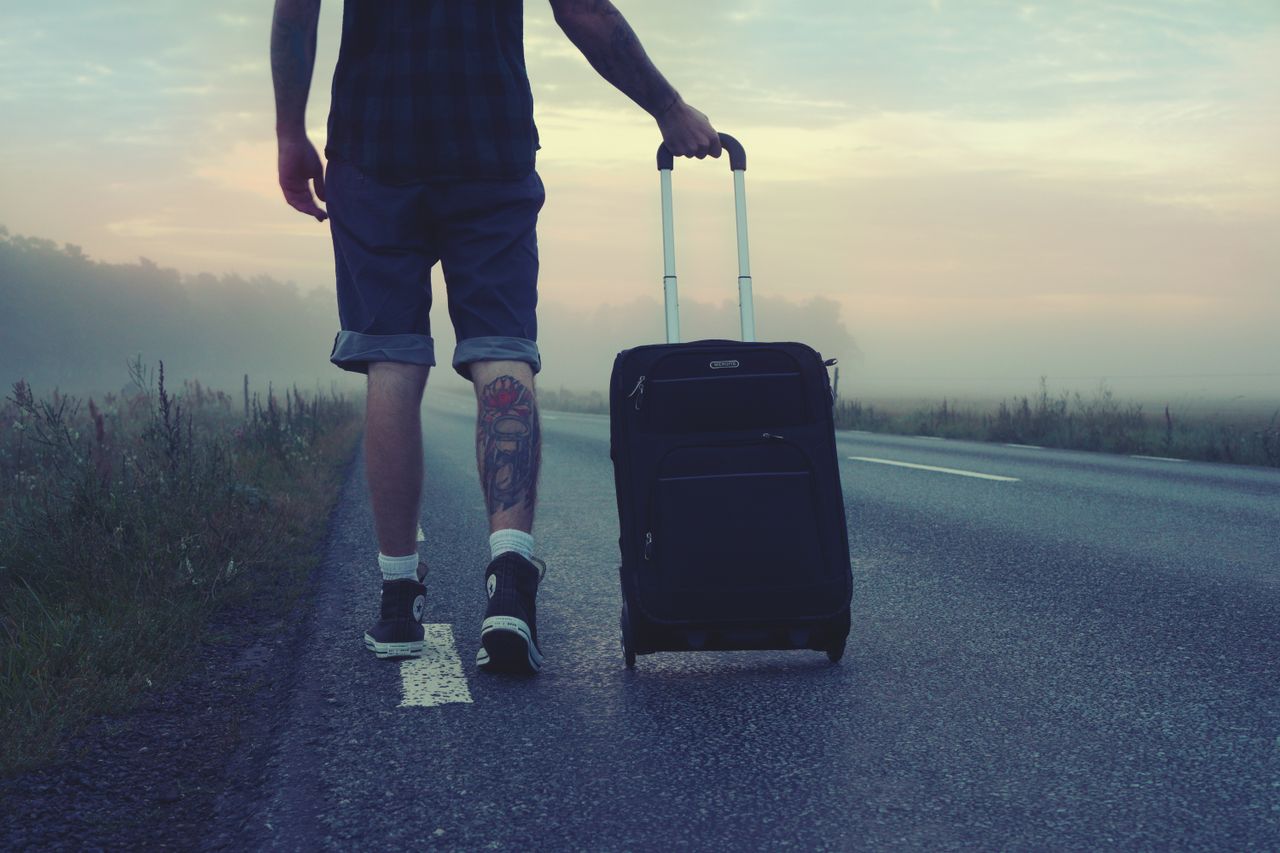
For decades, much of the tourism industry quietly assumed that travelers would arrive in pairs.
Hotel rooms were priced for two people. Tour packages were built around double occupancy. Restaurant reservations often made a table for two feel like the default. Cruises marketed shared cabins. Transportation, excursions and even advertising frequently imagined a couple or a family moving through a destination together.
But millions of travelers are increasingly choosing a different arrangement: themselves.
Solo travel is no longer simply a niche for backpackers, business travelers or people between relationships. It is becoming a mainstream travel behavior, driven by changing household patterns, greater independence, flexible work, longer life expectancy and a growing desire for personal time.
Google reported in April 2026 that search interest in “solo travel” reached an all-time high, while searches for “women solo travel” reached a 15-year peak. Hilton’s 2026 travel trends research found that 26% of travelers planned to travel alone during the year, while 48% planned to add solo days before or after family trips.
Those numbers suggest something important: traveling alone is becoming normal.
The tourism industry, however, is still catching up.
Solo Travel Is Bigger Than the Young Backpacker Stereotype
One of the most persistent images of solo travel is a young backpacker with a small bag, a hostel reservation and several months of free time.
That traveler certainly exists.
But today’s solo-travel market is considerably broader.
There are retirees taking their first international trip alone after a lifetime of family travel. There are divorced travelers restarting their travel lives. There are professionals adding private days to business trips. There are women who do not want to postpone a vacation until a friend or partner is available. There are travelers who simply enjoy making every decision themselves.
Older travelers are particularly important to the industry’s changing picture.
Travel companies have increasingly recognized demand from women over 50, with industry executives describing this group as one of the fastest-growing solo segments. These travelers can also be attractive customers because they may prioritize comfortable accommodations, organized experiences and cultural depth rather than ultra-low-budget travel.
That changes the economics of the sector.
Solo travelers are not necessarily looking for the cheapest possible trip.
Many are looking for the right trip.
The Numbers Suggest a Structural Change
The recent growth in solo-travel interest is not based on one survey alone.
Google’s 2026 travel-trends report found record search interest in solo travel, including a 15-year high for searches related specifically to women traveling alone. At the same time, searches for “travel groups” and “tour groups” also reached record levels.
At first glance, those trends may seem contradictory.
Why would people search both for solo travel and group tours?
Because traveling alone does not necessarily mean wanting to be alone.
That may be one of the biggest misunderstandings in the tourism industry.
A solo traveler may want complete control over the trip while still wanting opportunities to meet other people.
Someone can eat breakfast alone, join a walking tour in the afternoon and have dinner with new acquaintances in the evening.
They may want independence without isolation.
The New Solo Traveler Wants Control, Not Isolation
The modern solo traveler often wants something very specific:
Choice.
Choice about when to wake up.
Choice about where to eat.
Choice about how long to spend in a museum.
Choice about whether to join a tour.
Choice about whether to talk to someone.
Choice about whether to spend an entire afternoon alone.
That means hotels and tour operators should not necessarily try to “solve” solo travel by forcing social activities onto guests.
Instead, they can create opportunities.
A hotel might organize an optional neighborhood walking tour.
A hostel might offer a social dinner alongside private rooms.
A cruise line might create a solo meet-up without requiring guests to share cabins.
A tour company might let independent travelers join selected day excursions while keeping the rest of the itinerary flexible.
The distinction is subtle but important.
Solo travelers often want access to people on their own terms.
The Biggest Barrier May Be the “Single Supplement”
The most obvious mismatch between the solo traveler and the tourism industry’s traditional business model is pricing.
Consider a hotel room designed for two.
The room itself costs roughly the same whether one person or two people occupy it.
Staff still have to clean it.
The building still has to be heated or cooled.
The bathroom still has to be maintained.
The hotel may therefore argue that the cost of the room should not automatically fall by half when one guest disappears.
That is economically understandable.
But from the customer’s perspective, paying nearly double on some tours, cruises or accommodations can feel like a penalty for traveling alone.
This is commonly known as the single supplement.
Research from JourneyWoman’s survey of women over 50 found that 78% of respondents identified the single supplement as their biggest barrier to solo travel. Some respondents reported supplements that could approach the full cost of an additional traveler.
That creates a strange situation.
A traveler may be perfectly willing to pay for the space they use.
They are less enthusiastic about being charged as though they had brought someone who never arrived.
Why Hotels Are Beginning to Rethink the Room for One
Hotels have several ways to respond.
Some can introduce genuinely competitive single-room rates.
Others can create smaller rooms specifically designed for one person.
Some properties can offer flexible pricing depending on occupancy.
And hotels can add value through services that matter particularly to solo guests: easy digital check-in, convenient locations, strong security, luggage storage, local recommendations and simple ways to connect with other travelers.
The rise of solo travel also intersects with another hospitality trend: hotels are increasingly trying to become places for experiences rather than simply places to sleep.
That can be particularly useful for solo guests.
A hotel restaurant, rooftop bar, cooking class, spa or neighborhood event can give an individual traveler a way to participate without having to organize an entire social life from scratch.
Hilton’s 2026 trends research found that travelers increasingly value quiet and personal space, with nearly half saying they add solo time to family vacations.
The implication is broader than “more rooms for one.”
The industry may need to rethink what hospitality means for one person.
Japan Offers an Interesting Example
Japan is particularly instructive because elements of its travel culture have long accommodated people doing things alone.
Solo dining is relatively common.
Business hotels frequently provide compact single rooms.
Capsule hotels can offer accommodation designed for one.
Public transportation makes independent movement straightforward.
Even some traditional ryokan, which historically focused more on couples and groups, have increasingly introduced plans for individual travelers.
This does not mean Japan is universally effortless for solo visitors. Certain rural accommodations and traditional establishments can still be designed around couples or groups.
But Japan demonstrates an important principle:
A destination does not have to create an entirely new tourism industry for solo travelers.
Sometimes it simply needs to stop treating them as an unusual exception.
Restaurants Are Also Learning to Serve One
Dining can be one of the most emotionally complicated aspects of solo travel.
Some solo travelers love eating alone.
Others enjoy it less because they feel conspicuous sitting at a large table designed for multiple people.
Restaurants can respond with better layouts.
Counter seating, bar dining and small tables make it easier to serve individuals without making them feel as though they have occupied space intended for a larger group.
Japan’s dining culture offers especially visible examples of this, from ramen counters to individual booths.
Elsewhere, solo-friendly restaurant experiences are becoming easier to find through reservations and digital booking systems.
This is important because meals are a major part of travel spending.
A destination that makes solo dining comfortable can capture more of that visitor’s budget.
Technology Is Making Solo Travel Easier
Technology has also changed the economics of traveling alone.
A solo traveler can now manage many tasks independently:
Book flights.
Check into a hotel.
Navigate public transportation.
Translate signs.
Find restaurants.
Make reservations.
Join local experiences.
Stay in touch with family.
Access digital maps.
Use AI-powered planning tools.
This reduces some of the friction that once made solo travel more complicated.
Google’s 2026 travel research also points to a broader movement toward digitally assisted planning and more personalized travel behavior.
Artificial intelligence may be particularly significant for solo travelers because an AI assistant can effectively provide a private planning companion.
A traveler can ask for a three-hour itinerary based on their location and interests without negotiating with a group.
They can change the plan immediately.
They can translate a menu or explain a local custom.
They can compare transport options while standing on a train platform.
Technology does not replace human interaction, but it can reduce the cognitive burden of traveling alone.
Safety Remains a Major Consideration
The industry must also recognize that solo travel is not experienced identically by everyone.
Safety is particularly important for women traveling alone.
That does not mean women are incapable of independent travel. It means destinations, hotels and tour providers need to understand the practical concerns that can affect how comfortable a traveler feels.
Useful measures can include:
Well-lit entrances.
Reliable transportation information.
Clear emergency contacts.
Front desks that are available when needed.
Secure luggage storage.
Accurate neighborhood information.
Transparent room-access systems.
The most useful safety features are often not dramatic.
They are simply evidence that the business understands what an individual traveler may need when there is no companion to provide backup.
Solo Travelers Still Want Community
One of the biggest opportunities for hotels and tour operators is to solve the social side of solo travel without removing independence.
Travel can be intensely social.
A traveler might meet someone during breakfast, on a walking tour or at a hostel event and spend the rest of the day together.
That spontaneous interaction is one reason solo travel can be attractive.
Skift previously reported that about two-thirds of Hostelworld guests travel solo specifically to meet people to spend time with.
That means accommodation providers should not think about solo travelers as isolated customers.
They are often highly interested in social connection—provided that participation remains optional.
Group Tours Could Become More Solo-Friendly
Tour companies have another opportunity.
Traditional group tours already solve several problems for solo travelers.
The itinerary is organized.
Transportation is arranged.
Guides provide local knowledge.
Other travelers are present.
The solo traveler therefore gains social opportunities and logistical support without giving up the decision to travel independently.
The main obstacle has often been price.
A single traveler can face a significant supplement even though the tour itself is the same.
That is why some operators have begun experimenting with reduced or eliminated supplements.
Others use dedicated solo rooms, smaller cabins or solo-specific departures.
The business logic is changing because unused capacity can be more expensive than accommodating a solo customer at a more attractive rate.
Cruises Are Under Pressure to Adapt
Cruise lines face an especially interesting challenge.
Cruise cabins were historically designed and priced around two or more occupants.
A solo passenger can therefore face a large cost disadvantage.
But cruise ships also contain something that solo travelers value: built-in social infrastructure.
There are restaurants, entertainment venues, excursions, lounges and activities.
That makes cruising potentially attractive to people who want to travel independently without spending their entire vacation completely alone.
The industry’s response has included solo cabins, single-occupancy pricing and organized events for individual passengers.
The lesson is broader than cruising.
A successful solo product does not merely remove the second bed.
It redesigns the entire experience around the first person.
Business Travel Is Quietly Becoming Solo Leisure Travel
Another major source of solo tourism is the business traveler who adds personal time.
Instead of flying home immediately after a conference, a traveler may stay an extra two or three nights.
This is sometimes described as blended travel.
It can be particularly valuable because the traveler already has the expensive international or domestic transportation partly justified by work.
The personal portion of the journey can then become more flexible.
A traveler attending a conference in Singapore might add a weekend in the city.
Someone visiting London for meetings might stay through Sunday.
A worker attending an event in Tokyo might take an additional day trip alone.
The overlap between business travel and solo leisure therefore gives hotels another reason to design services for individual guests.
Solo Travel Can Help Tourism During the Shoulder Season
Solo travel may also help destinations smooth out demand.
Families often travel according to school calendars.
Couples frequently choose popular vacation periods.
Group trips can be constrained by multiple people’s schedules.
Solo travelers may have more flexibility.
That makes them potentially valuable during traditionally quieter periods.
Skift’s analysis has already linked increased solo travel with stronger shoulder-season demand, reporting increased travel activity during September and October and strong solo representation in hotel bookings.
For destinations, that can be economically useful.
A hotel does not need to build an entirely new property to accommodate more shoulder-season guests.
It needs to fill rooms that might otherwise remain empty.
Solo travelers can help.
Longer Stays May Also Work in Their Favor
Solo travelers may have another economic advantage: flexibility in trip length.
A couple or family often coordinates vacations around work and school.
An individual traveler can extend a trip by a few days when the hotel rate is attractive.
That creates opportunities for destinations promoting slow travel.
Google reported in 2026 that search interest in “slow travel” reached an all-time high alongside record interest in solo travel.
These trends fit together naturally.
Someone traveling alone may spend five days rather than three in one city.
They can work remotely for part of the trip.
They can take a spontaneous day trip.
They do not need to negotiate every extension with another traveler.
This makes solo travel potentially valuable for destinations trying to encourage longer stays.
Marketing Has to Change Too
The way the industry talks about solo travel matters.
Advertising frequently presents solo travelers as unusually brave or adventurous.
That can unintentionally reinforce the idea that going alone is abnormal.
Nobody needs to be told that couples are courageous for booking a weekend away.
Nobody describes a family as adventurous simply because they booked a hotel.
As solo travel becomes mainstream, the marketing should increasingly reflect that normality.
Instead of:
“Are you brave enough to travel alone?”
the industry can ask:
“What would you do if you could plan the whole trip your way?”
That is a very different message.
It focuses on freedom rather than overcoming fear.
Solo Travel Is Not One Market
Another mistake would be to treat all solo travelers as identical.
There are substantial differences between:
A 22-year-old backpacker.
A 35-year-old digital professional.
A 52-year-old divorced traveler.
A 70-year-old retiree.
A woman taking her first international solo trip.
A frequent business traveler adding vacation days.
A person traveling alone because friends were unavailable.
A person who deliberately prefers solitude.
Each group can have different budgets and needs.
Some want hostels.
Some want five-star hotels.
Some prioritize nightlife.
Others want museums and quiet cafés.
Some want group activities every day.
Others want almost none.
The better business strategy is therefore not “build one solo product.”
It is to offer flexibility across solo traveler types.
The Economics of One Person Can Be Better Than the Industry Thinks
There is also a fundamental psychological change in how individuals spend.
A solo traveler does not have to persuade anyone else to pay for a nicer hotel.
They do not need group agreement before booking a premium excursion.
They may spend more on convenience because they value their time.
This can make individual travelers attractive customers.
Some research and industry observations suggest that solo travelers can generate higher per-person spending in certain accommodation categories compared with their pre-pandemic baseline. Skift reported that solo travelers were spending 20% more on hotel bookings globally compared with 2019 in its analysis of 2024 travel activity.
That reinforces an important point.
The solo traveler is not necessarily a budget traveler.
The person traveling alone may actually be a premium customer who simply dislikes paying for unused capacity.
The Hotel of the Future May Be Designed Around Individual Choice
The larger lesson for the tourism industry is that solo travel requires more than a discounted room.
It requires a change in thinking.
A hotel designed for one traveler might offer:
A genuinely competitive single rate.
Compact but comfortable rooms.
Fast digital check-in.
Safe access.
Solo dining options.
Optional group experiences.
Flexible excursions.
Easy local transportation.
Luggage storage.
Quiet spaces.
Reliable Wi-Fi.
And staff who understand that a person arriving alone may want either complete privacy or an easy path to social interaction.
The best approach is not to assume which one.
Let the traveler decide.
Destinations Could Benefit Too
The solo-travel shift has implications for destination management.
Solo travelers can distribute spending differently.
They may visit smaller restaurants.
Use public transportation.
Book local experiences.
Stay in smaller properties.
Travel outside peak periods.
Visit cultural attractions that are easier to explore independently.
This could help tourism move away from a model dominated by large groups and peak-season demand.
At the same time, destinations need to avoid assuming that solo travel is automatically sustainable.
One traveler still consumes resources.
Ten million solo travelers can create just as much pressure as five million couples.
Responsible tourism therefore remains important.
The goal is not simply to maximize the number of individual travelers.
It is to serve them efficiently and sustainably.
The Future May Be “Alone Together”
Perhaps the most accurate phrase for the next phase of travel is not solo travel.
It is alone together.
A person can fly alone.
Stay alone.
Choose their own itinerary.
Eat alone.
And still meet people.
They can have complete control over the trip while remaining socially connected.
That combination may explain why solo travel and group-tour searches can rise simultaneously.
People are not necessarily choosing between being alone and being social.
They are choosing when they want each experience.
That is a much more sophisticated customer than the tourism industry once imagined.
A Tourism Industry Built for Two Is Beginning to Change
The shift toward solo travel will not happen overnight.
Hotels still have rooms designed around double occupancy.
Cruise cabins remain constrained by ship layouts.
Restaurants still have tables built for groups.
Tour operators still need to cover fixed costs.
The economics are real.
But the market is changing.
When a quarter or more of travelers are considering solo trips, and millions more are incorporating solo days into family or business journeys, treating individual travelers as an afterthought becomes increasingly difficult to justify.
The opportunity is therefore much larger than eliminating the single supplement.
It is about designing travel around individual autonomy.
The traveler who arrives alone does not necessarily want less.
They may want better.
Better control.
Better flexibility.
Better information.
Better social options.
Better value.
And, above all, the freedom to decide what the trip means to them.
For an industry historically optimized around two people sharing a room, a reservation and an itinerary, that may require a surprisingly large mental adjustment.
But the customer has already made theirs.
Increasingly, they are ready to travel.
Alone.
5 Frequently Asked Questions
1. Why is solo travel becoming more popular?
Several factors are contributing, including changing household patterns, greater financial and personal independence, flexible work, longer life expectancy and stronger interest in personalized travel. Google reported that global search interest in “solo travel” reached an all-time high in 2026, while searches for “women solo travel” reached a 15-year high.
2. How many people are traveling alone?
Hilton’s 2026 trends research found that 26% of travelers planned to travel alone during 2026. It also found that 48% planned to add solo days before or after family trips, showing that solo travel can be part of a broader vacation rather than an entire trip.
3. Why do solo travelers often pay more?
Hotels, cruises and tour operators frequently price products around double occupancy. When only one person uses a room or cabin, the company still has many of the same fixed costs, so it may charge a “single supplement” to compensate for the missing second customer. Surveys show that this pricing structure remains a significant barrier, particularly for older women traveling alone.
4. Does traveling alone mean being lonely?
No. Many solo travelers deliberately seek opportunities to meet other people while retaining control over their schedule. Group excursions, hostel events, walking tours, communal dining and organized activities can allow solo travelers to socialize without requiring them to travel with a permanent companion. Research cited by Skift found that many Hostelworld guests travel alone specifically because they want to meet people.
5. What can the tourism industry do to become more solo-friendly?
Hotels and tourism businesses can offer competitive single rates, dedicated solo rooms, flexible tours, single-occupancy cabins, comfortable dining options, strong safety information and optional social activities. The broader goal is to give solo travelers control: privacy when they want it and convenient access to people and experiences when they do not.
Sources Japan Today