
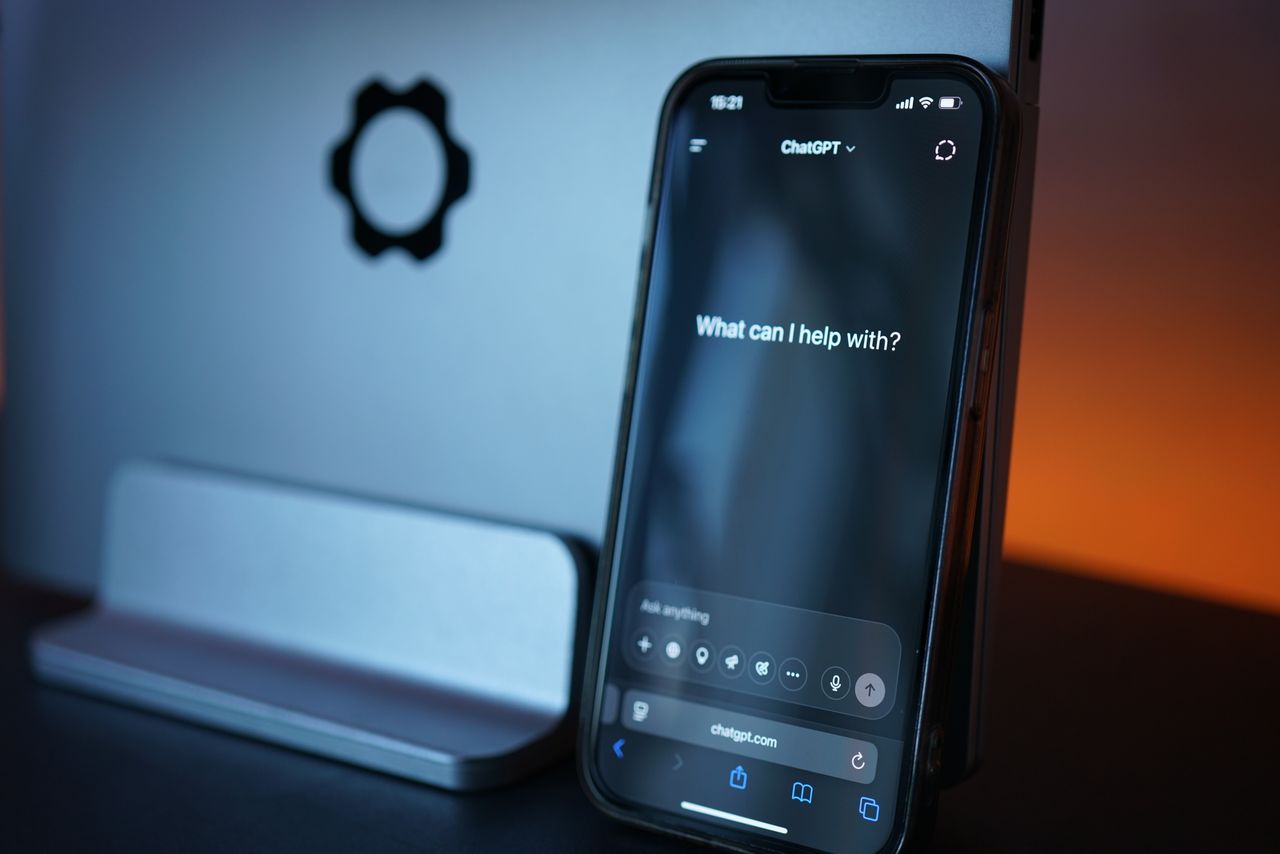
The keyboard has been one of the defining tools of modern office life.
For decades, employees have typed emails, entered figures into databases, created reports, searched for documents and instructed software through menus and commands. Even as smartphones introduced touchscreens and voice assistants became commonplace, typing remained the dominant interface for serious knowledge work.
SAP CEO Christian Klein believes that may be about to change.
In a recent Fortune interview, Klein argued that “the end of the keyboard is near,” saying advances in voice recognition could allow employees to interact with business systems by speaking rather than manually entering information. He sees a future in which workers ask analytical questions aloud and enterprise software translates natural language into business data and actions.
But the bigger story is not really about keyboards.
It is about the transformation of the workplace from a world in which humans learn how to operate software into one in which software increasingly learns how humans want to accomplish something.
That shift could make voice interfaces, real-time translation and AI agents increasingly important parts of enterprise technology.
It could also create new challenges involving accuracy, privacy, security, language, workplace culture and human oversight.
From Typing Commands to Expressing Intent
Traditional enterprise software works through structured interactions.
An employee opens an application, finds the appropriate screen, selects a menu, fills out fields and submits a transaction.
Even relatively simple tasks can require familiarity with the company’s software environment.
The AI model of work is different.
Instead of asking employees to remember where a function lives, the system can potentially interpret what the employee is trying to accomplish.
SAP calls this an intent-driven approach.
Its Joule Work platform is designed as a central workspace where users can express goals in natural language while AI assistants and agents coordinate actions across SAP and non-SAP systems.
Imagine a finance manager saying:
“Show me the regions where our margins fell most sharply this quarter and explain the main factors.”
Under a conventional system, the manager might open several reports, export spreadsheets and investigate different data sources.
Under an AI-driven interface, the system could retrieve the relevant business information, analyze it and present the results.
The real change is therefore not voice recognition.
It is the movement from software navigation to software conversation.
Why Voice Matters in the Enterprise
Typing is extremely useful, but it has limitations.
It requires a screen, keyboard and some degree of physical attention. It can also be inefficient when users need to express complex ideas quickly.
Speaking is much faster for many forms of natural communication.
People can describe problems verbally.
They can ask follow-up questions.
They can explain context.
They can refine requests conversationally.
And they can continue working while their hands are occupied.
SAP is already moving in this direction. In 2026, it announced a partnership with LiveKit to bring real-time voice capabilities to Joule, specifically extending AI interaction into environments where employees may not be sitting at a keyboard. SAP says the technology is intended to support workers across different roles, devices and environments.
This could be particularly useful for workers in factories, warehouses, hospitals, retail environments, field service and transportation.
A warehouse employee wearing a headset may be able to ask for inventory information without walking to a terminal.
A technician working on machinery could request troubleshooting instructions without removing their gloves.
A salesperson could dictate information immediately after a customer interaction.
A manager could ask for a performance analysis while walking between meetings.
The value comes from removing friction.
Translation Could Be the Next Workplace Advantage
Klein’s broader argument is particularly interesting because voice and translation are increasingly converging.
Businesses operate across borders.
Employees speak different languages.
Customers use different languages.
Suppliers operate in different markets.
A global company may have teams in Europe, Asia, North America, Latin America and Africa communicating every day.
Historically, this required combinations of English proficiency, human interpreters, bilingual employees, translated documents and localized software.
AI can potentially sit between those languages.
An employee could speak in Spanish.
The system could understand the request.
It could translate the intent into the organization’s business language.
It could retrieve information from an enterprise system.
And the response could potentially be delivered back in Spanish.
The important step is not merely translating words.
It is translating meaning into business action.
That is much harder.
Business Language Is Not the Same as Everyday Language
Enterprise systems contain specialized terminology.
A company may have specific definitions for revenue, inventory, customers, suppliers, purchase orders, cost centers or profitability.
An ordinary language model may recognize the words but still misunderstand how the organization uses them.
This is why SAP emphasizes grounding AI in business context.
Its current AI strategy centers on connecting AI to operational systems, data and business processes rather than treating enterprise AI as a generic chatbot.
Consider the sentence:
“Show me our best customers.”
That sounds simple.
But what does “best” mean?
Highest revenue?
Highest profit?
Longest relationship?
Lowest payment risk?
Most repeat purchases?
A human employee familiar with the organization may know the intended meaning from context.
An AI system has to understand it from data, permissions, business rules and previous interactions.
The future workplace therefore depends on AI that understands organizational context, not just language.
Voice AI Is Already Moving Into Enterprise Products
The technology is no longer hypothetical.
SAP’s 2026 product updates show a clear movement toward conversational enterprise interfaces.
Joule already supports informational, navigational, transactional and analytical interactions. Users can ask questions, find information, navigate applications and complete supported business tasks through conversational interaction.
SAP also says Joule is being integrated across dozens of business solutions.
And its newer Joule Work concept goes further by allowing AI agents to coordinate actions across multiple systems.
That is an important distinction.
A chatbot that answers a question is useful.
An agent that can answer the question and perform the necessary workflow represents a much larger change.
The Agentic Workplace Is Emerging
This is where voice becomes more powerful.
Suppose an employee says:
“Find the delayed orders that could affect our biggest customers, identify alternative inventory and prepare recommendations.”
That is not a single database lookup.
It may require several steps:
Retrieve open orders.
Identify delays.
Rank customers by business importance.
Check available inventory.
Examine supplier commitments.
Calculate financial implications.
Prepare recommendations.
A traditional interface forces the user to perform each step manually.
An AI agent can potentially orchestrate the workflow.
SAP’s Autonomous Suite and Joule Work are built around this model, with AI agents handling parts of business processes while humans retain oversight.
Voice becomes a natural front end for that system.
The worker expresses the objective.
AI figures out the sequence.
The enterprise software supplies the data.
The human reviews the result.
What Happens to the Keyboard?
This is where Klein’s prediction deserves some qualification.
The keyboard may become less important in some situations without disappearing.
There are tasks for which typing remains superior.
Writing code is one.
Editing long documents is another.
Entering exact numerical information can be easier through a keyboard.
Private communication in a shared office often favors silent typing over speaking aloud.
And some tasks simply require visual precision.
The future may therefore be less “voice replaces keyboard” and more “voice joins the interface toolbox.”
Employees may switch between typing, speaking, touching, clicking and visual interaction depending on what they are doing.
The smartphone already works this way.
People type messages, speak to assistants, swipe through applications and use cameras as input devices.
Enterprise software could adopt the same multimodal model.
The Office Creates a Major Problem for Voice
There is another issue that is easy to overlook.
Voice is socially disruptive.
A room full of people asking AI assistants questions aloud could quickly become chaotic.
Imagine 20 employees in an open-plan office all speaking to their computers simultaneously.
Even if the technology works perfectly, humans would still have to listen to other humans.
That is one reason voice may become more important on mobile devices, in field environments, private workspaces, vehicles and headphones than in traditional open-plan offices.
Voice is likely to expand where speaking is practical.
It may remain secondary where silence is important.
The keyboard’s survival may therefore have less to do with technological limitations than with workplace design.
Translation Creates an Even Bigger Opportunity
The combination of voice and translation could have profound consequences for multinational companies.
Today, language differences can slow communication.
An employee may understand a foreign-language email only after translation.
A global meeting may require interpreters.
Training materials must be localized.
Customer-service teams need multilingual staff.
Salespeople may rely on bilingual colleagues.
AI can potentially compress some of these processes.
Real-time speech-to-speech translation could allow two people to converse while each speaks their preferred language.
That could make multinational teams more fluid.
It could also make global companies less dependent on English as the default operational language.
However, the technology has to be extremely reliable before organizations can trust it with high-stakes decisions.
Translation Accuracy Remains a Major Limitation
AI translation has improved dramatically, but it is not perfect.
SAP itself warns that LLM-based translation quality can vary depending on the source and target language combination. The company notes that AI-generated translations can contain errors or inappropriate structures and recommends reviewing translated content before accepting it.
That warning is especially important in business.
A minor mistake in a casual conversation may be harmless.
A mistake involving a contract, medical instruction, financial transaction, legal requirement or safety procedure can be much more serious.
Business translation therefore needs more than fluency.
It needs accuracy, terminology control and context.
Cultural Nuance Is Another Challenge
Language is not simply vocabulary.
It contains cultural assumptions, levels of formality, humor and implied meaning.
A phrase that sounds perfectly acceptable in one culture can seem rude or confusing in another.
A literal translation can also miss the intention of the speaker.
This becomes particularly important in negotiations.
Imagine an executive saying:
“We may need to revisit the timeline.”
In some cultures, that might be understood as a polite warning that the deadline is unlikely to be met.
A literal translation could preserve the words while losing the business implication.
AI systems need to understand these distinctions if they are going to mediate international business conversations reliably.
Security Becomes More Complicated When Employees Speak to AI
Voice introduces another issue that typing does not always create in the same way: audio data.
A spoken conversation may reveal sensitive information.
Employees could accidentally mention:
Confidential financial results.
Customer information.
Product plans.
Employee records.
Unreleased acquisitions.
Passwords or authentication details.
Intellectual property.
This raises questions about where the audio goes, how long it is stored, whether transcripts are retained and who can access them.
Enterprise AI therefore needs strong data controls.
The challenge becomes even greater when voice systems operate across different countries with different privacy and data-residency rules.
Data Sovereignty Is Becoming a Technology Issue
Klein’s Fortune interview also emphasizes a different challenge: geopolitical fragmentation.
He described customers becoming more concerned about sovereignty requirements, including rules about where cloud servers are located, how data is protected and when systems must be isolated from global networks.
This matters enormously for AI.
A multinational corporation may not be able to send every employee’s voice data to a single global cloud service.
Some countries may require local processing.
Some industries may require strict controls over sensitive information.
Some organizations may want private infrastructure.
Therefore, the future of voice AI is not simply about making speech recognition better.
It is also about building infrastructure that organizations can trust.
Multilingual AI Could Help Global Companies Operate Differently
The potential upside is substantial.
Imagine a manufacturing company with teams in Germany, Mexico, India and Japan.
Employees could interact with the same enterprise AI system in their preferred languages.
The underlying business data would remain connected.
Managers could receive information in their own language.
Training could become more personalized.
Customer interactions could potentially be translated in real time.
Internal knowledge could become easier to access.
This could reduce some of the friction created by global operations.
But companies will still need standardized processes and terminology.
AI does not eliminate organizational complexity.
It changes how people interact with it.
The Real Workplace Revolution May Be Invisible
One reason this transformation could be bigger than previous software revolutions is that employees may not always notice the technology.
Consider an employee who says:
“Prepare the customer report for tomorrow’s meeting.”
The AI might retrieve data, identify relevant documents, build charts and produce a draft.
The employee did not learn a new software menu.
They simply expressed an intention.
That changes the learning curve.
In SAP’s vision, AI increasingly becomes an interface layer between humans and complex enterprise systems. Employees do not necessarily need to know which application contains the data or which workflow triggers the process.
The interface becomes conversational.
This Could Be Especially Important for Less Technical Workers
Enterprise software has historically rewarded employees who understand the system.
Someone who knows where a report lives or which code to enter can work faster.
Conversational AI could reduce that advantage.
A warehouse worker does not need to understand the architecture of an inventory system to ask:
“How many units of this product are available in the nearest warehouse?”
A salesperson may not need to know which CRM field contains a customer’s purchase history.
A manager may not need to remember which dashboard contains a particular KPI.
This could make business technology more accessible.
It could also shift the most valuable workplace skill from software navigation to asking good questions and evaluating AI-generated results.
Employees Will Need a New Kind of Digital Literacy
That does not mean training disappears.
It changes.
Workers may need to learn how to:
Describe objectives clearly.
Provide relevant context.
Recognize when AI misunderstood a request.
Verify important results.
Protect confidential information.
Understand what AI is authorized to do.
Question recommendations.
Correct errors.
Use AI within organizational policies.
This is a different type of digital literacy from learning menus and buttons.
It is closer to managing an intelligent collaborator.
Human Oversight Remains Essential
SAP’s own enterprise AI strategy emphasizes human oversight, particularly when AI agents perform actions in business systems.
That principle is crucial.
An AI system might correctly understand a request but still make a bad decision because the underlying data is incomplete.
It might identify the wrong supplier.
It might misunderstand a financial anomaly.
It might interpret a customer’s language incorrectly.
It might translate an important phrase badly.
The more authority an AI system has, the greater the consequences of mistakes.
The future enterprise therefore cannot simply be:
Human gives command → AI acts.
It is more likely to become:
Human gives objective → AI analyzes → AI proposes or acts within permissions → human monitors and remains accountable.
Voice Could Change Meetings Too
The technology could also reshape meetings.
Imagine participants speaking naturally while an AI system simultaneously:
Transcribes the discussion.
Translates different languages.
Identifies decisions.
Creates action items.
Updates project records.
Finds relevant documents.
Answers factual questions.
Summarizes disagreements.
This could make meetings significantly more productive.
But it could also make meetings more heavily monitored.
Employees may become uncomfortable knowing that every spoken sentence is captured and analyzed.
Organizations will therefore need clear policies explaining when voice data is collected, who can access it and how long it is retained.
Accessibility Could Be a Major Benefit
The conversation about voice and translation should not focus only on productivity.
Accessibility may be equally important.
Employees with certain physical disabilities may find voice interfaces easier than conventional keyboard-and-mouse systems.
Workers who struggle with extensive typing can interact more naturally through speech.
Multilingual employees can potentially use systems in languages they are most comfortable speaking.
Voice therefore has the potential to make enterprise software more inclusive.
That benefit could become one of the strongest reasons for organizations to adopt it.
The “End of Keyboard” May Actually Mean the End of Software Friction
Klein’s prediction is best understood as a statement about friction.
Modern enterprise software often makes employees adapt themselves to the software.
The emerging AI model attempts to reverse that relationship.
Employees communicate naturally.
AI interprets the request.
Business systems handle the underlying complexity.
The user sees the result rather than the machinery.
That is a profound change.
And it explains why voice matters.
Voice is simply the most natural form of human communication.
The deeper technology is the AI layer that connects language to data, workflows and decisions.
What Happens to Traditional Enterprise Software?
It probably does not vanish.
Instead, the visible interface may change.
The underlying systems—finance, supply chain, HR, procurement, customer management—still contain the operational data companies depend on.
What changes is how people access those systems.
Instead of opening five applications, an employee may interact with one intelligent workspace.
SAP’s Joule Work is designed around precisely this concept, acting as a central interface across SAP and non-SAP systems while coordinating AI agents and business workflows.
The ERP system remains.
The screen remains.
The database remains.
But the employee may not have to interact with each component directly.
A Multimodal Workplace Is More Likely Than a Voice-Only Workplace
The most realistic future is probably not an office where nobody types.
It is an office where interfaces become multimodal.
An employee speaks when that is faster.
Types when precision matters.
Uses a mouse for visual work.
Touches a phone on the move.
Reads AI-generated summaries.
Reviews charts visually.
And lets agents execute repetitive workflows.
In that environment, the keyboard loses its monopoly without disappearing.
It becomes one tool among many.
The Competitive Advantage May Belong to Companies That Connect AI to Real Work
The most important lesson from SAP’s strategy is that enterprise AI is moving away from generic chatbots.
A general-purpose chatbot can produce text.
An enterprise AI system has to understand business rules, permissions, data structures, workflows and organizational context.
That is considerably more difficult.
SAP’s CEO has argued that the AI race should focus less on models alone and more on connecting intelligence to the operational systems where economic decisions actually happen.
This is where enterprise software companies have a strategic advantage.
They already sit inside business processes.
They possess the data structures.
They understand how transactions work.
The AI layer can therefore become the interface between employees and the systems that run the business.
What the Workplace Could Look Like Five Years From Now
A typical workday could look very different.
A sales manager starts the morning by saying:
“Give me the latest forecast and flag customers at risk.”
An operations manager asks:
“Which shipments are delayed and what alternatives do we have?”
A human-resources employee says:
“Prepare a summary of open recruitment positions by region.”
A technician asks:
“Show me the maintenance history for this machine.”
A multinational project team conducts a meeting in four languages while AI provides live translation and creates a shared action list.
None of these scenarios requires employees to learn a new programming language.
They simply need to communicate.
That is the fundamental promise of conversational enterprise AI.
But Five Years Is a Long Time in AI
Predictions about AI should nevertheless be treated carefully.
Technology can move rapidly, but adoption inside large corporations is slower.
Companies have legacy systems.
They have regulatory obligations.
They have security policies.
They have procurement cycles.
They have millions of employees who need training.
And some processes simply cannot tolerate mistakes.
SAP’s own rollout illustrates this gradual approach. Its newer voice capabilities and Joule Work features have been introduced through early-access programs and staged availability rather than appearing overnight across every customer environment.
The technology may advance quickly.
The enterprise adoption curve will probably be slower.
The Keyboard Will Probably Survive
The keyboard’s future may therefore be less dramatic than Klein’s headline suggests.
It is difficult to imagine programmers, accountants, writers, analysts and many other professionals abandoning keyboards completely.
Typing remains silent, precise and socially compatible with shared workspaces.
But the keyboard may no longer be the default doorway into every digital system.
That distinction matters.
When voice becomes reliable enough, an employee may not need to type a query into an ERP system.
When translation becomes reliable enough, a Japanese-speaking employee may not need to formulate every request in English.
When agents become capable enough, employees may not need to manually navigate through multiple applications to complete common workflows.
The keyboard may remain on the desk.
But it may no longer define how people interact with work software.
The Bigger Shift: From Software Skills to Human Intent
The most important transformation is therefore not technological hardware.
It is a change in the relationship between humans and software.
For decades, workers learned the language of computers.
Menus.
Buttons.
Forms.
Codes.
Queries.
Commands.
Now computers are increasingly learning the language of humans.
That does not make technology simpler in every respect.
It makes the visible interaction simpler.
Behind the scenes, the systems become far more sophisticated.
Voice recognition, large language models, translation, enterprise data, AI agents, security controls and business workflows have to work together.
That is an enormous engineering challenge.
But if the pieces come together, the result could be a workplace where employees spend less time operating software and more time making decisions.
And that may be the real end of the keyboard era—not the disappearance of the keyboard itself, but the disappearance of the idea that humans should have to think like software before software can understand what they need.
5 Frequently Asked Questions
1. Is the keyboard really going to disappear from the workplace?
Probably not completely. Christian Klein’s prediction is better interpreted as a shift toward voice and conversational interfaces rather than the physical elimination of keyboards. Typing remains useful for precise, private and highly visual work, while voice can be advantageous for hands-free tasks and natural-language interaction. SAP’s own strategy is focused on extending interaction beyond the keyboard rather than eliminating every other interface.
2. What does voice AI actually do in an enterprise?
Voice AI can convert spoken requests into actions or information inside business systems. SAP’s Joule is designed to support informational, navigational, transactional and analytical interactions, while Joule Work aims to let users express goals in natural language and have AI agents coordinate workflows across multiple systems.
3. Why is translation becoming important for the future of work?
Multinational companies often have employees, customers and suppliers who speak different languages. Real-time AI translation could reduce communication barriers by allowing people to interact with business systems and colleagues in their preferred languages. SAP already supports multiple languages across parts of Joule and its translation technologies, although language coverage and output quality vary.
4. Can businesses trust AI translation completely?
No. AI translation has improved considerably, but errors can still occur, particularly with less-common language combinations, specialized terminology and culturally sensitive expressions. SAP explicitly warns that LLM-based translation quality can vary and recommends reviewing translated content before accepting it. High-stakes business, legal, financial and safety-related content therefore still requires appropriate human review.
5. What is the biggest change AI voice interfaces could bring to work?
The biggest change may be the move from navigating software to expressing intent. Instead of remembering where information resides or which application performs a particular task, employees could state what they want to achieve and allow AI to retrieve information, analyze it and coordinate actions. SAP’s Joule Work and Autonomous Enterprise strategy are built around this transition from fragmented software interfaces toward AI-driven, outcome-focused workflows with human oversight.
Sources Fortune