
A translation can look perfectly professional and still be rejected by an Australian government agency. The difference often comes down to something many customers overlook: who translated the document, whether their credentials are current, and whether the translation meets the requirements of the organisation receiving it.
For migrants, international students, professionals and businesses operating in Australia, choosing a reliable translation provider is more than a matter of convenience. A translated birth certificate, academic transcript, marriage certificate or professional qualification may influence a visa application, university admission, employment opportunity or professional registration.
A November 2026 press release published by The National Law Review highlights LEXIGO, an Australian translation and multicultural communications agency, as a NAATI-endorsed provider with three ISO certifications. Its announcement also draws attention to an important development in Australia’s translation industry: the introduction of a public endorsement system for language-service providers.
But what exactly does NAATI certification mean? How is an endorsed translation agency different from an individual certified translator? And how should customers decide which service is genuinely suitable for their needs?
Understanding these questions can help customers avoid costly mistakes and choose translation services with greater confidence.

What Is NAATI and Why Does It Matter in Australia?
The National Accreditation Authority for Translators and Interpreters, commonly known as NAATI, is Australia’s national standards and certifying authority for translators and interpreters.
It plays an important role in maintaining professional standards in Australia’s language-services industry. Its certification system assesses the knowledge and abilities required to work professionally in translation and interpreting.
The distinction matters because Australia is a multicultural country where government agencies, healthcare providers, educational institutions and businesses regularly interact with people who speak different languages.
A translated document must do more than replace words from one language with another. It must accurately communicate the original information, preserve important details and follow the conventions expected in the target language.
For official documents, even small mistakes can create complications. An incorrect spelling of a name, an inconsistent date, a mistranslated qualification or an omitted section may lead to requests for clarification or a replacement translation.
NAATI certification gives customers a way to identify practitioners who have met the authority’s professional requirements.
NAATI does not itself provide translation services. Instead, it certifies practitioners and maintains a public directory that helps individuals and organisations find qualified translators and interpreters.
Understanding NAATI-Certified Translation
A NAATI-certified translation is a written translation completed by a practitioner who holds an appropriate NAATI credential for the relevant language direction.
For example, someone translating a document from Mandarin into English needs the appropriate credential for that direction. A translator’s certification should not automatically be assumed to cover every language or every translation direction.
NAATI’s Certified Translator credential assesses the ability to translate complex but non-specialised written material. Its assessment includes translation tasks and a revision task, with candidates evaluated on their ability to transfer meaning accurately and follow relevant language conventions.
Applicants must also meet prerequisite requirements involving formal training, language proficiency, ethical competency and intercultural competency.
This professional framework is important because translation is a specialised discipline. Speaking two languages fluently does not automatically mean someone can accurately translate legal, technical, medical or administrative documents.
What does a NAATI-certified translation usually include?
A completed translation generally includes identifying information that allows the translator and their credentials to be verified.
Customers should look for:
- The translator’s full name.
- The translator’s NAATI Certified Practitioner Number (CPN).
- The appropriate translator stamp or digital identification.
- The translated document.
- Any certification statement or other information required by the receiving organisation.
NAATI-certified translators receive a practitioner number beginning with the letters CPN. Their credentials can be checked through NAATI’s official verification system.
Customers should avoid relying only on a company logo or a statement that a translation is certified. The individual practitioner responsible for the translation is an essential part of the verification process.
NAATI Certification vs NAATI-Endorsed Language Service Providers
One of the most significant developments highlighted in the LEXIGO announcement is the introduction of NAATI’s Language Service Provider (LSP) Endorsement Model.
It is important to understand that individual certification and organisational endorsement are not the same thing.
NAATI certification belongs to an individual practitioner.
It confirms that a translator or interpreter has met the requirements for a particular professional credential.
NAATI endorsement belongs to an organisation.
It indicates that a language-service provider has met NAATI’s organisational requirements for delivering translation and interpreting services.
The Australian, state and territory governments authorised NAATI to develop this endorsement model in December 2024. The model officially commenced on 24 February 2026.
The purpose is to provide an additional level of assurance to government agencies and other organisations that purchase language services.
What must an endorsed language-service provider demonstrate?
NAATI’s endorsement framework includes six requirements:
- Engagement of NAATI-certified practitioners: Providers must engage appropriately credentialed practitioners for assignments wherever possible, taking account of the availability and suitability of the practitioner.
- Compliance with a Code of Conduct: Providers must ensure that relevant practitioners and personnel follow professional conduct expectations.
- Cybersecurity standards: Organisations must have appropriate arrangements to protect information handled during language-service assignments.
- Quarterly data reporting: Providers must meet NAATI’s reporting requirements.
- Quality assurance and feedback: They must maintain documented processes for checking service quality and responding to feedback.
- Formal translator induction: Providers must have a process for introducing practitioners to their organisational procedures and requirements.
This system makes it easier for customers and organisations to distinguish between a business that simply advertises translation services and one that has undergone NAATI’s provider endorsement process.
However, endorsement should not replace checking the individual translator’s credentials. Both the organisation and the practitioner matter.
LEXIGO: A NAATI-Endorsed Translation Provider in Australia
The November 4, 2026 press release identifies LEXIGO as a Melbourne-founded Australian translation and multicultural communications agency.
According to the announcement, the company was established in 2011 and works with government departments, healthcare organisations, community groups and businesses.
Its services include certified document translation, multilingual communication campaigns, localisation, community engagement and other language-related services.
The announcement identifies LEXIGO as a NAATI-endorsed language-service provider under registration number LSP950085.
Its listing in NAATI’s public directory also identifies the organisation as endorsed and lists its ISO certifications.
The company says it works across 171 languages through a network of more than 10,000 translators. It also reports working with more than 50 government departments and agencies.
These figures are company-reported information, rather than an independent ranking of the Australian translation industry.
Nevertheless, the combination of a publicly listed NAATI endorsement and independently verifiable management-system certifications provides customers with concrete credentials to investigate.
Translation services for individuals
LEXIGO offers NAATI-certified translations for personal documents, including documents commonly required for administrative and official purposes.
Examples include:
- Birth certificates.
- Marriage certificates.
- Divorce certificates.
- Academic transcripts.
- Educational qualifications.
- Passports and identity documents.
- Police clearance certificates.
- Other personal and official records.
The company’s November 2026 announcement advertises personal-document translations starting at AUD $69.90 plus GST per document.
It describes three service levels:
- NAATI Essential: Advertised turnaround of three to five business days, with electronic delivery.
- NAATI Economy: Advertised turnaround of one to three business days, with two hard copies posted.
- NAATI Express: Advertised turnaround within 48 business hours, with two hard copies posted.
These are the company’s advertised service options and prices at the time of the announcement. Customers should confirm current prices, eligibility, delivery arrangements and turnaround times before ordering.
The company says customers can upload a photograph or scan of their document online while retaining the original.
Some uncommon languages and longer documents may require an individual quotation.
Translation services for organisations
LEXIGO also serves organisations that need multilingual communication across larger projects.
These may include:
- Government information and public-service announcements.
- Healthcare information and patient resources.
- Community outreach campaigns.
- Educational materials.
- Marketing and advertising content.
- Websites and digital platforms.
- Printed publications and brochures.
- Multilingual customer communications.
For organisations, the challenge is often more complex than translating a single document. A campaign may need to reach people who speak several languages, have different cultural expectations and access information through different channels.
This requires a combination of translation, editing, cultural adaptation and communication planning.
Why LEXIGO’s Three ISO Certifications Matter
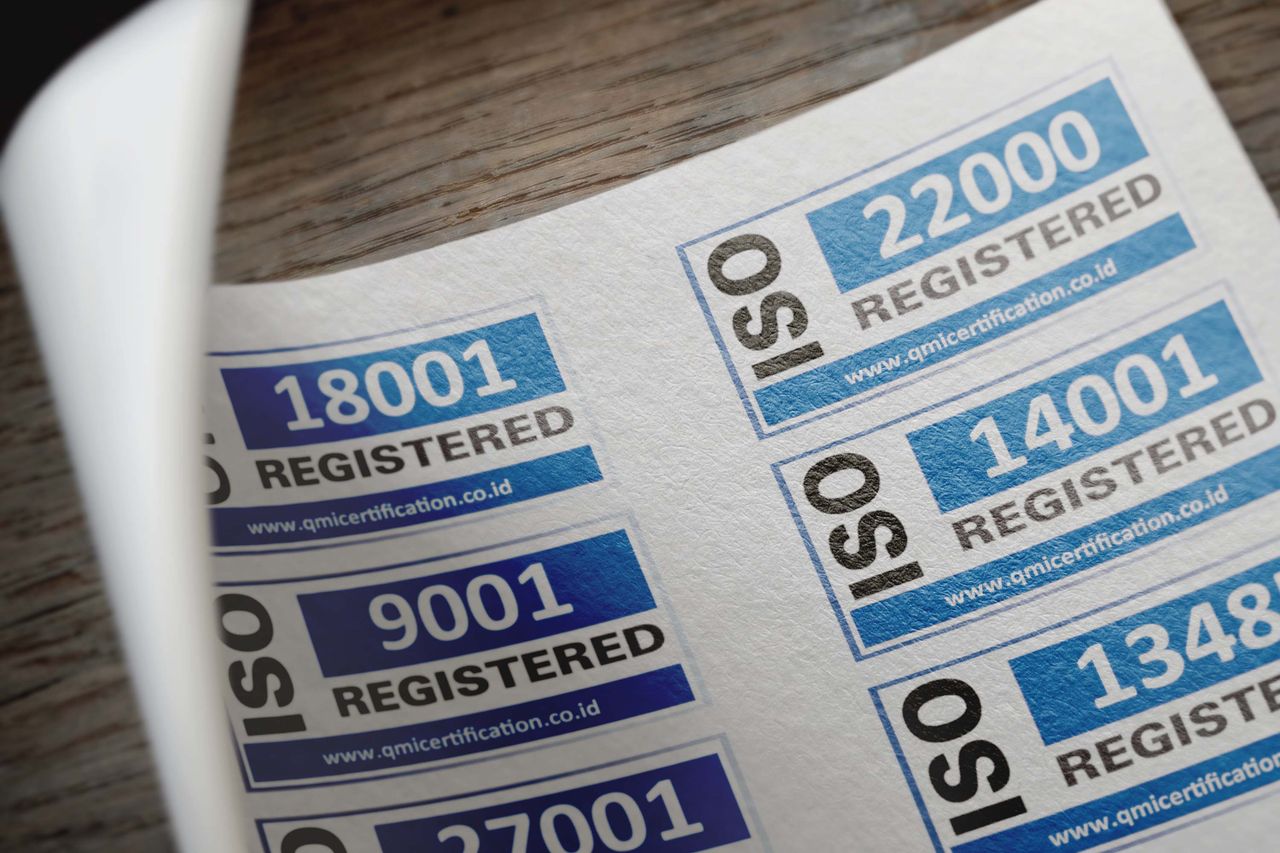
The press release places particular emphasis on LEXIGO’s three ISO certifications:
- ISO 17100 — Translation services.
- ISO 9001 — Quality management systems.
- ISO/IEC 27001 — Information security management systems.
These standards address different aspects of organisational performance. They are not interchangeable, and each provides a different kind of assurance.
1. ISO 17100: Translation quality and professional processes
ISO 17100 is an international standard that sets requirements for the core processes, resources and other aspects involved in providing professional translation services.
It establishes a framework for managing translation assignments and ensuring that services meet agreed specifications.
One important feature is the emphasis on appropriate revision. Under the standard’s translation process, a translation is revised by another qualified person before delivery, subject to the standard’s requirements.
This additional review can help identify:
- Incorrect terminology.
- Missing information.
- Grammar and spelling problems.
- Inconsistent names or dates.
- Errors in meaning.
- Formatting issues that affect readability.
The value of a structured revision process is especially clear when translating official or technical documents.
However, ISO 17100 is a process standard. It does not mean that every translation is automatically error-free or that a provider is qualified to handle every specialist subject.
Customers should still ask whether the assigned translator has experience with the document type and relevant terminology.
2. ISO 9001: Quality management
ISO 9001 is an international quality management standard.
It focuses on how an organisation manages its processes, responsibilities, customer requirements and continual improvement.
For a translation agency, an effective quality management system can help establish consistent procedures for:
- Receiving and reviewing customer instructions.
- Assigning suitable translators.
- Managing deadlines.
- Checking completed work.
- Handling complaints and corrections.
- Monitoring customer satisfaction.
- Improving internal processes.
This matters because translation quality is not determined by the translator alone. Project management, document handling, communication and review procedures also influence the final result.
A provider with a structured quality management system may be better positioned to manage larger projects involving multiple languages, deadlines and reviewers.

3. ISO/IEC 27001: Protecting confidential documents
Information security is particularly important in the translation industry.
Customers often submit documents containing highly sensitive personal information, including:
- Full legal names.
- Dates of birth.
- Residential addresses.
- Passport and identification numbers.
- Medical information.
- Financial records.
- Employment histories.
- Family and immigration details.
A translation provider must handle these documents responsibly.
ISO/IEC 27001 establishes requirements for an information security management system. It helps organisations identify information-security risks and establish appropriate controls to protect confidentiality, integrity and availability.
For customers, this is relevant because document security should be considered before uploading personal records to any online translation platform.
A responsible provider should be able to explain how documents are stored, who can access them, how they are transferred and when they are deleted.
It is also worth remembering that an ISO certification applies to the scope of the certified management system. Customers should check the certificate’s scope and validity rather than assuming that every activity or external contractor is automatically covered.
How to Choose the Best NAATI Translation Service in Australia
Searching for the best NAATI translation service can produce many results. Some companies emphasise low prices, others promote fast turnaround times, and some highlight their years of experience.
The most reliable approach is to compare providers using verifiable criteria.
1. Verify the individual translator’s NAATI credentials
Ask for the translator’s CPN and use NAATI’s official verification tool.
A translator’s certification status matters because NAATI credentials are subject to recertification. A practitioner whose credential has expired is not currently certified.
NAATI also explains that a translation completed while the translator held an active certification remains valid indefinitely, although the organisation receiving the document may have its own requirements.
2. Check whether the organisation is NAATI-endorsed
If you are dealing with an agency rather than an individual translator, look for its listing in NAATI’s public directory.
An endorsed provider has met organisational requirements beyond the credentials of an individual translator.
This can be especially useful for businesses, government agencies and customers who need several documents or ongoing translation support.
3. Confirm the language pair and direction
Not every translator works in every language combination.
For example, a translator qualified to translate Vietnamese into English should not automatically be assumed to have the appropriate credential for English into Vietnamese.
Confirm that the practitioner is suitable for the exact direction required.
4. Ask about subject-matter experience
A birth certificate and a legal contract require different types of knowledge.
Likewise, translating a medical report, academic transcript or engineering document may involve specialised terminology.
A good provider should be able to explain how it selects translators for different document types.
5. Look for a documented quality-control process
Ask whether the translation is reviewed before delivery, who performs the review and how corrections are handled.
A second-linguist revision process can provide an additional layer of quality control.
For larger projects, customers should also ask how terminology, formatting and consistency are managed across documents.
6. Review information-security arrangements
Before uploading sensitive documents, check the provider’s privacy policy and document-handling procedures.
Useful questions include:
- Are uploaded files encrypted?
- Who can access customer documents?
- How long are documents retained?
- Are files shared with external translators?
- Are third-party platforms involved?
- How can customers request deletion?
A provider’s security certification is useful, but customers should still understand the actual arrangements for their own project.
7. Compare prices and turnaround times
The cheapest option is not necessarily the best.
A low advertised price may exclude additional pages, unusual languages, hard-copy delivery or urgent processing.
Before placing an order, request a written quotation that clearly explains the total cost and expected delivery date.
For time-sensitive applications, leave enough time for possible corrections or additional requirements from the receiving authority.
What Documents Commonly Require NAATI Translation?
Many Australian institutions require English translations of documents issued in another language.
The exact requirements depend on the organisation and the purpose of the submission.
Immigration and citizenship applications
Applicants may need translations of birth certificates, marriage records, identity documents, police certificates and other supporting evidence.
The Department of Home Affairs requires English translations for documents that are not in English. Its instructions specify different translator-information requirements depending on whether the translation is completed in Australia or overseas.
For translations completed in Australia, applicants must use a NAATI-accredited translator under the department’s stated requirements.
University and education applications
International students may need translated academic transcripts, certificates, examination results and other educational records.
Universities can have their own document requirements, so applicants should check the institution’s instructions before ordering.
Professional registration
Regulatory organisations may require translated qualifications, proof of identity, certificates of good standing and other professional records.
For example, the Australian Health Practitioner Regulation Agency requires English translations for documents submitted in languages other than English and sets out specific requirements for who may translate them.
Employment and business
Employers may request translated qualifications, employment records or professional licences when assessing international applicants.
Businesses may also require translations of contracts, product information, financial documents and regulatory materials.
The appropriate translation process depends on the document’s purpose and the organisation receiving it.
NAATI Translation Is Not the Same as Notarisation or an Apostille
This is an important distinction that customers sometimes misunderstand.
A NAATI-certified translation confirms that a document has been translated by a practitioner holding an appropriate NAATI credential.
Notarisation is a separate legal process involving a notary public.
An apostille or other form of document legalisation is also a separate process used to authenticate certain public documents for international use.
Depending on the country and the receiving authority, a translated document may require additional certification, notarisation or legalisation.
For example, Australia’s Department of Foreign Affairs and Trade has specific requirements for translated documents submitted for legalisation. These include translator identification, the NAATI stamp and signature or QR code, the translation date and the relevant original document.
Therefore, customers should not assume that obtaining a NAATI translation automatically satisfies every international legal or administrative requirement.
The safest approach is to ask the receiving authority exactly what it requires before ordering the translation.
The Role of Technology in Modern Translation Services
Translation agencies increasingly use digital tools to improve efficiency.
Online document submission, electronic delivery, translation memory systems and terminology databases can make the process faster and more convenient.
Artificial intelligence and machine translation are also changing the industry.
These technologies can help with initial drafts, repetitive content and large volumes of routine text. However, automated translation can still make mistakes involving context, legal terminology, names, dates and culturally specific expressions.
For official documents, customers should be especially cautious about submitting unreviewed machine-generated translations.
ISO 17100 also has a defined scope that excludes raw machine-translation output followed by post-editing from its standard translation-service process.
The most effective approach is to use technology as a support tool while maintaining appropriate human expertise, professional accountability and quality control.
Why Language Services Matter in Multicultural Australia
Australia’s need for professional translation services extends beyond immigration paperwork.
Language access can influence whether people understand healthcare information, participate in education, access public services and engage with their communities.
For government agencies, accurate multilingual communication helps ensure that public information reaches people who may otherwise struggle to understand it.
For healthcare organisations, clear translations can help patients understand instructions and make informed decisions.
For businesses, multilingual communication can improve customer experiences and support relationships with culturally diverse audiences.
For community organisations, translation can make services more accessible to people who might otherwise remain disconnected.
This is why translation should be viewed as an essential communication service rather than simply an administrative expense.
The Future of NAATI-Certified Translation in Australia
The introduction of NAATI’s Language Service Provider Endorsement Model represents an important step in making the Australian language-services industry more transparent.
Customers now have clearer ways to distinguish between individual professional credentials and organisational service standards.
For companies such as LEXIGO, the combination of NAATI endorsement and ISO certifications provides a framework through which customers can assess professional processes, organisational quality management and information security.
However, no single certification or marketing claim should determine a customer’s decision.
The best provider for one person may not be the best for another. A customer translating a single birth certificate may prioritise affordability and turnaround time. A government department managing a multilingual public-information campaign may place greater emphasis on project management, specialist expertise, security and quality assurance.
Ultimately, the right choice is the provider that meets the receiving organisation’s requirements, assigns an appropriately qualified translator, protects confidential information and delivers accurate work within the agreed timeframe.
In a country as linguistically diverse as Australia, reliable translation services help people overcome communication barriers and participate more fully in society.
The message is simple: do not choose a translation provider based on advertising alone. Verify the credentials, understand the quality process and make sure the service is right for the document you need translated.
Frequently Asked Questions (FAQs)
1. What is a NAATI-certified translation in Australia?
A NAATI-certified translation is a written translation completed by a translator holding an appropriate NAATI credential for the relevant language direction. The completed document generally includes the translator’s identification details and NAATI practitioner number, along with a translator stamp or digital identification. Many Australian government agencies and professional organisations require NAATI-certified translations for documents originally issued in another language.
2. How can I check whether a NAATI translator is genuine?
Ask the translator for their Certified Practitioner Number (CPN). You can enter this number into the verification tool on NAATI’s official website to check the practitioner’s credentials and whether they are current. Do not rely only on a company logo, a website advertisement or a name printed on a translation.
3. What is the difference between a NAATI-certified translator and a NAATI-endorsed translation agency?
A NAATI-certified translator is an individual who has met NAATI’s professional credential requirements. A NAATI-endorsed language-service provider is an organisation that has met NAATI’s requirements for delivering translation and interpreting services. The endorsement system began on 24 February 2026. An endorsed agency should still use appropriately credentialed practitioners for assignments wherever possible.
4. How much does a NAATI-certified translation cost in Australia?
Prices depend on the language pair, document length, complexity, urgency and delivery method. LEXIGO’s November 2026 announcement advertises personal-document translations starting at AUD $69.90 plus GST per document, with different service levels for standard, economy and express delivery. Other providers may charge different rates. Customers should request a written quotation and confirm whether postage, additional pages or urgent processing incur extra fees.
5. How long does a NAATI-certified translation take, and will it be accepted by Australian government agencies?
Turnaround times vary depending on the provider, language and document complexity. LEXIGO advertises delivery options ranging from one to five business days, with an express option within 48 business hours, subject to its service conditions. NAATI-certified translations are commonly required by Australian government agencies, but acceptance depends on the specific authority and application. Always check the receiving organisation’s instructions before ordering. A NAATI translation may also need additional notarisation or legalisation for certain overseas purposes.

Sources The National Law Review