
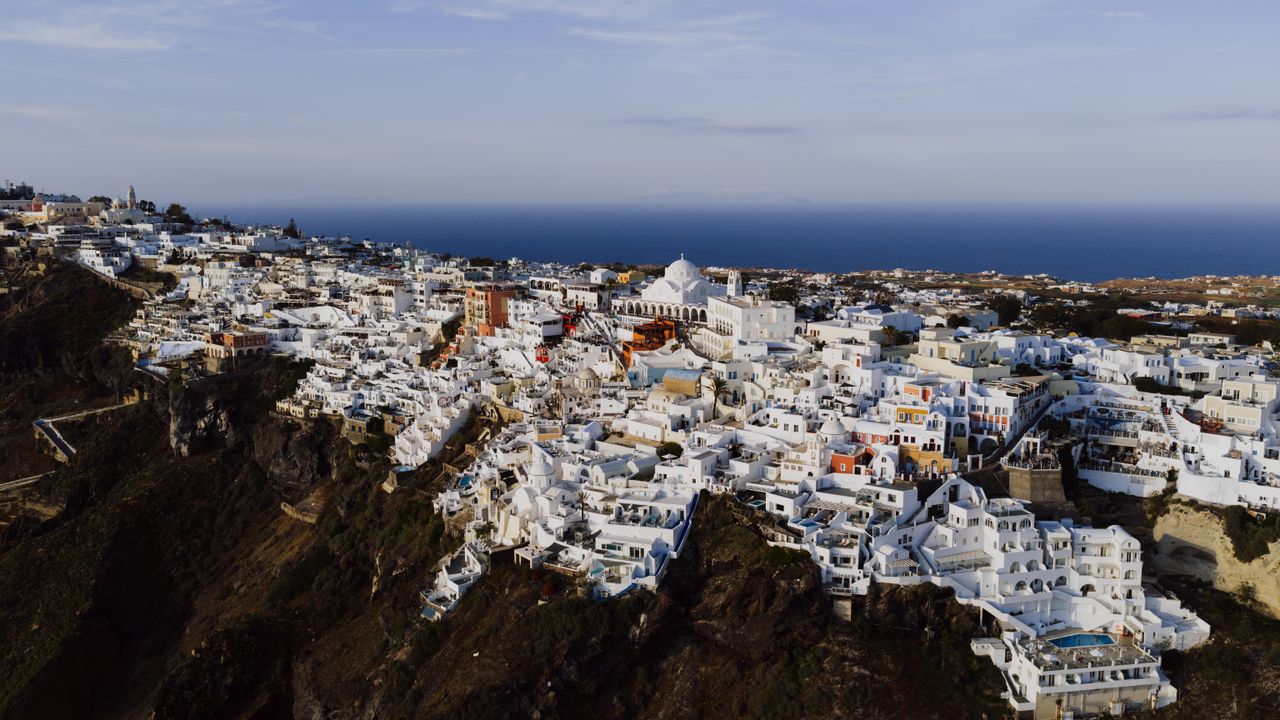
The most famous view in Santorini may be its golden sunset, but the island’s future could depend on convincing travellers to stay for something more.
For decades, Santorini has sold the world a dream: whitewashed villages clinging to volcanic cliffs, blue-domed churches, luxury hotels and spectacular sunsets over the Aegean Sea. Yet behind this postcard-perfect image is a tourism industry facing an uncomfortable question: what happens when too many businesses depend on a travel season that lasts only a few months?
The Greek island is now attempting to change that story. Instead of relying almost entirely on summer holidays, cruise ship excursions and romantic sunset experiences, Santorini wants to attract visitors throughout the year by promoting its distinctive cuisine, volcanic wines, archaeological heritage, religious landmarks and local traditions.
The strategy is about more than filling hotel rooms in winter. It could help spread tourism income across the calendar, reduce pressure during the busiest months and give visitors a deeper understanding of an island whose identity extends far beyond its famous views.
But turning that ambition into reality will require more than a marketing campaign. Santorini must also confront overcrowding, construction pressure, infrastructure limitations and the challenge of ensuring that tourism benefits residents as well as businesses.
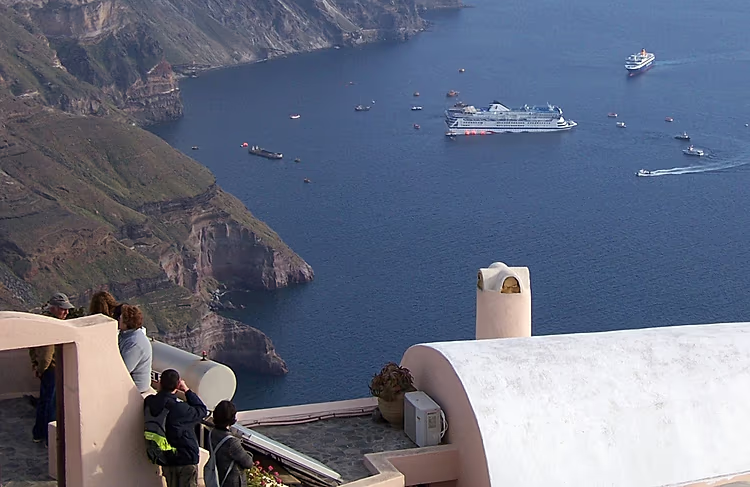
Why Santorini Wants to Move Beyond Summer Tourism
Santorini is one of Greece’s most recognisable international destinations. Its dramatic volcanic landscape, caldera villages and celebrated sunsets have made it particularly popular with couples, luxury travellers, cruise passengers and international holidaymakers.
However, the island’s tourism model has a structural weakness: demand is heavily concentrated in the warmer months.
Hotels, restaurants, transport operators, tour companies and seasonal employees often depend on a relatively short period to generate a substantial share of their annual income. When bookings fall, the consequences can extend well beyond accommodation providers.
According to Euronews, local hoteliers have reported weaker occupancy over the past two years. Hotel owner Thomas Giannis told the publication that business at his own property had declined by approximately 30% to 40%.
He attributed the downturn partly to events beyond the island’s control, including seismic activity around neighbouring islands in 2025 and geopolitical instability associated with the war in the Gulf in 2026.
Travellers do not always distinguish between the location of an international crisis and the destination they are considering. Even when a holiday island is far from the centre of events, uncertainty can influence booking decisions.
The decline was particularly noticeable among visitors from the United States and Israel, according to the report. American travellers are an important market for Santorini because they can book expensive accommodation, dining experiences and organised excursions.
The island’s mayor, Nikos Zorzos, said the tourism situation began to stabilise after the summer season, with September and October attracting visitors interested in more specialised experiences.
That observation supports a broader argument: Santorini may be able to attract travellers outside the traditional summer peak if it offers compelling reasons to visit beyond beach weather and sunset photography.
The New Strategy: 32 Videos to Present a Different Santorini
A central part of the island’s latest promotional effort is a digital campaign featuring 32 short videos.
The campaign aims to show international audiences a more complete picture of Santorini, highlighting experiences that are often overshadowed by its famous caldera views and luxury hotels.
The proposed themes include:
- Traditional and contemporary Greek gastronomy.
- Local wine production and vineyard experiences.
- Archaeological attractions and historical sites.
- Religious heritage and cultural traditions.
- The island’s distinctive landscape and everyday local life.
The intended audience includes travellers from established European markets such as the United Kingdom, Germany, France, Italy, Spain, Austria, the Netherlands, Poland, Belgium and Romania.
Visitors from the United States, Australia and Asian countries, including China, South Korea and Japan, are also important target markets.
The campaign reflects a shift in destination marketing. Rather than simply encouraging more people to visit the same famous locations, Santorini wants to persuade travellers to explore more of the island, spend more time there and discover experiences that are less dependent on the weather.
This could also help the destination attract smaller groups, independent travellers, food enthusiasts, wine lovers and culturally curious visitors.
However, promotional videos alone cannot create a year-round tourism economy. Restaurants, wineries, museums, accommodation providers and transport operators must also be able to operate consistently outside the peak season.
Santorini’s Volcanic Wine: A Major Attraction Beyond Summer
One of the island’s strongest advantages is its extraordinary winemaking tradition.
Santorini’s vineyards are unlike many conventional European wine-growing landscapes. The island’s volcanic soil, strong winds, limited rainfall and distinctive microclimate have shaped a specialised agricultural system over centuries.
The most famous local grape is Assyrtiko, a white variety known for producing wines with refreshing acidity, pronounced structure and mineral characteristics.
Other indigenous varieties include Athiri, Aidani, Mandilaria and Mavrotragano. The island is also associated with Vinsanto, a traditional sweet wine made from grapes that are dried before fermentation.
According to Wines of Greece, Santorini’s vineyards are planted in volcanic soils containing materials such as volcanic ash, pumice, sand and other volcanic rocks. The sandy character of these soils has helped the island preserve its own-rooted vines, which were not affected by phylloxera in the same way as many European vineyards.
Perhaps the most visually distinctive feature is the traditional kouloura method of vine training.
Instead of growing upright along conventional wires, vines are woven into low basket-shaped formations close to the ground. The grapes develop inside the protective structure, helping shield them from powerful winds and intense sunlight.
This technique is not simply an agricultural curiosity. It represents generations of adaptation to a challenging environment.
For visitors, wineries offer opportunities to taste local wines, learn about vineyard cultivation, explore traditional production methods and speak with producers.
The official Greek tourism website highlights wine experiences in areas such as Pyrgos, where visitors can enjoy local varieties while overlooking the island’s dramatic landscape.
These activities are particularly suitable for spring and autumn, when travellers may prefer vineyard visits and relaxed tastings to crowded summer sightseeing.
Wine tourism also has an economic advantage: it can connect visitors with local producers rather than concentrating spending exclusively in large hotels and internationally recognised hospitality businesses.
Gastronomy: Discovering the Flavours of Santorini
Santorini’s culinary identity is another important part of its year-round tourism potential.
The island’s food traditions are closely connected to its volcanic environment, dry climate, agricultural history and surrounding sea.
Its cuisine is not necessarily built around elaborate ingredients. Instead, it makes use of distinctive local produce that has adapted to the island’s conditions.
Some of its best-known specialities include:
Fava of Santorini: A smooth purée made from local yellow split peas. It is commonly served with olive oil, onions and capers. Santorini’s fava is a protected designation of origin product.
Santorini cherry tomatoes: Small, intensely flavoured tomatoes traditionally grown in the island’s dry conditions. They are frequently used in salads and fried tomato fritters known as tomatokeftedes.
White aubergine: A local variety with a sweeter flavour than many conventional purple aubergines. It can be used in dips, baked dishes and traditional recipes.
Chloro cheese: A fresh, creamy goat’s milk cheese associated with the island.
Katsouni cucumber: A traditional dry-farmed cucumber variety used in local salads.
Fresh seafood: Fish and seafood dishes reflect Santorini’s relationship with the Aegean Sea. Traditional preparations include fried small fish and cod served with aubergine-based accompaniments.
Desserts also provide an opportunity to explore local culinary traditions. Meletinia, small cheese pastries associated with Easter, and traditional almond sweets are examples of the island’s distinctive food culture.
These dishes give visitors a reason to explore family-run tavernas, local markets and restaurants beyond the most photographed villages.
The official Greek tourism portal describes Santorini’s cuisine as a combination of agricultural produce shaped by volcanic soil, sea breezes and the Aegean sun.
For the island’s tourism industry, gastronomy could become a valuable attraction during periods when swimming, sunbathing and beach activities are less appealing.
A traveller who visits specifically for local food may be more interested in a cooking class, a village restaurant or a producer-led tasting than in spending an entire afternoon waiting for a photograph of the sunset.
Culture and Archaeology: Santorini Has a Much Older Story
Santorini’s international image is dominated by its modern architecture and spectacular scenery. Yet its historical significance stretches back thousands of years.
The island’s archaeological heritage offers one of the strongest opportunities to attract visitors interested in education, history and cultural exploration.
Akrotiri: The Prehistoric City Preserved by Volcanic Ash
The archaeological site of Akrotiri is among the most important historical attractions on the island.
The prehistoric settlement flourished during the Bronze Age and developed into a sophisticated urban centre with multi-storey buildings, paved streets, drainage systems and remarkable wall paintings.
A major volcanic eruption buried the settlement under layers of volcanic material, helping preserve important elements of its architecture and objects.
The site is sometimes compared with Pompeii because volcanic deposits protected much of its ancient urban landscape.
Visitors can explore the remains of buildings and streets while learning about the civilisation that existed in the Aegean long before classical Athens became a major cultural centre.
The nearby Museum of Prehistoric Thera in Fira provides additional context through archaeological objects, artwork and exhibits about the island’s prehistoric development.
Ancient Thera: A City Above the Aegean
Another important attraction is Ancient Thera, located on Mesa Vouno.
The settlement was established by Dorian settlers in the eighth century BC and remained inhabited for centuries.
Its archaeological remains include temples, public buildings, a theatre and other structures that reveal the organisation of an ancient Greek city.
Its elevated position also provides impressive views across the surrounding coastline.
Museums and Local Heritage
Santorini’s museums offer further opportunities to understand the island beyond its best-known tourist locations.
The Archaeological Museum of Thera displays objects from different periods of the island’s history. The Maritime Museum in Oia explores the island’s relationship with shipping and seafaring, while the Wine Museum provides insight into the development of local viticulture.
The Folklore Museum in Kontochori also offers a glimpse into traditional occupations, domestic life and local craftsmanship.
Together, these attractions could form the foundation of cultural itineraries that remain interesting even when the weather is unsuitable for outdoor activities.
Opening schedules can vary significantly between seasons, so visitors planning winter trips should check individual attractions before travelling.
Religious Heritage and Traditional Villages
Santorini’s cultural identity is also reflected in its churches, monasteries, religious celebrations and traditional settlements.
Churches and chapels are visible throughout the island, often forming part of the distinctive landscape that attracts photographers.
The village of Pyrgos, for example, offers a different atmosphere from the crowded streets of Oia. Its traditional architecture, narrow pathways and elevated position make it a worthwhile destination for visitors interested in local history.
Emporio is another settlement with a distinctive medieval character, including fortified architecture and narrow streets.
These villages can help distribute tourism activity beyond the most famous locations.
Religious festivals and local celebrations may also provide opportunities for visitors to experience traditions that are not normally included in conventional holiday packages.
However, cultural tourism should be developed respectfully. Religious buildings and community celebrations are not simply tourist attractions; they remain meaningful parts of local life.
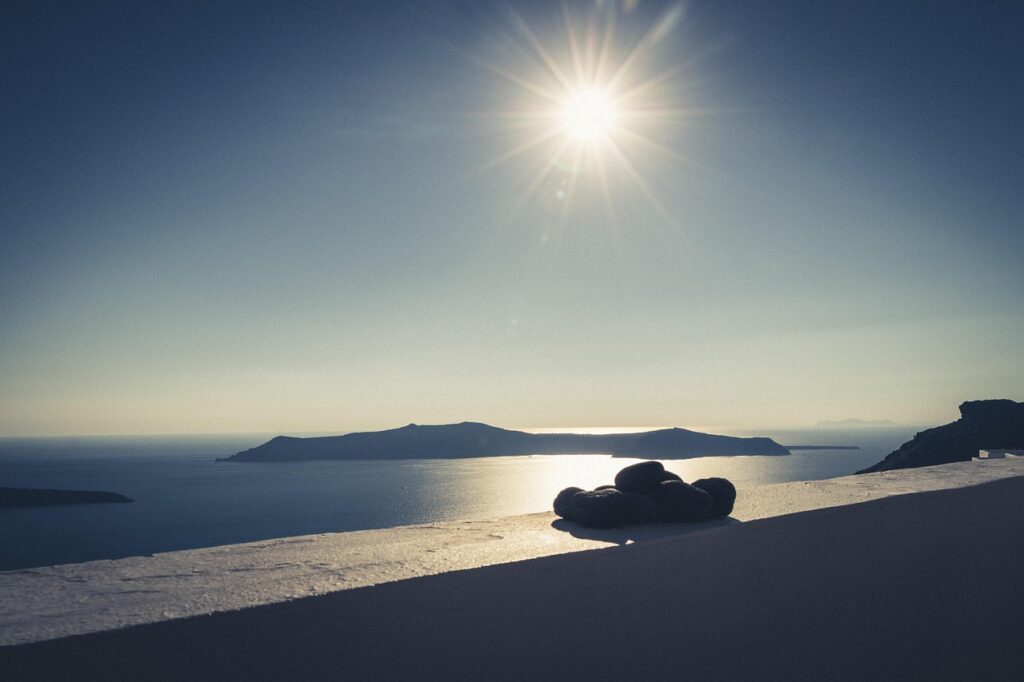
Can Santorini Really Attract Tourists During Winter?
Promoting year-round tourism is an attractive ambition, but Santorini faces practical challenges.
The island’s climate is generally mild compared with northern Europe, yet winter brings stronger winds, cooler temperatures, rain and rougher sea conditions.
Some hotels, restaurants, beach businesses and tour operators traditionally close or reduce their operations after the main holiday season.
Transport connections can also become less frequent, while certain excursions depend on suitable weather.
This means that winter visitors may encounter a very different destination from the one presented in summer travel advertisements.
Nevertheless, winter does not necessarily make Santorini unsuitable for tourism.
Visitors interested in history, food, wine, photography, walking and local culture may appreciate the quieter atmosphere.
A winter trip could include:
- Exploring Fira and traditional villages without the busiest summer crowds.
- Visiting archaeological sites and museums that remain open.
- Enjoying local cuisine in restaurants operating outside the peak season.
- Learning about Assyrtiko wine and traditional vineyard techniques.
- Photographing the volcanic landscape under changing winter light.
- Exploring religious heritage and local architecture.
- Taking walks along suitable coastal and village routes when weather permits.
The key is to develop realistic expectations. Santorini in January is not a summer beach holiday with fewer people. It is a different travel experience.
For the tourism industry, that distinction matters. Winter visitors need reliable accommodation, restaurants, transport and activities rather than simply a promise that the island is open.
The Cruise Tourism Problem: More Visitors Do Not Always Mean More Prosperity
Santorini’s attempt to diversify tourism also takes place against the background of a long-running debate about cruise ship arrivals.
Cruise tourism brings large numbers of visitors to the island, but the economic benefits are not necessarily distributed evenly.
According to Euronews, Mayor Nikos Zorzos estimated that Santorini receives approximately 3.5 million visitors annually when cruise passengers are included.
The figure requires careful interpretation. Passenger movements through the airport may include travellers who use Santorini as a gateway to neighbouring islands rather than staying on Santorini itself.
Cruise passengers also have different spending patterns from visitors who book hotels and remain on the island for several nights.
Some cruise travellers spend money on organised excursions, restaurants and shops. Others spend relatively little ashore or remain on their ships.
This creates a difficult economic calculation: a destination can record very high visitor numbers without receiving equivalent benefits for local businesses and residents.
Santorini’s Cruise Passenger Limits
Santorini has attempted to manage cruise tourism through daily visitor limits.
The Euronews report says the island currently allows up to 8,000 cruise passengers to disembark per day.
The local authority says these measures have helped reduce the most severe congestion associated with simultaneous arrivals.
Greece has also introduced a seasonal cruise passenger levy. According to the report, the charge is €20 per passenger during the peak summer period from June to September, €12 in April, May and October, and €4 between November and March.
Only one-third of the revenue goes to municipal coffers, with the remainder shared between national tourism and shipping authorities.
The levy creates a mechanism for collecting revenue from cruise activity, although its effectiveness depends on how the money is distributed and invested.
The larger question is whether cruise tourism can be managed in a way that supports local infrastructure, protects the visitor experience and provides tangible benefits to residents.
The Hotel Construction Dilemma
One of the more surprising aspects of Santorini’s tourism challenge is that declining hotel occupancy is occurring alongside continued growth in accommodation capacity.
Mayor Zorzos told Euronews that the increasing number of hotel beds is contributing to pressure on occupancy.
This illustrates an important problem in tourism development: building more accommodation does not automatically create more demand.
If visitor numbers remain stable while the supply of rooms increases, hotels may compete more aggressively for bookings. That can put pressure on prices, profitability and employment.
Unregulated construction also raises concerns about the island’s landscape and infrastructure.
Santorini’s distinctive architecture and dramatic natural environment are central to its international appeal. Excessive development could gradually undermine the very qualities that attract visitors.
The island therefore faces a policy challenge: how can it encourage tourism investment without allowing accommodation growth to exceed the destination’s environmental and economic capacity?
A more strategic approach could include stronger planning controls, protection of traditional settlements, careful management of hotel development and incentives for businesses that support local employment and sustainable practices.
Water Scarcity and Environmental Pressure Cannot Be Ignored
A year-round tourism strategy must also address the island’s limited natural resources.
Santorini is a dry volcanic island with limited freshwater resources. Its tourism industry requires substantial water for accommodation, restaurants, swimming pools, landscaping, cleaning and other services.
Research published through the Hellenic Centre for Marine Research has highlighted pressure on groundwater resources and the island’s dependence on desalination to supply drinking water.
The report also identifies tourism development, including swimming pools and other water-intensive facilities, as factors that can intensify demand.
This is an important issue because attracting visitors throughout the year could increase total annual resource consumption even if it reduces the pressure of peak-season crowds.
Sustainable tourism must therefore consider not only when people visit but also how much water, energy and infrastructure each visitor requires.
Possible measures include:
- Improving water efficiency in hotels and restaurants.
- Installing systems that reduce unnecessary water consumption.
- Encouraging responsible pool and landscaping practices.
- Investing in water infrastructure and monitoring.
- Improving waste management and recycling.
- Supporting renewable energy and energy-efficient buildings.
- Setting development limits that reflect the island’s environmental capacity.
The goal should be to make tourism more economically valuable without making the island increasingly difficult to sustain.
Why Longer-Staying Visitors Could Be More Valuable
One of the most important opportunities in Santorini’s strategy is attracting travellers who stay longer.
A cruise passenger may spend only several hours on the island. A visitor staying for four or five nights has more opportunities to use local services.
Longer-staying travellers may spend money on accommodation, restaurants, winery visits, cultural attractions, transport, guided tours and shopping.
They also have more time to explore less familiar villages and support businesses outside the main tourist centres.
This does not mean cruise tourism should disappear. Cruise passengers remain part of the island’s visitor economy.
Instead, Santorini could pursue a more balanced tourism model that values overnight stays, local spending and visitor experiences rather than relying primarily on headline arrival figures.
Tourism authorities could measure success using indicators such as:
- Average length of stay.
- Visitor spending retained by local businesses.
- Employment stability throughout the year.
- Tourist distribution across different villages.
- Seasonal hotel occupancy.
- Resident satisfaction.
- Water and energy consumption per visitor.
- Environmental impact and infrastructure pressure.
Such indicators would provide a more realistic picture of whether tourism is improving life on the island.
Is Santorini Still an Expensive Destination?
Santorini has a reputation as one of Greece’s more expensive holiday destinations, particularly because of its luxury hotels, cliffside accommodation, high-profile restaurants and wedding industry.
However, the island’s tourism offering is not limited to premium properties.
Hotel owner Thomas Giannis told Euronews that Santorini offers accommodation at different price levels and that travellers can find better deals outside the busiest season.
This is an important point for visitors who assume that the island is financially inaccessible.
Accommodation costs depend on location, season, property type and booking timing. Staying outside Oia’s most expensive areas, choosing simpler accommodation and travelling during quieter months can make a substantial difference.
Visitors can also explore local tavernas, public transport and independent businesses rather than relying entirely on premium experiences.
However, travellers should not assume that every service will operate during winter. Checking opening dates and transport schedules before booking is essential.
What Santorini Can Learn from Other Year-Round Destinations
Santorini is not alone in trying to reduce dependence on seasonal tourism.
Many destinations around the world are attempting to attract visitors through food, wine, wellness, culture, nature and outdoor activities.
Wine regions in France, Italy and Spain attract visitors beyond the summer holiday period. Historic cities such as Athens and Rome maintain cultural tourism throughout the year. Rural destinations use local food traditions, festivals and heritage experiences to create reasons for travel outside peak seasons.
Greece itself is pursuing a broader strategy to expand tourism beyond its traditional beach and island image.
The country’s tourism minister has highlighted agrotourism, wellness, wine tourism and mountain destinations as ways to encourage year-round travel.
For Santorini, the lesson is that a successful off-season strategy needs a complete visitor experience.
A wine campaign will have limited impact if wineries close for months. Archaeological attractions cannot attract visitors if access and transport are unreliable. Food tourism will struggle if most restaurants shut down after summer.
The island needs coordination between public authorities, tourism businesses, cultural institutions, transport providers and local communities.
A Practical Guide to Visiting Santorini Outside the Summer Season
For travellers considering an autumn, winter or spring visit, the island offers a different experience from its busy summer months.
Spring: A good period for walking, village exploration, archaeology and wine experiences. The weather generally becomes more suitable for outdoor activities as the season progresses.
Autumn: September and October can be particularly attractive because the sea is still relatively warm, while the most intense summer crowds may begin to ease. The Euronews report identifies these months as strong periods for visitors interested in specialised experiences.
Winter: Best suited to travellers interested in history, photography, local food and a quieter atmosphere. Visitors should check accommodation availability, ferry schedules, restaurant opening times and attraction hours.
Summer: Still the traditional high season, with the widest choice of hotels, excursions and restaurants. However, it is also the period when crowding and accommodation prices can be most challenging.
A balanced itinerary might include a visit to Akrotiri, an afternoon exploring Pyrgos, a winery experience, a traditional meal featuring local produce and time in Fira or Emporio.
Travellers should also consider staying for several nights rather than treating Santorini as a brief stop on a cruise itinerary.
The Future of Santorini: More Than a Marketing Campaign
Santorini’s effort to become a year-round destination reflects a wider change in how popular travel destinations think about tourism.
For many years, success was often measured through visitor arrivals, hotel construction and seasonal revenue. But the experience of heavily visited destinations has demonstrated that growth without careful management can create serious problems.
Santorini’s latest campaign offers a sensible starting point. The island has genuine attractions beyond its sunsets: distinctive wine, traditional cuisine, archaeological sites, museums, religious heritage and villages with a strong local identity.
These experiences could attract a broader range of visitors, extend the tourism season and create more opportunities for local producers and cultural businesses.
Yet marketing cannot solve every problem.
The island must also address construction pressure, water scarcity, cruise passenger management, seasonal employment and the practical limitations of winter travel.
Its greatest opportunity may lie in redefining what a successful tourist visit looks like.
Instead of chasing the largest possible number of arrivals, Santorini could focus on visitors who stay longer, spend locally, explore responsibly and develop a deeper appreciation of the island.
The famous sunset will remain one of Santorini’s greatest attractions. But its long-term tourism future may depend on everything that happens before and after the sun disappears below the Aegean horizon.
Frequently Asked Questions (FAQs)
1. Why is Santorini trying to attract tourists throughout the year?
Santorini relies heavily on summer tourism, leaving many hotels and businesses vulnerable to seasonal downturns and unexpected events. By promoting food, wine, culture and historical attractions, the island hopes to attract visitors during spring, autumn and winter, spread tourism income more evenly and reduce dependence on the busiest months.
2. What new attractions is Santorini promoting beyond its famous sunsets?
The island is highlighting its volcanic wine tradition, local gastronomy, archaeological sites, museums, religious heritage and traditional villages. A planned digital campaign featuring 32 short videos will showcase these experiences to international audiences.
3. Is Santorini worth visiting during winter?
Yes, particularly for travellers interested in history, archaeology, photography, wine and local cuisine. Winter offers a quieter atmosphere, but visitors should expect cooler and windier weather, fewer operating hotels and restaurants, and potentially reduced transport services. Checking opening schedules before travelling is important.
4. What makes Santorini wine so special?
Santorini’s wines are shaped by volcanic soil, strong winds, limited rainfall and distinctive local grape varieties. Assyrtiko is the island’s best-known grape, producing dry white wines with refreshing acidity and mineral characteristics. Traditional basket-shaped vine training, known as kouloura, protects grapes from harsh environmental conditions. The island is also famous for its sweet Vinsanto wine.
5. How is Santorini managing overcrowding from cruise ships?
Santorini has introduced measures to regulate cruise passenger arrivals, including a reported daily disembarkation limit of up to 8,000 passengers. Greece has also introduced a seasonal cruise levy, with higher charges during the summer. These measures aim to manage congestion and generate revenue, although questions remain about how much cruise tourism benefits local businesses and residents.
Sources Euro News