
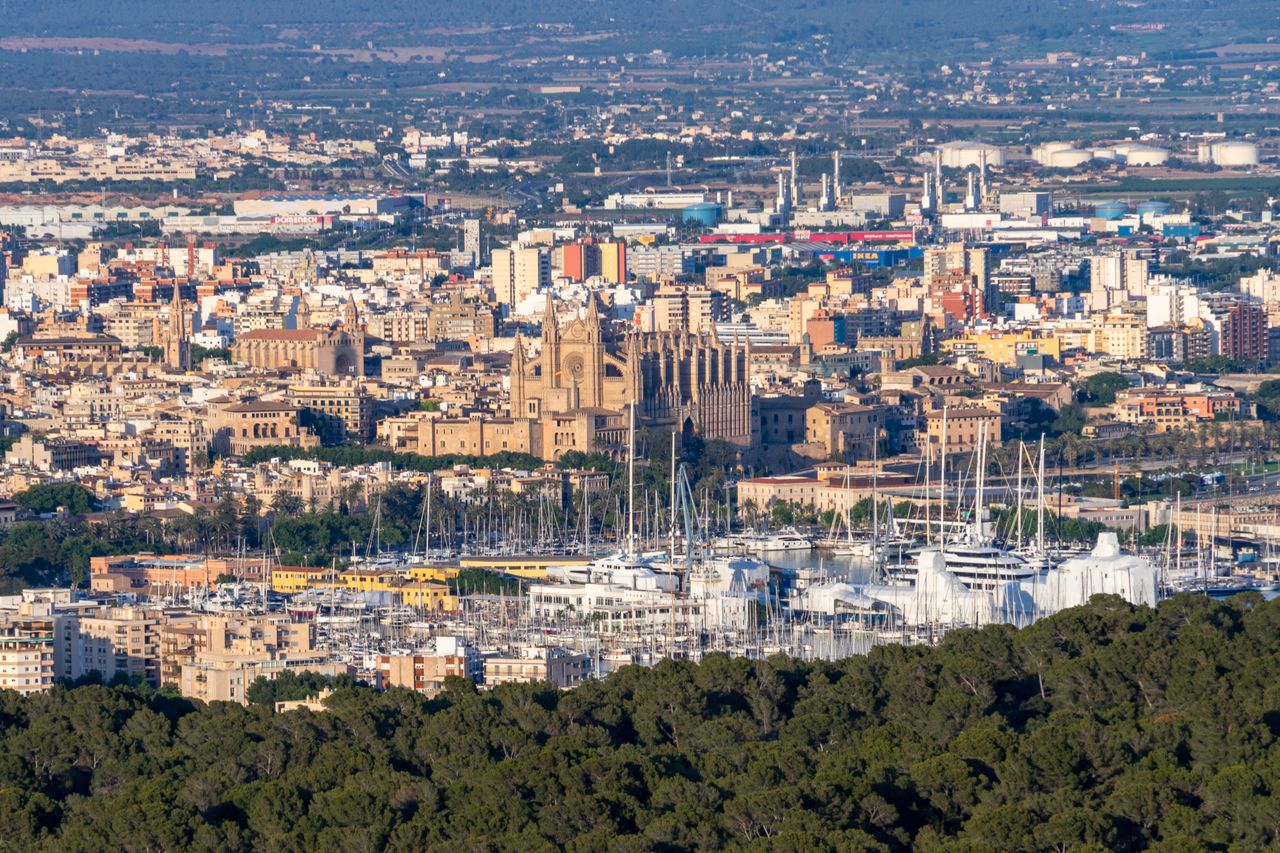
When a holiday paradise becomes difficult to call home
Imagine living on a beautiful Mediterranean island, surrounded by beaches, restaurants and hotels that attract millions of international visitors every year. Tourism provides thousands of jobs, supports local businesses and brings billions of euros into the economy. Yet finding an affordable apartment to rent or buy becomes increasingly difficult.
For many residents of Mallorca, this is no longer a hypothetical situation. It is a growing reality.
Mallorca, one of Spain’s most popular holiday destinations, is facing mounting pressure to reduce the number of tourist accommodation places, strengthen controls on holiday rentals and reconsider how tourism contributes to the local economy.
The debate intensified after Jordi Mora, president of Pimem, a federation representing small and medium-sized businesses in Mallorca, called for a reduction in the island’s total number of tourist beds. His proposal includes reducing the supply of registered holiday rentals and taking stronger action against illegal accommodation.
The argument reflects a wider conflict across Spain and other popular European destinations: tourism creates prosperity, but uncontrolled growth can place pressure on housing, public infrastructure, natural resources and the quality of life of permanent residents.
Mallorca’s challenge is particularly significant because tourism is central to its economic identity. The question is no longer simply how to attract more visitors. It is whether the island can build a tourism model that allows residents, businesses and visitors to benefit without undermining the place that makes Mallorca attractive in the first place.
1. Why Mallorca is considering fewer tourist accommodation places
Mallorca has long been one of Europe’s most recognisable Mediterranean holiday destinations.
Its beaches, historic villages, mountain landscapes, restaurants and Mediterranean climate attract visitors from Germany, the United Kingdom, Spain and many other countries.
However, the growing popularity of the island has created pressure on residential neighbourhoods and local infrastructure.
In November 2026, Jordi Mora argued that Mallorca needs to reduce the number of tourist beds rather than continue expanding its accommodation capacity.
His position is notable because Pimem represents small and medium-sized businesses, not simply environmental campaigners or anti-tourism activists.
Mora’s proposal includes two important measures:
- Reducing the number of accommodation places available through registered tourist rentals.
- Increasing enforcement against properties operating illegally as holiday accommodation.
He also suggested that smaller hotel operators could support a reduction in accommodation capacity if changes were implemented through agreements and incentives rather than sudden restrictions.
This is an important distinction. The proposal is not necessarily about eliminating tourism or shutting down every holiday rental. It is about controlling the overall scale of accommodation and encouraging a more sustainable balance.
Mora’s argument is that Mallorca does not need an ever-increasing number of tourists to improve its economy. Instead, the island should increase the value generated by tourism and ensure that the benefits reach the wider community.
2. Mallorca welcomed approximately 13.6 million tourists in 2025
The scale of the challenge becomes clearer when examining the island’s visitor numbers.
According to figures presented by the Economic and Social Council of the Balearic Islands in November 2026, Mallorca welcomed approximately 13.6 million tourists in 2025, representing a 1.5% increase compared with 2024.
The island generated approximately €16.876 billion in tourism expenditure during the year, an increase of 4.4%.
Other figures included:
- Approximately 86.5 million overnight stays.
- A median visitor stay of 6.4 days.
- Average tourism spending of approximately €1,242 per visitor.
- Average daily visitor expenditure of approximately €195.
- International tourists accounting for approximately 86.4% of visitors.
These figures reveal an important aspect of Mallorca’s tourism economy: the island is already generating substantial revenue from its existing visitor base.
The economic question is therefore whether additional visitors are necessary to produce further growth, or whether the island could generate greater economic value by encouraging longer stays, higher-quality services and more spending with local businesses.
The distinction matters because visitor numbers alone do not measure whether tourism is improving residents’ lives.
A destination can welcome millions of people while experiencing housing shortages, congested roads, environmental damage and growing dissatisfaction among permanent residents.
3. The housing crisis: Why residents feel increasingly excluded
Housing has become one of the most sensitive issues in Mallorca.
For many residents, the problem is not simply that property prices are high. It is that the local housing market increasingly competes with an international market of holidaymakers, investors and second-home buyers.
A property that could accommodate a local family for an entire year may generate more revenue when rented to holidaymakers for shorter periods.
This creates a financial incentive for some property owners to prioritise tourist accommodation.
How holiday rentals affect the housing market
Short-term rentals can influence residential housing through several mechanisms.
Reduced long-term rental supply
When homes are converted into holiday accommodation, fewer properties may be available to people looking for permanent housing.
Higher potential rental income
Owners may be attracted to the possibility of earning more from short stays, particularly in areas with strong tourism demand.
Investor competition
Properties in popular destinations can attract buyers who are interested in holiday income, second homes or investment returns rather than permanent residence.
Neighbourhood changes
Residential streets can gradually become dominated by temporary visitors. This can weaken long-term community relationships and change the character of neighbourhoods.
Pressure on essential workers
Teachers, healthcare employees, hospitality workers, cleaners, restaurant staff and other essential employees may struggle to find affordable accommodation close to their workplaces.
This final issue is particularly important. Tourism businesses need workers, but those workers also need somewhere affordable to live.
If employees cannot afford housing in the destination where they work, businesses may face recruitment problems, higher operating costs and staffing shortages.
Official housing figures reveal the scale of tourist accommodation
The Balearic Islands Housing Observatory reports that the region has approximately 26,143 homes designated for tourist stays.
Around 65% of these properties are located in Mallorca.
The number of tourist homes across the Balearic Islands increased from approximately 11,403 in 2015 to 26,492 in 2022, a rise of 132%.
By 2025, the figure had fallen slightly to approximately 26,143.
The observatory also reports that tourist accommodation represents approximately 4.2% of the region’s total housing stock.
That percentage may appear relatively small, but the impact is not distributed evenly. In certain municipalities and neighbourhoods, tourist accommodation accounts for a much larger proportion of available homes.
For example, the observatory identifies particularly high concentrations in some municipalities, including Pollença and several locations on the smaller Balearic Islands.
This helps explain why island-wide averages can hide serious local housing pressures.
4. Is Airbnb responsible for Mallorca’s housing crisis?
Short-term rental platforms are a major part of the discussion, but blaming one company or platform would oversimplify the problem.
Platforms such as Airbnb and Booking.com make it easier for property owners to advertise accommodation to international customers. They also allow travellers to find apartments, villas and rooms that may not be available through traditional hotels.
However, the underlying housing pressures involve several factors.
These include:
- Limited housing construction in areas with strong demand.
- Competition from domestic and international property buyers.
- Second-home ownership.
- Seasonal employment and population changes.
- Rising construction and renovation costs.
- Limited availability of affordable long-term rental properties.
- Tourist accommodation demand.
- Investment activity in popular coastal locations.
The Bank of Spain’s 2025 annual report provides useful national context. It estimated that Spain had approximately 355,000 tourist dwellings on average in 2025.
Although tourist housing represented around 1.5% of the country’s overall housing stock, it accounted for approximately 10% of the rental market.
The report also emphasised that the effects vary significantly between regions and neighbourhoods.
This is an important qualification. Short-term rentals do not explain every aspect of Spain’s housing crisis, but their concentration in popular destinations can have a more significant local impact than national averages suggest.
The policy challenge is therefore to identify where tourist accommodation is placing the greatest pressure on residential housing and respond with measures that reflect local conditions.
5. Mallorca’s tourism model is changing from quantity to quality
One of the most interesting developments in Mallorca is the growing discussion about attracting fewer visitors who spend more money.
Pedro Homar, managing director of Palma’s tourism board, has previously described the island’s desired direction as a move towards quality rather than quantity.
The idea is straightforward: tourism should generate greater economic value without requiring visitor numbers to increase indefinitely.
For example, visitors who stay longer, use local services, purchase products from local businesses and travel outside the busiest months may contribute more sustainably than large numbers of short-stay visitors concentrated in peak season.
Fox News reported comparisons from The Wall Street Journal indicating that American tourists in Spain spent approximately $410 per day in July, compared with around $240 for German visitors and $260 for British visitors.
These figures illustrate differences in average spending among visitor groups, but they should not be interpreted as proof that one nationality is inherently more valuable or desirable.
Spending varies according to accommodation choices, length of stay, travel purpose, household income and the types of activities visitors undertake.
A successful quality-tourism strategy should therefore focus on visitor behaviour and economic contribution rather than simply targeting wealthy nationalities.
What does quality tourism actually mean?
A more sustainable tourism model could include:
- Promoting cultural and historical experiences.
- Encouraging longer stays outside peak summer months.
- Supporting locally owned restaurants and accommodation.
- Developing nature-based and rural tourism.
- Improving public transport for visitors.
- Encouraging responsible water and energy consumption.
- Increasing spending with local suppliers.
- Reducing pressure on residential neighbourhoods.
The objective should be to increase the benefits of tourism while reducing its negative effects.
6. The economic argument against reducing tourism
Not everyone agrees that Mallorca should reduce its tourist accommodation capacity.
Tourism is a major economic engine for the Balearic Islands. Hotels, restaurants, bars, transport operators, travel agencies, retailers and entertainment businesses depend heavily on visitor spending.
Reducing accommodation availability could have consequences for businesses and workers.
Small businesses depend on visitor demand
A family-owned restaurant in Palma may depend on tourists to remain profitable throughout the year.
A hotel may employ dozens of people, while local transport companies, cleaning services and food suppliers depend on the continued operation of accommodation businesses.
A sudden reduction in tourist beds could reduce demand for these services.
It could also affect property owners who have invested in legally registered holiday accommodation and rely on rental income.
This is why proposals for accommodation reductions need to consider the economic impact on legitimate businesses.
Tourism jobs can be seasonal and insecure
Another challenge is the structure of tourism employment.
Many jobs are concentrated in the spring and summer months, when visitor numbers are highest.
Seasonal workers may face irregular income, temporary contracts and difficulty finding housing during the busiest periods.
Reducing visitor numbers without creating alternative employment opportunities could worsen the financial position of some workers.
The solution is not necessarily to preserve every existing tourism activity. Rather, policymakers need to ensure that changes in the industry do not disproportionately harm people whose livelihoods depend on it.
A balanced approach
The strongest argument for reform is not that tourism should disappear.
It is that tourism growth should be evaluated according to its overall contribution to society.
If additional visitors create revenue but also increase housing costs, congestion and environmental pressure, the net benefit may be lower than headline spending figures suggest.
Mallorca needs policies that consider both sides of the equation.
7. Illegal holiday rentals become a major enforcement target
One of the clearest areas of agreement in the debate is the need to control illegal tourist accommodation.
Illegal rentals can undermine legitimate businesses, avoid regulatory requirements and create additional pressure on residential areas.
They may also operate without appropriate safety standards, registration or tax compliance.
Spain’s nationwide crackdown
Spain has taken increasingly firm action against accommodation listings that allegedly violate regional regulations.
In May 2025, the Spanish Ministry of Consumer Affairs announced that it had ordered Airbnb to block 65,935 tourist accommodation listings that did not meet relevant advertising requirements.
In July 2025, Reuters reported that authorities were targeting nearly 120,000 listings considered potentially illegal or non-compliant.
The issues included missing tourist registration numbers and failure to provide required information about property ownership.
These actions demonstrate that Spain’s response extends beyond Mallorca.
The national government and regional authorities are attempting to make the short-term rental market more transparent and enforce existing rules.
Tougher Balearic regulations
The Balearic government has also introduced measures aimed at controlling tourist accommodation.
In May 2025, the regional parliament confirmed a decree that included:
- A prohibition on creating new tourist places in multi-family residential buildings.
- Stronger action against illegal accommodation.
- Increased penalties, potentially reaching €500,000.
- Measures to prevent uncontrolled growth in tourist accommodation capacity.
- Policies encouraging the replacement of outdated tourist facilities.
The regional authorities have also introduced measures addressing disruptive activities in tourist properties.
In July 2026, the Majorca Daily Bulletin reported further proposed enforcement changes, including daily fines for illegal holiday rentals that continue operating despite official orders to stop.
These measures reflect a broader shift from simply regulating tourism to actively controlling its impact.
8. Why Mallorca’s protests have become a warning for other destinations
Mallorca’s housing debate is part of a wider movement against overtourism.
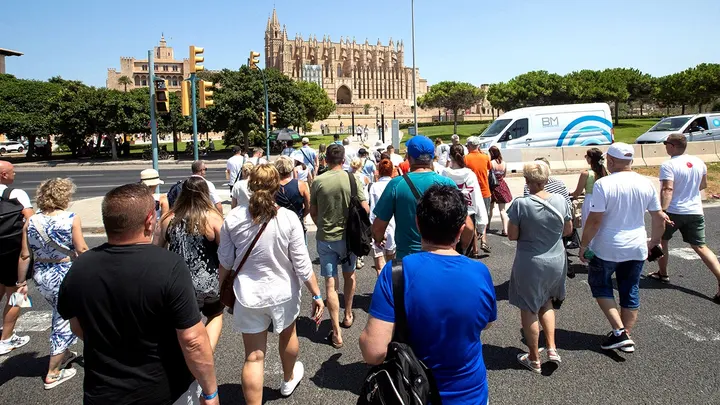
In June 2025, thousands of demonstrators took to the streets in Mallorca to protest against the effects of mass tourism.
One slogan captured the frustration of some residents: “One more tourist, one less resident.”
The message reflects concerns that tourism is changing the island faster than local communities can adapt.
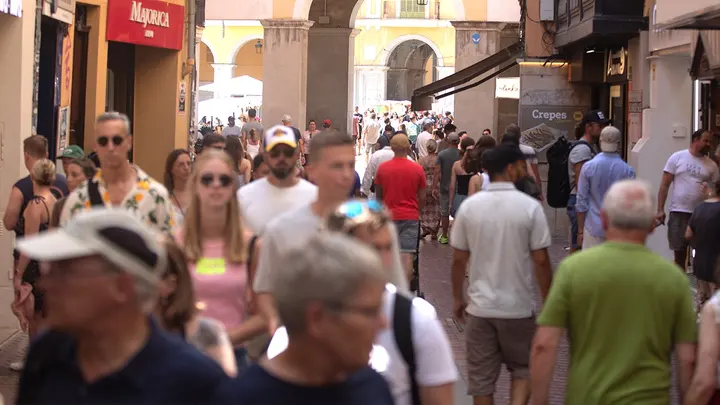
Residents have raised issues involving housing affordability, overcrowding, traffic congestion, water consumption and the loss of neighbourhood character.
Barcelona, Venice and the Canary Islands face similar tensions
Mallorca is not alone.
Barcelona, Spain
Barcelona has become one of Europe’s most prominent examples of opposition to mass tourism.
The city has faced protests over housing affordability, crowded public spaces and the growth of short-term holiday accommodation.
Authorities have announced plans to eliminate tourist apartment licences by 2028, although implementation and the legal consequences remain important issues.
Venice, Italy
Venice faces a different but related challenge.
The historic city has introduced measures such as an entry fee for certain day visitors on selected dates to manage the impact of large numbers of tourists.
The policy reflects concerns that visitors who spend only a few hours in the city can place pressure on infrastructure without generating the same economic benefits as overnight guests.
Canary Islands, Spain
The Canary Islands have also experienced demonstrations against mass tourism.
Residents have raised concerns about housing costs, environmental pressures and the impact of tourism development on local communities.
Ibiza, Spain
Ibiza has faced particularly strong pressure from the holiday rental market.
Reuters reported in January 2026 that short-term holiday rentals on the island had nearly halved in 2025 compared with the previous year, reflecting the effects of stricter regulation and enforcement.
These examples show that the debate is not confined to one island. Popular destinations are increasingly questioning whether traditional tourism growth models remain sustainable.
9. The environmental cost of mass tourism
Housing is only one part of Mallorca’s challenge.
The island’s natural environment is another major concern.
Tourism increases demand for water, electricity, transport and waste-management services. These demands can become especially difficult to manage during the summer months.
Water shortages and pressure on resources
Mallorca has a Mediterranean climate, with hot, dry summers and periodic water shortages.
Tourist accommodation requires water for showers, swimming pools, laundry, kitchens and landscaping.
Golf courses and other leisure facilities can also require significant water resources.
When visitor demand increases during the hottest months, local authorities must balance tourism consumption with the needs of permanent residents, agriculture and the environment.
Waste and coastal pollution
More visitors generally mean more waste.
Beaches, restaurants, public spaces and transport facilities need additional cleaning and maintenance during peak periods.
If waste-management systems fail to keep pace with visitor numbers, coastal areas and residential neighbourhoods can suffer.
Transport congestion
Mallorca’s roads and public transport systems experience significant seasonal pressure.
Rental cars, tour buses, taxis and delivery vehicles compete for limited road space.
Traffic congestion can affect residents commuting to work while also reducing the quality of the visitor experience.
Protecting the island’s natural attractions
Mallorca’s beaches, mountains, coastal landscapes and rural communities are among the main reasons people visit.
If tourism development damages these attractions, it risks undermining the industry’s long-term economic foundations.
Environmental protection should therefore be considered an essential part of tourism policy, rather than an optional addition.
10. What reducing tourist accommodation could mean for travellers
If Mallorca succeeds in reducing the number of tourist accommodation places, visitors may notice changes in the holiday market.
However, the consequences will depend on how the restrictions are implemented.
Higher accommodation prices
If demand remains strong while the supply of legal accommodation falls, prices could increase.
This may make Mallorca more expensive for families and travellers on limited budgets.
Greater demand for hotels
Some visitors who previously preferred private apartments may move towards hotels and other registered accommodation.
This could benefit established hotel operators, although it may also increase pressure on hotel capacity during peak periods.
More competition for legal accommodation
Travellers may need to book earlier, particularly during July and August.
The availability of holiday apartments and villas could become more limited in popular locations.
Better regulation and consumer protection
Stronger enforcement could improve transparency.
Visitors would have greater confidence that accommodation has the necessary registration and meets relevant legal requirements.
More emphasis on off-season travel
Mallorca could promote spring, autumn and winter visits to spread demand across the year.
This would help businesses generate revenue beyond the traditional summer season while reducing pressure during peak periods.
Travellers may also find a quieter and more relaxed island outside the busiest months.
11. How Mallorca can protect residents without destroying tourism
The challenge for policymakers is to create a system that addresses housing pressures while preserving legitimate economic activity.
A complete ban on holiday rentals would be an extreme response. Equally, allowing unrestricted growth could create long-term problems for residents and businesses.
A more effective approach would combine several policies.
1. Enforce existing rental rules
Authorities should prioritise identifying and removing illegal accommodation listings.
Properties operating without appropriate licences should face meaningful penalties.
Enforcement should be consistent, transparent and supported by sufficient staff and resources.
2. Establish local accommodation limits
Not every municipality experiences tourism pressure in the same way.
Areas with severe housing shortages may require stricter limits than communities where tourist accommodation has a smaller impact.
Local authorities should use reliable data to determine appropriate accommodation capacity.
3. Increase affordable housing supply
Restricting tourist accommodation will not automatically solve a housing shortage.
Mallorca also needs more homes that residents can realistically afford.
Possible measures include:
- Supporting affordable housing construction.
- Expanding social and public housing.
- Encouraging long-term residential rentals.
- Improving access to housing finance.
- Using public land for affordable developments.
- Supporting housing opportunities for essential workers.
4. Encourage responsible property ownership
Policies could distinguish between homeowners occasionally renting out their primary residence and investors operating multiple tourist properties.
A carefully designed system could protect ordinary homeowners while limiting large-scale speculative activity.
5. Improve tourism taxation
Tourism taxes can help finance infrastructure, public services and environmental protection.
However, revenue should be directed towards projects that address the costs of tourism and benefit local communities.
6. Measure tourism success differently
Instead of focusing exclusively on visitor numbers, authorities should monitor:
- Housing affordability.
- Average wages in tourism.
- Employment stability.
- Water consumption.
- Waste generation.
- Public transport capacity.
- Resident satisfaction.
- Spending retained by local businesses.
- Tourism revenue per visitor.
These indicators would provide a more complete picture of whether the industry is benefiting the island.
12. What this debate reveals about the future of global tourism
Mallorca’s housing revolt reflects a fundamental change in the way tourism is understood.
For much of the twentieth century, tourism growth was widely treated as an economic achievement.
More visitors meant more hotel bookings, restaurant spending, employment and investment.
But the rise of online booking platforms, low-cost flights, international property investment and social media has made it easier for millions of people to travel to the same destinations.
Places that were once seasonal holiday locations have become year-round international markets.
This has created new challenges.
Tourism can become a victim of its own success
A destination’s popularity can eventually undermine the conditions that made it attractive.
Crowded beaches become less enjoyable. Historic neighbourhoods lose permanent residents. Housing becomes unaffordable. Local services struggle to keep pace.
When residents feel that tourism benefits outside investors more than the people who live in the destination, public opposition becomes increasingly likely.
The rise of destination management
The next stage of tourism development may involve more active destination management.
Instead of competing to attract the largest possible number of visitors, destinations may focus on:
- Managing visitor flows.
- Protecting residential neighbourhoods.
- Limiting environmental damage.
- Encouraging travel throughout the year.
- Supporting local businesses.
- Improving public transport.
- Promoting cultural experiences.
- Maintaining affordable housing.
This represents a shift from tourism marketing to tourism management.
A more responsible role for travellers
Travellers also have a part to play.
Visitors can make more responsible choices by:
- Booking legally registered accommodation.
- Supporting locally owned businesses.
- Respecting residential neighbourhoods.
- Avoiding excessive noise.
- Using public transport where practical.
- Respecting water and environmental restrictions.
- Travelling outside peak periods when possible.
- Learning about local customs and community concerns.
Responsible tourism does not mean visitors are unwelcome. It means recognising that destinations are homes as well as holiday locations.
13. What Mallorca’s tourism dispute means for small businesses
One of the most interesting aspects of the current debate is the involvement of Pimem, an organisation representing small and medium-sized businesses.
Its president’s call for fewer tourist beds suggests that concerns about overtourism are not limited to residents who oppose tourism development.
Some business owners may also recognise that unlimited expansion is not necessarily good for the local economy.
A small restaurant may benefit from visitors, but it also needs employees who can afford to live nearby.
A hotel may want more customers, but it needs reliable water, transport and public services.
A local shop may welcome tourism, but it also depends on a stable residential community.
If tourism becomes too expensive or disruptive for permanent residents, the local economy can lose the people and businesses that give the destination its character.
This is why a sustainable tourism model must consider the entire business ecosystem rather than simply the number of available hotel rooms.
Conclusion: Mallorca must decide what kind of tourist destination it wants to become
Mallorca’s tourism industry has created extraordinary economic opportunities. Millions of visitors arrive every year, spending billions of euros and supporting businesses across the island.
Yet the same success has intensified concerns about housing affordability, overcrowding, environmental pressure and the changing character of residential communities.
The call by Jordi Mora and Pimem to reduce tourist accommodation places reflects a growing belief that more visitors do not automatically mean a better economy.
Mallorca’s future may depend on whether it can move towards a model that generates more value from tourism while reducing the pressure placed on residents and natural resources.
That will require more than restricting holiday rentals. It will involve stronger enforcement, affordable housing investment, responsible property ownership, better infrastructure and a tourism strategy that gives local communities a meaningful voice.
The island does not need to choose between welcoming visitors and protecting its residents. But it does need to recognise that the two goals are connected.
A destination that becomes unaffordable for the people who live and work there risks losing the very culture, hospitality and community identity that make it attractive to travellers.
Ultimately, Mallorca’s biggest challenge is not simply deciding how many tourists it can accommodate. It is deciding how tourism can contribute to a future in which the island remains a good place to visit—and, just as importantly, a good place to call home.
Frequently Asked Questions (FAQs)
1. Why are residents in Mallorca protesting against mass tourism?
Residents are concerned that the growth of tourism is contributing to higher housing costs, overcrowding, traffic congestion, pressure on water supplies and changes to residential neighbourhoods. Some believe that the island’s tourism industry has expanded beyond what local communities and infrastructure can comfortably support. Demonstrators are calling for stronger controls and a tourism model that gives greater priority to residents’ quality of life.
2. How many tourists visited Mallorca in 2025?
According to figures presented by the Economic and Social Council of the Balearic Islands, Mallorca received approximately 13.6 million tourists in 2025, representing a 1.5% increase compared with 2024. Tourism expenditure reached approximately €16.876 billion, demonstrating the industry’s importance to the island’s economy.
3. Are Airbnb and holiday rentals responsible for Mallorca’s housing crisis?
Short-term holiday rentals are considered one contributing factor, particularly in areas where tourist accommodation is concentrated. Converting residential properties into holiday rentals can reduce the supply of homes available for permanent residents. However, the housing crisis also involves limited construction, property investment, second-home ownership, population growth and other market pressures. Short-term rentals are part of the problem, but they are not the only cause.
4. Is Mallorca banning holiday rentals?
Mallorca is not implementing a blanket ban on all holiday rentals. The Balearic Islands have introduced restrictions on creating new tourist accommodation places in multi-family residential buildings and stronger measures against illegal rentals. Authorities are also increasing enforcement and considering ways to manage overall tourist accommodation capacity. Existing legal properties may continue operating subject to applicable regulations.
5. Will Mallorca become more expensive for tourists because of accommodation restrictions?
It is possible. If the supply of legal accommodation decreases while visitor demand remains strong, prices could rise, particularly during the busiest summer months. However, the long-term impact will depend on how many properties are affected, whether hotel capacity expands, how regulations are enforced and whether the island succeeds in encouraging more visitors to travel during the off-season. Travellers should check that accommodation is legally registered and consider booking well in advance.
Sources Fox News