
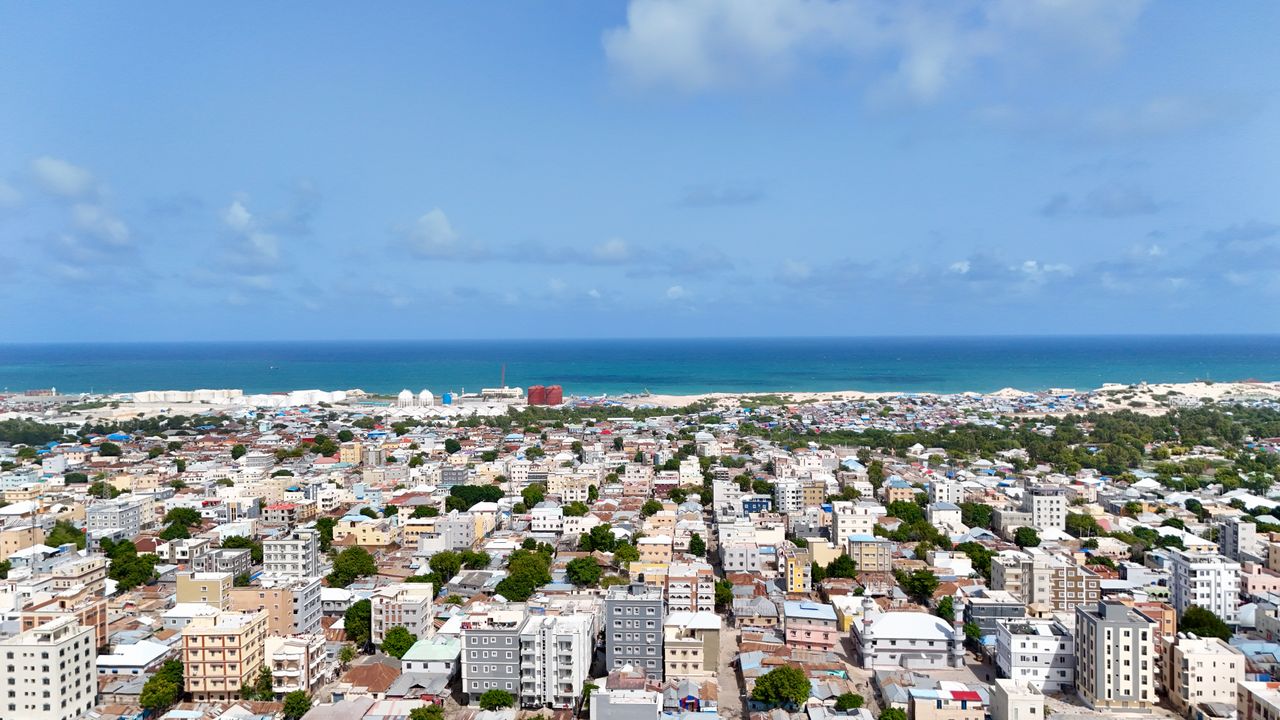
A different picture of Somalia
For decades, Mogadishu has appeared in international headlines largely because of civil war, terrorist attacks, political instability and humanitarian crises. These stories are part of Somalia’s modern history, but they do not represent the country’s entire identity.
Along the Indian Ocean, Somalia has thousands of kilometres of coastline, historic trading cities, distinctive architecture, traditional cuisine and a deeply rooted culture of hospitality. Yet these attractions have rarely received the same international attention as the country’s security problems.
One young Somali woman is working to change that perception.
Sucdi Abdul Fattah Abdul Khader, a 23-year-old tour guide from Mogadishu, is introducing visitors to the capital’s beaches, markets, historic neighbourhoods and everyday culture. Working alongside her father, who has more than three decades of experience in the tourism and guiding business, she is helping visitors discover a city that many know only through negative news reports.
Her work is about more than showing tourists attractive locations. It represents a wider effort to rebuild confidence in Somalia, create economic opportunities and allow Somali people to tell their own stories.
As international interest in less familiar destinations grows, Sucdi’s experience offers a revealing example of how small businesses and individual entrepreneurs can contribute to a country’s changing image.
1. Meet Sucdi: A young entrepreneur continuing a family tradition
Tour guiding is not an entirely new profession for Sucdi’s family. Her father has spent more than 30 years showing journalists, photographers and international visitors around Somalia.
He introduced her to the business nearly three years before the BBC report, initially allowing her to participate as a hobby. Over time, however, she developed a genuine interest in the work and began treating it as a professional opportunity.
Today, she works alongside her father and a team of guides, combining his experience and local knowledge with her own approach to reaching visitors.
Her contribution is particularly significant because Somalia’s tourism industry remains small and relatively undeveloped. The number of professional guides in Mogadishu is limited, and attracting visitors requires more than simply advertising beautiful locations. Tour operators must also address concerns about security, transportation, accommodation and the practical challenges of travelling in the country.
Sucdi understands that many potential visitors arrive with strong preconceptions. Some expect to encounter a city defined entirely by violence and instability. Her tours aim to introduce them to a more complete picture.
She has also embraced social media as a way to promote her work. Through TikTok videos, she gives international audiences glimpses of Mogadishu’s coastline, food markets and landscapes. She is considering creating more English-language content to reach people who do not speak Somali.
This is an important business decision. A traditional tour operator might depend on travel agencies, personal recommendations and established international networks. Social media allows a young entrepreneur to communicate directly with potential customers, demonstrate what a destination offers and build an audience without relying entirely on conventional advertising.
2. Mogadishu’s beaches: An overlooked coastal attraction
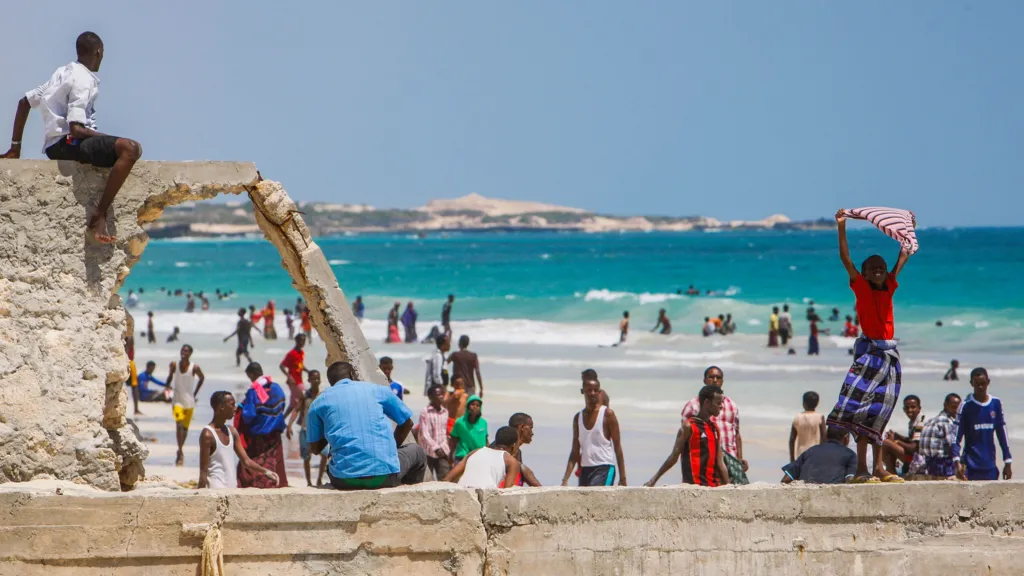
One of the most important parts of Sucdi’s tours is Mogadishu’s coastline.
Somalia has approximately 3,333 kilometres of coastline, according to figures displayed by the country’s Ministry of Information, Culture and Tourism. Its location along the Indian Ocean and Gulf of Aden gives it a remarkable range of coastal landscapes and marine resources.
For a capital city, Mogadishu has an unusually close relationship with the sea. Beaches, fishing activity and coastal recreation form part of its everyday character.
Jazeera Beach and the surrounding sand dunes
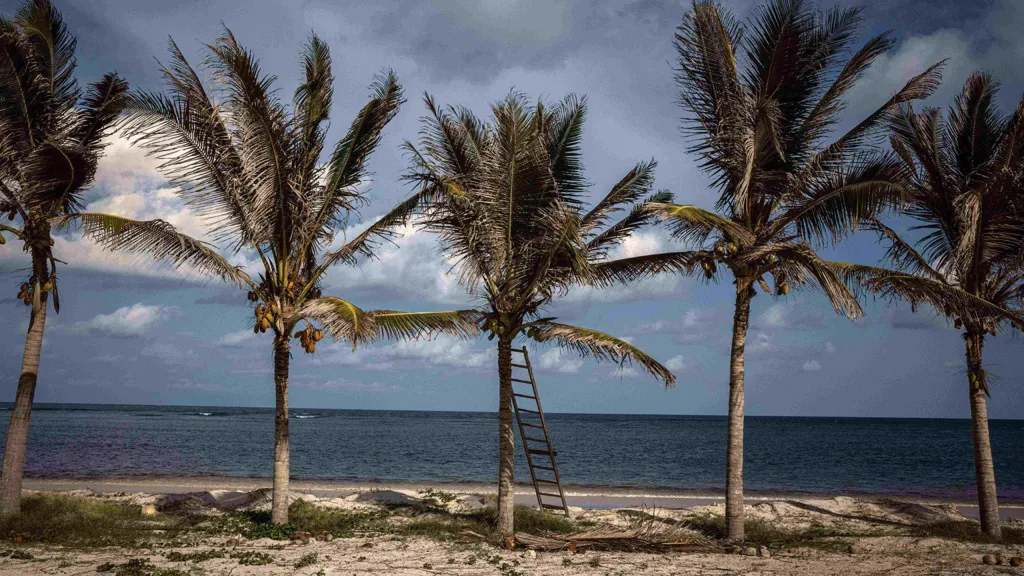
Jazeera Beach is one of Sucdi’s favourite destinations. Visitors can enjoy the shoreline before exploring nearby sand dunes, which create a striking contrast between the desert-like landscape and the blue waters of the Indian Ocean.
Some visitors compare the dunes to parts of the Sahara. Their proximity to the capital makes them particularly interesting for travellers who want to experience different landscapes without travelling long distances.
The beach experience also provides an opportunity to appreciate Somalia’s natural environment rather than viewing the country exclusively through its political history.
Lido Beach and coastal life
Lido Beach is another well-known coastal destination in Mogadishu. It has traditionally been a popular place for residents to relax, eat and spend time with family and friends.
However, its history also illustrates why tourism development in Somalia requires caution. Lido Beach was the site of a devastating militant attack in August 2024, which killed more than 50 people and injured many others, according to the UK government’s security reporting.
This painful reality cannot be separated from the wider tourism discussion. Somalia’s beaches may be beautiful, but their attractiveness does not eliminate the risks associated with travelling in the country.
For local residents, these coastal locations are part of everyday life. For international visitors, they offer a chance to understand the city beyond its reputation.
3. Fish markets reveal the richness of Somalia’s marine resources
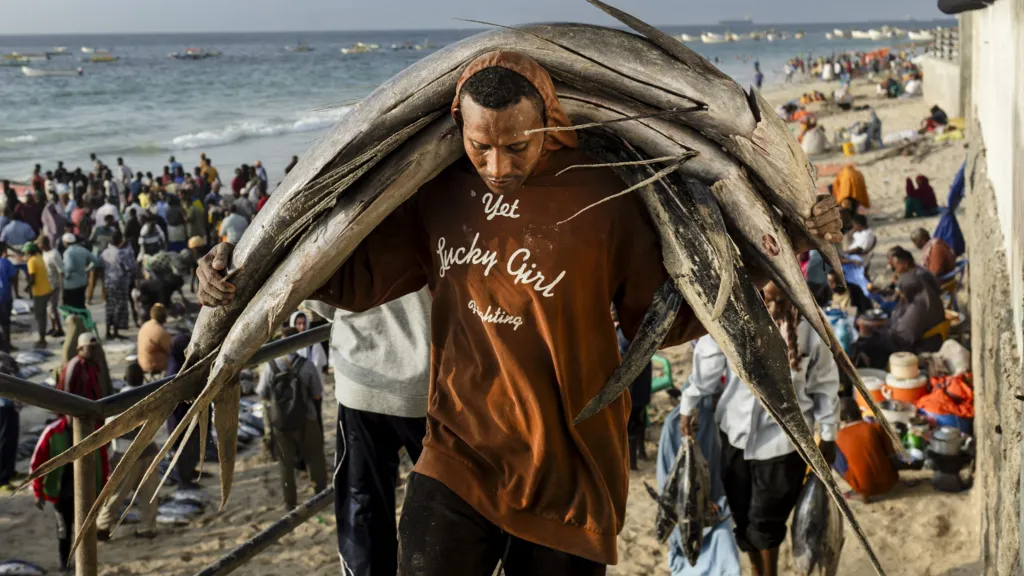
A visit to Mogadishu’s fish market offers another perspective on the country’s coastal identity.
Somalia’s extensive shoreline supports a variety of marine life, and fishing has long been an important activity for coastal communities. Markets provide a direct connection between the ocean, local livelihoods and Somali food culture.
Visitors can encounter different varieties of fish and observe how seafood moves from fishing communities into the local economy.
For international tourists, the diversity of marine products can be a surprise. Many people know Somalia primarily through reports about conflict, drought and humanitarian emergencies. Fewer are familiar with its fishing industry or the potential of its maritime resources.
A stronger fishing sector could also contribute to wider economic development through:
- Improved fishing equipment and storage facilities.
- Better cold-chain transportation to reduce food waste.
- Processing and packaging businesses.
- Training and employment for coastal communities.
- Greater access to regional and international seafood markets.
- More sustainable management of marine resources.
Tourism and fishing are not separate industries. Seafood restaurants, fish markets and coastal experiences can create opportunities for local businesses while giving visitors a more authentic understanding of the destination.
4. A city shaped by centuries of Indian Ocean trade
Mogadishu’s appeal is not limited to its beaches. The city has a long history as an important centre of commerce and cultural exchange.
For centuries, the Somali coast connected East Africa with the Arabian Peninsula, Persia, India and other parts of the Indian Ocean trading world.
Merchants, sailors and travellers moved goods, languages, religious traditions and architectural influences across these maritime networks. Mogadishu became part of a wider commercial system that linked different societies.
This history is important because it challenges the impression that Somalia has always been isolated from the international community.
Architecture and historical influences
The city’s architectural character reflects different periods of its history, including Islamic traditions and later European colonial influence.
Italy established colonial control over southern Somalia in the early twentieth century, and Mogadishu became the capital of Italian Somaliland. Buildings and urban features from the colonial period remain part of the city’s historical landscape.
The Mogadishu Lighthouse, for example, is among the heritage locations included on Somalia’s UNESCO Tentative List, according to the country’s Ministry of Information, Culture and Tourism.
A tentative listing is not the same as full World Heritage status, but it indicates that a site has been identified for possible future consideration.
For tourists interested in architecture and history, these locations provide an opportunity to explore how Mogadishu developed through trade, religion, migration and political change.
The challenge is to preserve these sites while the city continues to expand. Urban development can create economic opportunities, but poorly managed construction may damage historic buildings and erase important parts of the city’s identity.
5. Somali food: A cultural experience that brings visitors closer to local life
Food is another important part of Sucdi’s tours.
Visitors can experience traditional Somali dishes, including camel meat, samosas and Somali tea. These foods offer a glimpse into the country’s culinary traditions and the cultural influences that have shaped them.
Somali cuisine reflects a combination of local ingredients, pastoral traditions and historical connections with the wider Indian Ocean region.
Rice, meat, seafood, flatbreads, spices and aromatic tea are familiar features of many Somali meals. Food traditions vary between regions and communities, so there is no single menu that represents the entire country.
Why food tourism matters
Food tourism is one of the easiest ways for visitors to connect with a destination.
A meal can introduce travellers to local ingredients, cooking techniques, family traditions and social customs. Restaurants, cafés, food vendors and markets also create business opportunities for people who may not work directly in the travel industry.
For Mogadishu, developing food tourism could support:
- Local restaurants and family-owned food businesses.
- Small-scale food producers and suppliers.
- Traditional cooking demonstrations.
- Culinary tours and market visits.
- Employment in hospitality and catering.
- Greater international recognition of Somali cuisine.
These opportunities could help tourism generate economic benefits beyond hotels and large travel companies.
6. Somalia’s tourism industry is growing, but it remains small
Sucdi’s business is part of a wider, emerging tourism market.
According to figures published by Somalia’s Ministry of Information, Culture and Tourism, more than 10,000 tourists visited the country in 2024. The ministry reports that this represented a 50% increase compared with 2023.
These figures suggest growing interest, although they should be interpreted carefully. The published total does not necessarily mean that all visitors were conventional holidaymakers. Visitor statistics can include people travelling for different purposes, depending on how the authorities define and collect the data.
Even with this growth, Somalia remains a small destination in the international tourism market.
Sucdi has described the business as seasonal and said that receiving around five tourists a week can be considered a successful result. She believes visitor numbers can increase, but the industry still faces considerable obstacles.
What is attracting visitors?
Several factors may be contributing to renewed interest in Somalia.
1. Curiosity about less familiar destinations
Some travellers are interested in visiting countries that receive relatively little conventional tourism. They may want to discover places outside established holiday routes and experience destinations that are rarely represented in mainstream travel advertising.
2. Social media exposure
Travel videos and personal accounts can introduce destinations to audiences who might otherwise know very little about them.
A single visitor’s experience can encourage friends, followers and other travellers to consider a destination.
3. The Somali diaspora
Somalis living abroad have maintained connections with their homeland through family visits, business, investment and cultural activities. Their travel can contribute to demand for accommodation, restaurants, transportation and other services.
4. Rebuilding and private investment
Mogadishu has experienced a visible construction and business revival, supported in part by returning diaspora members, local entrepreneurs and investors.
New hotels, restaurants, shops and residential developments have changed parts of the city’s appearance and commercial activity.
5. Interest in cultural and coastal experiences
Somalia offers a combination of coastline, history, food and cultural traditions that could appeal to specialist travellers if the necessary security and infrastructure conditions are in place.
7. From conflict to rebuilding: Understanding Mogadishu’s transformation
To understand why Sucdi’s work matters, it is necessary to understand the city’s recent history.
Somalia’s central government collapsed in 1991, triggering years of civil war, political fragmentation and widespread displacement.
Mogadishu experienced extensive destruction. Infrastructure and public services deteriorated, businesses closed and many residents were forced to leave their homes.
The city became internationally associated with armed conflict, humanitarian emergencies and the breakdown of state institutions.
The gradual recovery after 2011
A significant change occurred in 2011, when al-Shabaab withdrew from most of Mogadishu. The establishment of the Federal Government of Somalia in 2012 created a new political framework for rebuilding national institutions.
However, the recovery has never been straightforward. The government has continued to face security challenges, political disputes and the task of extending effective administration across the country.
Despite these difficulties, Mogadishu has experienced a gradual commercial revival.
Returning members of the diaspora have invested in businesses, property and services. Local entrepreneurs have opened restaurants, hotels, shops and other enterprises. Construction has reshaped parts of the capital, while a growing private sector has created new employment opportunities.
This transformation does not mean that the city’s problems have disappeared. Rather, it demonstrates that economic activity and everyday life can continue alongside serious security challenges.
Sucdi’s tourism business is one small example of this wider rebuilding process.
8. Social media is helping Somalis tell their own stories
One of the most interesting aspects of Sucdi’s work is her use of TikTok.
For many years, international perceptions of Somalia were shaped largely by foreign news coverage, documentaries and humanitarian reporting.
Journalism plays an essential role in explaining conflict and holding institutions accountable. However, when a country is repeatedly covered through the same narrow themes, audiences may begin to associate the entire population and territory with those problems.
Social media creates an additional channel through which local people can present their own experiences.
From local guide to digital storyteller
By sharing videos of beaches, sand dunes, markets and cultural experiences, Sucdi can reach audiences far beyond the people who book her tours.
Her videos serve several purposes:
- They introduce unfamiliar locations to potential visitors.
- They provide visual evidence of the city’s natural beauty.
- They promote her guiding services.
- They allow Somali people to participate in shaping the country’s international image.
- They encourage conversations about travel, culture and local business.
Her interest in producing more English-language content could broaden her audience further.
This strategy reflects a larger shift in global tourism marketing. Travellers increasingly use TikTok, Instagram, YouTube and other platforms to discover destinations, compare experiences and make travel decisions.
For a small operator, a compelling online presence can be a valuable marketing tool.
Nevertheless, social media promotion should be responsible. Videos showing attractive locations should not create the impression that every part of Somalia is safe or that visitors can travel without professional arrangements.
Accurate information builds trust more effectively than exaggerated promises.
9. Women entrepreneurs are helping reshape Somalia’s business culture
Sucdi’s work also highlights the contribution of young Somali women to economic activity.
In societies recovering from prolonged conflict, women often face several overlapping challenges: limited access to capital, restricted employment opportunities, social expectations and the difficulty of building businesses in uncertain economic conditions.
Tourism can provide opportunities for women in guiding, hospitality, food services, administration, marketing and business ownership.
Sucdi’s visibility is significant because she is working in a profession that remains relatively small and male-dominated in Mogadishu.
Her work demonstrates that women can participate in the city’s commercial revival and help shape how visitors experience Somali society.
She is also not the only example of women entering new areas of business. A separate report by The Guardian in July 2026 described young women working in Mogadishu’s growing café industry, including baristas and managers taking on responsibilities that were less common for women in the past.
These developments suggest that entrepreneurship is creating new spaces for women to develop skills, earn income and pursue professional ambitions.
However, individual success stories should not obscure the broader barriers that remain. Sustainable progress requires access to education, finance, professional training, safe workplaces and fair business opportunities.
10. The biggest challenge: Security remains a serious concern
Any discussion of tourism in Mogadishu must address security honestly.
The fact that some visitors have positive experiences does not mean the city is safe for everyone or that the risks have disappeared.
Al-Shabaab continues to carry out attacks in Somalia, including in Mogadishu. Hotels, restaurants, transport facilities, government buildings and crowded public places have previously been targeted.
The UK Foreign, Commonwealth and Development Office continues to advise against travel to much of Somalia because of terrorism and continuing violence. The United States, Canada and Australia also maintain strong warnings against travel to the country.
These are important considerations for anyone thinking about visiting.
Why security checkpoints are common
Visitors to Mogadishu may encounter checkpoints and other security arrangements around the city.
These reflect the authorities’ efforts to protect important locations and manage security risks. They also illustrate why independent sightseeing and unplanned travel can be particularly difficult.
Tour operators working in this environment need to understand local conditions, coordinate transportation and follow relevant security advice.
The importance of responsible tourism
Tourism businesses should never encourage visitors to ignore official warnings or treat security precautions as unnecessary.
Responsible tourism development requires:
- Reliable local security information.
- Careful route and transport planning.
- Coordination with qualified local operators.
- Emergency procedures.
- Appropriate accommodation arrangements.
- Respect for local laws and customs.
- Honest communication about risks.
A destination’s tourism potential should be assessed separately from whether it is currently advisable for international leisure travellers to visit.
Sucdi’s work can help people understand Mogadishu, but her positive experiences do not replace official travel guidance.
11. What Mogadishu needs to become a sustainable tourist destination
Somalia has natural and cultural attractions, but turning them into a sustainable tourism industry will require long-term investment.
A successful destination needs more than attractive beaches and enthusiastic guides. It requires reliable infrastructure, professional services, clear regulations and confidence among visitors and businesses.
Better infrastructure
Roads, electricity, water supply, sanitation, telecommunications and transport services are essential for tourism.
Coastal destinations also need appropriate waste management, public facilities and environmental protection.
Without these services, even attractive locations may struggle to provide a consistent visitor experience.
Professional tourism training
Tour guides need more than knowledge of local attractions. Professional training can cover:
- Customer service and communication.
- First aid and emergency response.
- Foreign languages.
- Cultural and historical interpretation.
- Business management.
- Digital marketing.
- Responsible tourism practices.
Training programmes could help young Somalis enter the industry and improve service standards.
Investment in hotels and hospitality
Visitors need accommodation that meets appropriate standards of comfort, hygiene and security.
Hotels, restaurants and transport providers also create employment for people who are not directly involved in tour guiding.
However, investment must be matched by realistic assessments of demand and operating risks.
Heritage conservation
Mogadishu’s historical buildings and cultural locations should be protected as part of the city’s long-term development.
Heritage conservation can support tourism while preserving the identity of local communities.
A national tourism strategy
Somalia’s Ministry of Information, Culture and Tourism lists a National Tourism Strategy for 2025–2030 as being in development.
A coordinated strategy could help establish priorities for destination promotion, licensing, training, infrastructure, environmental protection and investment.
The challenge will be turning policy plans into practical improvements that benefit local communities.
12. Tourism must benefit local communities, not just visitors
Tourism is often promoted as a source of foreign currency and international investment. But its long-term value should also be measured by the opportunities it creates for local people.
A successful tourism sector can support a network of small businesses, including:
- Tour guides and local travel operators.
- Restaurants and cafés.
- Hotels and guesthouses.
- Fishing communities and seafood suppliers.
- Drivers and transport companies.
- Photographers and content creators.
- Traditional craftspeople.
- Market vendors and food producers.
This wider economic effect is particularly important in a country where employment opportunities and public resources remain limited.
For Sucdi, each visitor represents more than a booking. A successful tour can generate income for guides, drivers, restaurants and other local businesses.
If tourism expands, it could help create a more diversified economy and provide young people with alternatives to limited employment opportunities.
However, development should be inclusive. Local residents should have a voice in decisions about coastal areas, historic sites and community spaces. Tourism should not displace residents, damage the environment or turn cultural traditions into performances designed solely for visitors.
13. Can Mogadishu become an international tourism destination?
The potential exists, but the timeline is uncertain.
Somalia has several characteristics that could support tourism development: a long coastline, a distinctive cultural identity, historic trading cities, traditional cuisine and a diaspora with international connections.
The country also has an opportunity to develop specialist tourism rather than immediately competing with established mass-market destinations.
Possible areas of development include:
Cultural tourism: Guided visits to historic buildings, traditional markets and heritage locations.
Coastal tourism: Carefully managed beach experiences and marine-related activities where security and environmental conditions permit.
Food tourism: Restaurants, cooking experiences and visits to local markets.
Historical tourism: Educational tours exploring Mogadishu’s Indian Ocean trading history and architectural influences.
Diaspora tourism: Travel programmes that help people of Somali heritage reconnect with family, culture and national history.
Yet none of these opportunities can develop at scale without significant improvements in security, infrastructure, healthcare access and the reliability of tourism services.
It is also important to distinguish tourism potential from immediate travel readiness. A place can have extraordinary attractions while remaining unsuitable for ordinary holiday travel under current security conditions.
14. Why Sucdi’s story matters beyond tourism
Sucdi’s work is a reminder that the international image of a country is not shaped only by governments, political leaders or international news organisations.
Ordinary citizens, business owners, artists, journalists and young entrepreneurs also influence how the world understands their homeland.
Her tours challenge a simplified image of Somalia by showing visitors its natural landscapes, food, historical connections and welcoming communities.
But her story is not an argument that the country’s problems should be ignored. Somalia continues to face terrorism, political instability, poverty and humanitarian pressures. A balanced understanding must acknowledge both the challenges and the country’s potential.
The most important part of Sucdi’s work may be that she is helping create a more complete picture.
A country should not be defined exclusively by its worst moments. Nor should its difficulties be hidden behind attractive travel photographs.
Somalia’s future will depend on the ability of its institutions, communities and entrepreneurs to address the problems that have held back development while protecting the cultural and natural assets that make the country distinctive.
For a young guide building a business with her father, every visitor offers an opportunity to contribute to that process.
Conclusion: A new generation is telling Somalia’s story
Mogadishu’s image is changing, but the transformation is still incomplete.
Sucdi Abdul Fattah Abdul Khader represents a generation of young Somali entrepreneurs who are determined to build opportunities at home rather than allow the country’s international reputation to be defined entirely by decades of conflict.
By taking visitors to Jazeera Beach, exploring the city’s sand dunes, introducing them to fish markets and sharing traditional food, she is showing that Mogadishu has a cultural and natural identity that deserves attention.
Her use of social media also demonstrates how digital platforms can help small businesses reach international audiences and challenge outdated perceptions.
However, tourism cannot flourish through promotion alone. Security, infrastructure, professional training, investment and community participation will determine whether Somalia can turn its tourism potential into a lasting industry.
For now, Sucdi’s story offers a powerful example of what individual initiative can achieve. She is not claiming that Mogadishu has become free of danger. She is showing that the city is more than the dangers often associated with it.
And sometimes, changing the world’s understanding of a place begins with one person inviting others to see it from a different perspective.
Frequently Asked Questions (FAQs)
1. Who is Sucdi Abdul Fattah Abdul Khader?
Sucdi Abdul Fattah Abdul Khader is a 23-year-old Somali tour guide from Mogadishu. She works with her father, an experienced guide with more than 30 years in the profession, to introduce visitors to the city’s beaches, markets, historical locations and cultural attractions. She also uses TikTok to promote her tours and show international audiences a different side of Somalia.
2. What are the main tourist attractions in Mogadishu?
Mogadishu’s attractions include Jazeera Beach, Lido Beach, nearby sand dunes, traditional fish markets, historical architecture and locations connected to the city’s Indian Ocean trading history. Visitors can also experience Somali food, including traditional tea, samosas and camel meat. However, the availability and safety of visits depend on current local conditions.
3. Is Mogadishu safe for international tourists?
Mogadishu continues to face serious security threats, including terrorism, kidnapping and violent crime. Several foreign governments advise against travel to Somalia or maintain strict warnings covering Mogadishu. A positive experience reported by an individual visitor should not be interpreted as evidence that the city is generally safe. Anyone considering travel should consult their government’s latest official advice and obtain qualified local security guidance.
4. How many tourists visited Somalia in 2024?
Somalia’s Ministry of Information, Culture and Tourism reports that more than 10,000 tourists visited the country in 2024, representing an increase of approximately 50% compared with 2023. The figures indicate growing interest, although the tourism sector remains small and the definition of visitors may include different categories of travel.
5. Can tourism help Somalia’s economy recover?
Yes. Tourism could support economic development by creating employment and generating income for hotels, restaurants, tour operators, transport companies, food suppliers, fishing communities and local entrepreneurs. It could also encourage investment in infrastructure and cultural preservation. However, sustainable growth depends on improved security, reliable services, professional training, environmental protection and policies that ensure local communities benefit from tourism.
Sources BBC