
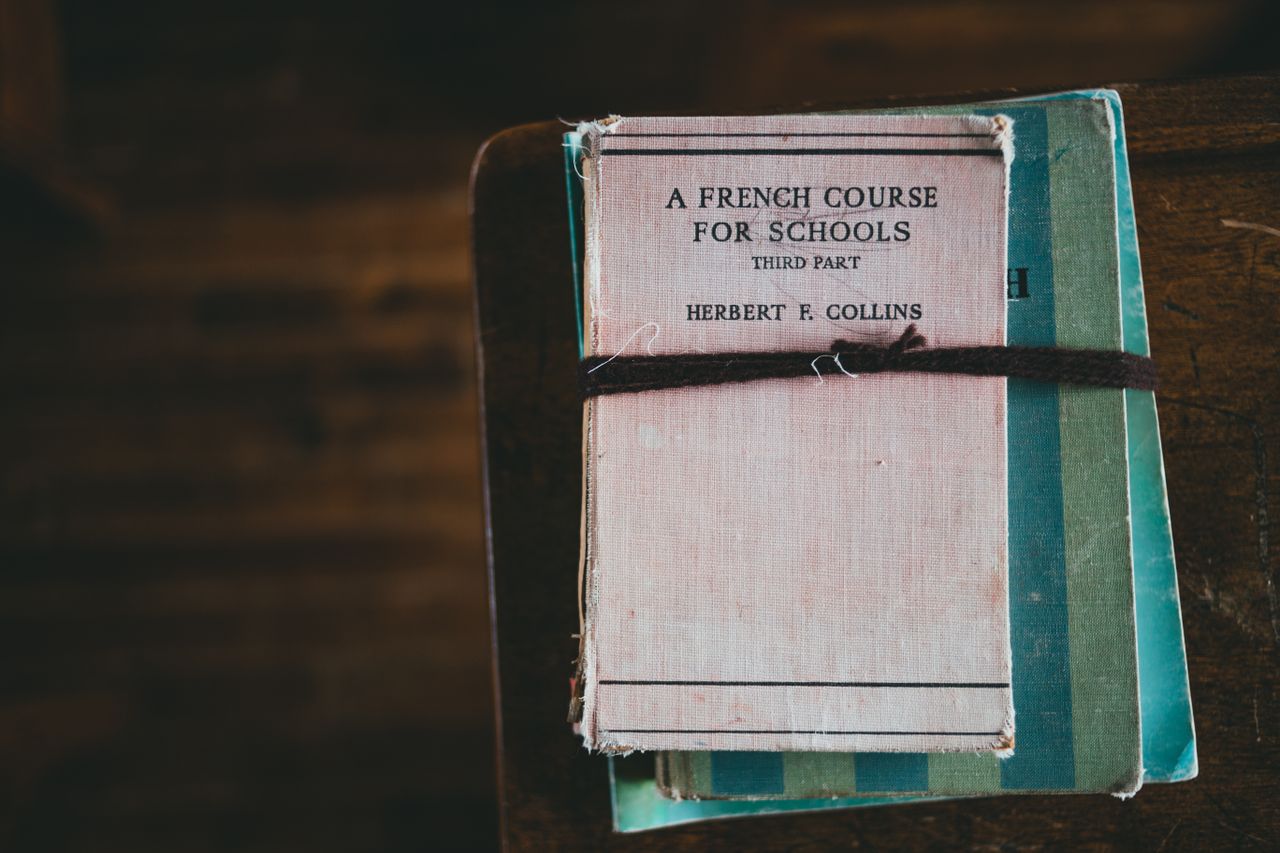
Imagine ordering your morning coffee in French, chatting with local shopkeepers, exploring medieval streets and practising conversation over dinner. Instead of memorising vocabulary from a textbook, you learn by using the language every day. That is the promise of an immersive French-learning holiday in Normandy.
Learning a language is one thing. Finding the confidence to speak it in real life is another. Many students spend years studying grammar, vocabulary and verb conjugations, only to freeze when a French waiter asks a simple question. Immersive language travel offers a different approach: take the classroom into the streets, make everyday interactions part of the lesson, and learn French in the place where it is spoken.
A week in Rouen, Normandy, with a personal French teacher—or prof—illustrates how travel and education can work together. But the appeal reaches beyond one destination or one teaching arrangement. It raises a bigger question: could a carefully planned language holiday help learners make faster, more meaningful progress than conventional lessons alone?
The Rouen approach: Turning the whole city into a classroom
The central idea behind an immersive language holiday is simple: stop treating French as a subject you study and start treating it as a language you use.
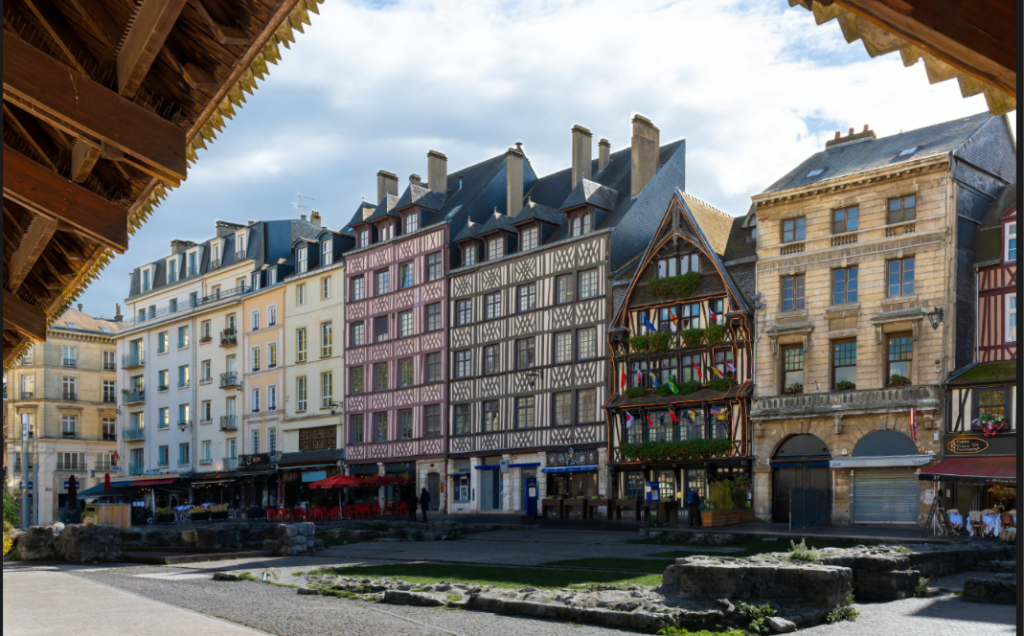
In Rouen, this can mean walking through medieval streets while discussing architecture, ordering lunch while practising food vocabulary, or visiting a museum and describing what you see. A personal tutor can turn each activity into an informal lesson, correcting pronunciation, suggesting more natural expressions and explaining grammatical mistakes as they arise.
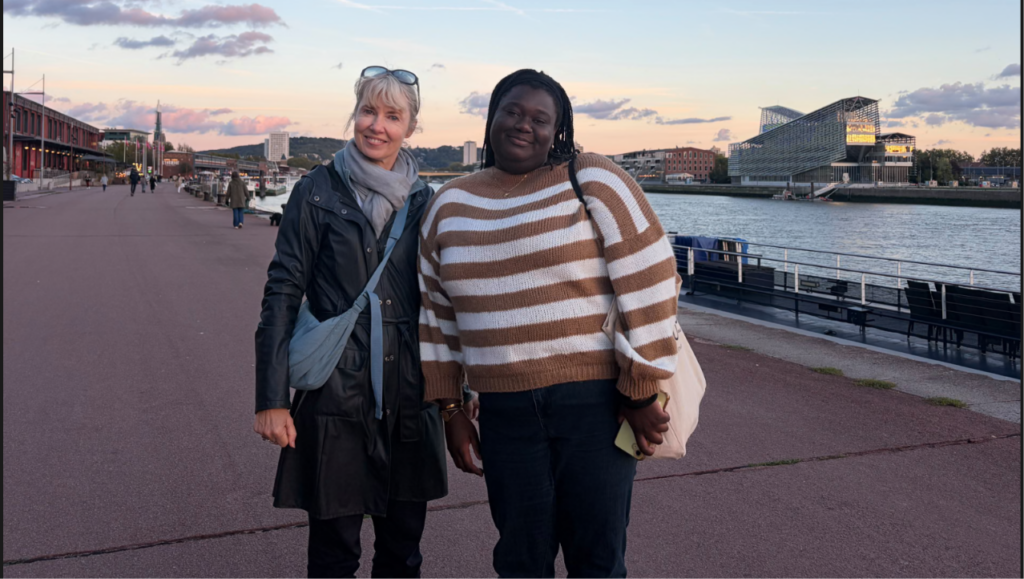
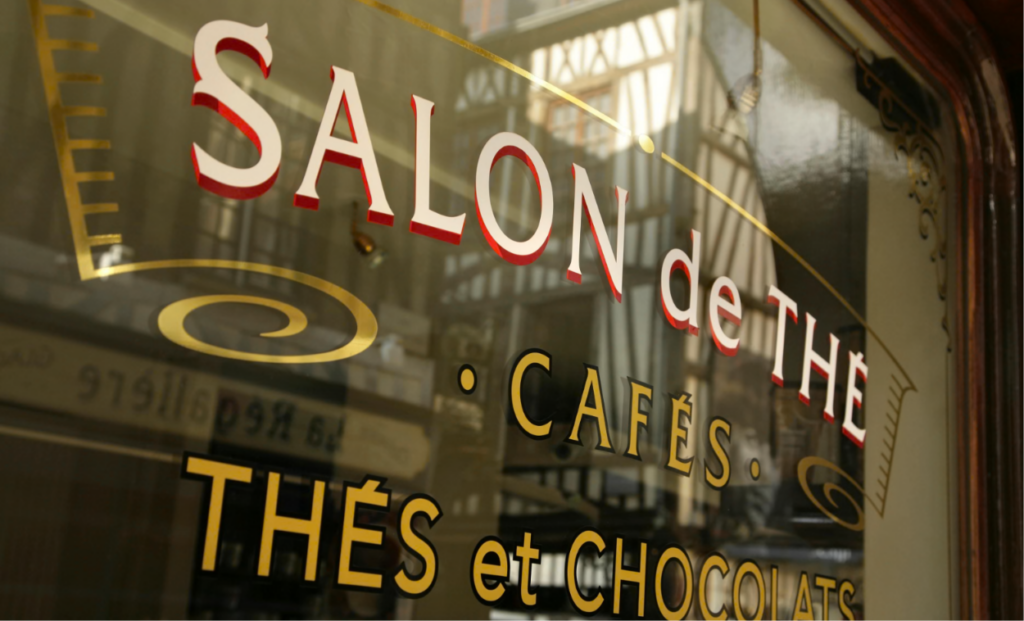
A reported week-long experience in Rouen followed this model. The learner arranged ten hours of conversation lessons across five days, meeting a French tutor for two hours each day. Rather than sitting in a classroom, they explored the city on foot, visited cultural attractions and continued conversations in cafés and tea rooms when the weather turned wet. The tutor also helped explain unfamiliar grammar and introduced subjects beyond language, including French student life and Senegalese history.
This approach offers something conventional classroom learning can struggle to provide: a reason to communicate.
A textbook exercise might ask you to construct a sentence about buying bread. In Rouen, you can walk into a bakery, greet the person behind the counter, ask for a baguette and respond to the follow-up question. The vocabulary suddenly has a purpose.
Why Rouen is an excellent destination for learning French
Rouen is not simply a convenient place to practise French. It is a destination with enough history, culture and everyday activity to make language lessons interesting.
Located in Normandy on the River Seine, the city has long been an important centre of trade, politics and culture. Its historical connections stretch from the Roman period and Viking settlement to the medieval Duchy of Normandy and the Hundred Years’ War.
Its streets provide a ready-made collection of conversation topics.
Notre-Dame Cathedral: The enormous Gothic cathedral is closely associated with the paintings of Claude Monet, who created a celebrated series depicting its façade under different lighting conditions. A visit can prompt discussions about art, architecture, religion and history.
The Gros-Horloge: This famous astronomical clock sits above one of Rouen’s main pedestrian streets. It is an ideal starting point for conversations about time, local traditions and the city’s medieval past.
Place du Vieux-Marché: This historic square is associated with Joan of Arc, who was executed there in 1431. It offers a natural opportunity to discuss French history and the country’s national identity.
Saint-Maclou: The church is a striking example of Gothic architecture, surrounded by historic streets and traditional half-timbered buildings.
Musée des Beaux-Arts: The city’s fine arts museum is particularly attractive to learners interested in painting and cultural history. Its collections provide plenty of material for describing artworks, expressing opinions and learning new vocabulary.
For a language student, these are more than sightseeing opportunities. They are conversation prompts waiting to happen.
The benefits of learning with a personal French tutor
A private tutor offers a different experience from a large language class.
In a classroom of 10 or 12 students, speaking time is divided among everyone. Some learners dominate discussions, while others become comfortable listening rather than participating. A private lesson gives one learner much more opportunity to speak, ask questions and receive individual feedback.
The biggest advantages include:
1. Lessons can match your actual ability
A learner who understands written French but struggles with conversation needs a different programme from someone who has difficulty with basic grammar.
A personal tutor can identify these weaknesses and adjust the lessons accordingly. They can slow down when a topic becomes difficult, introduce more challenging vocabulary when the learner is ready, and revisit recurring mistakes.
2. Corrections happen in real time
One of the most useful aspects of face-to-face learning is immediate feedback.
A tutor can explain why a particular phrase sounds unnatural, demonstrate the correct pronunciation and suggest a more conversational alternative.
This matters because learners can develop habits that are difficult to correct later. Regular feedback helps prevent repeated mistakes from becoming permanent.
3. Conversation becomes more natural
Real conversations rarely follow textbook patterns.
People interrupt, change subjects, use informal expressions and speak at different speeds. Learners need exposure to these situations before they can feel comfortable communicating independently.
A tutor can gradually introduce more spontaneous discussions, helping students move beyond rehearsed sentences.
4. Cultural understanding becomes part of the lesson
Language is inseparable from culture.
A discussion about food might lead to French dining habits. A walk through a historic square could introduce regional history. A conversation about university life might reveal differences between French and British education.
These exchanges help learners understand not just what French expressions mean, but when and why people use them.
Why walking lessons may help you remember more
One particularly interesting feature of the Rouen experience was the decision to conduct lessons while walking.
Movement can make a language-learning session feel less like formal study and more like an ordinary social activity. Instead of concentrating exclusively on a worksheet, learners must connect words with places, objects, people and experiences.
For example, a walk through a market could involve learning the names of vegetables, asking about prices and describing different products. A riverside walk might lead to conversations about directions, weather, buildings and local geography.
This creates several useful learning conditions:
- Contextual learning: Words are associated with real objects and experiences rather than isolated vocabulary lists.
- Repeated exposure: Learners encounter familiar expressions in different situations throughout the day.
- Active participation: Students must listen, respond, ask questions and clarify misunderstandings.
- Reduced classroom pressure: Walking side by side may feel less intimidating than sitting opposite a teacher in a formal lesson.
- Stronger personal associations: Memorable experiences can give new vocabulary a meaningful context.
Movement should not be presented as a guaranteed shortcut to language fluency. The benefits depend on the learner, the activity and the quality of instruction. However, research into movement and cognition has explored how physical activity may support attention and learning processes.
The practical lesson is straightforward: combining conversation with meaningful activities can make language practice more engaging and easier to sustain.
Can an immersive holiday outperform a traditional language school?
Not necessarily in every situation. The two approaches serve different purposes.
A language school usually offers a structured programme covering grammar, reading, writing, listening and speaking. Students may also benefit from meeting classmates from different countries and learning in a group environment.
A private immersion holiday places greater emphasis on individual conversation and everyday communication.
| Learning method | Main advantage | Potential drawback |
|---|---|---|
| Traditional language school | Structured curriculum and group learning | Less individual speaking time |
| Private tutor | Personalised lessons and immediate feedback | Quality depends on the tutor |
| Immersive language holiday | Real-world communication and cultural exposure | Requires independent effort outside lessons |
| Language-learning apps | Convenient, flexible and often inexpensive | Limited spontaneous human interaction |
| Online tutoring | Access to teachers from almost anywhere | Less exposure to the local environment |
The strongest option may be a combination.
A learner could study grammar online before travelling, spend a week practising with a local tutor, and continue lessons after returning home. This creates a cycle of preparation, real-world practice and reinforcement.
Immersion is especially useful for people who already understand some French but lack the confidence to speak. Beginners can also benefit, although they may need more preparation and a tutor willing to work patiently with basic vocabulary.
How technology fits into modern language learning
Language-learning technology has transformed how people prepare for travel.
Apps provide vocabulary exercises, pronunciation practice and short grammar lessons. Podcasts expose learners to different accents and speaking speeds. Online dictionaries make it easier to check unfamiliar expressions, while artificial intelligence tools can simulate conversations and explain grammar.
These tools are useful, but they do not fully reproduce the experience of speaking with a real person.
A human conversation involves facial expressions, interruptions, social expectations, humour and unexpected questions. A local tutor can also explain cultural references and regional expressions that automated systems may not handle naturally.
AI can be a useful preparation partner. A student might practise ordering food, asking for directions or introducing themselves before arriving in France. During the trip, however, the real test is using those expressions with people who are not following a prepared script.
The most effective approach is not necessarily choosing between technology and human teaching. It is using each for what it does best.
Does learning another language benefit the brain?
Language learning is often associated with cognitive benefits, including mental flexibility, attention and the ability to manage competing information.
Research has also investigated possible relationships between multilingualism and healthy ageing. A 2025 study published in Nature Aging, for example, analysed data from 86,149 participants across 27 European countries. It reported an association between greater multilingualism at the country level and a lower likelihood of accelerated biobehavioural ageing.
However, this type of research needs careful interpretation. The study examined broad population-level relationships and does not prove that taking a one-week French course will prevent cognitive decline or slow ageing.
There are more immediate reasons to learn a language: communicating with people, understanding another culture, travelling more independently and enjoying the satisfaction of developing a new skill.
A language holiday can make those benefits feel tangible because learners are not simply studying for a future possibility. They are using the language while they learn.
How much does a French immersion holiday cost?
Cost is one of the most attractive aspects of the personal-tutor model, although the final price depends heavily on the destination, accommodation and lesson arrangements.
In the reported Rouen experience, the writer paid €19 an hour for a private tutor found through Apprentus. The article contrasted this with a quoted language-school tutor rate of €60 an hour. Ten hours of lessons over five days therefore cost considerably less than the quoted school alternative.
The writer also reported renting a studio apartment in the historic centre for less than £60 per night and travelling by ferry from Newhaven to Dieppe, followed by a train journey to Rouen. The return ferry-and-train combination cost £65. The overall six-day trip, including food, accommodation, transport and tutoring, came to a little over £600. These are individual reported costs, not guaranteed prices for future travellers.
A realistic budget should include:
- Private lessons: Hourly rates vary according to the tutor’s experience, qualifications and location.
- Accommodation: A central studio or apartment may provide more independence, while a homestay can offer additional opportunities to practise French.
- Transport: Compare train, coach, ferry and flight options based on your departure point.
- Food and drinks: Include meals, cafés and occasional restaurant visits.
- Activities: Museums, guided tours, cultural events and excursions may add to the total.
- Learning materials: Books, notebooks and subscriptions are relatively small costs but should still be considered.
The main financial advantage of arranging a private tutor independently is flexibility. You can decide how many hours to book, where to meet and whether to combine lessons with sightseeing.
However, the cheapest tutor is not automatically the best choice. Check teaching experience, reviews, language proficiency, cancellation policies and whether the tutor is comfortable teaching adults at your level.
A practical five-day French learning itinerary in Rouen
A successful immersion trip does not require six hours of formal lessons every day. A manageable programme can combine two hours of tutoring with independent practice and cultural exploration.
Here is one possible structure:
| Day | Main activity | Language focus |
|---|---|---|
| Monday | Explore the historic centre with a tutor | Introductions, directions and everyday conversation |
| Tuesday | Visit a market and local cafés | Food, shopping, prices and polite requests |
| Wednesday | Explore museums and historic buildings | Art, history and expressing opinions |
| Thursday | Use public transport and discover different neighbourhoods | Asking questions, understanding instructions and spontaneous conversation |
| Friday | Take a riverside walk and review the week | Free conversation, storytelling and correcting recurring mistakes |
The schedule should remain flexible. If a discussion becomes particularly interesting, there is no need to interrupt it just to reach the next attraction.
The goal is not to collect as many sightseeing photographs as possible. It is to create situations in which French becomes useful.
How to organise your own French immersion holiday
You do not need to enrol in an expensive language school or join a package tour. A self-organised trip can work well if you plan carefully.
1. Decide what you want to achieve.
Be realistic. A week is unlikely to turn a beginner into a fluent speaker. Better goals include ordering food confidently, holding a short conversation, asking for directions or becoming more comfortable understanding spoken French.
2. Choose the right tutor.
Look for someone with experience teaching your level and, ideally, working with adult learners. Ask whether lessons can take place outside a classroom and whether the tutor is comfortable combining conversation with cultural activities.
3. Arrange lessons before travelling.
Agree on the number of hours, meeting locations, lesson structure and payment arrangements. A short introductory video call can help establish whether you communicate comfortably.
4. Stay somewhere that encourages independence.
Accommodation near the historic centre can make it easier to walk to lessons, cafés, shops and museums. A homestay may offer even more daily exposure to French, although it is important to check how much interaction is included.
5. Prepare before arrival.
Learn basic greetings, numbers, common questions and essential phrases. This will make the first few days less intimidating and allow you to spend more time practising rather than searching for every word.
6. Keep speaking after lessons finish.
Order your meals in French, listen to local radio, read signs and try small conversations with shopkeepers. Do not expect every interaction to become a full lesson. Even brief exchanges are useful.
7. Continue practising after returning home.
A short holiday creates momentum, but progress depends on what happens next. Schedule regular conversations, revisit your notes and keep listening to French content.
Is Rouen the only place to try language immersion?
Certainly not. France offers many destinations that can support different learning styles and budgets.
- Montpellier: A lively southern city with a strong student atmosphere, making it attractive to learners who enjoy meeting people and socialising.
- Tours: A useful base for exploring the Loire Valley, with historic streets and access to castles and regional culture.
- Lyon: A larger urban destination with a celebrated food culture, museums and varied neighbourhoods.
- Caen: Another Normandy option, particularly appealing to people interested in medieval history and the Second World War.
Rouen has a particular advantage for travellers who want a historic setting without the scale and expense of Paris. It also has good rail connections, with journeys from Paris taking approximately 90 minutes and direct connections to other regional destinations including Dieppe, Caen and Le Havre.
The best destination is ultimately the one that encourages you to use the language. A smaller town may provide more opportunities for relaxed conversations, while a larger city can offer more cultural activities and social experiences.
The challenges of learning French through travel
Immersion sounds appealing, but it is not automatically easy.
The first few days can be uncomfortable. Learners may struggle to understand rapid speech, regional accents or unfamiliar expressions. This is normal, and a good tutor should help build confidence gradually.
Locals may switch to English. In popular tourist areas, people sometimes use English when they realise a visitor is struggling. Politely explaining that you are practising French can encourage them to continue in French, although it is important to respect their time.
A short trip cannot replace long-term study. Ten hours of lessons can provide valuable practice, but vocabulary, grammar and listening skills require consistent reinforcement.
A tutor’s teaching ability matters. Someone who speaks French fluently is not necessarily an effective teacher. The ability to explain mistakes, adapt to different learning styles and encourage conversation is essential.
Travel logistics can distract from learning. If every day is packed with excursions, transport changes and sightseeing, learners may become exhausted. A relaxed schedule is often more productive than trying to fit everything into one week.
The answer is to treat the trip as a focused learning experience rather than a holiday with a few French lessons added.
The future of language holidays: Personal, flexible and experience-led
The traditional language-school model is unlikely to disappear. Structured courses remain valuable for learners who need a formal curriculum, examinations or a clear progression through grammar and vocabulary.
But the rise of online learning, AI tutors and independent travel planning has created more options. Learners can now combine digital preparation with local teaching, cultural activities and everyday conversation.
The personal-tutor model is particularly interesting because it combines several services in one experience. A good tutor can act as a teacher, conversation partner and informal cultural guide. Lessons can be adapted around the learner’s interests, whether those involve history, food, art, politics or everyday life.
It also changes the emotional side of learning. Instead of measuring progress only through test scores, students can recognise practical achievements: understanding a joke, completing a conversation without switching to English or being understood by a stranger.
That confidence can be just as important as memorising another hundred words.
Conclusion: The best way to learn French may be to start using it
A week in Rouen demonstrates that language learning does not have to happen behind a desk. With a personal tutor, a walkable city and a willingness to make mistakes, ordinary activities can become meaningful learning opportunities.
The experience is not a magic route to fluency. It takes time, repetition and continued practice. But it can help learners overcome one of the biggest obstacles in language education: the gap between knowing French and having the confidence to speak it.
For travellers who want more from a holiday than sightseeing, an immersive language break offers a compelling alternative. You return home with photographs and memories, certainly—but perhaps also with a new ability to order lunch, ask questions and hold a conversation in French.
And that is a souvenir worth keeping.
Frequently Asked Questions (FAQs)
1. Can you learn French in one week?
You are unlikely to become fluent in one week, especially if you are a beginner. However, an intensive immersion experience can improve confidence, reinforce existing knowledge and help you practise everyday conversations. Learners with an intermediate foundation may notice particularly useful progress in speaking and listening.
2. How many hours of French lessons should you take each day?
For many adult learners, one to two hours of focused private tuition per day is a manageable starting point. The remaining time can be spent practising independently through conversations, reading, listening and sightseeing. The ideal schedule depends on your ability, energy and learning objectives.
3. Is a private French tutor better than attending a language school?
Neither option is universally better. A private tutor offers individual attention, flexible lessons and more speaking opportunities. A language school usually provides a structured curriculum, group interaction and opportunities to meet other learners. Your choice should depend on whether you prioritise personal conversation practice or a formal learning programme.
4. Is Rouen a good destination for a French language holiday?
Yes. Rouen offers historic architecture, museums, markets, cafés and pedestrian-friendly areas that provide natural opportunities to practise French. It is also connected by rail to Paris and several Normandy destinations, making it a practical base for a short cultural and educational trip.
5. How can I continue improving my French after an immersion holiday?
Keep practising regularly. Arrange online conversations with a tutor, listen to French podcasts, watch French television, read books suited to your level and review vocabulary from your trip. Even 15 to 30 minutes of consistent daily practice can help maintain momentum.
Sources The Guardian