
A Local Tourism Dispute With International Consequences
A dispute involving a painted wall, Israeli visitors and pro-Palestinian activists has developed into a major public controversy in northeastern Brazil. Authorities in Bahia are investigating allegations of harassment and confrontations between Israeli tourists and local residents, while officials work to prevent further violence and discrimination.
The incidents have attracted attention because they connect two subjects that are increasingly difficult to separate in international tourism: the economic importance of welcoming foreign visitors and the political and social consequences of global conflicts.
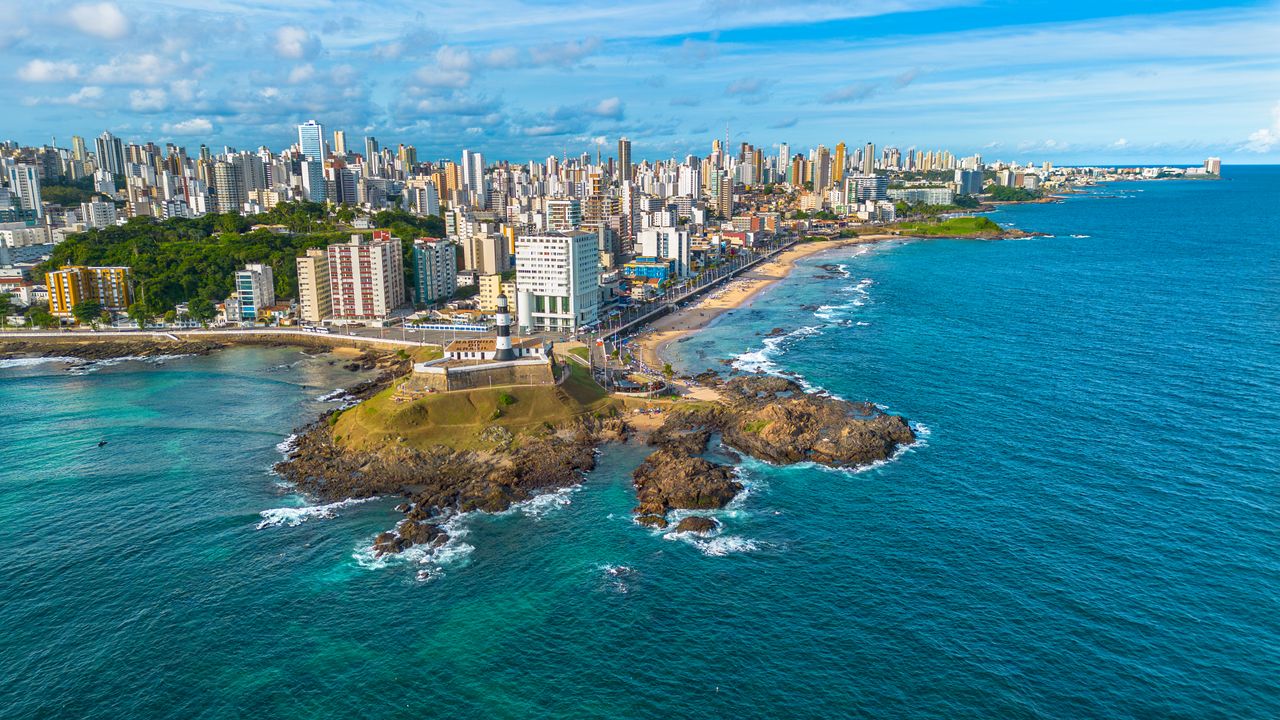
At the centre of the controversy is Itacaré, a coastal town in Bahia known for its beaches, surfing, tropical scenery and relaxed tourism atmosphere. The destination has become particularly popular among young Israeli travellers, including people who visit Brazil after completing compulsory military service.
The latest incidents have divided public opinion. Pro-Palestinian activists have raised concerns about alleged misconduct by some Israeli visitors and expressed solidarity with Palestinians. Meanwhile, tourism businesses and other residents have defended the right of Israeli visitors to travel to the area without being collectively blamed for the actions of a government or military.
The Bahia state government has responded by announcing additional security measures, investigations and initiatives intended to protect residents and tourists alike.
The situation raises a broader question: can an international tourism destination remain welcoming and economically successful when geopolitical tensions begin influencing relationships between visitors and local communities?
What Happened in Itacaré? The Dispute Behind the Headlines
The latest controversy centres on a blue colonial-style house in Itacaré that had been rented by an Israeli resident and used as a synagogue and gathering place for Jewish and Israeli travellers.
According to Associated Press reporting, the property’s owner decided not to renew the rental agreement earlier in 2026. The Israeli tenant, Rabbi Nehorai Yitzhak Tamsit, said the parties attempted to resolve the disagreement peacefully but eventually decided to leave.
After the departure, pro-Palestinian activist Mariá Veiga requested permission from the owner to paint a watermelon on the building’s exterior. The watermelon is widely recognised as a symbol of Palestinian solidarity because its colours resemble those of the Palestinian flag.
The initial artwork developed into a larger mural as additional artists contributed. Some added political messages and other illustrations, including the phrase “From the river to the sea.”
That phrase is politically controversial. Supporters of Palestinian rights may interpret it as a call for freedom and equality throughout the territory between the Jordan River and the Mediterranean Sea. Some Jewish organisations and supporters of Israel, however, understand it as a threat to Israel’s continued existence.
The artwork therefore became more than a local decoration. It represented competing political interpretations of one of the world’s most emotionally charged conflicts.
Videos circulated online showing a confrontation outside the building. A woman accused people wearing traditional Jewish clothing of wanting to remove the artwork and demanded that they leave.
Accounts of the dispute differ. Activists said Israeli visitors attempted to remove parts of the mural, while the building’s owner subsequently argued that the artwork had gone beyond what he had originally authorised. He requested that the exterior be repainted.
Local reporting also highlighted disagreements over exactly which messages and illustrations had been approved.
The disagreement illustrates why the incident cannot be reduced to a simple dispute between two clearly defined groups. It involves property rights, artistic expression, political speech, religious identity and the responsibilities of visitors and residents in a shared public environment.
A Second Investigation: Allegations of Sexual Harassment in Salvador
The controversy expanded after Carolina Carvalho, a 33-year-old resident of Salvador, publicly described an incident in which she said an Israeli tourist sexually harassed her.
Carvalho said she reported the incident to police. In a widely circulated video, she described experiencing anger and indignation, followed by anxiety after the incident. She also expressed distress because the individual had not yet been identified.
Her account has become another focus of public discussion and investigation.
It is important to distinguish allegations from established findings. A police investigation does not automatically establish guilt, and the person accused should not be treated as legally responsible before the evidence is examined.
At the same time, reports of sexual harassment must be taken seriously. Women travelling, working or living in tourist destinations should be able to access effective reporting systems and protection regardless of the nationality of the alleged offender.
The Bahia government has indicated that investigations are under way into the incidents and other reported hostilities involving visitors and residents.
The wider challenge is ensuring that complaints are handled through credible legal processes rather than social-media accusations, public intimidation or collective punishment.
Why Does Bahia Attract So Many Israeli Tourists?
The presence of Israeli travellers in southern Bahia is not entirely new. It has developed over several years through a combination of travel culture, popular entertainment, destination marketing and word-of-mouth recommendations.
The post-military travel tradition
Many young Israelis undertake extended international trips after completing compulsory military service. These journeys are often associated with backpacking, cultural exploration, adventure activities and spending time in destinations far from home.
South America has become one of the regions attracting these travellers. Brazil, Argentina, Peru, Bolivia and other countries offer opportunities for long-distance travel, outdoor activities and relatively established backpacker routes.
For some visitors, the journey represents a transition between military service and university, employment or other stages of adult life.
However, military service backgrounds vary considerably. It would be inaccurate to assume that every Israeli tourist served in a combat role or participated in military operations in Gaza.
The influence of Israeli television
A particularly interesting factor behind Bahia’s popularity is the Israeli television series Malabi Express, which premiered in 2013.
The programme followed three young friends travelling after completing their military service, with Bahia serving as part of the story’s setting.
The series helped introduce Brazilian destinations to Israeli audiences and contributed to the region’s visibility as a post-service travel destination.
According to reporting by Brazilian outlet UOL, the programme helped stimulate interest in Bahia, while travel agencies subsequently developed longer itineraries for Israeli visitors.
Established travel infrastructure
As the number of Israeli visitors increased, local businesses adapted.
Some accommodation providers became familiar with the needs and preferences of these travellers. Restaurants and businesses introduced Hebrew-language signs and menus, while tourism operators developed experience serving international backpackers.
This existing infrastructure helps explain why certain destinations in southern Bahia continue attracting Israeli visitors.
It also demonstrates how tourism markets can develop through cultural connections rather than conventional advertising campaigns alone.
Itacaré: Why the Town Matters to Brazil’s Tourism Industry
Itacaré has approximately 30,000 residents and is part of Bahia’s Costa do Cacau, or Cocoa Coast.
The town attracts visitors through its combination of beaches, Atlantic rainforest, surfing opportunities, outdoor activities and relatively informal coastal atmosphere.
Its appeal extends beyond international backpackers. Brazilian tourists also visit the region, while local businesses depend on accommodation, restaurants, transport, tours and other visitor services.
The tourism economy includes:
- Hotels, guesthouses and independent pousadas.
- Restaurants, cafés and beach bars.
- Surf schools and equipment rental businesses.
- Local guides and outdoor adventure operators.
- Taxi drivers and transport providers.
- Boat excursions and coastal activities.
- Small shops, markets and independent service providers.
For a destination of this size, international visitors can make a meaningful contribution to business revenues, particularly during periods when domestic travel demand is weaker.
A report by UOL quoted local tourism operators who said Israeli visitors help maintain accommodation occupancy during parts of the year that would otherwise be quieter.
The same report cited an estimate of approximately 3,000 Israeli visitors annually, although this figure should be treated as a reported local estimate rather than a verified official tourism statistic.
Some business owners have defended the visitors, arguing that the misconduct alleged in recent incidents should not be generalised to an entire nationality.
Others have expressed concerns about how visitors behave, whether local cultural expectations are respected and whether complaints from residents receive adequate attention.
These differing perspectives matter because tourism is not simply a relationship between a visitor and a hotel. It is an economic and social relationship involving an entire community.
The March 2026 Confrontation: Why the Latest Dispute Is Not an Isolated Incident
The recent controversy follows another confrontation in Itacaré in March 2026.
At that time, three Israeli tourists were detained following a disturbance involving pro-Palestinian demonstrators and local residents.
Bahia state police said the three men, aged between 21 and 22, had clashed with people participating in a pro-Palestinian demonstration and subsequently insulted officers and resisted arrest.
Police later released them.
The incident attracted attention on Brazilian social media, where footage showed confrontations between visitors and residents. Another demonstration reportedly expressed support for the tourists’ presence.
The March incident demonstrated that tensions had already emerged before the dispute over the colonial house and the later harassment allegation.
It also revealed a difficult problem for local authorities: demonstrations, political disagreements and international tourism can overlap in public spaces where residents and visitors interact daily.
When confrontations become repeated events, local police and tourism officials must do more than respond to individual incidents. They need procedures for preventing escalation, protecting peaceful demonstrations and investigating allegations fairly.
The Economic Divide: Why Some Local Businesses Support Israeli Visitors
One of the most important aspects of the controversy is the response from Itacaré’s tourism industry.
Some local business owners have defended Israeli travellers, arguing that their presence supports accommodation providers and other businesses.
In interviews reported by UOL, hotel and guesthouse operators described Israeli tourists as an established customer group. Some said they had maintained relationships with these travellers for years and had not personally experienced the types of behaviour described by activists.
Other tourism representatives argued that excluding Israeli visitors would damage local businesses and unfairly penalise people because of their nationality.
This position reflects a wider economic reality.
Tourism destinations often depend on several international markets. A decline in visitors from one country can affect accommodation occupancy, restaurant sales, transport services and seasonal employment.
For smaller destinations, losing an established visitor segment may have a disproportionate effect.
However, economic dependence should not be used to dismiss legitimate complaints. A tourism industry that protects revenue while ignoring harassment, intimidation or discrimination risks damaging its reputation and losing the confidence of residents.
The more sustainable approach is to welcome visitors while applying consistent standards of behaviour.
A tourist’s nationality should not determine whether they are entitled to protection, and economic value should not determine whether misconduct is investigated.
How the Gaza War Has Reached a Brazilian Beach Town
The controversy cannot be fully understood without considering the wider Israel-Palestine conflict.
The Hamas-led attack on southern Israel on October 7, 2023, killed approximately 1,200 people and resulted in 251 people being taken hostage, according to figures cited by the Associated Press.
Israel’s subsequent military offensive in Gaza has caused extensive destruction and a major humanitarian crisis. The Gaza Health Ministry reported more than 74,600 Palestinian deaths in the figures cited in the AP report.
The conflict has generated demonstrations, diplomatic disputes and political divisions far beyond the Middle East.
Brazil has also become part of the international debate. Its government has strongly criticised Israel’s military actions and expressed support for Palestinian rights, while also condemning terrorism and advocating peace.
For pro-Palestinian activists in Bahia, the presence of Israeli visitors who may have completed military service can raise difficult questions about responsibility, solidarity and the consequences of the war.
Some activists argue that travellers should not be able to avoid scrutiny of military backgrounds or alleged involvement in abuses.
However, there is an important distinction between political accountability and collective blame.
Being Israeli does not establish that someone participated in military operations, committed a crime or supports every policy of the Israeli government.
Similarly, being Jewish does not automatically mean someone supports Israel’s military actions.
A person can oppose the Israeli government’s policies while supporting the safety and rights of Israeli civilians. A person can support Palestinian rights without endorsing violence against Jewish people.
Maintaining these distinctions is essential to preventing political disagreements from turning into antisemitism, anti-Palestinian discrimination or hostility toward people because of their nationality.
Can Brazil Ban Israeli Tourists or Former Soldiers?
The controversy has prompted calls for tougher restrictions on certain foreign visitors.
Brazilian lawmaker Erika Hilton has urged the federal government to consider barring soldiers from Israel and other countries accused of war crimes by international bodies.
Her proposal reflects demands from activists who believe individuals suspected of serious abuses should face greater scrutiny when travelling internationally.
However, such a proposal raises complex legal and diplomatic questions.
Nationality is not the same as individual responsibility
A blanket restriction based on nationality would raise serious concerns about discrimination.
A person holding an Israeli passport cannot automatically be considered responsible for military actions carried out by the Israeli government.
Likewise, military service alone does not prove that an individual committed a crime.
If authorities have credible evidence that a particular person participated in serious violations of international law, that evidence should be assessed through appropriate legal procedures.
International law and due process
Serious international crimes can involve individual criminal responsibility, but establishing that responsibility requires evidence.
A credible legal process should consider the person’s identity, conduct, role, available evidence and applicable law.
Travel restrictions may be justified in particular circumstances under national immigration and security laws, but they should not become a substitute for an investigation.
The debate therefore raises a wider question about how countries should respond when individuals suspected of serious crimes seek entry.
Brazil must balance its sovereignty and immigration powers with due process, international obligations and the principle that people should not be treated as guilty simply because of their nationality.
Bahia Government Announces a Wider Safety and Anti-Discrimination Response
The state government has moved beyond public statements and announced a package of measures.
Governor Jerônimo Rodrigues visited Itacaré on November 10, 2026, meeting local authorities and security representatives.
The following day, state officials held discussions with representatives of the Frente Palestina do Sul da Bahia, a movement involved in organising pro-Palestinian activities and raising concerns about the incidents.
According to an official government announcement published on November 12 and updated on November 13, the response includes several important initiatives.
1. Increased police presence
The government announced an extension of its Operation Summer security deployment until the end of April.
The aim is to strengthen policing in southern Bahia tourist areas during a period of international visitor activity.
2. Greater protection for women
Authorities plan to extend the work of the Ronda Maria da Penha, a programme associated with protection against violence against women, to tourism-related activities in the region.
The government also announced plans to introduce the “Não é Não” protocol, which will certify participating commercial establishments that take steps to identify and prevent sexual harassment and violence.
This is particularly relevant to hotels, bars, restaurants and nightlife businesses.
3. Action against racism and religious intolerance
The state’s Coordination for Combating Racism and Religious Intolerance will also extend its activities into tourism areas.
The measure recognises that visitors and residents may experience discrimination linked to religion, ethnicity, nationality or cultural identity.
4. Training and awareness campaigns
The government plans to introduce a public information guide on respectful coexistence, alongside a tourism-sector awareness campaign.
Tourism workers and public employees will receive training intended to improve their ability to prevent discrimination and manage conflict.
5. Continued dialogue with residents and businesses
The government has also committed to discussions involving community groups, activists, business owners and tourism workers.
The official announcement stresses that the objective is to protect residents and visitors while ensuring that tourism remains safe and economically productive.
These measures are significant because they address several underlying problems rather than focusing exclusively on the nationality of the visitors involved. [Source: Government of Bahia]
Why Social Media Has Made the Conflict More Difficult to Manage
Social media has played a major role in turning local incidents into an international controversy.
Videos of confrontations can circulate rapidly, often reaching thousands or millions of viewers before police have completed their investigations.
This creates several risks.
Incomplete information can become accepted as fact
A short video may show only the final seconds of an argument. Viewers may not know what happened before the recording began, who initiated the confrontation or whether important context is missing.
Political groups can amplify competing narratives
Pro-Israeli and pro-Palestinian accounts may share the same footage while presenting completely different interpretations.
This can make it difficult for people outside the community to distinguish verified facts from claims, assumptions and political messaging.
Individuals can become targets
People shown in viral footage may face threats, harassment or public accusations before authorities have established what happened.
Local tourism businesses can suffer reputational damage
International travellers may become concerned about safety, while local businesses may fear losing customers because of political controversy.
The situation demonstrates why public authorities and media organisations need to communicate verified information clearly and avoid treating unproven allegations as established facts.
Social media can provide visibility to people who might otherwise struggle to have their complaints heard. But visibility alone does not guarantee accuracy or justice.
What This Means for International Tourism
The Itacaré controversy highlights a challenge facing destinations that attract visitors from countries involved in international conflicts.
Tourism traditionally depends on hospitality, cultural exchange and the idea that people can travel beyond national borders.
But global events increasingly influence how visitors are perceived and how communities respond to them.
Similar tensions can emerge in destinations hosting visitors from countries involved in military conflicts, diplomatic disputes or controversial government policies.
For tourism authorities, several lessons stand out.
Protect visitors without dismissing residents
International visitors should be able to travel without facing harassment because of their nationality or religion.
At the same time, local residents must have meaningful ways to report misconduct and receive protection.
Both responsibilities are essential.
Establish clear rules for tourist behaviour
Destinations should communicate expectations concerning public conduct, sexual harassment, respect for religious spaces, property rights and local customs.
These rules should apply equally to domestic and international visitors.
Create accessible reporting systems
Tourism workers, residents and visitors should know where to report harassment, discrimination, intimidation and violence.
Reports should be handled confidentially and investigated by appropriate authorities.
Avoid collective punishment
A person should not be considered responsible for the actions of a government, military or political organisation simply because they share a nationality or religion.
Individual conduct and credible evidence should determine legal responsibility.
Make local communities part of tourism planning
Tourism development is more sustainable when residents have a voice in decisions that affect their neighbourhoods, public spaces and local businesses.
Itacaré’s experience shows that economic growth and community well-being cannot be treated as separate priorities.
The Future of Tourism in Itacaré and Southern Bahia
The immediate priority for Bahia is to establish what happened in the reported incidents and ensure that future confrontations do not result in violence.
However, the longer-term challenge is more complicated.
Itacaré has developed an international visitor market that supports accommodation providers, restaurants, guides, transport operators and other local businesses.
Losing that market through blanket hostility toward Israeli visitors could harm the local economy. Ignoring legitimate complaints about harassment or intimidation could also damage the town’s reputation.
The government therefore faces a balancing act: preserve the town’s openness while strengthening protections for everyone who lives in or visits the region.
Its announced measures offer a starting point, particularly the focus on policing, women’s safety, anti-discrimination training and dialogue with community groups.
Whether these initiatives succeed will depend on how consistently they are implemented and whether residents believe that their concerns are being taken seriously.
The controversy also offers a wider lesson for international travel. Tourism cannot operate independently of politics, social identity and human rights. A destination may welcome visitors from around the world, but hospitality must be supported by safety, accountability and respect.
Ultimately, the goal should not be to make Itacaré a destination for one political side or another. It should be a place where people can travel, work, express peaceful political views and participate in community life without fear of harassment or discrimination.
That is a much stronger foundation for tourism than any marketing campaign can provide.
Frequently Asked Questions (FAQs)
1. Why is Brazil investigating Israeli tourists and pro-Palestinian residents in Bahia?
Authorities are investigating a series of incidents involving Israeli tourists and local residents, including a confrontation over a pro-Palestinian mural in Itacaré and a separate sexual harassment allegation made by a woman in Salvador. The incidents attracted widespread attention on social media and prompted state-level action.
2. What happened at the colonial house in Itacaré?
The building had previously been rented by an Israeli resident and used as a synagogue and gathering place. After the rental agreement ended, a pro-Palestinian mural featuring a watermelon symbol was painted on its exterior. A disagreement developed after additional political messages were added and Israeli visitors allegedly attempted to remove parts of the artwork. The property owner later requested that the facade be repainted, saying the artwork went beyond what had been agreed.
3. Why do so many Israeli tourists visit Bahia, Brazil?
Israeli tourism to southern Bahia has grown through backpacking traditions, word-of-mouth recommendations and popular culture. The 2013 Israeli television series Malabi Express, which featured young travellers visiting Bahia after military service, helped increase the region’s visibility among Israeli audiences. Itacaré and nearby destinations subsequently became established stops for some Israeli travellers.
4. What measures has the Bahia government announced?
The state government has announced stronger police presence in tourist areas, an extension of Operation Summer until the end of April, expanded support for women’s protection and anti-discrimination initiatives, tourism-sector training, public awareness campaigns and the planned introduction of the “Não é Não” protocol to help businesses prevent sexual harassment and violence.
5. Are Israeli tourists being banned from visiting Brazil?
No general ban on Israeli tourists has been announced. A Brazilian lawmaker has called for consideration of restrictions on foreign soldiers accused of war crimes, but this is a proposal rather than an implemented nationwide travel ban. The current government response focuses on investigating specific incidents, improving security and protecting the rights of residents and visitors.
Sources AP News