
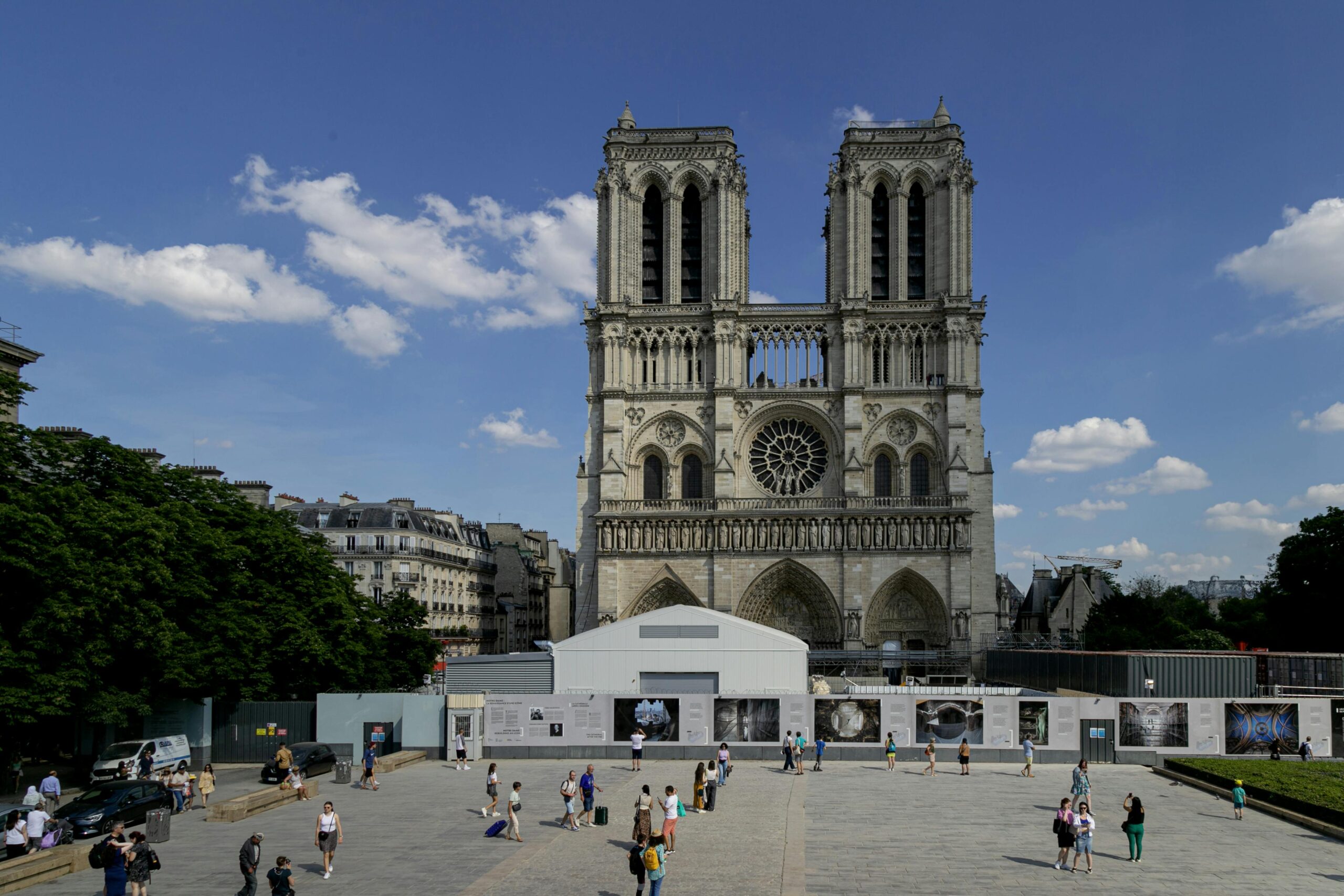
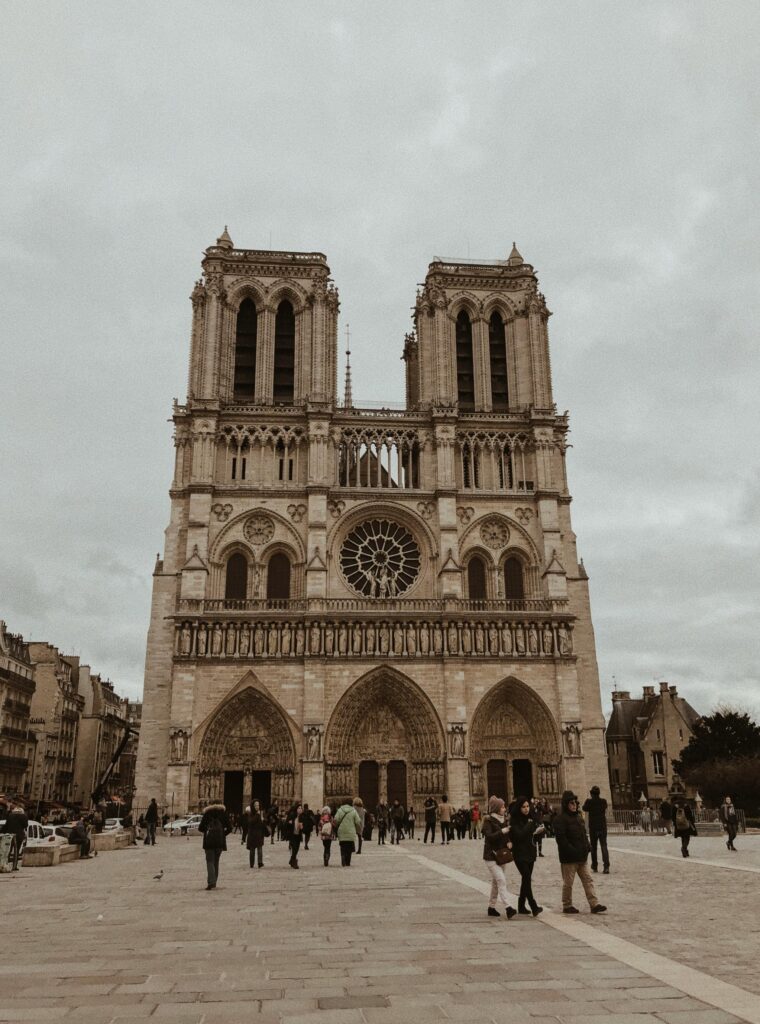
After some of the most extensive restoration work in recent decades, the famed towers of Notre‑Dame Cathedral in Paris are reopening to the public on 20 September 2025, in conjunction with European Heritage Days (Journées du Patrimoine). For many Parisians and visitors, this moment marks a deeply symbolic return: access once again to parts of the cathedral that have been off limits since the devastating fire of April 2019.
What follows is a deeper look at what is new, how the visitor experience has been redesigned, what remains unchanged or challenging, and why this matters—plus what you need to know if you plan to visit.
What’s New: Enhanced Visitor Experience & Redesigned Tour
- A Redesigned Itinerary / Route
- The tour is fully redesigned to offer not just access, but a sensory‑immersive experience. Visitors begin in an introductory room at the foot of the south tower, with educational displays, architectural models, and historical timelines of the cathedral’s construction (including Viollet‑le‑Duc’s restorations).
- A presentation of original chimeras (the sculpted gargoyles and grotesques), which are emblematic of the restored architecture.
- There is also a drone‑based exhibit or soundscape feature that uses modern digital media to evoke key moments in French history.
- Climb & Views
- Visitors can ascend approximately 69 meters via a newly designed double oak staircase. There are 424 steps in total. The climb offers views over Paris, the Seine, and the cathedral’s restored features (including the spire in view, the belfry, and the rooftop chimeras).
- The terrace at the south tower provides panoramic views—including sights like Île de la Cité, surrounding rooftops, the Eiffel Tower in the distance, etc.
- Sensory / Interpretative Additions
- Enhanced lighting, signage, and interpretative stations to help visitors appreciate architectural details.
- Soundscapes or audio elements in certain rooms (for example, the drone exhibit) to evoke emotional or historical connections.
- A footbridge in the roof‑structure area, giving access to viewpoints that were previously inaccessible or limited.
- Opening Hours & Availability
- On 20 (Saturday) and 21 (Sunday) September 2025, the towers will be open from 9 a.m. to 11 p.m., non‑stop.
- Following Heritage Days, regular hours will be from 9 a.m. to 11 p.m. through 31 October. Starting 1 November 2025, the hours revert to shorter winter schedule, ending around 5:30 p.m.
- The last admission is typically one hour before closing.
- Tickets, Admission & Free Entry Conditions
- Admission to the towers costs €16 for adults.
- Free admission is offered for certain groups: children Under 18, EU nationals aged 18‑25, persons with disabilities and companions, jobseekers (with certificate), valid French education pass, etc.
- During European Heritage Days (the weekend), access is free, but online registration is mandatory. Tickets cannot be purchased on‑site.
- Safety / Access Restrictions / Practicalities
- The climb is rigorous—424 steps, narrow staircases, potentially steep passages. It is not recommended for people with mobility issues, vertigo, or certain health conditions.
- Bag size restrictions; some rules about what can be brought in.
- The towers may be closed in case of adverse weather (e.g. high winds, storms) or for safety reasons. Refunds are possible if closures occur.
What the Sources Didn’t Emphasize or Missed — Deeper Context & Challenges
To get the full picture, it helps to understand what is not immediately obvious, or what remains under the surface.
- Ongoing Restoration Work: While the towers are reopening, many parts of Notre‑Dame are still under restoration. For example, the spire reconstruction, roof timbers (la forêt), lead roof replacement, oak framework beneath the towers—all required painstaking traditional craftsmanship. Some areas behind the scenes may remain inaccessible or visible in work‑in‑progress condition.
- Preservation vs Modern Requirements: Structural upgrades, fire safety systems, stabilization of stone and metal elements, better lightning protection, and restoration of sculptures and decorative elements have all been part of the work. These modern safety enhancements are essential, yet their integration with delicate Gothic structure is complex and not fully visible to visitors.
- Visitor Capacity & Impact: Prior to the fire, Notre‑Dame drew some 12‑14 million visitors per year. Since reopening, millions have returned to the cathedral. The reopening of the towers is expected to draw high demand. Management of visitor flow, crowding at narrow staircases, wear and tear, and impact on fragile historical fabric are all concerns, though not always discussed in appealing visitor literature.
- Symbolism & Cultural Importance: The reopening of the towers is more than a tourist event—it’s a strong symbol in France and globally about resilience, heritage recovery, unity. It also raises questions about funding heritage, the role of national and international donation, and how cultural identity is preserved.
- Cost & Funding Questions: Restoration cost (public and private contributions), the role of donations, governmental decisions on funding, and debates over potentially introducing or adjusting entry fees (though the towers have a ticket fee; the cathedral interior remains largely free). These fiscal dimensions are often less emphasized in tourist‑oriented stories.
Why It Matters
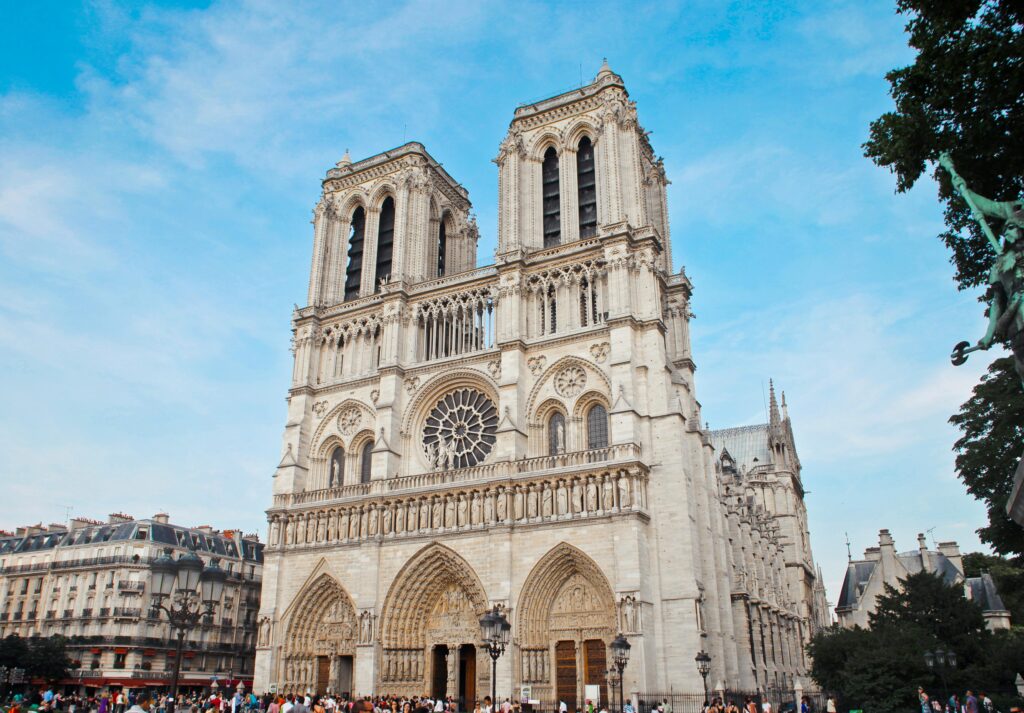
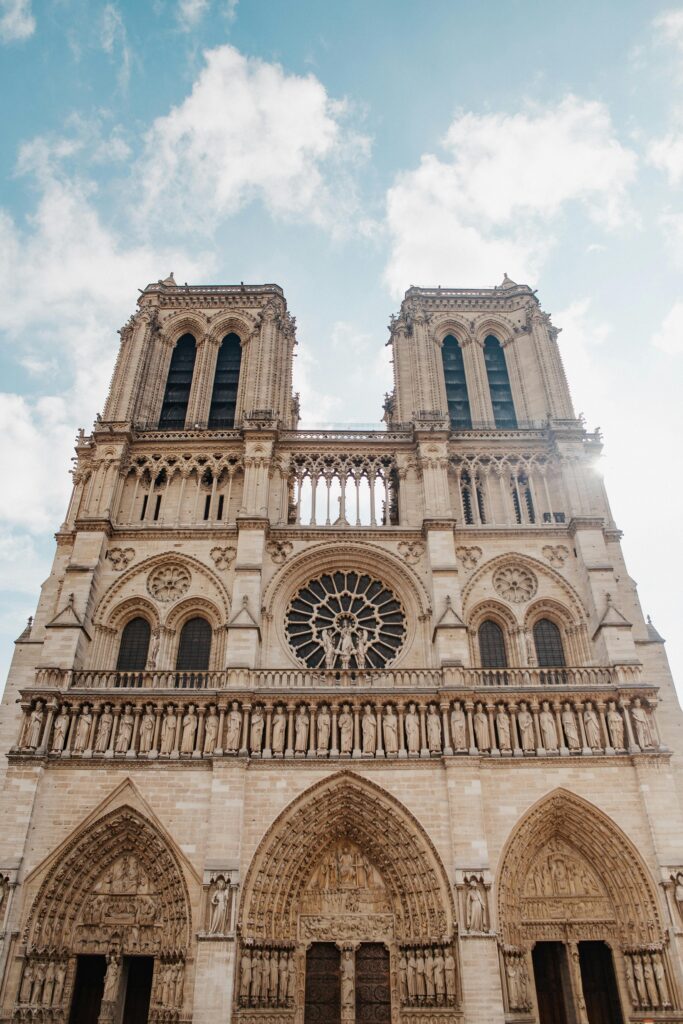
- The towers of Notre‑Dame are among the most iconic components of the cathedral’s architecture—they house the famous bells, the chimeras/gargoyles, and offer views that have inspired literature, art, and history lovers for generations.
- Their closure since the fire meant the loss of a major historical, cultural, and tourist site; reopening means restoration of both a physical structure and a shared experiential heritage for locals and internationals.
- The project has significance not only for heritage protection but also for the local and national economy (tourism, related services), cultural education, and identity.
Frequently Asked Questions (FAQs)
1. When exactly can I visit the towers?
- The towers reopen to the public on 20 September 2025, coinciding with European Heritage Days. From that date through 31 October, towers are open daily from about 9 a.m. to 11 p.m. Then, from 1 November through winter, shorter closing times (around 5:30 p.m.).
2. Is there a cost to enter?
- Yes, under normal access, the ticket for tower entry is €16 for adults.
- Free access is available for certain groups (youths, EU nationals under 25, disabled persons, etc.), and on the Heritage Days weekend admission is free (but reservation required).
3. Do I have to reserve or buy tickets in advance?
- Absolutely. Tickets for the towers must be reserved online in advance. No ticket sales on‑site. Especially for the Heritage Days, free tickets will be snapped up fast.
4. What are the main physical requirements/restrictions?
- Climbing 424 steps including a double oak staircase and navigating narrow passages.
- Not recommended for those with mobility challenges, vertigo, serious health conditions.
- Weather may force temporary closures.
5. What will be visible from the towers?
- Panoramic views over Paris: rooftops, the Seine, Île de la Cité, landmarks like the Eiffel Tower in the distance.
- Architectural features up close: chimeras, gargoyles, roof frames, views of the spire (reconstructed), belfry, etc.
6. How does the experience differ now compared to before the fire?
- The route has been revamped to offer new interpretative spaces (models, educational exhibits).
- Safety, structural support, and materials have been restored with modern techniques while preserving historical craftsmanship.
- Some features (like specific decorative elements) may differ in restoration. Some sections may still show signs of ongoing restoration.
7. What happens if the weather is bad or something unforeseen occurs?
- Tours may be closed temporarily for safety (e.g. high winds).
- If your ticket is purchased and the tower closes, refunds are handled via the ticketing system.
8. Can I also visit the interior of the cathedral?
- Yes. The cathedral interior has already reopened (since December 2024). It has extended opening hours during European Heritage Days, with special arrangements (volunteers, interactive info terminals, etc.).
Final Thoughts
The reopening of Notre‑Dame’s towers is a landmark moment in heritage restoration—one that combines centuries of history, artistry, and human craftsmanship with modern preservation science. It offers visitors not just a chance to climb to breathtaking heights, but to reconnect with an architectural and cultural icon whose restoration has been a national and global effort.
If you plan to go, try to get your ticket early, choose a time that avoids peak crowds (early morning or late evening), and allow time to absorb the views and the stories embedded in the stone—not just the photo opportunity.
Sources Euro News

