

From Paw Paw to Harvard
Spencer Lee-Lenfield grew up in the small town of Paw Paw, Michigan, population around 3,000. As a first-generation college student, he had no roadmap for elite admissions. On something of a whim, he applied to Harvard — and got in just as the university was dramatically expanding financial aid. His family soon discovered that Harvard would cost less than a community college back home.
That financial aid opened doors that eventually led Lee-Lenfield not just through Harvard’s undergraduate halls, but back again as a professor of Comparative Literature. “When you get offered your dream job,” he says, “how could you possibly say no?”
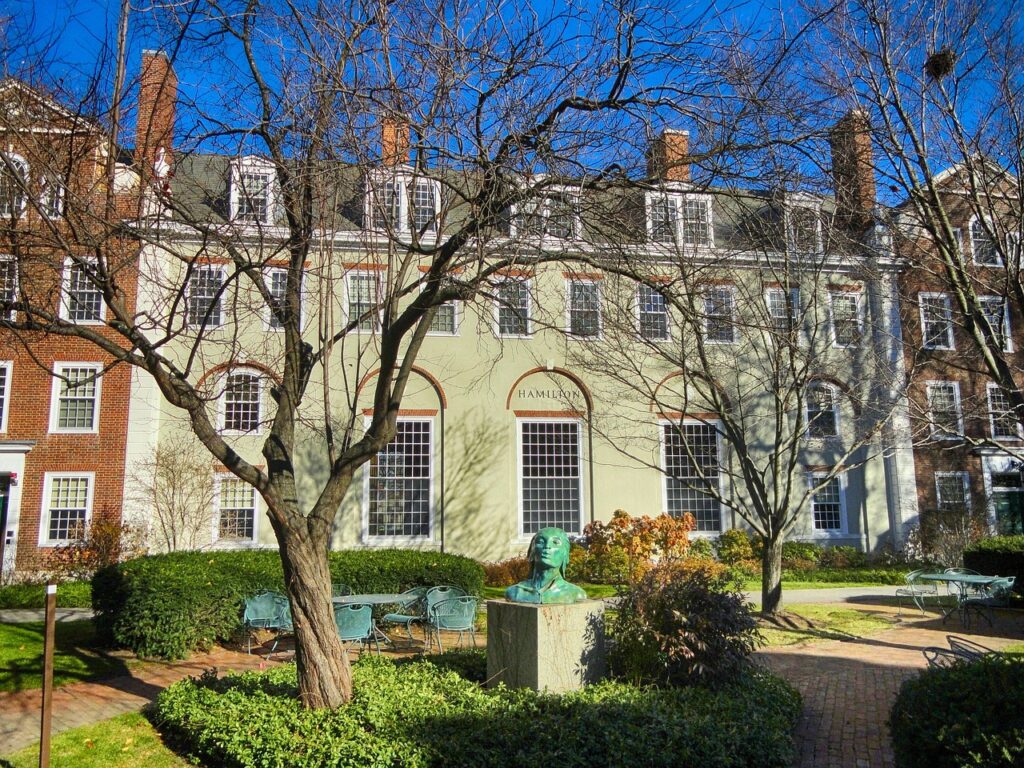
The Student Years: Keats, HUM 10, and Language as Revelation
As a Harvard undergrad, Lee-Lenfield enrolled in Humanities 10 at its inception, taught then by Louis Menand and Stephen Greenblatt. The intimate classes, capped off with literary celebrations — like a cake iced with a quote from Joyce’s Ulysses — set the tone for his intellectual journey.
Another defining moment was Helen Vendler’s seminar on John Keats. Vendler’s method of dissecting poems “almost one word at a time” reshaped his understanding of literature and inspired him to memorize all of Keats’s odes — verses he still carries with him.
Languages, Identity, and Translation
Although he works across ancient Greek, Latin, English, French, and Asian literatures, Korean is at the heart of his scholarship and life. Adopted by white American parents, Lee-Lenfield didn’t seriously study Korean until after college. At 25, he immersed himself in the language, which has since become central to his personal and professional identity.
It’s the language he speaks daily at home with his wife and the one through which he now communicates with his birth family. His view of translation reflects this intimacy: translation isn’t just about what’s “lost,” but about focus — like a telescope narrowing one’s vision to reveal something with greater clarity.
Literary Anchors
- Favorite novel: Mrs. Dalloway by Virginia Woolf — a book he first read at 14 and even wrote about in his college admissions essay. The novel remains at the core of his scholarship, and his first research article on it coincides with its 100th anniversary.
- Classical influences: As a Rhodes Scholar at Oxford, Lee-Lenfield immersed himself in Greek and Latin texts — Sappho, Sophocles, Euripides, Ovid, Horace, Virgil — which shaped his approach to reading across traditions.
- East Asian literature: He admires Han Yong-un’s Buddhist poetry, contemporary voices like Park Sang Young, and Nobel Prize–winner Han Kang. He also honors the early influence of Korean American children’s author Linda Sue Park.

Scholarship and Perspective
Lee-Lenfield argues that literature from Europe, long treated as the “center,” can also be read as peripheral — and that traditionally “marginal” literatures deserve to be central. This reversal of perspective is core to comparative literature: a discipline that thrives by juxtaposing traditions and unsettling assumptions about cultural hierarchy.
Beyond the Classroom
Colleagues and students describe him as a bridge between traditions: rigorous in textual analysis, passionate about world literature, and approachable in his teaching. He participates in community events around translation and has engaged with celebrated translators like Anton Hur.
Frequently Asked Questions
| Question | Answer |
|---|---|
| Who is Spencer Lee-Lenfield? | A Harvard Assistant Professor of Comparative Literature, scholar of Korean, Asian American, and classical literatures. |
| What is his academic background? | Harvard undergraduate, Rhodes Scholar at Oxford, Ph.D. in Comparative Literature. |
| Why is Korean important to him? | As a Korean adoptee, learning the language connected him to his heritage, his wife, and his birth family. |
| What does he believe about translation? | It’s not just about loss — it’s about selective focus, like looking through a telescope. |
| What’s his favorite novel? | Virginia Woolf’s Mrs. Dalloway. |
| Which poets influenced him? | Keats (through Vendler’s teaching), Han Yong-un, Sappho, Ovid, Horace, Virgil. |
| Does he still work with classical languages? | Yes, his training in Greek and Latin deeply influences his approach to other literatures. |
| Who are his favorite contemporary authors? | Park Sang Young, Han Kang, and rising Korean voices like Yun Haeseo. |
| What role did Harvard play in his career? | Harvard’s financial aid made it possible for him to attend; now he teaches there, fulfilling a long-held academic dream. |
| What courses does he teach? | He contributes to comparative literature and humanities curricula, including Harvard’s foundational HUM 10 course. |
Conclusion
Spencer Lee-Lenfield’s journey — from Paw Paw, Michigan, to Harvard, Oxford, and back again — reflects the transformative power of language and literature. Through translation, comparative analysis, and teaching, he invites students and readers to see that literature is not about fixed centers and margins, but about dialogues across traditions.
His story is also a reminder that the humanities remain vital: they are how we learn not just to read texts, but to read the world.

Sources The Crimson

