
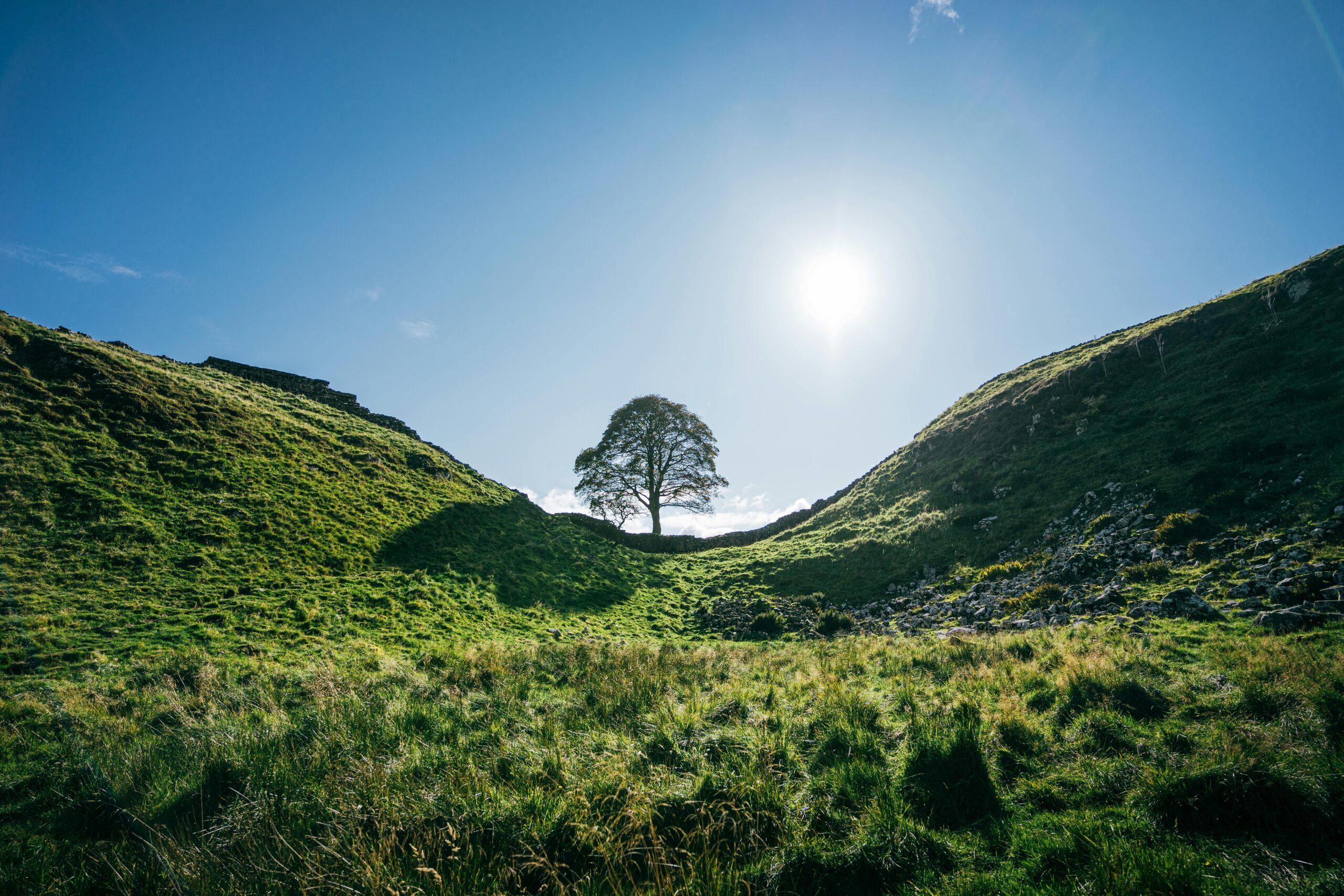
In September 2023, two men felled one of Britain’s most beloved natural landmarks — the iconic Sycamore Gap tree along Hadrian’s Wall in Northumberland. What they likely anticipated as a clandestine act of vandalism instead ignited widespread condemnation, legal consequences, and a surge of public support for heritage preservation. In short, the attackers unintentionally elevated the tree’s symbolic status.

This incident underscores how acts of destruction directed at tourism or heritage sites can dramatically backfire — turning the victim into a martyr and galvanizing public sentiment.
The Tree, Its Place, and Its Appeal
The Sycamore Gap tree was not just any tree. It stood in a dramatic dip along Hadrian’s Wall, by the Roman frontier built nearly 2,000 years ago. Its silhouette framed photographers, visitors, and even featured in the 1991 film Robin Hood: Prince of Thieves. Over time, it became a “totemic” symbol of Northumberland’s landscape — a natural icon, a backdrop for proposals, walks, and pilgrimages of sorts.
Had the tree stood “quietly” all those years, it might have remained a local landmark. But when someone cut it down, they transformed it into something far larger in cultural memory.
What Happened: Method, Motive, and Aftermath
The Act
- The two men, Daniel Graham and Adam Carruthers, allegedly drove from their homes toward the tree overnight, against the backdrop of poor weather conditions.
- They used a chainsaw, reportedly prepared in advance (spray paint marking, wedge cuts) to bring it down in a short time.
- Footage was recovered from a phone — video showing the cutting and collapse was shown in court.
- When the tree fell, it also damaged Hadrian’s Wall beneath it.
The Trial & Sentencing
- Both men were convicted in May 2025 of criminal damage to the tree and to the wall.
- Damage valuations placed losses in the hundreds of thousands of pounds for the tree, and additional damage to the UNESCO heritage site.
- Prosecutors described the act as “deliberate” and “moronic,” reflecting both planning and disregard.
- The court labeled this an act of mindless vandalism — the type which provokes outrage rather than sympathy.
Motivations (or Claimed Motivations)
- During the trial, various possible motives emerged — one is revenge. Reports suggest that Graham, in particular, had disputes with neighbors, planning issues, or conflict over property rights.
- Some community members speculated the act was symbolic — a protest or lashing out — but no legally acceptable motive was convincingly established.
- After the backlash, both men reportedly tried to shift blame, downplay the significance, or deny ownership.
How the Attack “Backfired”: Perception, Heritage, and Tourism
1. Global Outcry & Solidarity
- What might have been a local act of vandalism resonated nationally and internationally. People rallied around the loss, and the tree became a symbol of heritage under threat.
- The publicity revived interest in the site, driving people to visit what remained (or commemorate it in memory). The tree’s absence added a new “tourist draw.”
2. Strengthened Heritage Protection
- Conservation bodies, government agencies, and local councils intensified efforts to restore, protect, or memorialize what was lost.
- The case spurred renewed debate about safeguarding natural landmarks, preventative surveillance, and legal penalties for heritage damage.
3. Narratives Shifted
- The perpetrators inadvertently fueled a narrative in which the tree was sacrosanct. Their act confirmed that people cared deeply — because many people felt robbed by the act.
- The attackers’ intention to degrade the place became a story of disbelief, remorse, and in some quarters, public shaming.
4. Tourist Legacy
- Even though the tree is gone, the site now attracts more commentary, pilgrimage, and tourism around the story of its loss.
- Some argue this kind of “dark tourism” — visiting sites altered by tragedy or destruction — becomes part of the heritage.
Underexplored Dimensions & What Media Often Misses
Here are some deeper angles that are not always fully covered:
Legal & Preventative Gaps
- Why wasn’t the site better monitored? The tree was known to be iconic; perhaps more physical or surveillance protections could have prevented the act.
- How do heritage laws interpret damage to natural vs. built heritage? The boundary between landscape and architecture complicates legal frameworks.
- Post-incident, debates often arise over who should bear restoration costs — taxpayers, local authorities, or perpetrators.
Community Voices
- Local residents and heritage stakeholders often feel the impact most keenly: loss of identity, local memory, tourism income shifts, and emotional attachment.
- The voices of communities who regularly visited or used the site (walkers, local historians) are sometimes overshadowed by national media portrayals.
Ecological & Regrowth Potential
- Trees regrow differently; there’s interest in whether the same tree (from the stump or saplings) can be revived, or whether a “replacement” is even meaningful.
- How do we preserve ecological continuity after such acts — soil damage, surrounding vegetation, root systems may have been harmed.
Symbolism vs. Physical Loss
- The symbolic meaning may now exceed what was physically lost. The memory, photos, stories, and outrage become part of the “heritage” that remains.
- Over time, the narrative of “what was lost” can become more powerful than the presence before.
Frequently Asked Questions (FAQ)
| Question | Answer |
|---|---|
| Which tree was cut down? | The Sycamore Gap tree, along Hadrian’s Wall in Northumberland — a natural landmark and cultural icon. |
| Who did it? | Two men, Daniel Graham and Adam Carruthers, were convicted of felling the tree and damaging the wall. |
| Why did they do it? | The exact motive is unclear. The court considered revenge, conflict, and symbolic anger, but no accepted explanation was confirmed. |
| How was it done? | Using chainsaws at night, with preparatory cutting (wedge, spray markers), and filming the event. The tree crashed on the wall below. |
| What was the damage? | The tree was valued in the hundreds of thousands of pounds in damage; the wall suffered structural damage as well. |
| Did this “help” tourism? | Ironically, yes — the tree’s removal sparked renewed interest, heritage campaigns, and makes the site a point of symbolic tourism. |
| Can the tree be restored? | Possibly, from its stump or saplings, but the identity of that tree, its shape, and presence may never be fully recaptured. |
| How did the public respond? | Outrage, grief, media campaigns, and mobilization of preservation efforts. |
| What legal consequences followed? | The two were convicted of criminal damage; sentencing is pending. |
| What’s the legacy? | A stronger awareness of heritage vulnerability, the power of symbolic loss, and renewed calls for protection of natural landmarks. |
Conclusion
The felling of the Sycamore Gap tree is more than a simple act of vandalism — it’s a lesson in heritage, public emotion, and how destructive acts aimed at landmarks often rebound into lasting legacies. The perpetrators tried to erase part of the landscape, but instead they elevated its meaning and galvanized conservation.
This episode reminds us: in places we love, loss can awaken deeper loyalty. And in the world of cultural memory, what we lose can become the strongest part of what we still cherish.

Sources BBC

