
What’s New
China has recently adopted language and policies that effectively give itself more leeway to build and operate new coal‑fired power plants, even while publicly committing to peak carbon emissions before 2030 and attaining carbon neutrality by 2060. The key signals include:
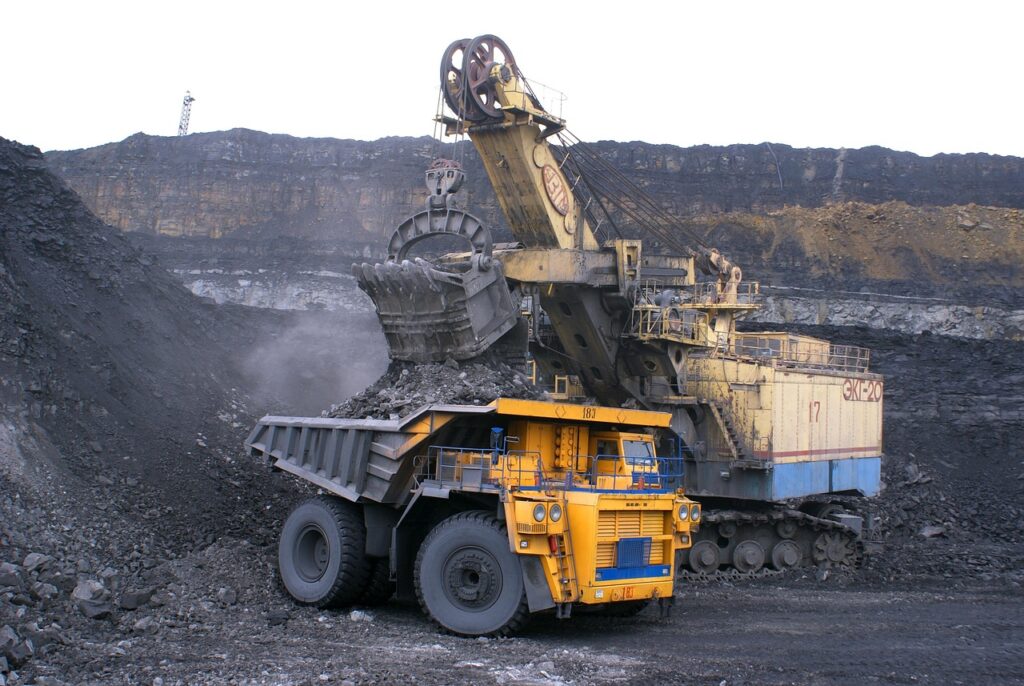
- Approval and construction of large amounts of new coal‑fired power capacity in recent years, including years when China added more new coal capacity than almost any other country combined.
- Official statements reframing coal plants as playing a “supporting” role (back‑up generation, grid stability) rather than baseload dominance.
- Policymakers citing energy security, grid reliability, and economic growth as justifications for continued coal use and capacity additions—even in the context of growing renewable deployment.
- Data showing that although China is adding renewables at a massive scale, coal power generation remains high and may continue to rise in the near term.
In short: while China had signalled a shift away from coal, current policy and investment trends suggest it is allowing considerable “room” for coal to remain central—at least for now.
Why This Matters
- Climate trajectory: China is the world’s largest coal consumer and by far the largest emitter. Any prolongation of coal dominance in its power mix slows global efforts to limit warming.
- Lock‑in risk: New coal plants are long‑lived (30‑50 years). Building now may lock in emissions and stranded assets, especially if renewables and storage begin to overtake their economics.
- Renewables vs coal dynamics: China is deploying wind and solar at record pace—but if coal is still built and operated, the net emissions reduction may be compromised.
- Global policy ripple: China’s stance on coal affects commodity markets (coal, steel, mining), influences other countries (especially developing ones) and shapes global climate negotiations.
- Energy security trade‑offs: China often frames its coal expansion in terms of grid stability, regional power shortages, and economic growth rather than purely climate goals. This highlights the complex trade‑off between decarbonisation and immediate supply reliability.
What the Original Coverage Missed or Undervalued
- Detailed regional dynamics: Much of the coal capacity additions occur at the provincial level, with local governments approving plants for local economic and employment reasons.
- Utilisation rates matter: Building capacity does not always equal full operation. Some new plants may be used sparingly or reserved for peak demand, which alters climate impact calculations.
- Infrastructure constraints and grid complexity: China’s power system has challenges: variable renewables, dispatch difficulties between provinces, coal rescue capacity for intermittent renewables.
- Transition‑scenario uncertainties: Reports often show broad targets (carbon peak, neutrality) but less detail on the pathways: when and how will coal be phased out, what happens to coal workers, miners, regions dependent on coal, and how will new capacity be retired.
- Financial and investment risk: New coal plants may become economically unviable if renewables and storage get cheaper; this raises risk of stranded assets for investors and for regions reliant on coal jobs and infrastructure.
- Impacts on air quality and local environment: While global emissions matter, local pollution (SO₂, particulates) from coal continues to affect public health in China.
- Overseas coal financing: China had pledged to restrict overseas coal financing, but the domestic build‑up may still indirectly support global coal demand.
- Legal/regulatory signal vs actual operation: There is a gap between what policies declare (e.g., “strict control of new coal”) and what actual permit approvals and plant builds indicate.
- Role of new technology and retrofits: New coal plants may incorporate more efficient tech, and older plants may be upgraded; but whether that meaningfully reduces emissions per unit is uncertain.
Future Outlook & Key Variables
Several critical factors will determine whether China’s “more room for coal” phase becomes a long‑term trend or a temporary adjustment:
- Renewable deployment pace: If wind+solar+storage grow fast enough to meet most new demand, coal may shift to a backup role and gradually decline.
- Grid reform and flexibility: The ability to dispatch power across provinces, integrate renewables, retire inefficient coal plants will shape how much coal remains needed.
- Economic growth and demand patterns: If electricity demand continues high (industry, EVs, AI/data centres), incremental demand may still be met by coal rather than renewables.
- International pressure and markets: Carbon tariffs, global climate diplomacy, investor sentiment may increasingly penalise coal capacity and overheads.
- Stranded asset risk and plant utilization: If new plants are built but under‑utilised (low capacity factor), financial viability may be poor, forcing reconsideration.
- Policy continuity and credibility: Future five‑year plans, province‑level approvals, coal phase‑down deadlines will test whether China transitions away from coal or simply prolongs its role.
FAQs: Common Questions About China’s Coal Strategy
Q1. Does China’s build‑up of new coal plants mean it will burn more coal overall?
Not necessarily. Build capacity and actual generation are different. Some new plants may act as backup or for peak demand, not full‑time baseload. Utilisation rates matter.
Q2. Why is China continuing to build coal when it has so many renewable resources?
Several reasons: energy security (coal is predictable), grid stability (backup for intermittent renewables), provincial incentives (jobs, local industry), need to meet surging electricity demand (industry, data centres, heating/cooling).
Q3. How does this affect China’s climate pledges (peak emissions by ~2030, carbon neutrality by 2060)?
It raises risk. If coal remains dominant or declines slowly, China may still meet a peak, but the level of that peak may be higher, and the descent slower—meaning higher cumulative emissions.
Q4. Is China building lower‑emission coal plants?
Yes, new plants often use more efficient ultra-supercritical or advanced technology, have tighter emissions standards, and are intended to be more flexible. But even “efficient” coal still emits far more CO₂ than renewables.
Q5. Will China’s coal demand stop growing soon?
Most analysts expect near‑term growth or at least steady levels, perhaps peaking in the later part of the 2020s. Some estimates suggest coal use may continue until 2026+ before meaningful decline begins.
Q6. What does this mean for global climate efforts?
Since China is such a large part of the global emissions picture, its trajectory heavily influences whether the world can limit warming to 1.5 °C or 2.0 °C. Prolonged coal use in China raises the bar for other countries.
Q7. Are these new coal plants financially viable long‐term?
There is a risk of stranded assets, especially if utilisation is low or renewables undercut them. If coal plants are built but barely used, their profits and asset value may suffer.
Q8. What about the environmental/pollution impacts beyond CO₂?
Coal plants emit particulate matter, sulphur dioxide, nitrogen oxides, mercury and more. These have local health impacts (respiratory, cardiovascular) and degrade air quality.
Q9. Does China still import coal or rely solely on domestic supply?
China is both a major producer and importer of coal. Import volumes fluctuate with domestic supply, quality requirements, and cost.
Q10. What signals would show China is starting to phase out coal in earnest?
Key signals: Sharp nationwide decline in coal generation, early retirement of coal plants, major investment in storage/grid flexibility over new coal, clear policies for phase‑down or shutdown, structural shift in provincial incentives away from coal.
Final Thoughts
China’s current stance on coal shows a complex balancing act: the country publicly commits to decarbonisation but operationally gives coal substantial room to operate, at least in the near term. This does not necessarily mean failure, but it means the road to peak emissions and net‑zero will likely be bumpier, and possibly higher and longer, than many observers hoped.
For the global climate community, China’s decisions matter not only for its own emissions but for what they signal about broader energy transitions. Monitoring China’s coal capacity, utilisation, grid reform and renewable integration will be essential.
Sources Bloomberg

