

In a major shift for the country’s education policy, Nigeria’s federal government recently announced the cancellation of the 2022 “mother‑tongue instruction” policy in primary schools. English will now serve as the sole medium of instruction from early primary through tertiary levels. The reversal raises profound questions about language, learning outcomes, equity, and the future of Nigerian education.
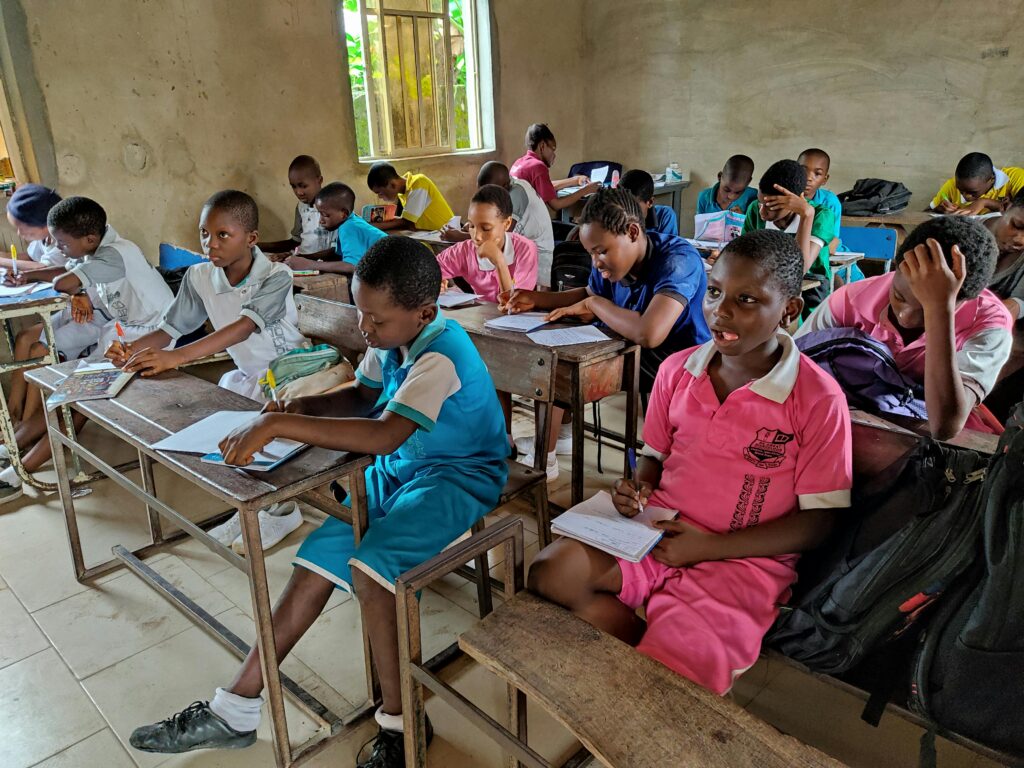
What Has Changed
- Under the 2022 National Language Policy, Nigeria had committed to using the child’s mother tongue or the language of the immediate community as the medium of instruction at least in early primary years (for example Primary 1 to 3).
- However, the Ministry of Education stated that evidence showed poorer academic performance in regions that adopted mother‑tongue instruction, particularly on national exams such as WAEC, NECO and JAMB.
- As a result, the Minister of Education announced that English will henceforth be the official instructional language across all levels of formal schooling.
- The change applies nationwide and revokes the earlier mandate for teaching in indigenous languages up to Primary Six.
Why the Shift? The Official Reasons
According to government statements:
- Implementation of the mother‑tongue policy faced major challenges: Nigeria has over 500 indigenous languages, making it difficult to select a single dominant language in multilingual communities.
- In many urban schools, English was already being used from day one, contradicting the mother‑tongue requirement.
- Educational materials, textbooks and teacher training for indigenous‑language instruction were lacking in many regions.
- The government argued that in geographies where the mother‑tongue policy was applied widely, academic outcomes were lagging, driving the change to protect learning quality.
What the Original Policy Aimed To Do
- The mother‑tongue policy was aligned with global research showing that early learning in a child’s first language can enhance literacy, comprehension and confidence in school.
- It sought to preserve Nigeria’s linguistic diversity and empower children to learn in familiar languages rather than immediately switching to English.
- It was also meant to support equity, helping pupils in rural and minority‑language regions to access basic education more comfortably and effectively.
What This Turnaround Might Overlook
While the reversal is significant, several important dimensions may not have been fully addressed in public discussion:
1. Long‑term Language & Cultural Impact
By removing mother‑tongue instruction, Nigeria risks further marginalising indigenous languages and eroding cultural heritage embedded in language teaching. This could affect identity formation, intergenerational transmission of languages and local cultural resilience.
2. Foundations of Learning
Global evidence suggests that strong foundational literacy in the first language can make the transition to second languages (such as English) smoother. By skipping indigenous‑language instruction, some pupils might face steeper learning curves in English‑medium classrooms.

3. Resources & Teacher Capacity
The original Nigeria policy struggled with materials, trained teachers and curricula for many language groups. While the reversal acknowledges this, it doesn’t automatically solve resource gaps—English‑language instruction also demands high levels of teacher competence, especially in less‑resourced areas.
4. Urban‑Rural and Regional Equity
Challenges in using mother‑tongue policy were especially acute in urban multilingual environments. But reversing the policy might widen disparities: children in rural or minority‑language communities may find English‑only instruction even more alienating if support is weak.
5. Implementation vs Policy Design
The problem in many cases seemed to be implementation rather than the concept. Issues like textbook shortages, language selection confusion, teacher training lapses and inconsistent policy execution undermined the original approach—not necessarily the ideological basis of mother‑tongue instruction.
What Happens Next
- The government now needs to focus on teacher training, ensuring that instructors are fully capable of teaching in English from early years, especially in schools previously geared for indigenous‑language instruction.
- Textbook and curriculum reforms will be required to align all levels with English‑medium instruction—this is a massive logistical and financial task.
- Monitoring and evaluation of learning outcomes will be critical: the government will need robust data to ensure the shift improves academic performance rather than creating new challenges.
- Civil‑society, language rights groups and educators may push for supplementary local‑language programs or bilingual offerings, especially in minority‑language regions, to preserve local languages alongside the new policy.
- Long‑term, there may be a transitional period in which both local‑language and English‑language instruction coexist, especially in community or private schools.
Frequently Asked Questions (FAQs)
Q1: Which levels of schooling does the new policy affect?
The policy change declares that English will be the sole medium of instruction from primary through tertiary levels—effectively replacing indigenous‑language instruction in all standard public education from early primary onward.
Q2: Why did the government abandon the mother‑tongue policy?
The official reasons cite poor academic performance in some regions under the policy, high implementation complexity (500+ languages), shortage of materials and teachers, and inconsistent use of English in urban schools despite the original policy.
Q3: Does this mean indigenous languages will be banned?
Not banned—but indigenous languages will no longer be the medium of instruction in primary schools under the new directive. They may survive as “subjects” or community programs, but not as the main language of teaching core subjects.
Q4: What impact could this have on students?
Potentially positive if English‑teaching capacity is high—but risks include alienation of pupils in minority‑language communities, loss of strong foundational learning in a familiar language, and weaker engagement for children unfamiliar with English.
Q5: What role do teachers play in this change?
Teachers will need strong proficiency in English and be capable of teaching subjects fully in English from early years. Many may also need retraining if previously focused on local‑language instruction.
Q6: How might this affect rural or minority‑language regions?
These regions may face extra burdens: children may struggle with English as the only medium, local languages may be de‑emphasised, and education quality may depend heavily on the availability of resources and teacher competence.
Q7: Could the policy change be reversed again?
Possibly—education policy is dynamic. If data show major negative effects, or if language‑rights advocates push strongly, the government could revisit the policy to reintroduce mother‑tongue components or bilingual models.
Q8: What about the international angle?
Nigeria’s policy shift contrasts with UNESCO and other global education frameworks that support mother‑tongue instruction in early years. Nigeria may face critique in international education forums about this reversal.
Q9: How should parents respond?
Parents should engage with schools to ensure children get support in English instruction, ask about teacher experience, lesson content and supplementary help if needed. Parents in minority‑language areas may also seek additional language support at home or in communities.
Q10: What should be watched next?
Key indicators will include literacy and numeracy outcomes in Primary 1‑3, school retention rates, regional performance comparisons, teacher training completion rates, resource distribution and whether local languages continue to have a place in the curriculum.
Nigeria’s pivot from mother‑tongue instruction to an English‑only model is more than a change of language policy—it touches identity, equity, learning quality and the country’s education future. Whether this turn enhances learning for all children or creates new divides will depend greatly on how well it is implemented and monitored in the coming years.

Sources BBC


Excellent breakdown, I like it, nice article. I completely agree with the challenges you described. For our projects we started using Listandsell.us and experts for our service, Americas top classified growing site, well can i ask zou a question regarding zour article?