

Optogenetics has transformed neuroscience. With light-sensitive proteins that can switch neurons on or off, researchers have mapped circuits, decoded behaviors, and uncovered mechanisms behind disorders ranging from Parkinson’s disease to depression.
But one major question has hovered for years:
How do we take a technology that requires genetic modification and light delivery deep into the brain—and make it safe and useful for humans?
A recent scientific roadmap lays out the steps. But the true path from lab to clinic is even more complex, and far more exciting. This expanded article breaks down what optogenetics is, how it can realistically reach patients, and what challenges lie ahead.
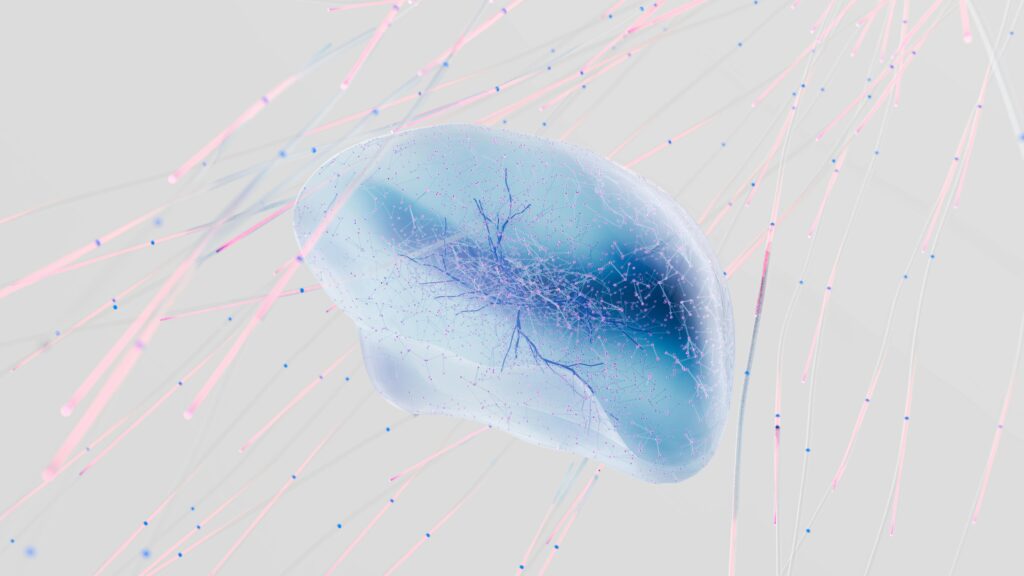
What Exactly Is Optogenetics?
Optogenetics combines two components:
1. Genetic Tools
Neurons are modified to express light-sensitive proteins (opsins). Different opsins respond to different wavelengths and can either:
- Activate neurons
- Silence neurons
- Modulate firing patterns
2. Light Delivery
To control these neurons, researchers deliver light through:
- Fiber-optic cables
- Mini-LED implants
- Wireless light sources
- External devices (future systems may allow transcranial stimulation)
Together, this allows for millisecond-precision control of brain circuits—something no drug or electrode can do.
The Roadmap: Direct vs. Indirect Pathways to Human Therapy
The outlined roadmap in the scientific community includes two branches:
A. Direct Translation — Using Optogenetics As a Human Therapy
This means directly using opsins and light in patients, similar to how it’s used in mice.
What this could treat:
- Blindness (retinal optogenetics already shows promise)
- Parkinson’s disease
- Epilepsy
- Major depression
- Chronic pain
- Motor disorders from spinal cord injury
What needs to happen first:
- Safe gene delivery
- Viral vectors (AAVs) must be optimized for precision and low immune response.
- Opsins must be human-safe, stable, and long-lasting.
- Safe, implantable light delivery systems
- Wireless micro-LEDs
- Biocompatible implants
- Flexible optical fibers
- Noninvasive light-penetration technologies
- Precision mapping of human circuits
Human brains vary more than mouse brains. Personalized circuit maps may be needed to target stimulation effectively. - Regulatory frameworks
Optogenetics requires gene therapy + implantable device approval—making it one of medicine’s most complex regulatory paths.
B. Indirect Translation — Using Optogenetics to Discover Targets for Standard Therapies
This is the near-term pathway many experts see as the fastest route to patient benefit.
Here, optogenetics acts as a discovery tool, not a therapy.
Optogenetics helps researchers:
- Identify which neural circuits cause symptoms
- Determine which cells are “master switches”
- Map the timing of pathological neural activity
- Test drug candidates
- Optimize deep brain stimulation (DBS) targets
- Train AI models of brain function
These discoveries then inform:
- Drug development
- Electrical stimulation therapies
- Noninvasive ultrasound neuromodulation
- Next-generation brain-machine interfaces
This approach avoids altering human brain cells with genetic tools, making it safer and faster to implement.
What the Original Roadmap Doesn’t Fully Emphasize
To make the article more comprehensive, here are added dimensions:
1. Immune and Ethical Challenges Are Bigger Than Stated
Delivering opsins requires viral vectors that might provoke immune responses, especially with repeated dosing. Human brains are far less forgiving than mice.
Ethically, altering the brain’s cells—even for therapy—raises concerns about identity, consent, and long-term unknowns.
2. Light Delivery Is the Biggest Technical Barrier
The mouse skull is thin. The human skull is not. Light penetration to deep brain structures is extremely difficult. Solutions under exploration include:
- Upconversion nanoparticles
- Ultrasound-triggered light emitters
- Wireless implantable optical arrays
- Adaptive optics
- Transcranial multiphoton stimulation
These require enormous engineering advances.
3. Human Brain Diversity is a Challenge and an Opportunity
The human connectome is far from uniform. Personalized optogenetic maps could transform psychiatry—but only if mapping can be scaled.
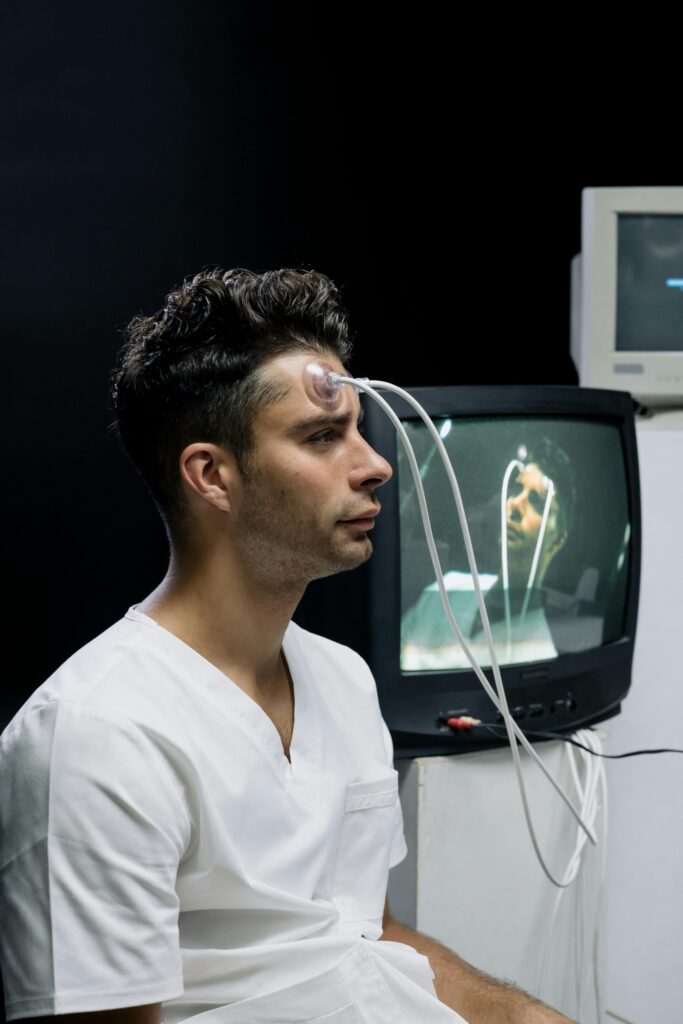
4. Optogenetics Will Likely Be Used First in Peripheral or Sensory Systems
The retina, vagus nerve, and peripheral pain circuits are easier targets than the brain. This is where the earliest approvals are likely.
5. AI + Optogenetics Is a Revolution Still Understated
AI models trained on optogenetic neural data could simulate:
- Whole-brain circuit dynamics
- Drug-response curves
- Personalized treatment plans
- Closed-loop neuromodulation systems
This synergy may be more impactful than direct brain opsin implants.
6. Military and Neurosecurity Questions Will Emerge
Any technology offering brain-circuit manipulation invites scrutiny from defense and cybersecurity sectors. Ethical guidelines will need to evolve fast.
Where We Are Today
Already achieved:
- Blindness treated via retinal optogenetics (early success in humans)
- Precise circuit maps for Parkinson’s, depression, addiction
- Noninvasive light-modulation prototypes
- Wireless micro-LED implants in animal models
In progress:
- Opsins engineered for lower light power
- Human-compatible viral vectors
- Clinical trial frameworks
- AI-powered circuit modeling
Still far away:
- Full-brain optogenetic therapy
- Deep-brain opsin delivery without invasive surgery
- Large-scale clinical trials
Frequently Asked Questions
Q1: Is optogenetics being used on humans today?
Yes, in a limited way. Retinal optogenetic therapy has restored partial vision to blind patients. Full-brain optogenetics is still experimental and decades from mainstream use.
Q2: Why can’t we just put opsins in the human brain like in mice?
Because doing so requires:
- Genetic modification
- Brain implants
- Invasive surgeries
- Immune-safe viral delivery
Human brains face higher biological and ethical risks.
Q3: When will optogenetic treatments for the brain be available?
Most experts predict:
- Peripheral uses: this decade
- Deep-brain therapeutic trials: 10–20 years
- Widespread clinical use: 20–40 years
Q4: Can optogenetics “read minds”?
No. It cannot decode complex thoughts. It can only activate or silence known cell types or circuits.
Q5: Could optogenetics cure psychiatric disorders?
Potentially. It may help uncover the circuit-level roots of depression, OCD, anxiety, PTSD, and addiction. But direct treatment remains a long-term goal.
Q6: Are there safer alternatives to direct optogenetics?
Yes:
- Transcranial magnetic stimulation (TMS)
- Focused ultrasound neuromodulation
- Deep brain stimulation (DBS)
- Pharmacological circuit modulators
- Electrical vagus nerve stimulation
Optogenetics can guide and improve these therapies.
Q7: Will optogenetics change our understanding of consciousness?
Possibly. It allows researchers to turn specific consciousness-related circuits on and off, offering unprecedented insight.
Q8: Is there any risk of misuse?
Yes. Potential misuse includes:
- Coercive brain manipulation
- Non-consensual neural alteration
- Military exploitation
Strict ethics frameworks are needed.
Q9: What is the most promising short-term application?
Restoring vision through retinal opsins and light-sensitizing therapies. This is the closest to widespread human use.
Final Thoughts
Optogenetics is one of the most powerful neuroscience tools ever created. It allows us to “speak the language” of the brain with precision no drug or electrode can match.
But turning it into a therapy requires solving massive challenges: biological, ethical, engineering, and societal. The roadmap is real, but it will take decades.
Still, each breakthrough—whether in mapping circuits, designing opsins, or prototyping wireless light implants—brings us closer to a world where brain disorders can be treated not by guessing, but by targeting the exact circuits that cause them.
The future of optogenetics is bright—literally and figuratively.
Sources nature

