
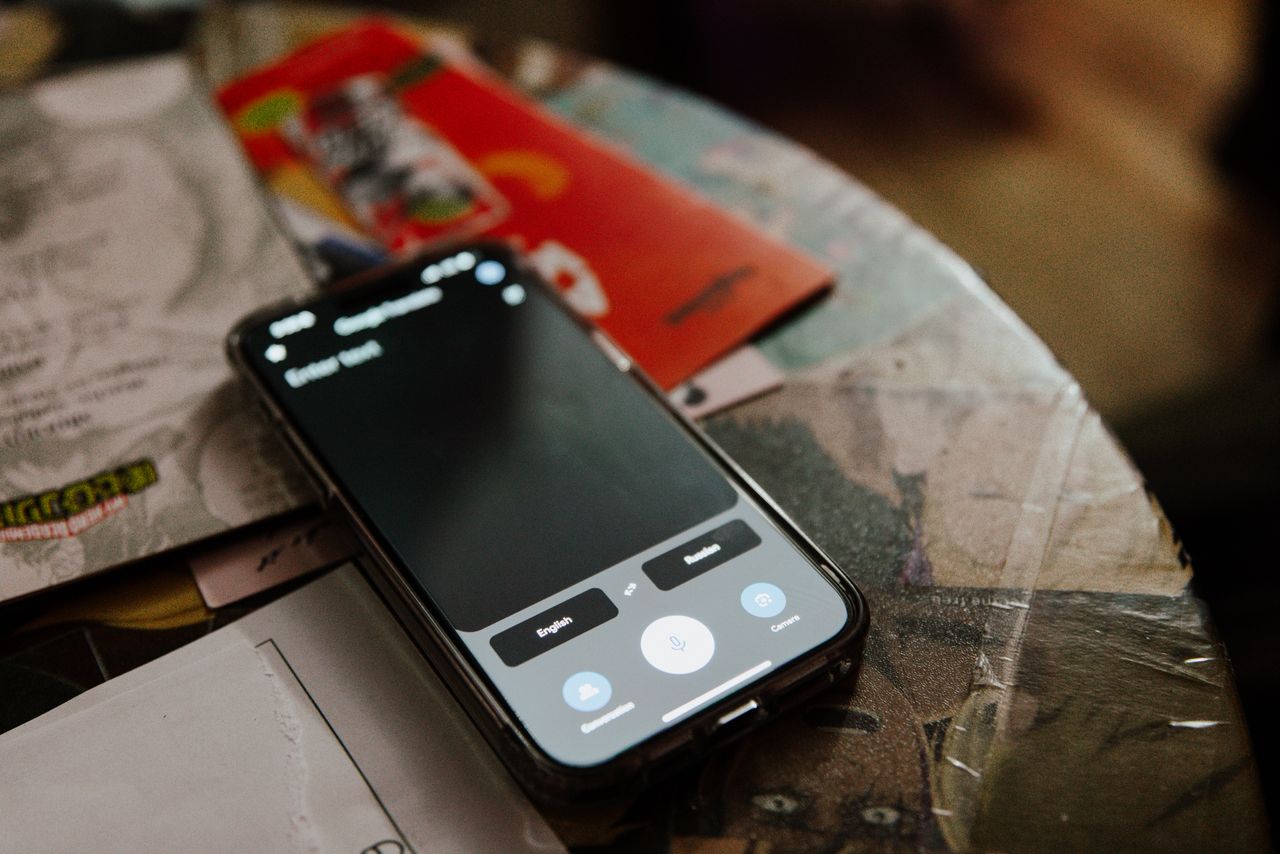
Imagine walking into an international conference where speakers are talking in English, Spanish, Japanese and Arabic, while hundreds of attendees follow the discussion in their own preferred languages—all through devices they already carry.
There is no headset distribution desk.
No interpretation booths taking up part of the venue.
No complicated collection of receivers at the end of the event.
And potentially no need to hire a separate human interpreter for every language represented in the audience.
That is the proposition behind LiveVoice, which has expanded its platform with AI-powered live voice and text translation supporting more than 70 languages. The system is designed to let conference attendees, meeting participants and tourists receive translated speech and subtitles through their own smartphones, tablets or computers.
The technology reflects a larger transformation happening across events, tourism and international business.
For decades, multilingual communication at conferences depended on professional interpreters, dedicated audio equipment and carefully planned language channels.
Those systems remain extremely important, particularly for high-stakes meetings.
But AI is introducing a new possibility:
Make multilingual access available at much larger scale and at a much lower technical barrier.
LiveVoice’s approach is particularly notable because it does not require special audience hardware. Participants can use the web or an app over Wi-Fi or mobile data, while event organizers manage the service through a self-service platform.
The implications extend well beyond conferences.
Tour operators can offer multilingual experiences with a single guide.
Businesses can make hybrid meetings accessible to international participants.
Public institutions can provide translated captions.
Churches, museums, sports events and cultural organizations can reach audiences that previously required significant interpretation budgets.
But the technology also raises difficult questions about accuracy, cost, privacy, human oversight and whether AI can truly match professional interpretation when the stakes are high.
What LiveVoice Is Actually Offering
LiveVoice describes its AI Translation service as real-time voice and text translation into more than 70 languages.
Organizers select an audio input language and then choose the target languages needed by participants. The platform can produce AI-generated translated speech, translated captions or both.
That distinction matters because different audiences have different needs.
Some participants may prefer to listen to translated audio.
Others may find subtitles easier to follow.
Some may want both.
LiveVoice also allows translated subtitles to appear on attendee smartphones, web browsers, large screens or within video streams.
This makes the technology useful not only for people sitting in an auditorium but also for remote and hybrid audiences.
The Most Important Feature May Be the Lack of Hardware
Traditional simultaneous interpretation systems can require:
Receivers.
Headsets.
Transmitters.
Interpretation booths.
Audio distribution equipment.
Technicians.
And staff to manage the equipment.
LiveVoice takes a different approach.
Attendees use their own smartphones, tablets or computers.
The platform says no additional hardware is required beyond an internet connection and a compatible device.
This creates an immediate operational advantage.
An organizer running a 500-person conference does not have to prepare 500 interpretation receivers.
Participants do not have to collect and return equipment.
There are fewer physical devices to charge, sanitize, store or lose.
The venue also becomes less dependent on dedicated interpretation infrastructure.
Bring Your Own Device Becomes the Interpretation System
The concept is similar to the “bring your own device” model used in many modern workplaces.
Instead of the event providing the endpoint, the participant provides it.
That changes the economics.
The organizer manages the digital service.
The attendee supplies the screen, speaker or headphones.
This also makes the system more scalable.
Adding another attendee does not require another physical receiver.
But BYOD Is Not Completely Free
The lack of hardware does not mean the service has no technical requirements.
Participants need a suitable device.
They need sufficient battery.
They need Wi-Fi or mobile data.
They need to understand how to join the event.
And the venue needs reliable connectivity.
For a large conference, network capacity can become a serious issue.
Hundreds or thousands of smartphones simultaneously streaming audio could create additional demand on venue Wi-Fi.
That means the technology shifts some infrastructure requirements rather than eliminating them.
QR Codes Can Reduce the Friction
LiveVoice supports several ways of sharing an event, including links, invite codes and QR codes.
A QR code can be especially useful at physical events.
Participants scan the code.
They open the event page.
They select their language.
They start listening.
That process can be significantly simpler than receiving specialized equipment.
For conferences with international attendees arriving at different times, this kind of self-service access can also reduce pressure on event staff.
More Than 4,000 Language Combinations
Supporting 70+ languages is impressive, but the more interesting number is the potential number of language combinations.
LiveVoice says its AI translation system can translate among the supported languages, providing more than 4,000 possible language combinations.
That does not mean every combination will always produce identical quality.
Language pairs vary in linguistic complexity, available training data and contextual difficulty.
But the scale illustrates why AI is attractive.
Human interpretation becomes increasingly expensive as the number of required language combinations grows.
AI Can Solve the “We Don’t Know What Languages People Need” Problem
Event organizers often have to estimate language demand before an event.
That creates a problem.
What happens if the organizer expects English, Spanish and French but ten attendees need Korean?
Hiring a Korean interpreter at the last minute may be difficult.
LiveVoice has introduced an AI Translation On Demand feature that allows attendees to request one of more than 70 languages during an event. Administrators can automatically approve a preset number of requests or manually approve them.
That turns language access into a demand-driven service.
The organizer does not need to predict every language in advance.
On-Demand Translation Could Change Event Planning
This feature is particularly interesting for international events where language demand is unpredictable.
Consider a trade show.
The organizer knows thousands of people will attend, but may not know their preferred languages.
Instead of hiring interpreters for every possibility, the organizer could provide a baseline group of languages and activate others when attendees request them.
That could lower costs while broadening access.
AI Translation Can Also Be Paused Automatically
LiveVoice has built cost-control features around its AI services.
The company says AI translation can be paused based on user activity, and its Voice Activity Detection system can automatically stop or pause translation after prolonged periods without speech.
That matters because AI translation is billed by usage.
Without safeguards, an organizer could accidentally leave a translation channel running after a speaker stops.
Automation helps reduce that risk.
The Pricing Model Is Different From Traditional Interpretation
LiveVoice’s AI translation is billed by the minute and by language channel in addition to the underlying account plan.
For example, if an event runs for three hours and uses AI voice translation for two target languages, the platform says six hours of AI usage would be billed.
That creates a simple relationship between usage and cost.
It also allows organizers to estimate expenses based on event length and the number of active languages.
AI Can Be Much Cheaper Than Human Interpretation
Traditional interpretation pricing can include:
Interpreter fees.
Travel.
Accommodation.
Booths.
Headsets.
Technicians.
Event staffing.
Coordination.
AI does not eliminate all those costs in every situation, but it can substantially reduce the expense of providing a large number of languages.
LiveVoice positions its AI service as a lower-cost option for events that need many languages or have limited budgets.
That is one of the main reasons the market is growing.
The Hybrid Model May Be the Most Practical
The strongest use case may not be replacing humans.
It may be combining humans and AI.
LiveVoice explicitly supports a hybrid model in which professional interpreters handle primary languages while AI covers additional languages.
Imagine an international conference where:
English and German have human interpreters.
French and Spanish also have human interpretation.
Japanese, Korean, Arabic and Portuguese are delivered by AI.
That could create broad multilingual access without requiring a full team of human interpreters covering every possible language.
Human Interpreters Still Have Advantages
Professional interpreters bring something AI struggles to reproduce consistently:
Context.
They can understand ambiguity.
They can recognize tone.
They can interpret cultural references.
They can ask for clarification.
They can make judgment calls.
They can deal with specialized terminology.
And they are accountable to professional standards.
For diplomatic meetings, legal proceedings, medical conferences and other high-stakes situations, those capabilities remain extremely valuable.
AI is therefore better understood as a new layer rather than a universal substitute.
Accuracy Depends on Audio Quality
One of the biggest misconceptions about AI translation is that language intelligence alone determines performance.
It does not.
The first challenge is hearing the speaker correctly.
Background noise can interfere.
People can speak too quickly.
Multiple people may talk at once.
Microphones may be poorly positioned.
Accents can make speech recognition harder.
A poor transcription produces a poor translation.
LiveVoice’s own guidance emphasizes sound quality, clear speech, avoiding overlapping speakers and using only the languages actually needed for a given setup.
Specialized Vocabulary Is Another Challenge
Corporate conferences are full of company names, product names, technical terminology and acronyms.
A general-purpose AI model may recognize a common word correctly but struggle with a specialized business term.
That is why LiveVoice offers glossaries for eligible customers.
Organizers can use glossaries to improve recognition of company names and control how particular terms are translated.
This could be particularly useful for:
Medical terminology.
Legal terms.
Engineering language.
Financial vocabulary.
Technology conferences.
Academic presentations.
Glossaries Are a Bridge Between Generic AI and Domain Expertise
This is one of the most useful lessons from the platform.
AI systems work better when they receive information about the environment in which they operate.
A company can tell the translation system:
This is our brand name.
This acronym should remain untranslated.
This product name has a specific spelling.
This technical term should be rendered in a specific way.
That improves consistency.
It also gives organizations greater control over their multilingual communications.
AI Can Support Live Captions Even Without Translation
Translation is not the only application.
LiveVoice also offers AI-powered live captions and transcripts. Translated subtitles can be displayed to audiences, while transcripts can be downloaded after the event when activated.
That creates another layer of accessibility.
A participant who already understands the spoken language may still benefit from captions.
A person with hearing difficulties can follow the discussion visually.
An attendee in a noisy venue can read rather than listen.
And organizers can potentially retain a textual record for later use.
Accessibility Is Becoming a Core Event Requirement
This is one of the most important broader trends.
Multilingual access and disability access are often discussed separately.
Technology increasingly allows them to overlap.
The same digital infrastructure can support:
Language translation.
Live captions.
Audio description.
Remote access.
Text-based participation.
Live transcripts.
That turns accessibility from a specialized add-on into a general event-design principle.
The Guided-Tour Opportunity May Be Even Bigger
LiveVoice is not limiting its technology to conferences.
The company also markets multilingual AI translation for guided tours. A single guide can potentially address multiple language groups through smartphone-based translation.
This could be valuable for:
Museums.
Historic sites.
Tour buses.
Walking tours.
Factories.
Universities.
Theme parks.
Heritage destinations.
Travel agencies.
Instead of organizing a separate guide for each language, an operator can provide one core guide and deliver AI translation to different visitors.
Tourism Operators Could Change Their Business Models
Imagine a historic attraction offering one English-language tour.
Traditionally, the attraction might need to schedule separate tours in Spanish, German and Japanese.
AI could make multilingual access available during the same tour.
That potentially means:
More languages.
More departure times.
Fewer scheduling constraints.
Smaller groups.
Lower staffing costs.
And a broader international customer base.
The same model could apply to museums and cultural institutions.
There Is a Cultural Question Behind the Technology
AI translation is not merely a technical service.
It changes who can participate.
A traveler who previously could not understand a tour may now be able to follow it.
A conference participant may engage with speakers in languages they do not speak.
An immigrant community member may access an event without requiring a dedicated interpreter.
A museum can make its content available to more international visitors.
Language barriers have historically shaped who gets included.
AI can lower those barriers.
But Access Does Not Equal Understanding
A translated sentence can be grammatically correct and still fail to communicate the intended meaning.
Humor may not translate.
Idioms can be difficult.
Sarcasm can be misunderstood.
Cultural references can lose their context.
Political language can be particularly sensitive.
This is where human oversight remains valuable.
Latency Matters in Live Communication
People do not experience a live meeting as a series of isolated sentences.
They experience a conversation.
A delay of several seconds can make it more difficult to follow.
LiveVoice describes its system as having extremely low latency, but like any speech-to-speech system, translation still requires time to process the source audio.
Organizers should therefore test the actual experience rather than assuming that technical latency figures automatically translate into perfect conversational flow.
Multi-Language Stage Events Are Especially Difficult
An increasingly common event format involves several speakers using different languages.
A conference may feature an English keynote, followed by a Japanese presentation and then a Spanish panel.
LiveVoice supports multiple input languages through its Multi Language Detection capability and other language-switching tools.
That reduces the need to manually reconfigure the system every time the language changes.
But accuracy still depends on clear audio and proper configuration.
The Organizer Still Has to Get the Setup Right
AI does not eliminate event production work.
Someone still needs to:
Set the source language.
Choose the target languages.
Configure channels.
Check audio.
Test microphones.
Verify internet connectivity.
Share access instructions.
Train staff.
Monitor the event.
Provide support.
Technology makes these tasks easier, but it does not make event management disappear.
The Platform’s Self-Service Model Is Part of Its Appeal
LiveVoice emphasizes that customers can manage events themselves without requiring specialized technical teams. The company says users can create events, configure channels, invite speakers and distribute access through links or QR codes.
That could be especially valuable for smaller organizations.
A multinational corporation may already have audiovisual staff.
A small nonprofit may not.
Self-service tools can lower the skill threshold.
Small Organizations Stand to Benefit
A community group might never be able to justify professional simultaneous interpretation in six languages.
With AI, it could potentially make a public meeting or cultural event accessible to a much larger audience.
The economics of scale change.
An organization does not have to predict that 500 people will need Spanish interpretation before deciding to offer it.
It can turn the service on when needed.
Remote and Hybrid Events Become More International
Hybrid conferences already connect speakers and attendees across countries.
Translation can make those events genuinely multilingual.
A participant in Brazil can follow an English keynote in Portuguese.
Someone in Japan can read Japanese subtitles.
A European attendee can listen in German.
The event effectively becomes a language-neutral digital space.
This can broaden the potential audience without requiring every speaker to become multilingual.
The Technology Can Help Universities
Universities hold many international events.
Guest lectures.
Academic conferences.
Research presentations.
Graduation ceremonies.
International student orientations.
Public lectures.
AI translation could allow institutions to offer multilingual access without organizing human interpreters for every event.
For campuses with international populations, this could become a useful part of digital accessibility.
Businesses Could Use It for Global Meetings
A multinational company may have employees who understand English well enough for email but prefer another language during live presentations.
AI translation can make internal meetings more inclusive.
It may also reduce the burden on employees who otherwise translate informally for colleagues.
That can improve both efficiency and fairness.
Customer Service Could Be Another Application
Events are only one part of the opportunity.
A retail chain could use live translation during training sessions.
A factory could support multilingual worker briefings.
A hospital could use translation for nonclinical informational sessions, subject to appropriate professional safeguards.
A tourism company could communicate with visitors.
A government agency could use it for community meetings.
The underlying technology is flexible.
Government Use Will Require Higher Standards
This is particularly relevant given the earlier growth of AI translation in public meetings.
Cities such as Mountain View, California, are now testing AI translation to improve multilingual civic participation.
But public-sector users need stronger safeguards than casual event organizers.
A mistranslated sentence at a concert may be inconvenient.
A mistranslated sentence in a housing hearing can affect someone’s understanding of a policy.
That means government use should generally preserve access to professional interpretation for high-consequence situations.
Privacy Is Another Major Consideration
Live speech contains sensitive information.
Corporate meetings may contain confidential material.
Medical discussions can contain personal information.
Public meetings can contain names and addresses.
Event organizers therefore need to understand how audio and transcripts are handled.
Questions to ask include:
Is the audio stored?
How long is it retained?
Is it used to train models?
Who can access transcripts?
Where is data processed?
How is information deleted?
These questions become more important as AI translation moves into workplace and government environments.
Translation Can Also Create Legal and Compliance Risks
In some environments, the translated output could be interpreted as an official communication.
That creates additional responsibilities.
Organizations may need to make clear whether AI translation is provided for convenience or constitutes an authoritative translation.
Legal documents, contracts and regulated communications should generally not rely solely on informal machine translation without appropriate review.
Human-in-the-Loop Will Remain Important
The most sensible long-term architecture is likely to be human plus machine.
AI does the repetitive, scalable work.
Humans provide judgment.
AI handles dozens of languages.
Humans handle the most important ones.
AI delivers captions.
Humans verify critical terminology.
AI expands access.
Humans maintain accountability.
This is a much more realistic future than an all-or-nothing choice between AI and professional interpretation.
What Makes LiveVoice’s Approach Interesting
The platform’s growth is notable not only because it supports 70+ languages.
It combines several ideas into one workflow:
Smartphone-based access.
Web-based participation.
AI voice translation.
Translated subtitles.
Live captions.
On-demand languages.
Glossaries.
Hybrid human-AI interpretation.
Remote participation.
Self-service event management.
Cost controls.
That combination is what makes the platform potentially useful across so many industries.
The Event Industry Could Become Less Language-Constrained
Historically, language was a logistical problem.
If organizers expected participants from five countries, they had to plan five language services.
Now the software can make language selection more flexible.
That could change event design.
Organizers might advertise events in more markets because language support is no longer limited to a handful of predefined options.
Tourism Could Become More Accessible
Tourism is especially well suited to this model.
Visitors often encounter language barriers at exactly the moments when they want to learn.
A tour guide explains a historic site.
A museum docent describes an artifact.
A guide tells a local story.
A cultural center hosts a performance.
AI translation can make those moments available to a much wider audience.
The Biggest Opportunity May Be Smaller Events
Large international conferences have historically had money to pay for interpretation.
Small events did not.
That is where AI may have its greatest disruptive potential.
A local museum.
A small tourism company.
A neighborhood festival.
A university club.
A community organization.
A church.
A startup conference.
These groups may now be able to offer multilingual access that was previously out of reach.
AI Translation Could Change Expectations
Once multilingual access becomes cheap and easy, audiences may begin to expect it.
Just as Wi-Fi became a standard event feature, translation could become another baseline capability.
Organizers may eventually be asked:
Which languages do you support?
Can attendees read captions?
Can remote participants follow?
Can I use my own phone?
That would represent a major change in the event industry.
But Better Technology Will Not Eliminate Language Differences
There is a temptation to believe that real-time translation means language barriers are essentially solved.
They are not.
Language is connected to identity, humor, culture and power.
Machine translation can transfer information.
It cannot automatically transfer the entire cultural experience surrounding that information.
Human connection still matters.
The Future Could Be a Personalized Language Layer
The most interesting long-term possibility is that every attendee could experience the same event through a personalized language interface.
One speaker.
One event.
Many individual language experiences.
The person sitting next to you may hear Spanish.
You hear English.
Another participant reads Japanese subtitles.
A remote attendee follows Mandarin captions.
Everyone remains part of the same event.
That is a fundamentally different architecture for communication.
Final Takeaway
LiveVoice’s expansion into AI-powered translation across more than 70 languages illustrates how quickly multilingual communication is moving from specialized infrastructure toward software people can access on devices they already own.
The most disruptive idea is not simply the number of languages.
It is the combination of no special audience hardware, self-service setup, live voice translation, translated captions and on-demand language activation. Participants can join through smartphones, tablets or browsers, while organizers can add languages according to anticipated or real-time demand.
That could significantly lower the cost of multilingual conferences, guided tours, cultural events, meetings and hybrid gatherings.
But AI translation has limits.
Audio quality matters.
Specialized terminology matters.
Latency matters.
Cultural context matters.
And for high-stakes communication, professional interpreters remain important.
The most practical future is therefore unlikely to be “AI replaces translators.”
It is more likely to be AI expands access while humans provide high-confidence interpretation where it matters most.
That approach could make multilingual communication dramatically more scalable.
A small museum could offer tours in dozens of languages.
A conference could support unexpected language requests.
A business could make international meetings easier to follow.
A community organization could welcome residents who speak different languages.
And a global event could become truly global without requiring every participant to speak the same language.
The technology is still evolving, and real-world accuracy will vary.
But one thing is already clear:
The future of multilingual communication may not require a different headset for every language.
It may simply require a smartphone.
5 Frequently Asked Questions
1. What is LiveVoice AI Translation?
LiveVoice AI Translation is a real-time service that converts spoken audio into AI-generated translated speech, translated subtitles or both. The company says the service supports more than 70 languages and can be used for conferences, meetings, online events and guided tours.
2. Do attendees need special translation equipment?
No. LiveVoice is designed around participants using their own smartphones, tablets or computers through an app or web browser. The company says no special audience hardware is required, although users do need an internet connection through Wi-Fi or mobile data.
3. How does on-demand language translation work?
Participants can request languages through the LiveVoice system. Event administrators can automatically approve a selected number of language requests or approve them manually. The company says more than 70 languages can be requested, allowing organizers to provide language access even when they did not know in advance which languages attendees would need.
4. Is AI translation as good as a professional human interpreter?
Not in every situation. AI can provide broad, scalable access and may work very well in appropriate conditions, but quality depends on audio, speaking style, terminology, language pair and context. Human interpreters remain valuable for complex, sensitive or high-stakes communication. LiveVoice itself supports combining AI translation with human interpretation.
5. How much does LiveVoice AI Translation cost?
The AI service is billed by the minute and by language channel in addition to the underlying LiveVoice account plan. The total cost therefore depends on event duration and the number of active translation languages. LiveVoice also provides usage controls such as Voice Activity Detection and activity-based pausing to help prevent unnecessary AI usage.
Sources Business Insider