
Apple’s latest reveal of its 2025 foundation models signals a major leap in the company’s machine learning strategy—focused on privacy, multimodal capabilities, and efficient on-device intelligence. These updates highlight Apple’s distinct path in the AI arms race: building powerful yet responsible models that serve users without compromising their data.
🔍 What’s New in Apple’s 2025 Foundation Models
1. MM1 Multimodal Model Expansion
- MM1, Apple’s multimodal transformer model, has received upgrades in visual reasoning and multi-turn dialogue.
- It now integrates text, images, and speech inputs with enhanced contextual understanding—ideal for features like smarter Siri and photo captioning.
2. On-Device Language Models (ODLM)
- Apple has developed a suite of smaller, fast, yet highly capable language models that can run fully on-device, preserving user privacy.
- These models support autocorrect, dictation, and translation with better accuracy and lower latency.
3. Private Personalization
- Apple’s foundation models now include differential privacy-enhanced training, allowing them to learn from user behavior without directly accessing personal data.
- Personalized suggestions (e.g., Safari search, Siri replies) improve over time while staying private.
4. Energy-Efficient Training
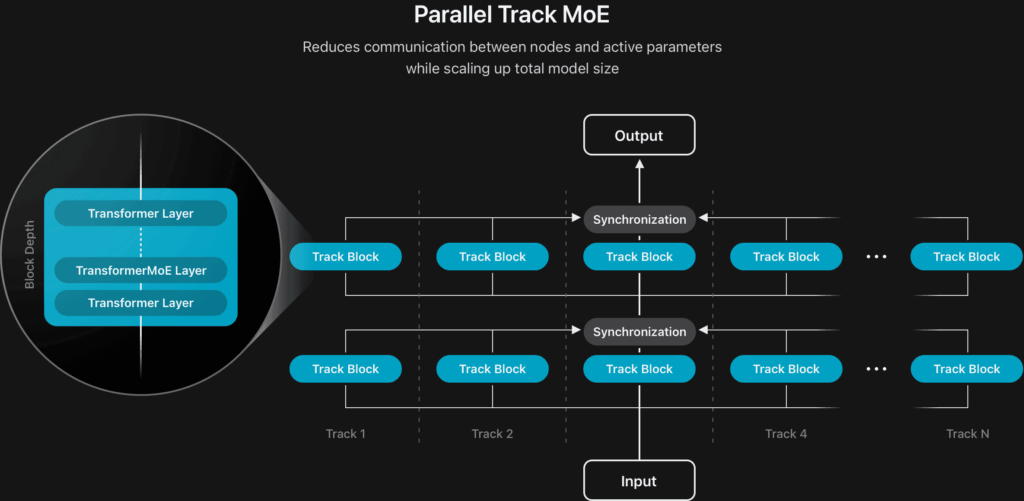
- Apple Research emphasized training models with minimal carbon footprint using optimized compute stacks and sparse model architectures.
📱 Real-World Applications: From Siri to Spotlight
These foundation models power a range of iOS, macOS, and watchOS functions:
- Siri 2.0: Context-aware conversations, understanding visual cues from your screen, and completing multi-step tasks.
- Apple Vision Pro: Real-time captioning and translation of visual content.
- Accessibility Features: Enhanced VoiceOver and live speech recognition for users with disabilities.
- Photos App: Smart scene understanding, object detection, and AI editing suggestions.
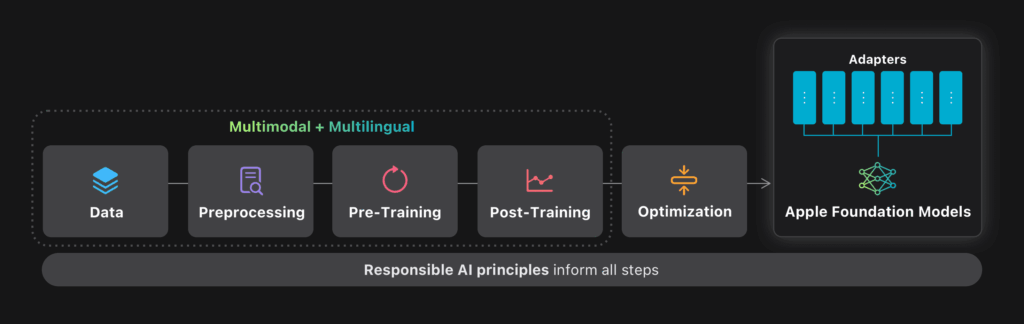
🧠 Apple’s Distinct AI Strategy
Unlike Google’s Gemini or OpenAI’s GPT models, Apple doesn’t aim to create AGI-like bots. Instead, its foundation models are:
- Compact and efficient
- Privacy-centric (on-device inference, encrypted learning)
- Contextually smart, not just big
This aligns with Apple’s core design principles: personal, useful, and secure.
🔒 Why It Matters: AI Without Surveillance
Apple is betting on AI that doesn’t need your data in the cloud. By focusing on edge computing, federated learning, and encryption, it’s carving out a niche for privacy-respecting machine learning—especially appealing to institutions and healthcare providers wary of big tech surveillance.
FAQs
Q1: What is MM1 in Apple’s foundation model suite?
MM1 is Apple’s leading multimodal model that processes text, images, and speech for smarter on-device experiences.
Q2: How is Apple’s approach different from Google or OpenAI?
Apple prioritizes privacy and efficiency, focusing on small but effective models that can run directly on user devices.
Q3: Will these models be used in future iPhones or Macs?
Yes, they’re already integrated into iOS, macOS, and visionOS for powering features like Siri, Photos, and Spotlight.
Sources Machine Learning Apple

