
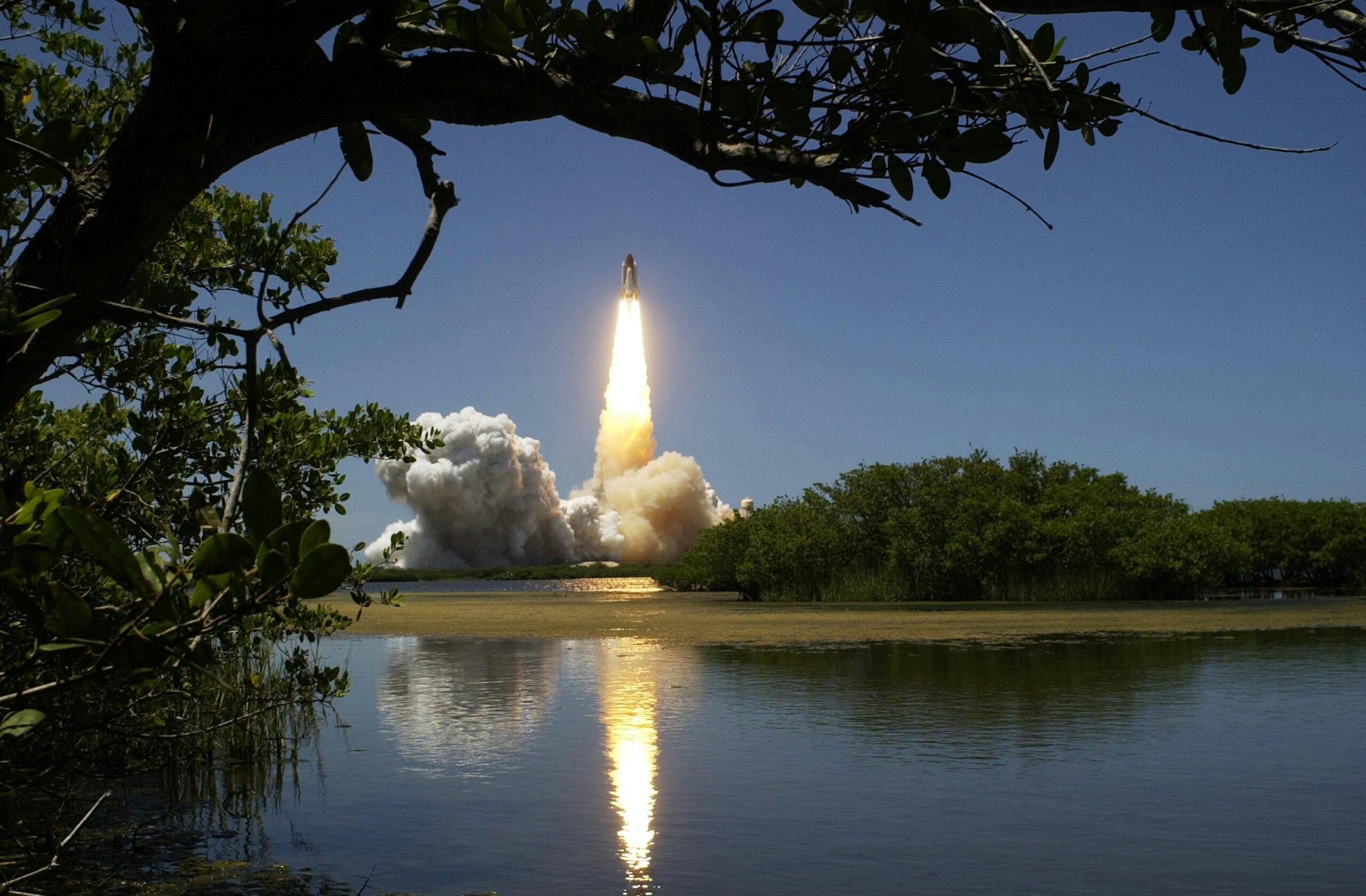
Blue Origin, the space company founded by Jeff Bezos, has announced it will halt its space tourism flights, a move that sends ripples through the still-nascent commercial spaceflight industry. While the company has framed the pause as a strategic and technical decision, the announcement raises broader questions about safety, sustainability, profitability, and the long-term viability of space tourism as a business.
For an industry that once promised frequent suborbital trips for wealthy civilians, the halt is a sobering reminder that space travel—no matter how well-funded—remains complex, risky, and capital-intensive.
What Blue Origin’s Space Tourism Program Is
The New Shepard System
Blue Origin’s space tourism flights use New Shepard, a fully reusable suborbital rocket system designed to:
- Carry passengers beyond the Kármán line (the internationally recognized edge of space)
- Provide several minutes of weightlessness
- Return passengers safely to Earth via capsule parachutes
Flights last roughly 10 to 12 minutes from launch to landing.
Who Has Flown So Far
Since launching its tourism program, Blue Origin has flown:
- Paying customers
- Celebrities
- Scientists and educators
- Company executives, including Jeff Bezos himself
The missions were designed to demonstrate reliability and inspire broader interest in spaceflight.
Why Blue Origin Is Halting Flights
Safety and Technical Priorities
Although no new accidents have been publicly cited, suborbital spaceflight requires:
- Continuous system upgrades
- Rigorous safety validation
- Extensive testing after every anomaly
Pausing flights allows engineers to reassess hardware, software, and operational procedures.
Focus on Other Strategic Goals
Blue Origin is simultaneously working on:
- The New Glenn orbital rocket
- Lunar lander projects tied to NASA’s Artemis program
- Long-term infrastructure ambitions
Redirecting resources may be necessary to meet these higher-stakes objectives.
The Broader Challenges of Space Tourism
High Costs, Limited Market
Space tourism remains:
- Extremely expensive
- Accessible only to ultra-wealthy individuals
- Limited in volume compared to conventional tourism
Scaling such a business has proven far more difficult than early marketing suggested.
Safety Expectations Are Unforgiving
Unlike aviation, spaceflight:
- Has no margin for frequent failure
- Faces intense public scrutiny
- Operates in an environment where small issues can be catastrophic
A single serious incident could halt the entire industry.
Financial and Commercial Pressures
Profitability Remains Unclear
While ticket prices are rumored to be in the hundreds of thousands to millions of dollars:
- Development and maintenance costs are enormous
- Flight frequency remains low
- Break-even timelines are long
Even well-funded companies must make hard choices about return on investment.
Investor and Public Expectations
Space tourism companies face pressure to:
- Demonstrate steady progress
- Avoid accidents at all costs
- Justify massive capital expenditures
Pausing flights can be seen as risk management rather than retreat.
Competition in the Space Tourism Market
Rivals Face Similar Challenges
Other companies pursuing civilian spaceflight have:
- Delayed launches
- Reduced flight cadence
- Shifted focus to government or research contracts
The entire sector is evolving more slowly than early projections predicted.
Experience vs. Utility
Suborbital tourism offers:
- A powerful emotional experience
- Limited practical application
By contrast, orbital launches, satellite deployment, and lunar missions provide clearer long-term economic value.
Regulatory and Public Perception Issues
Regulatory Oversight Is Increasing
As more civilians fly to space:
- Regulators are under pressure to tighten safety standards
- Licensing requirements may grow more stringent
This could further slow commercial flight schedules.
Environmental Concerns
Critics also point to:
- Carbon emissions from launches
- The optics of luxury space travel during global crises
These concerns influence public and political support.
What This Means for Space Tourism’s Future
A Pause, Not Necessarily an End
Blue Origin’s decision does not necessarily mean space tourism is over. Instead, it may signal:
- A recalibration of timelines
- More cautious flight schedules
- A shift toward fewer, more deliberate missions
The industry may mature more like early aviation—slowly, with setbacks.
Long-Term Vision vs. Short-Term Reality
Jeff Bezos has often emphasized a long-term vision of millions of people living and working in space. Space tourism, in that view, is:
- A stepping stone
- A testing ground
- Not the ultimate goal
Halting flights may align with that broader strategy.
Impact on Customers and the Industry
What Happens to Ticket Holders
Customers with reservations may:
- Face delays or rescheduling
- Receive refunds or credits
- Be placed on indefinite waiting lists
Clear communication will be critical to maintaining trust.
Signal to the Industry
The pause reinforces that:
- Space tourism is still experimental
- Growth will be uneven
- Safety and sustainability come before frequency
Frequently Asked Questions (FAQs)
Why is Blue Origin stopping space tourism flights?
To focus on safety reviews, technical upgrades, and other strategic projects.
Is this due to an accident?
No specific new accident has been cited, but spaceflight requires constant reassessment.
Does this mean space tourism is failing?
Not necessarily. It indicates slower, more cautious development than initially expected.
Will flights resume in the future?
Possibly. The company has not ruled out restarting tourism missions.
How does this affect competitors?
It highlights shared challenges across the industry, including cost, safety, and scalability.
Is space tourism profitable?
Profitability remains uncertain due to high development costs and limited demand.
What is Blue Origin focusing on now?
Orbital rockets, lunar missions, and long-term space infrastructure.
Conclusion
Blue Origin’s decision to halt space tourism flights marks a pivotal moment for the commercial spaceflight industry. Far from signaling collapse, the pause underscores the reality that space travel—even at the edge of space—is not easily commercialized.
As the industry recalibrates, the future of space tourism may depend less on spectacle and more on patience, safety, and integration into broader space exploration goals. In that sense, this pause may not be a setback—but a necessary step toward a more sustainable spacefaring future.
Sources Bloomberg

