
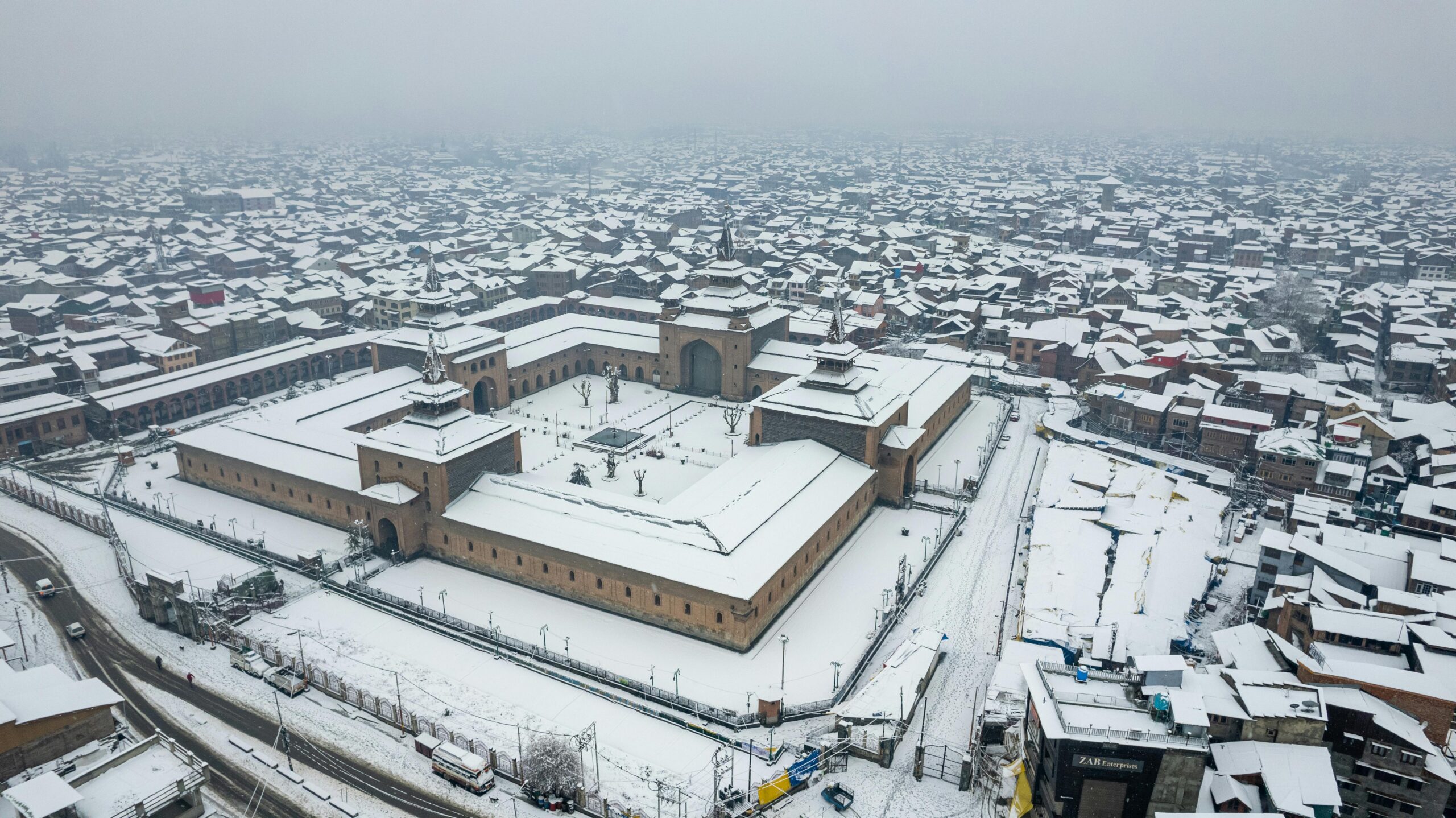
Machine translation has made remarkable progress in languages like French, Spanish, and Chinese. But for low-resource languages such as Kashmiri, which has fewer digitized texts and limited global recognition, translation remains a steep challenge. A new study introduces deep neural network models tailored for Kashmiri–English translation, marking a major step toward inclusivity in AI.

Why Kashmiri Matters in AI Translation
- Spoken by Millions, Digitally Underrepresented
Kashmiri is spoken by over 7 million people, mainly in the Kashmir Valley, but its presence online is minimal. Unlike widely used languages, it suffers from a lack of parallel corpora (aligned Kashmiri-English text datasets), making AI training harder. - Linguistic Complexity
Kashmiri uses multiple scripts (Perso-Arabic, Devanagari, and sometimes Roman), rich inflection, and unique syntax. These features complicate tokenization and model training compared to Latin-script languages.
The Study: Neural Architectures in Action
The research explored and compared several deep learning approaches:
- RNN-based Models – Recurrent Neural Networks with LSTM and GRU units, suitable for handling sequential data but limited in capturing long-term dependencies.
- CNN-based Models – Convolutional Neural Networks adapted for sequence modeling, offering speed but less contextual accuracy.
- Transformer Models – Attention-based architectures that dominate modern machine translation due to their ability to capture long-range dependencies efficiently.
- Hybrid Models – Combinations of RNNs and attention mechanisms to balance efficiency with accuracy.
Results
- Transformer-based systems consistently outperformed others, especially in handling complex Kashmiri morphology.
- BLEU (Bilingual Evaluation Understudy) scores were significantly higher compared to traditional statistical methods.
- Even with limited parallel data, transfer learning and subword tokenization (e.g., Byte Pair Encoding) improved performance.
Beyond the Study: Wider Implications
- Preserving Cultural Identity
Kashmiri literature, poetry, and oral histories could soon be digitized and translated more effectively, safeguarding cultural heritage for global audiences. - Access to Services
Improved machine translation will allow Kashmiri speakers to better access education, healthcare, and government resources in English or Hindi. - AI for Other Low-Resource Languages
Methods refined here could be adapted for other underrepresented South Asian languages like Bodo, Dogri, or Santali.
Challenges Still Ahead
- Lack of Large Parallel Datasets – Without broader text corpora, models remain limited.
- Script Diversity – Supporting multiple writing systems requires unified preprocessing pipelines.
- Bias & Hallucination Risks – AI may mistranslate idioms or culturally loaded expressions.
- Ethical Use – Protecting privacy, avoiding political misuse, and ensuring fairness are critical in conflict-sensitive regions like Kashmir.
FAQs About Kashmiri–English Machine Translation
Q1: Why is Kashmiri so difficult for AI to translate?
Because it has multiple scripts, rich morphology, and limited digital resources, making it harder to train accurate models.
Q2: Which AI model works best for Kashmiri?
Transformer-based models (like those behind Google Translate and GPT) are proving most effective for Kashmiri.
Q3: Can these models be used in real-time translation apps?
Yes, but they still need optimization. Pilot applications for chatbots and mobile translation are being developed.
Q4: How does this research help everyday Kashmiri speakers?
It could enable smoother education access, medical consultations, and government communication in English.
Q5: Could this work extend to other low-resource languages?
Absolutely. The same architectures can be adapted to dozens of languages currently excluded from mainstream translation apps.
Q6: What are the biggest risks?
Mistranslation of sensitive texts, cultural misrepresentation, and the digital divide if AI tools remain inaccessible to rural populations.
Final Thoughts
The Kashmiri–English AI translation project highlights the power of deep neural networks to bridge cultural and linguistic divides. While challenges remain—particularly around datasets and ethical safeguards—the breakthroughs here point to a future where even the world’s smallest languages can thrive online, ensuring inclusivity in the global digital conversation.

Sources nature

