
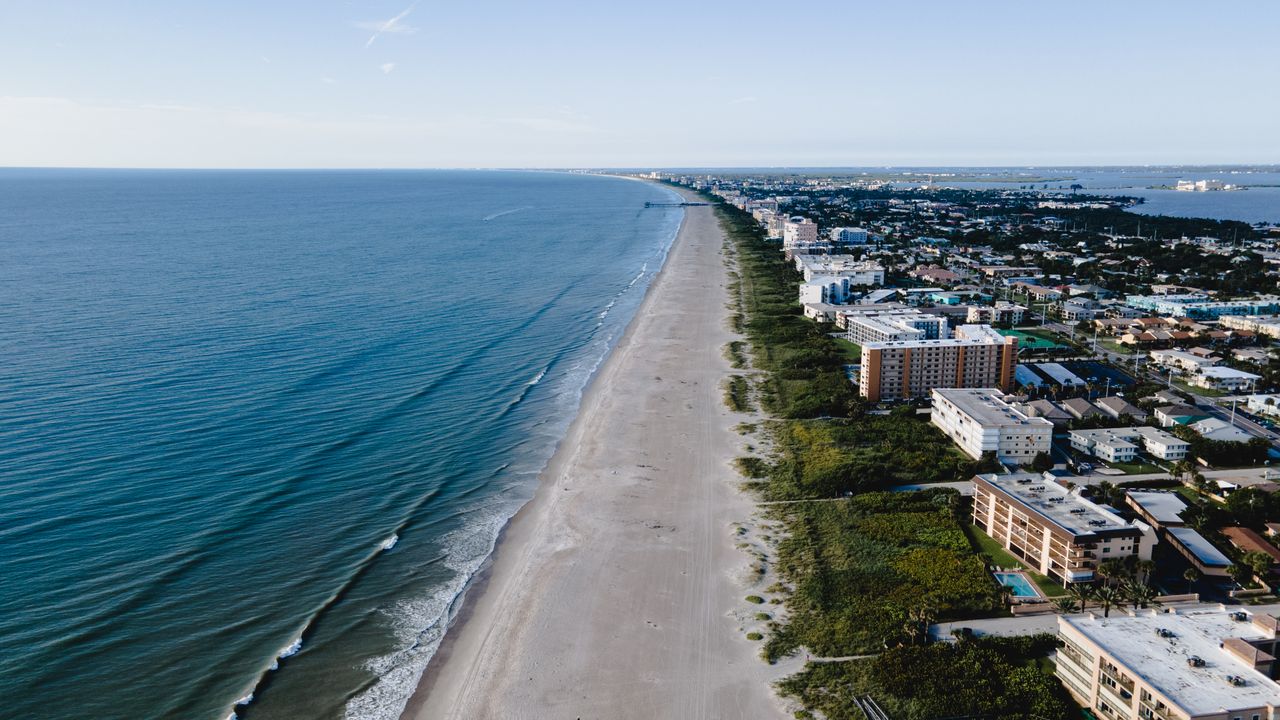
Brevard County, Florida, is changing how it pays for one of its most visible visitor services: beach lifeguards.
The County Commission voted September 15, 2026, to shift $889,949 in tourist development tax revenue to fully cover the county’s ocean lifeguard program. The move comes as local officials consider how to protect lifeguard funding from possible pressure on the county’s property-tax-supported general fund and as the Space Coast continues to rely heavily on tourism.
The decision is significant because Brevard’s so-called bed tax has traditionally been associated with tourism promotion, beach improvements, cultural events, visitor services and tourism-related facilities.
Now, visitor-generated revenue is being used directly for public safety on the beaches.
That shift reflects the practical connection between tourism and beach safety in a county whose Atlantic coastline, Cocoa Beach, Port Canaveral and space-related attractions form a major part of its visitor economy.
The debate is also part of a larger discussion about the proper use of tourism taxes, the cost of staffing lifeguards and the future of local government revenue in Florida.
What Exactly Is Brevard County’s Tourism Tax?
Brevard County imposes a 5% Tourist Development Tax, commonly called a bed tax, on short-term rentals of six months or less.
The tax applies to accommodations including hotels, motels, apartment hotels, rooming houses, RV parks and condominiums. It was approved by local voters in 1986 and increased in stages, reaching 5% in 2005.
The important point for visitors is that the tax is charged on the short-term accommodation transaction.
A person staying at a hotel therefore contributes to the tourism-tax system as part of the lodging bill.
The tax is separate from many other taxes and fees associated with a vacation.
That means a traveler staying in Brevard may encounter the tourism tax in addition to state and local sales taxes or other hotel charges.
Tourism Taxes Are Restricted-Use Revenues
Unlike ordinary general-fund revenue, the tourist development tax has designated purposes.
Brevard County’s current allocation rules divide the five cents of tax among tourism promotion, beaches, capital facilities, cultural events and related tourism purposes. The county’s official explanation says the money cannot simply be transferred to unrelated government programs without following the required process for changing the allocation.
Among the current allocations are significant amounts for beaches.
The first two cents include money for tourism promotion, beach facilities and improvements, tourism-related public facilities and cultural and special events.
The third cent allocates 65% to beach improvements, restoration, renourishment and erosion control.
The fourth cent is largely connected with tourism promotion and sports facilities.
The fifth cent is dedicated entirely to promoting and advertising Brevard County as a tourism destination.
The county’s Tourism Development Office manages the day-to-day administration of these programs, while the nine-member Tourist Development Council advises the County Commission on tourism-tax expenditures.
Why Can Tourism Money Be Used for Lifeguards?
This question has been debated by Brevard officials for several years.
In 2023, the county attorney’s office concluded that certain tourist development tax revenues could be used to fund beach lifeguard services. The discussion centered on funds connected to tourism marketing and capital facilities rather than treating lifeguards as an unrestricted general-government expense.
At the time, the county explored using tourism money to cover part of the lifeguard program.
That earlier debate became important because officials were trying to balance two competing objectives:
Fund beach safety.
Continue spending tourism money on marketing and other visitor-related purposes.
The legal landscape became even clearer in 2026.
Florida Law Now Specifically Authorizes Tourist Taxes for Lifeguards
The current 2026 Florida Statutes expressly identify lifeguard services as an allowable use of tourist development tax revenue.
Section 125.0104 permits qualifying tourist development tax revenue to be used to employ, train, equip, insure or otherwise fund certified lifeguards serving beaches on Florida’s Atlantic or Gulf coast.
That change provides an important piece of context for Brevard’s September decision.
The county is not simply improvising a new use for hotel-tax revenue.
State law now explicitly recognizes lifeguard services as an eligible tourism-tax expenditure.
That is especially relevant for a coastal county where swimming and beach recreation are central components of the tourism product.
Brevard Had Already Been Using Tourism Revenue for Lifeguards
The September decision does not represent the first tourism-tax contribution to ocean rescue.
At an April 2026 Tourist Development Council meeting, county tourism officials said approximately $1.57 million was already being used for the lifeguard program through the tourism budget.
The funding came from several tourism-related accounts: approximately $1 million from capital facilities, $250,000 from the cultural budget and the remaining amount from marketing funds.
The same meeting focused on rising lifeguard pay and recruitment difficulties.
The council approved $25,000 in additional funding for pay raises in May, with the County Commission approving that request.
The September action therefore builds on an existing relationship between tourism-tax revenue and ocean rescue.
The new allocation changes the scale and structure of that support.
The September Transfer Is $889,949
Florida Today reported that the County Commission voted September 15 to shift $889,949 from tourist development tax revenue to fully cover the lifeguard program’s budget.
The report says the move means the program will be less dependent on the county’s general fund. County spokesman Don Walker emphasized that the change does not put additional money into the general fund; rather, the general fund would no longer need to provide that portion of lifeguard funding.
This distinction is important.
The county is not receiving $889,949 in new general-purpose revenue.
Instead, a tourism-restricted revenue source is taking over an expense that would otherwise place pressure on the general fund.
That makes the move primarily a funding-source change, rather than an increase in total government revenue.
Why the General Fund Has Become a Concern
The timing of the decision is connected to a constitutional amendment on Florida’s November 2026 ballot.
The amendment, listed as Amendment 3, would change Florida’s homestead exemption and several rules governing property taxation. The Florida Department of State’s official summary says the proposal would raise the homestead exemption for non-school taxes to $150,000 in 2027 and $250,000 in 2028, with an inflation adjustment afterward. It would also reduce the annual assessment-growth cap for non-homestead property from 10% to 5% and impose additional restrictions concerning the uses of local property-tax revenue.
County officials have been concerned that changes to property-tax revenue could affect local-government budgets.
Florida Today reported that Brevard’s lifeguard funding shift was intended, in part, to protect the ocean-rescue program from potential reductions in property-tax-supported funding if the amendment changes the county’s revenue picture.
This is a matter of budget planning rather than a statement about what the amendment will ultimately do.
The amendment’s actual effect on Brevard’s finances would depend on its implementation and the county’s future property-tax base and spending decisions.
The Tourism Tax Gives the County Another Revenue Stream
For county budget planners, tourism-tax revenue has a different economic origin from property taxes.
It is tied to short-term accommodation activity.
When hotel rooms and other qualifying lodging are occupied, tax revenue is generated.
That means tourism-tax collections can increase as visitor activity grows.
Brevard’s 2025-26 adopted budget estimated $27 million in Tourist Development Tax revenue. Actual collections had reached approximately $24.3 million for fiscal 2024-25 at the time of the budget document’s preparation, compared with approximately $25.26 million in 2023-24.
The county therefore has a tourism revenue stream large enough to support multimillion-dollar programs and projects.
But those revenues are also sensitive to changes in hotel occupancy and visitor spending.
Tourism Is Central to the Space Coast Economy
Brevard County is marketed as Florida’s Space Coast, combining beaches, space exploration, cruise tourism, recreation, wildlife, fishing and family attractions.
The visitor economy is not concentrated in a single city.
Cocoa Beach and Cape Canaveral are major beach destinations.
Melbourne and Indialantic have their own tourism activity.
Port Canaveral is one of the country’s major cruise ports.
Kennedy Space Center Visitor Complex brings travelers interested in NASA and spaceflight.
The county’s lodging sector therefore plays a major role in generating the bed-tax revenue used for tourism programs.
This helps explain the argument for using part of that revenue to protect visitors when they enter the water.
Beach Safety Is a Tourism Issue, Not Just a Public-Safety Issue
For a coastal destination, beach safety can affect the visitor experience in ways that go beyond emergency response.
A serious drowning can affect how travelers perceive a particular beach.
Families may prefer beaches with visible lifeguard coverage.
Hotels and tourism organizations can use designated guarded areas as part of their visitor information.
And local authorities need to communicate changing rip-current conditions during periods of dangerous surf.
Brevard County’s Ocean Rescue division explicitly identifies visitors and tourists among the people it protects and lists accident and drowning prevention, public education, swimmer rescues, basic life support and lost-child recovery among its responsibilities.
From that perspective, lifeguards are not an unrelated government service.
They are directly connected to a primary reason people visit the county.
Brevard Has Nearly 72 Miles of Sandy Beaches
The scale of the coastline makes staffing particularly complicated.
Brevard County has approximately 72 miles of sandy beaches along the Atlantic coast, extending from the north near Volusia County toward Sebastian Inlet in the south.
The county cannot realistically provide the same level of continuous lifeguard coverage at every stretch of shoreline.
Instead, staffing is concentrated at designated beaches and towers.
That makes the location of lifeguard stations important.
Visitors who walk farther from guarded areas can enter stretches of shoreline where no lifeguard is immediately available.
Where Are County Lifeguards Stationed?
Brevard County’s Ocean Rescue information lists several full-time locations operating daily from 10 a.m. to 5 p.m.
They include:
Cocoa Beach Pier.
Shepard Park in Cocoa Beach.
Lori Wilson Park in Cocoa Beach.
Minutemen Causeway in Cocoa Beach.
Paradise/Futch Park in North Indialantic.
Port Canaveral provides year-round lifeguard service separately at Jetty Park.
The county also operates seasonal towers at additional locations.
These stations generally expand coverage during the busier parts of the beach season, with schedules changing outside the peak summer period.
Visit Space Coast similarly advises visitors to look for designated guarded areas and lists permanent and seasonal lifeguard locations.
The practical implication is straightforward:
A beach being public does not mean every section of that beach is continuously lifeguarded.
Lifeguard Staffing Has Been a Continuing Challenge
The number of stations is only one part of the problem.
The county has also faced difficulty recruiting and retaining lifeguards.
At an April 2026 Tourist Development Council meeting, officials said higher lifeguard pay rates were necessary because of difficulty recruiting and retaining qualified personnel.
The county’s official Ocean Rescue information says the program consists of approximately 90 part-time lifeguards, 26 full-time lifeguards and three full-time supervisors. All county ocean lifeguards are required to have United States Lifesaving Association certification and at least first-responder training.
Recruitment involves significant physical and educational requirements.
The county’s 2026 tryout standards included a 550-yard swim in under 10 minutes and a one-mile run in under 10 minutes, followed by an Ocean Rescue Academy that includes CPR, Emergency Medical Responder and advanced surf-rescue training.
That illustrates why simply deciding to add towers is not enough.
The county needs qualified people to staff them.
Recent Drownings Put More Attention on the Coverage Question
Beach-safety concerns became particularly prominent in 2026.
Spectrum News 13 reported in May that Brevard County had recorded five beach drownings during the year at that point. One incident involved a 17-year-old who was swept out by a strong rip current at Lori Wilson Park, while another incident in April involved two people who drowned while attempting to save a child caught in a rip current.
Earlier in the year, WFTV reported that two people drowned in April after being swept out by a rip current on a beach without a lifeguard on duty. The incident occurred roughly three-quarters of a mile from the nearest lifeguard tower, according to the report.
Those incidents helped focus attention on the geographic limits of the existing lifeguard network.
They also show why the county is considering funding stability at the same time as beach safety is under scrutiny.
Rip Currents Are a Major Part of the Risk
Rip currents are among the most important hazards for swimmers along the Atlantic coast.
They are powerful channels of water moving away from shore and can pull swimmers farther offshore.
The danger is not limited to inexperienced swimmers.
A swimmer who panics and attempts to fight directly against the current can become exhausted quickly.
Brevard Ocean Rescue’s public-safety messaging emphasizes using guarded beaches and checking current conditions before entering the water.
Visit Space Coast also tells beachgoers to remain within designated swimming areas when lifeguards are present.
Lifeguards Do More Than Pull People From the Water
The image of a lifeguard diving into the surf is only one part of the job.
Brevard’s Ocean Rescue division lists several responsibilities:
Drowning prevention.
Public education.
Citizen assistance.
Lost-child searches.
Basic life support.
Swimmer rescues.
Accident prevention.
Prevention is especially significant.
A lifeguard can identify dangerous conditions, warn swimmers away from a rip current and encourage people to move into a safer area before an emergency occurs.
A response after someone is already in trouble is important, but prevention can stop an incident from becoming a rescue in the first place.
Tourism Money Already Supports Beach Restoration
The use of tourism-tax funds for lifeguards also fits into a longer-standing pattern of using visitor-generated revenue to maintain the coastline.
Brevard’s Beach Management Program says a portion of the bed tax is dedicated to the local cost share for beach-restoration projects.
Those projects involve placing suitable sand and native dune vegetation along sections of the Atlantic shoreline to protect property and maintain beaches for residents, visitors and wildlife.
In other words, tourism-tax dollars were already contributing to the physical condition and protection of the beaches.
The lifeguard decision extends that relationship from the physical beach to the people using it.
Tourism and Beach Infrastructure Are Closely Connected
This connection has practical economic consequences.
A well-maintained beach can support hotel demand.
A beach with erosion problems may require restoration.
A beach with dangerous swimming conditions needs warnings and safety measures.
A beach without adequate lifeguard staffing may present a different kind of visitor-management problem.
For a place like Brevard County, where beach recreation is part of the tourism identity, these functions are interconnected.
The tourism tax is therefore being used across several parts of the visitor experience.
The County Commission Is Also Funding Tourism Marketing
The lifeguard transfer does not mean tourism marketing is ending.
Brevard’s FY2026-27 tourism marketing plan was approved at approximately $15.03 million, with additional disaster funds of about $1.55 million listed in the fiscal impact for the plan.
The county’s tourism program continues to promote Brevard as a destination while supporting visitor information, events and other tourism-related initiatives.
At the same September 15 meeting, commissioners approved 45 tourism-related cultural and sports-event grants totaling $664,120 for fiscal 2026-27.
That means the lifeguard decision is taking place alongside continued investment in traditional tourism activities.
The Hospitality Industry Has Supported the Lifeguard Shift
Florida Today reported that the hospitality industry backed the move.
Eric Garvey, president of the Cocoa Beach Area Hotel and Lodging Association, told commissioners that his association supports using tourism development tax revenue to fully fund the lifeguard program while emphasizing the need to implement the plan appropriately.
The rationale from the hospitality sector is closely tied to the visitor economy.
Hotels collect the tourism tax through lodging transactions.
Their businesses also depend heavily on a safe and attractive beach environment.
A hotel operator may therefore view beach safety as directly connected to the product being sold to visitors.
Commissioners Have Discussed Municipal Cost Sharing Before
The funding question has been debated in Brevard for several years.
In 2024, county officials discussed whether beachside municipalities should help cover lifeguard costs.
County records show that the Board of County Commissioners directed staff to meet with municipalities about possible cost-sharing arrangements and that parks maintained by municipalities were being considered for a combination of tourism-tax, county general-fund and municipal funding.
The September 2026 funding change potentially reduces the need for that kind of annual negotiation.
Florida Today reported that Commissioner Rita Pritchett promoted the tourism-tax shift as a way to reduce pressure on the general fund, while county officials said the move would provide a more stable funding structure for the program.
Why Stable Lifeguard Funding Matters
Lifeguarding is an unusual government service because demand can rise sharply during certain periods.
Beach conditions fluctuate.
Weather changes.
Tourism peaks during holidays and warm-weather periods.
A sudden rip-current event can produce many rescues within hours.
Staffing therefore has to be planned before the emergency occurs.
A county cannot easily recruit and train a new lifeguard during a dangerous weekend.
That makes reliable year-to-year funding particularly important.
The county’s decision attempts to create that reliability by using a tourism-tax revenue stream specifically connected to the visitor economy.
Rescue Numbers Show How Quickly Demand Can Rise
Brevard Ocean Rescue typically carries out roughly 450 rescues in a year, according to figures cited in the Florida Today report.
But the number can rise dramatically during periods of dangerous surf.
The report says approximately 150 rescues occurred in the weeks following Thanksgiving 2025 during a period of heightened rip-current danger.
Such episodes demonstrate why annual averages can hide the demands placed on lifeguards.
A program may appear adequately staffed during ordinary conditions but suddenly face dozens of emergencies during a concentrated period of dangerous surf.
The Debate Is Also About Where Lifeguards Should Be Located
Funding the existing program does not automatically answer the question of whether coverage should be expanded.
A county with approximately 72 miles of shoreline cannot place a lifeguard tower at every possible swimming location without substantial additional staffing and infrastructure.
Earlier 2026 reporting said Brevard faced a shortage of nearly 45 lifeguards when officials were discussing broader coverage.
That report also noted that two drownings occurred approximately three-quarters of a mile from the nearest tower.
The challenge is therefore partly financial and partly geographic.
Even with stable funding, officials must decide where additional lifeguards would provide the greatest increase in coverage.
Lifeguard Towers Are Not a Guarantee Against Drownings
This distinction is also important.
A lifeguard presence can improve response and prevention, but no lifeguard system can guarantee that drownings will never occur.
Swimmers can enter the ocean outside designated areas.
People can ignore warnings.
Conditions can change.
Emergencies can occur outside operating hours.
The county’s own safety guidance therefore combines lifeguard coverage with public education and personal responsibility.
For visitors, the safest practice remains using a guarded area, following posted warnings and taking rip-current advisories seriously.
The Importance of Swimming Near a Lifeguard
Visit Space Coast recommends that swimmers stay within designated guarded areas when lifeguards are present.
The organization says signs mark the boundaries of guarded swimming areas, helping visitors identify where they should remain within lifeguards’ view.
That creates a simple behavioral measure that does not depend on additional government spending.
A visitor can choose a guarded beach rather than an unguarded stretch.
That decision can reduce the distance between a swimmer and professional assistance if something goes wrong.
What Happens if Someone Is Caught in a Rip Current?
Public-safety guidance generally advises swimmers not to try to swim directly against the current toward shore.
Instead, swimmers should stay calm, float if necessary and move parallel to the shoreline until they escape the strongest current, then swim toward shore.
Calling or signaling for help is also important.
Brevard’s public-safety messaging emphasizes checking current conditions before swimming and staying near lifeguards.
For visitors unfamiliar with Florida’s coastline, these precautions are particularly valuable because clear-water rip currents can be difficult to see.
The Tourism Tax Shift May Change Other Tourism Priorities
One of the questions that will eventually need to be monitored is opportunity cost.
Tourist development tax revenue is finite.
Money directed toward lifeguards cannot simultaneously be spent on another tourism project.
The county already has established allocations for tourism marketing, beaches, cultural events, visitor centers, capital facilities and sports infrastructure.
The September decision therefore changes the relative distribution of funds within the tourism system.
The county has continued to approve tourism marketing and cultural grants, suggesting that other tourism functions are continuing.
But the effect on future projects will depend on annual revenue collections, reserves and future budget decisions.
Tourism Revenue Can Also Fluctuate
Another consideration is that tourism tax collections depend on accommodation activity.
If hotels are full and short-term rentals are strong, collections can increase.
If travel demand declines, collections can fall.
Economic downturns, hurricanes, airline disruptions or major changes in visitor behavior can therefore affect the revenue available for tourism-related programs.
That makes it important for county officials to avoid treating a single year’s tourism-tax revenue as guaranteed.
The Space Coast Has Multiple Sources of Tourism Demand
Brevard is somewhat unusual because its tourism economy is not built around one attraction.
The county has beaches.
It has the Kennedy Space Center.
It has Port Canaveral.
It has fishing, boating and wildlife.
It hosts sports events.
It has hotels and vacation rentals across several communities.
This diversification can help explain why tourism-tax revenue has become a significant recurring source of county funding.
At the same time, it means visitor spending is spread across different communities and tourism businesses.
The Kennedy Space Center Adds a Different Tourism Dimension
The Space Coast’s identity is not limited to beach tourism.
The Kennedy Space Center Visitor Complex connects Brevard to the country’s space program and attracts visitors who may combine space-related sightseeing with beach vacations.
That creates a visitor profile that can look different from a traditional Florida resort destination.
A family may visit a launch-related attraction in the morning and spend the afternoon at the beach.
A cruise passenger may visit the coast for only a few hours.
A hotel guest may stay several days and visit both beaches and space attractions.
The tourism-tax system captures part of that broader lodging economy.
Port Canaveral Adds Another Layer to Beach Tourism
Port Canaveral’s cruise industry also contributes to the county’s visitor environment.
Cruise passengers do not necessarily stay overnight in Brevard before every trip, so not all cruise-related visitors directly generate the tourist development tax.
But the port creates substantial visitor traffic and supports hotels, restaurants, transportation companies, attractions and other tourism businesses.
That makes beach safety one element within a much wider tourism economy.
Beach Safety Can Affect the Local Brand
Destination marketing often emphasizes scenery and experiences.
A beach tourism destination also has to communicate safety.
Brevard’s official tourism organization maintains a dedicated beach-safety page that tells visitors how to recognize guarded locations and provides information about swimming conditions.
The existence of this information shows that safety is part of how the Space Coast communicates with visitors.
The lifeguard funding decision can therefore be viewed as both a public-safety issue and a destination-management issue.
Brevard’s Lifeguard Program Is Already Year-Round
The county’s Ocean Rescue program is not simply a summer operation.
Official county information describes it as a year-round program, with full-time and part-time staff and towers operating on varying schedules.
That makes the funding challenge more complicated.
A county cannot simply employ lifeguards for a few holiday weekends.
It needs supervisors, training, equipment, insurance and personnel availability throughout the year.
This helps explain why officials have focused on structural funding rather than one-time emergency appropriations.
Training Is an Ongoing Expense
The county’s lifeguard academy includes professional-rescuer CPR, Emergency Medical Responder training and advanced surf rescue.
New lifeguards also undergo on-the-job training.
Those requirements are necessary because ocean rescue is fundamentally different from pool lifeguarding.
Open-water environments contain waves, currents, shifting sandbars, changing weather and much larger areas of water.
The financial commitment therefore includes much more than the hourly wages of lifeguards standing in towers.
Equipment and Insurance Also Cost Money
The state law allowing tourism-tax revenue to fund lifeguards explicitly includes not only employment and training, but also equipment and insurance.
That language recognizes that an effective lifeguard program requires an entire operational system.
Rescue boards.
Buoys.
Communication equipment.
Rescue vehicles.
Watercraft.
Medical supplies.
Towers.
Insurance.
Training facilities.
All of those costs add up.
The tourism-tax shift can therefore support the infrastructure surrounding the lifeguard rather than simply paying salaries.
The Decision Comes at a Time of Growing Beach-Safety Awareness
Brevard’s recent rescue and drowning data has made the lifeguard debate more visible.
Five beach drownings had already been reported by early May 2026, while previous periods had also seen clusters of drownings and rescues connected with rip currents.
The incidents occurred in different circumstances, and not all drownings can be attributed to the absence of lifeguards.
Nevertheless, the concentration of some incidents on unguarded stretches has increased attention on the geography of beach coverage.
That is why funding and deployment are increasingly being discussed together.
What the Shift Means for Hotel Guests
For visitors staying in Brevard County hotels or other taxable accommodations, the change does not create a new tourism tax.
The county already imposes the 5% Tourist Development Tax.
The September decision changes how a portion of that existing revenue is allocated.
Visitors will therefore not suddenly see an additional five-percent charge because lifeguards are now being funded from the tourism tax.
The same tax continues to be collected under the county’s existing system.
What It Means for Tourism Businesses
For hotels and short-term accommodation providers, the tax remains an established collection responsibility.
The broader issue is what visitors receive from the revenue.
Tourism businesses may benefit from a safer and more consistently staffed beach environment, while other tourism organizations continue to rely on tourism-tax funding for marketing, events and visitor infrastructure.
The hospitality industry’s reported support for the lifeguard shift indicates that at least some lodging operators see direct value in the arrangement.
What It Means for County Budgeting
From a budget perspective, the transfer could make the lifeguard program less dependent on general-fund property-tax revenue.
That gives county officials another funding source tied to visitors.
It also creates a stronger connection between tourism-related revenues and a service used heavily by tourists.
However, it does not eliminate the county’s broader fiscal challenges.
The general fund still pays for many public services.
Tourism tax revenue can only be spent within its legally authorized purposes.
And visitor-related revenues can fluctuate.
The move therefore changes the funding mix rather than solving every budget issue.
The Debate Could Continue Over Expanded Beach Coverage
The September decision fully funds the existing lifeguard program, but it does not automatically mean every Brevard beach will have a lifeguard.
Earlier 2026 discussions considered the possibility of much broader coverage.
One local official told WFTV that staffing every beach would require a significant budget increase and that the county was already short roughly 45 lifeguards.
That leaves another question for future years:
How much lifeguard coverage does a county with nearly 72 miles of beach actually need?
Answering that requires decisions about population, visitor concentrations, drowning risk, beach geography, hours of operation and available personnel.
Other Florida Counties Have Used Tourism Taxes for Lifeguards
Brevard’s decision also fits into a broader Florida pattern.
Florida Today reported that Nassau, Bay and Okaloosa counties have used tourist development tax revenue to help pay for lifeguards in recent years.
The report described Brevard as the largest Florida county to fully fund its lifeguard program through tourist development tax revenue.
The statewide legal framework now explicitly permits the practice for qualifying coastal counties.
This could make tourism-tax-funded beach safety a more common feature of coastal tourism management in Florida.
The Model Connects Visitors to the Services They Use
The underlying logic is straightforward.
Visitors generate tourism-tax revenue through lodging.
Visitors use beaches.
Lifeguards protect beach users.
Therefore, visitor-generated money can help finance a service that directly supports a major visitor activity.
But the policy also has implications for residents because local people use the same beaches.
This means the program serves both groups.
The distinction between “tourism spending” and “community spending” is therefore not always clear at the beach.
Residents and Tourists Share the Same Coastline
A resident swimming at Cocoa Beach and a tourist staying at a nearby hotel face the same ocean conditions.
Both can encounter a rip current.
Both may need assistance.
Both benefit from public education and rescue infrastructure.
That is one reason beach safety tends to blur the traditional boundary between tourism spending and general public safety.
The service is visitor-related, but its benefits are not exclusive to visitors.
Transparency Will Matter Going Forward
Because tourism taxes are restricted funds, the county will need to continue accounting for how they are allocated.
The Tourism Development Office maintains financial reporting and budget information, while the Tourist Development Council advises the County Commission.
That makes future tourism-tax budgets important for understanding whether the lifeguard shift changes spending on other tourism priorities.
A useful question for future budget cycles will be:
How much tourism-tax revenue is going to beach safety, and how much remains available for marketing, events, beach restoration and capital projects?
The numbers will provide the clearest picture of the policy’s practical impact.
What Visitors Should Know Before Going to a Brevard Beach
The funding change does not replace the need for personal caution.
Visitors should check the current surf and rip-current forecast before entering the water.
They should use beaches with lifeguards whenever possible.
They should stay within marked swimming areas.
They should pay attention to flag warnings.
And parents should keep children close, particularly in active surf.
Brevard Ocean Rescue specifically directs visitors to check rip-current conditions before going to the beach.
Red Flags and Rip-Current Warnings Matter
Beach warning flags can communicate dangerous water conditions even when the sky is clear and the beach appears inviting.
A calm-looking shoreline can still contain powerful offshore currents.
The safest approach is therefore not to judge water conditions entirely by appearance.
Follow official warnings.
Ask lifeguards about conditions.
Stay in guarded areas.
And avoid entering the water when officials advise against swimming.
The Larger Tourism Question
Brevard County’s decision raises a broader issue for tourism destinations around the world:
Should visitor-generated revenue help pay for the public infrastructure and services that make tourism possible?
The county already answers that question in several ways.
Bed-tax revenue helps finance beach restoration.
It supports tourism marketing.
It contributes to cultural and sports events.
It supports visitor information services.
It can finance tourism-related capital projects.
Now it will also fully fund the county’s lifeguard program.
The September decision therefore expands the definition of what tourism investment can mean.
Instead of treating tourism promotion and beach safety as completely separate categories, Brevard is linking them within the same visitor economy.
A Safer Beach Is Part of the Visitor Experience
For Brevard County, that connection is particularly direct.
The Space Coast’s beaches are not an incidental attraction.
They are one of the reasons visitors come.
Lifeguards do not advertise hotels.
They do not organize festivals.
They do not run the county’s tourism website.
But they perform a service that can determine whether a day at the beach becomes an ordinary vacation memory or an emergency.
The county’s decision to use $889,949 in tourism-tax revenue for the lifeguard program reflects that reality.
The long-term question will be how the county balances this new funding commitment with the other purposes assigned to tourism revenue—and whether the arrangement helps provide enough trained lifeguards to match the risks and visitor demand along Brevard’s long Atlantic shoreline.
As tourism continues to evolve on Florida’s Space Coast, beach safety is increasingly being treated not merely as a public-service expense, but as part of the infrastructure that supports the destination itself.
5 Frequently Asked Questions About Brevard County’s Tourism Tax and Lifeguards
1. How much is Brevard County’s tourism tax?
Brevard County currently charges a 5% Tourist Development Tax on qualifying short-term accommodations, including hotels, motels, condominiums, RV parks and certain other lodging rented for six months or less. The tax was originally approved by voters in 1986 and reached its current 5% rate in 2005.
2. How much tourism-tax money is being shifted to lifeguards?
The Brevard County Commission voted September 15, 2026, to shift $889,949 in tourist development tax revenue to fully fund the county’s lifeguard program budget. The county says the change reduces the need for general-fund support rather than creating new money for the general fund.
3. Can Florida tourism-tax revenue legally be used to pay lifeguards?
Yes. Florida’s 2026 version of Section 125.0104 specifically authorizes qualifying tourist development tax revenue to be used to employ, train, equip, insure or otherwise fund certified lifeguards for beaches on Florida’s Atlantic or Gulf coasts.
4. Why does Brevard County need lifeguards?
Brevard’s Ocean Rescue division serves residents, visitors and tourists and is responsible for drowning prevention, public education, swimmer rescues, basic life support and other beach-safety duties. The county reports approximately 90 part-time lifeguards, 26 full-time lifeguards and three full-time supervisors.
5. Are all Brevard County beaches staffed with lifeguards?
No. Lifeguard coverage is concentrated at designated beaches and towers, with some locations protected year-round and others covered seasonally. Permanent county locations include several Cocoa Beach sites and Paradise/Futch Park in North Indialantic, while additional seasonal locations operate during parts of the year. Visitors are advised to swim in designated guarded areas whenever possible.
Brevard County’s 2026 decision represents a significant change in how tourism-generated revenue is connected to public beach safety. The county already spends tourist-tax money on beach restoration, tourism marketing, cultural events and visitor infrastructure; the addition of full lifeguard funding places direct protection of beach users within that same tourism-investment framework.
The move also comes as Brevard faces questions about long-term local-government revenues and as beach safety remains a prominent concern following recent drownings and periods of unusually high rip-current rescue activity. For visitors, however, the most immediate message remains simple: the presence of lifeguards improves the safety net, but checking conditions and swimming near professional lifeguards remain essential parts of a safe Florida beach trip.
Sources Florida Today