
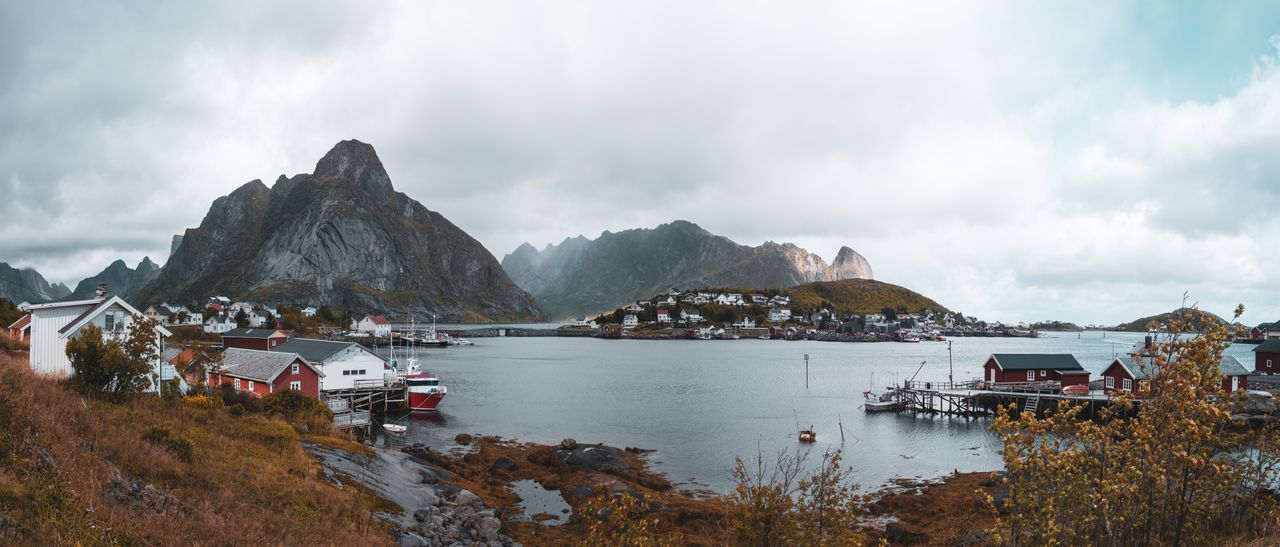
Europe’s tourism map is quietly being redrawn by climate change. As southern destinations bake under increasingly intense summer heat, travelers are looking north, toward mountains, forests, islands and Arctic landscapes. But there is a catch: nature’s air conditioner is not an unlimited resource.
For generations, the classic European summer holiday followed a familiar formula: Mediterranean sunshine, warm seas, outdoor restaurants and long afternoons on the beach.
Now, a growing number of travelers are asking a different question:
Where can I go to escape the heat?
The resulting “coolcation” trend is sending visitors toward Scandinavia, the Baltic states, the British Isles, Alpine regions and other traditionally cooler destinations. Recent travel data shows growing interest in northern Europe, while tourism businesses are increasingly marketing cooler climates as an advantage rather than a limitation.
But this creates an uncomfortable paradox.
Climate change may make cooler destinations more attractive precisely when those destinations are least prepared for large numbers of visitors.
The forests, lakes, mountains, coastlines and wildlife that make these places appealing are not infinitely resilient.
If millions of travelers flee overheated destinations and converge on the same “cool” landscapes, Europe could simply create a new version of overtourism—this time in places that previously escaped it.

What Is a “Coolcation”?
A coolcation is essentially a holiday chosen for mild or cold weather rather than guaranteed heat.
Instead of spending August somewhere where temperatures can approach 40°C, travelers may choose destinations where summer conditions are more comfortable for hiking, cycling, sightseeing and outdoor activities.
Popular choices include:
- Norway
- Sweden
- Finland
- Iceland
- Denmark
- Scotland
- Ireland
- the Baltic states
- Switzerland
- Austria
- northern Spain
- mountain regions of France and Italy
A 2026 European heat-escape index ranked Iceland, Finland and Norway among the strongest options for travelers seeking cooler conditions. The ranking considered factors including daytime and nighttime temperatures, sea temperatures, forest coverage, population density and access to wild camping.
The trend is therefore about more than temperature.
Travelers are looking for nature, space and relief from extreme heat.
And that combination is precisely what makes the trend potentially problematic.
Why Travelers Are Heading North
The basic motivation is obvious.
Nobody wants to spend thousands of dollars on a European vacation only to discover that walking around a historic city at midday is physically miserable.
Extreme heat can change an entire itinerary.
Outdoor sightseeing becomes difficult.
Hiking becomes dangerous.
Sleeping becomes harder.
Older travelers and people with certain health vulnerabilities face greater risks.
Even beaches can become uncomfortable when temperatures are exceptionally high.
Cooler destinations offer a different proposition.
Instead of hiding indoors during the hottest part of the day, travelers can spend more time outside.
That makes destinations such as Norway, Scotland and Sweden particularly attractive for active travelers.
The Mediterranean Is Losing Its Summer Monopoly
For decades, southern Europe dominated the European summer holiday market.
Spain.
Italy.
Greece.
Portugal.
Croatia.
The Mediterranean’s appeal remains enormous, and cooler destinations are not replacing it overnight.
But climate is becoming a more important factor in travel decisions.
Research reported in 2026 found increasing interest in northern regions, including southern Finland and Norway’s Vestland, while travelers were also looking toward cooler areas within traditionally hot countries such as Galicia in Spain, Trentino-Alto Adige in Italy, and Normandy and Alsace in France.
That is an important distinction.
The future of cool tourism may not simply be:
South → North.
It could also be:
coast → mountains,
cities → countryside,
lowlands → highlands,
July/August → spring/autumn.
Northern Europe Suddenly Looks Different
Places that were once marketed primarily for winter travel are discovering a new summer identity.
Finland is no longer just about snow and Santa Claus.
Norway is not only about skiing and northern lights.
Sweden isn’t simply a winter destination.
Iceland’s appeal extends far beyond cold-weather adventure.
Summer provides these destinations with long daylight hours, green landscapes, hiking, cycling, wildlife and outdoor culture.
That makes them particularly well suited to the coolcation traveler.
Iceland: The Ultimate Coolcation?
Iceland has emerged as one of Europe’s most obvious heat-escape destinations.
Its appeal is almost tailor-made for travelers escaping Mediterranean temperatures:
- cool summers;
- dramatic volcanic landscapes;
- glaciers;
- waterfalls;
- geothermal areas;
- hiking;
- relatively low population density.
But Iceland also illustrates the central problem.
The country is already a major international tourism destination.
More visitors do not automatically mean more sustainable tourism.
A fragile landscape can be damaged by repeated foot traffic, vehicles and infrastructure expansion.
Norway’s Fjords Are Beautiful—and Vulnerable
Norway’s fjords are another obvious beneficiary of the coolcation boom.
The landscape offers precisely what overheated tourists want:
cool air, water, mountains and space.
But “space” can be deceptive.
A fjord community may look enormous on a map while having a tiny permanent population.
A cruise ship can deliver thousands of visitors into a community whose local infrastructure was never designed for that number of people arriving simultaneously.
That creates a mismatch between:
visitor capacity
and
community capacity.
The Cruise Ship Problem
Cruise tourism deserves particular attention.
A cruise ship can transport thousands of passengers to a destination in a single arrival.
That sounds economically impressive.
But local communities may experience something quite different.
Thousands of visitors might:
- overwhelm streets;
- increase waste;
- pressure public toilets;
- strain transportation;
- create congestion;
- increase demand for water;
- generate relatively short visits.
And because many passengers sleep and eat on the ship, not all of their spending necessarily remains in the local economy.
The result can be a lot of people without proportionately large local economic benefits.
Nature Has a Carrying Capacity
This is the key concept behind the entire coolcation debate.
Every ecosystem has limits.
A hiking trail can handle a certain amount of foot traffic.
A lake can absorb a certain amount of recreational use.
A wildlife population can tolerate only a certain amount of disturbance.
A small village can process only so many visitors.
Once those limits are exceeded, damage begins to accumulate.
The problem is that nature doesn’t always announce the exact moment when the line has been crossed.
The Fragile Landscape Problem
Many of Europe’s most attractive coolcation destinations are attractive precisely because they are relatively undeveloped.
That creates a paradox.
Tourists arrive because they want:
untouched nature.
Tourism then creates pressure to build:
roads, hotels, parking areas, restaurants, airports and visitor centers.
The infrastructure required to accommodate tourists can gradually destroy the very wilderness that attracted them.
Trails Don’t Stay Wild Forever
Hiking is one of the most popular coolcation activities.
It seems environmentally friendly.
Walking produces far fewer emissions than driving.
But thousands of people walking repeatedly over the same landscape can cause:
- soil erosion;
- vegetation loss;
- widening trails;
- disturbance to wildlife;
- damage to fragile habitats.
In mountainous regions, recovery can be particularly slow.
A trail that looks slightly worn today may become a serious erosion channel after repeated heavy use.
Wildlife Doesn’t Always Appreciate Tourists
Wildlife tourism is another growing attraction.
Visitors want to see:
- whales;
- reindeer;
- bears;
- seabirds;
- seals;
- puffins;
- Arctic wildlife.
But animals do not necessarily understand that tourists are merely trying to take photographs.
Repeated human presence can affect:
- feeding behavior;
- breeding;
- migration;
- nesting;
- resting;
- predator avoidance.
Responsible wildlife tourism therefore requires distance and strict rules.
The Photography Problem
Modern smartphones and social media have transformed wildlife tourism.
A photograph of a rare animal can generate enormous attention.
That attention can send thousands of people to the same location.
One viral post can effectively become an unofficial tourism advertisement.
And unlike a conventional tourism campaign, there may be no infrastructure in place to handle the resulting visitors.
The “Hidden Gem” Paradox
The phrase hidden gem should perhaps make tourism planners nervous.
Once a place is widely described as a hidden gem, it stops being hidden.
This has happened repeatedly around the world.
A waterfall becomes famous online.
A remote beach becomes a TikTok sensation.
A mountain viewpoint becomes an Instagram destination.
Then parking lots fill up.
Trails become crowded.
Local residents complain.
The gem is no longer hidden.
Coolcations Could Create Northern Overtourism
This is the most important warning.
If millions of travelers change direction, tourism pressure doesn’t disappear.
It moves.
Southern Europe could experience some relief during the hottest periods.
But northern Europe could face:
- overcrowding;
- rising accommodation prices;
- pressure on housing;
- increased waste;
- traffic;
- water demand;
- ecosystem damage.
In other words:
Europe could solve one tourism problem by creating another.
Scotland Offers a Preview
Scotland is already seeing a tourism boost as travelers look for cooler alternatives to hot European destinations.
Flight bookings increased during June and July 2026, with international visitors attracted by the country’s cooler climate, landscapes and cultural appeal.
The opportunity is significant.
But Scotland also has to manage the pressures that come with increased visitor numbers.
Popular rural areas can struggle with:
- road congestion;
- parking;
- waste;
- accommodation shortages;
- pressure on local services.
The lesson is simple:
Cooler does not automatically mean sustainable.
Northern Sweden Is Experiencing the Same Shift
Travelers are also discovering southern Sweden as an alternative to overheated Mediterranean destinations.
Visitors have reportedly been impressed by daytime temperatures below 30°C and the relative lack of crowds compared with southern European hotspots.
That sounds like a win.
But if the number of visitors continues increasing, the very advantage attracting them—low crowd density—could disappear.
Rural Communities Face a Difficult Choice
For small communities, tourism can be both opportunity and threat.
On the positive side, tourism can:
- create jobs;
- support restaurants;
- preserve local crafts;
- keep accommodation businesses open;
- generate tax revenue;
- encourage young people to remain locally.
But rapid growth can also:
- raise property prices;
- increase rents;
- create seasonal employment;
- strain public services;
- change local culture.
The challenge is achieving economic benefit without losing community control.
Housing Could Become the Biggest Issue
Tourism pressure often shows up first in housing.
If homeowners can make more money from short-term rentals than long-term tenants, housing supply can shift toward visitors.
That creates problems for:
- nurses;
- teachers;
- restaurant workers;
- construction workers;
- young families.
A destination can attract more tourists while simultaneously making itself harder for local people to live in.
That is not sustainable tourism.

The Water Question
Water may become one of the most important constraints on tourism.
A tourist needs water for:
- drinking;
- showers;
- toilets;
- swimming pools;
- laundry;
- restaurants;
- landscaping.
In a cool, rainy destination, water may appear abundant.
But climate change can alter rainfall patterns.
And tourism demand tends to increase during periods when local resources may already be under pressure.
A destination that markets itself as a climate refuge needs to know exactly how much water it can sustainably provide.
Cooler Doesn’t Mean Climate-Proof
This is a crucial misconception.
Northern Europe is warming too.
The region isn’t escaping climate change.
It may experience:
- heatwaves;
- drought;
- wildfires;
- flooding;
- storms;
- ecosystem changes.
The difference is that its baseline climate is generally cooler.
That may make it attractive today.
But it does not guarantee permanent immunity from extreme weather.
Climate Refuge Tourism Could Become Normal
The coolcation trend may represent something bigger than a travel fad.
Historically, tourists selected destinations based on:
- scenery;
- culture;
- price;
- food;
- beaches;
- attractions.
Increasingly, they may add another criterion:
climate comfort.
Travel planning could eventually look like weather shopping.
A traveler might ask:
Where in Europe will the temperature stay between 18°C and 25°C during my vacation?
That is a significant change in tourism behavior.
Shoulder Seasons Could Be the Real Solution
There is an alternative to simply moving tourists north.
Move them across time.
Instead of visiting Italy in July, travel in May.
Instead of Greece in August, visit in October.
Instead of Spain during the hottest period, travel in spring.
This can reduce pressure on both northern and southern destinations.
It also extends the tourism season.
Tourism Doesn’t Have to Be a Summer Industry
One of the biggest weaknesses in European tourism is seasonal concentration.
Millions of people want to travel during the same few weeks.
That produces:
- expensive flights;
- expensive hotels;
- crowded attractions;
- overloaded transport;
- seasonal labor shortages.
Spreading travel across the year makes much more economic and environmental sense.
The Rise of “Climate-Smart” Travel
The next evolution of sustainable tourism may combine several ideas:
coolcation
plus
slow travel
plus
off-season travel
plus
local tourism
plus
public transport.
That is much more powerful than simply telling everyone to fly north.
Rail Could Help Redistribute Tourism
Rail networks can play an important role.
Europe already has extensive rail infrastructure.
Travelers can reach cooler destinations without necessarily taking another flight.
A traveler might take a train to:
- the Alps;
- Scotland;
- Scandinavia;
- northern Germany;
- Switzerland;
- Austria.
This reduces some emissions and can distribute visitor spending among smaller communities along the route.
But Tourism Growth Needs Infrastructure First
The biggest mistake would be to market a destination before building the systems required to handle visitors.
Before aggressively promoting a rural region, governments should consider:
- roads;
- public transport;
- waste management;
- sewage;
- water;
- emergency services;
- housing;
- medical capacity;
- environmental protection.
Otherwise, tourism becomes a demand shock.
Visitor Caps May Become More Common
Some sensitive destinations may eventually need hard limits.
That could include:
- daily visitor quotas;
- timed entry;
- parking reservations;
- cruise ship restrictions;
- trail permits;
- wildlife viewing limits.
These measures can be unpopular.
But if the alternative is environmental destruction, restrictions may become unavoidable.
Tourism Taxes Can Fund Conservation
Another solution is a visitor tax.
If tourists benefit from a natural landscape, a small portion of their spending can help maintain it.
Tourism revenue can fund:
- trail maintenance;
- conservation;
- waste collection;
- public transport;
- wildlife protection;
- local infrastructure.
But the money must actually reach the communities and ecosystems experiencing the tourism pressure.
Local Residents Should Get a Seat at the Table
Tourism decisions should not be made entirely by:
- airlines;
- hotel companies;
- tourism boards;
- investors.
Residents should have meaningful influence.
They know where:
- traffic is worst;
- water shortages occur;
- wildlife is disturbed;
- housing is becoming unaffordable.
The people who live in a destination year-round should have a say in how many visitors it receives.
The Economic Opportunity Is Real
Despite the risks, the coolcation boom could be a major opportunity for northern and rural Europe.
It can diversify local economies.
It can create jobs.
It can encourage infrastructure investment.
It can preserve cultural attractions.
It can support small businesses.
And it can reduce dependence on traditional mass-tourism models.
But only if growth is managed carefully.
The Difference Between Sustainable and Merely Smaller
This distinction deserves emphasis.
A destination receiving 100,000 tourists instead of 1 million sounds better.
But what if those 100,000 visitors:
- all arrive by air;
- all stay in large resorts;
- consume enormous quantities of water;
- produce large amounts of waste;
- damage fragile habitats?
The numbers alone don’t tell the story.
Sustainability is about impact per visitor, not simply visitor totals.
A Better Tourism Metric: Value Per Visitor
Tourism policymakers should increasingly ask:
How much economic value does each visitor create for the local community?
A traveler who stays for seven nights and spends locally may be more valuable than five day-trippers.
A small group using local guides may be preferable to a large tour bus.
A traveler arriving by train may have a smaller environmental footprint than one arriving by private jet.
The future of tourism should therefore focus on:
value, not volume.
Travelers Can Help
Visitors have more influence than they realize.
If you want to participate in the coolcation trend responsibly:
Stay longer
Fewer, longer trips can be better than constant destination-hopping.
Travel off-season
Spring and autumn can reduce pressure.
Use public transportation
Trains and buses can reduce the need for rental cars.
Choose locally owned accommodation
More tourism spending can remain within the community.
Follow trail restrictions
A closed trail is closed for a reason.
Don’t approach wildlife
The perfect photograph isn’t worth disturbing an animal.
Respect local residents
A tourist destination is somebody else’s home.
Avoid viral hotspots
Sometimes the most responsible travel choice is not visiting the place everyone on social media is recommending.
Nature Is the Product
This may be the central lesson of the entire coolcation phenomenon.
Tourism companies are selling:
mountains.
forests.
lakes.
wildlife.
coastlines.
fresh air.
But those things are not manufactured products.
They are ecosystems.
And ecosystems can be damaged.
If tourism destroys the landscape, the industry eventually destroys its own product.
The Great Irony of Coolcations
There is something almost poetic about the situation.
Climate change is making southern Europe increasingly uncomfortable during summer.
Travelers escape north.
They seek forests, mountains and wilderness.
But if millions of people arrive in search of untouched nature, they may transform those landscapes into the next crowded tourist destinations.
The cure can become part of the disease.
What the Future of European Tourism Could Look Like
The tourism map of Europe may become more geographically and seasonally distributed.
Southern Europe could increasingly specialize in:
- spring tourism;
- autumn tourism;
- winter tourism;
- coastal experiences outside peak heat.
Northern Europe could gain more:
- summer visitors;
- outdoor tourism;
- wellness tourism;
- nature tourism.
Mountain regions could benefit from:
- summer hiking;
- cycling;
- wellness;
- adventure travel.
And smaller towns could receive visitors who previously concentrated in major cities.
That could be a healthier tourism model—if managed properly.
The Real Question Isn’t “Where Is It Cool?”
The more important question is:
“How much tourism can this place handle?”
A cool climate is not enough.
A beautiful landscape is not enough.
Low population density is not enough.
Nature needs limits.
Communities need housing.
Infrastructure needs capacity.
Wildlife needs space.
And tourists need to understand that the best destination isn’t necessarily the one with the most Instagrammable view.
Sometimes it’s the one that still has enough nature left to protect.
Final Thoughts
The rise of coolcation tourism is one of the clearest signs that climate change is changing travel behavior.
Travelers are increasingly treating temperature as a fundamental part of destination selection rather than simply hoping for good weather.
That creates enormous opportunities for northern Europe and other cooler regions. Iceland, Finland, Norway, Sweden, Scotland, Ireland and the Baltic states can offer precisely what overheated travelers increasingly want: fresh air, outdoor adventure, dramatic landscapes and more comfortable summer temperatures.
But nature has limits.
A mountain trail cannot accommodate infinite hikers.
A small village cannot absorb infinite visitors.
A wildlife population cannot tolerate infinite disturbance.
A lake cannot provide infinite water.
The answer, therefore, isn’t to stop people from discovering cooler destinations.
It is to make sure that coolcation tourism doesn’t become the next mass-tourism problem.
The smartest future may involve fewer peak-season crowds, longer stays, better public transportation, stronger conservation rules, local ownership and careful visitor management.
Because the irony would be painful:
Travelers fleeing the damage caused by climate change should not end up damaging the very natural places they fled to enjoy.
5 Frequently Asked Questions
1. What is a coolcation?
A coolcation is a holiday deliberately planned around cooler temperatures. Instead of seeking hot Mediterranean weather, travelers choose destinations such as Scandinavia, Iceland, Scotland, Ireland or mountain regions where summer conditions are generally milder.
2. Why are coolcations becoming more popular?
More frequent and intense European heatwaves are influencing travel decisions. Travelers increasingly want comfortable temperatures for sightseeing and outdoor activities. Research in 2026 found growing interest in northern Europe and cooler areas within traditionally popular southern countries.
3. Can coolcation tourism harm the environment?
Yes. A sudden increase in visitors can put pressure on fragile ecosystems through trail erosion, wildlife disturbance, waste, traffic, water consumption and infrastructure development. A destination being remote or naturally beautiful does not mean it has unlimited tourism capacity.
4. Which destinations are popular for coolcation travel?
Iceland, Finland, Norway and Sweden are among the leading European choices. Scotland, Ireland, Denmark, the Baltic states, Switzerland, Austria and cooler northern regions of countries such as Spain, France and Italy are also benefiting from the trend.
5. How can travelers enjoy a coolcation more sustainably?
Travelers can stay longer, avoid peak periods, use trains and public transportation, support locally owned businesses, follow conservation rules, avoid disturbing wildlife and choose destinations that have the infrastructure to accommodate visitors. Most importantly, travelers should remember that cooler does not automatically mean sustainable—the environmental capacity of the destination matters.

Sources DW

