
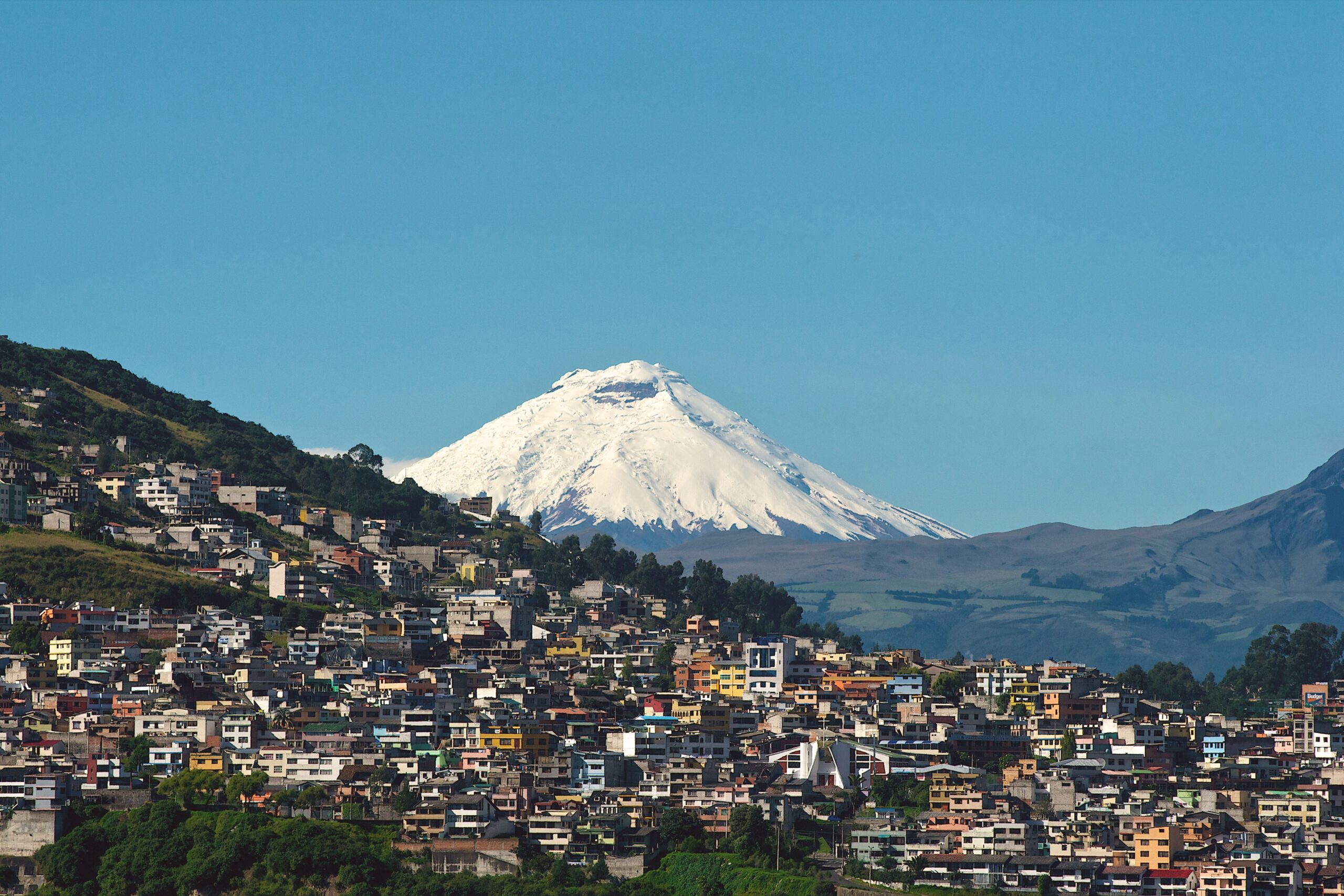
Ecuador remains one of South America’s most spectacular destinations—but a new U.S. travel advisory is putting a spotlight on the country’s growing security problem, particularly in areas where drug-trafficking organizations have fueled violent crime.
From the Andes and historic cities to Pacific beaches and the Galápagos Islands, Ecuador has built a strong international tourism reputation. Yet travelers are now being urged to exercise increased caution as authorities warn about murders, armed robberies, assaults, kidnappings and extortion.
The warning is significant because Americans are one of Ecuador’s most important international visitor groups. But the story is more complicated than simply saying “Ecuador is dangerous.”
The country is vast, security conditions vary dramatically between regions, and some of its most popular destinations are not currently under the most severe travel restrictions.
Why Ecuador Is Facing Growing Security Concerns
Ecuador has historically been known for its natural beauty and relatively accessible tourism.
That reputation has been challenged by the expansion of organized criminal networks and drug trafficking.
Ecuador’s geographic position is particularly important. It sits between Colombia and Peru, two major producers in the international cocaine trade, while its Pacific ports provide access to international shipping routes.
Criminal organizations have increasingly competed for control of trafficking routes, territory and local economies.
That competition has contributed to a deterioration in public security.
The result is a tourism problem with several dimensions:
- violent crime can affect local communities;
- criminal groups can control particular neighborhoods or corridors;
- kidnapping and extortion can target residents and businesses;
- demonstrations can disrupt transportation;
- and travelers may become victims of opportunistic crime even when they are not the intended targets.
Not All of Ecuador Has the Same Risk
This is perhaps the most important point for travelers.
A nationwide travel advisory does not mean that every destination inside a country carries identical risks.
The U.S. warning highlights specific higher-risk areas, including parts of:
- Guayaquil
- Manabí Province
- Santa Elena Province
At the same time, popular destinations including Quito, Cuenca and the Galápagos Islands are not among the areas facing the most severe travel restrictions.
That distinction matters.
Travelers should research their specific itinerary, rather than making assumptions about the entire country.
Guayaquil Faces Particular Challenges
Guayaquil is Ecuador’s largest city and an important commercial and transportation center.
It is also one of the areas where security concerns are particularly serious.
The city has experienced violent crime associated with organized criminal groups and competition over drug-trafficking routes.
For tourists, the issue isn’t simply avoiding obviously dangerous neighborhoods.
Large cities can present more subtle risks:
- robbery around transportation hubs;
- phone theft;
- scams;
- opportunistic assaults;
- and criminals taking advantage of visitors unfamiliar with their surroundings.
Tourists can also stand out because of luggage, cameras, smartphones and unfamiliarity with local streets.
That makes situational awareness especially important.
Kidnapping and Extortion Change the Risk Equation
Robbery is unfortunately a familiar travel risk.
Kidnapping is different.
U.S. officials have warned that American citizens and lawful permanent residents have been victims of kidnapping and extortion in Ecuador.
These crimes are closely connected to organized criminal activity in certain areas.
Extortion can also affect local businesses and residents, meaning the security problem isn’t confined to tourists.
For travelers, the important lesson is that security risks can extend beyond traditional tourist scams.
A destination may have excellent hotels, restaurants and attractions while nearby communities are dealing with entirely different security realities.
Why Tourists Can Become Vulnerable
International travelers can sometimes be attractive targets because criminals may assume they:
- carry foreign currency;
- have access to international financial resources;
- possess expensive electronics;
- are unfamiliar with local neighborhoods;
- have limited local contacts;
- or are reluctant to involve authorities.
This does not mean tourists are inevitably targeted.
It does mean visitors should avoid advertising their wealth or behaving as though normal tourist routines automatically provide protection.
Simple habits can reduce exposure.
The Biggest Mistake: Treating Travel Advisories as Binary
One of the most common mistakes travelers make is interpreting government travel warnings as either:
“The country is safe.”
or
“The country is unsafe.”
Reality is more complicated.
The U.S. State Department uses four broad advisory levels:
- Level 1 — Exercise Normal Precautions
- Level 2 — Exercise Increased Caution
- Level 3 — Reconsider Travel
- Level 4 — Do Not Travel
Ecuador is currently described as Level 2 nationally, while specific locations have more severe guidance.
A Level 2 advisory does not mean Americans are prohibited from visiting.
It means travelers should recognize elevated risks and take additional precautions.
Ecuador’s Tourism Industry Has a Lot at Stake
The country’s tourism sector depends heavily on international visitors.
Americans are particularly important to Ecuador’s tourism economy.
That means American perceptions of safety can have an outsized economic impact.
If travelers cancel trips, the effect can spread throughout the tourism economy:
fewer bookings → fewer hotel stays → fewer restaurant customers → fewer guides hired → lower transportation demand → weaker local income.
And the damage isn’t necessarily limited to the areas experiencing the worst crime.
Negative headlines can affect the reputation of an entire country.
The Galápagos Islands Are a Different Tourism Story
The Galápagos Islands are arguably Ecuador’s most internationally famous tourism attraction.
The archipelago is known for:
- giant tortoises;
- marine iguanas;
- sea lions;
- penguins;
- volcanic landscapes;
- and extraordinary biodiversity.
Because the islands are geographically isolated and tourism is heavily regulated, their security environment differs considerably from major mainland urban areas.
The current advisory information does not place the Galápagos among the destinations under the highest travel restrictions.
That doesn’t mean visitors should ignore general safety guidance.
It does demonstrate why travelers should research their specific itinerary rather than making assumptions about an entire country.
Quito and Cuenca Remain Important Tourism Centers
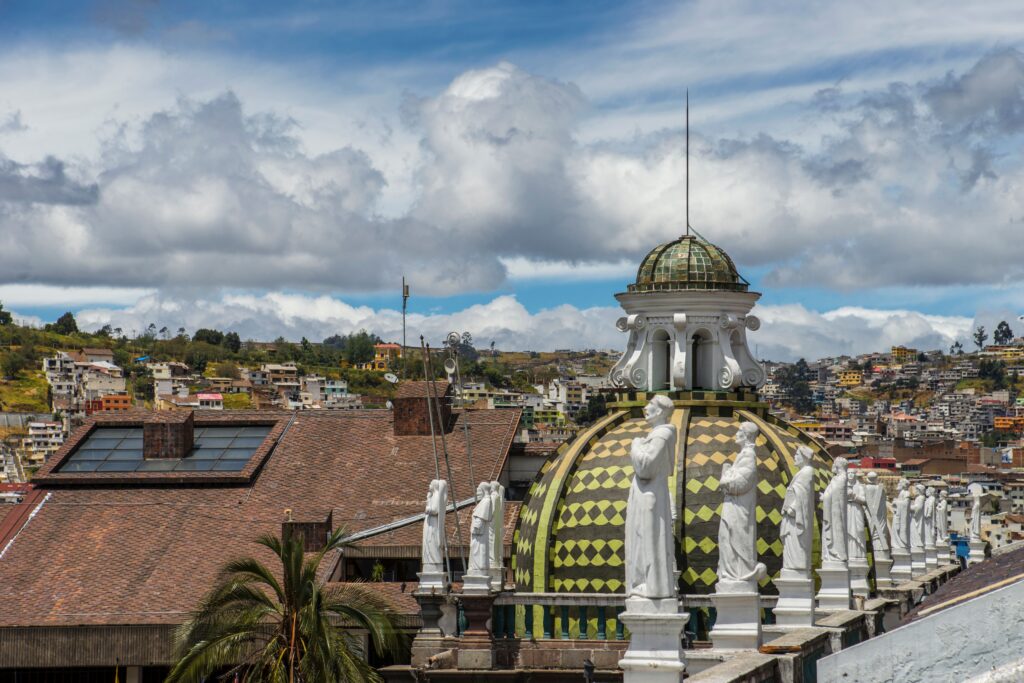
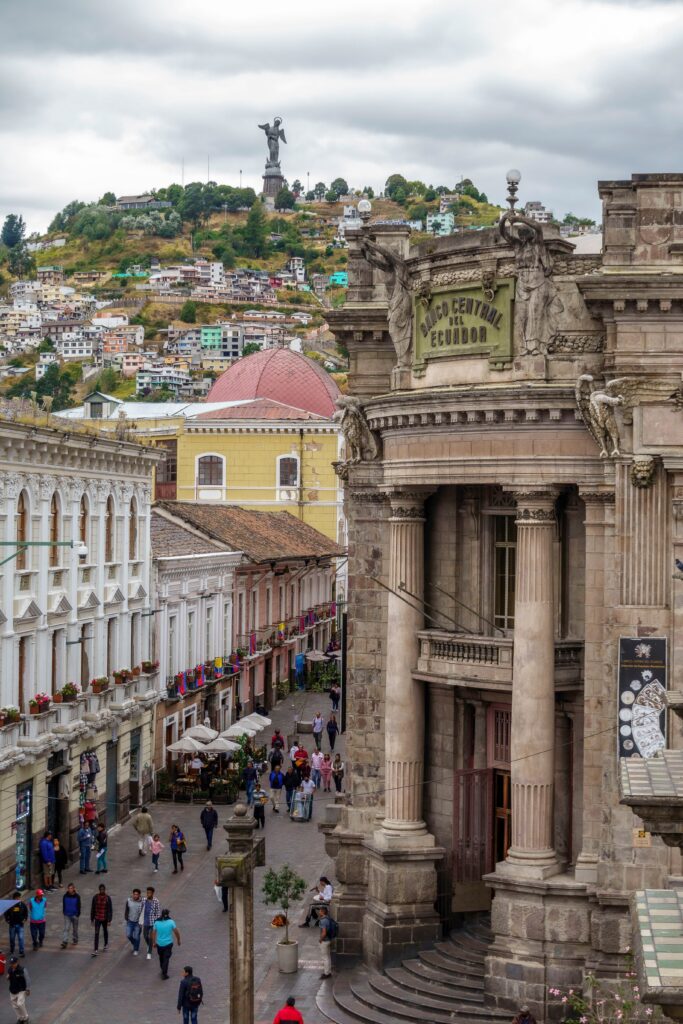
Quito, Ecuador’s capital, is one of South America’s most important historic destinations.
Its colonial center is a UNESCO World Heritage Site, and the city serves as a gateway to the Andes.
Cuenca is another major tourism destination, known for its architecture, cultural heritage and surrounding mountain landscapes.
Neither is identified among the areas under the most severe restrictions.
Nevertheless, travelers should still follow normal urban safety precautions and monitor official updates.
Demonstrations Can Create a Different Kind of Risk
Crime isn’t the only concern.
Travelers should also be aware of civil unrest and demonstrations.
Protests can block roads and disrupt transportation and essential services.
For tourists, that can create problems even when demonstrations themselves are peaceful.
A road blockade can cause:
- missed flights;
- cancelled tours;
- delayed buses;
- difficulty reaching hotels;
- and unexpected changes to itineraries.
This is especially important in Ecuador because mountainous geography and long-distance road travel can make alternative routes difficult.

Remote Travel Requires Extra Planning
Ecuador’s natural attractions encourage travelers to leave cities.
That is part of the country’s appeal.
But remoteness can create another challenge.
Much of Ecuador outside major towns and cities is sparsely populated, meaning assistance from local authorities or foreign consular services may be limited in remote areas.
That means adventure travelers should take preparation seriously.
A remote hiking trip isn’t the same as walking around a major tourist district.
Visitors should consider:
- transportation reliability;
- mobile connectivity;
- emergency contacts;
- weather conditions;
- travel insurance;
- local guides;
- and evacuation options.
Tourism Safety Is Also About Transportation
Travelers often focus on hotel safety and forget transportation.
Yet getting from one destination to another can expose visitors to different risks.
Long-distance road travel can involve:
- unfamiliar routes;
- nighttime driving;
- remote areas;
- demonstrations;
- road closures;
- and limited emergency services.
Visitors should avoid making transportation decisions solely on price.
The cheapest option isn’t necessarily the safest option.
Don’t Let a Beautiful Destination Create False Confidence
Ecuador’s scenery can make it easy to forget that the country is dealing with serious security problems.
A traveler may spend the morning photographing mountains and the afternoon visiting a historic plaza.
Everything feels normal.
That doesn’t mean the underlying risks have disappeared.
Tourists should resist both extremes:
Don’t panic—but don’t become complacent.
Good travel safety is about understanding the environment and making sensible decisions.
What Travelers Should Do Before Going
Anyone considering Ecuador should check the latest U.S. State Department advisory shortly before departure.
Travel conditions can change quickly.
Travelers should also:
Research individual destinations
Don’t assume conditions in Quito are identical to conditions in Guayaquil or a remote coastal area.
Register for travel alerts
The State Department’s Smart Traveler Enrollment Program (STEP) can provide updates from U.S. embassies and consulates.
Keep valuables discreet
Avoid displaying expensive watches, jewelry, cameras or large amounts of cash.
Use reputable transportation
Research airport transfers and local transportation before arriving.
Avoid unnecessary nighttime travel
Especially in unfamiliar neighborhoods.
Keep copies of important documents
Store copies separately from passports and other originals.
Maintain communication
A charged phone and backup power source can be invaluable.
Have an emergency plan
Know where your accommodation is, how to contact local emergency services and where the nearest major medical facility is.
What Travelers Should Do During a Robbery
If confronted by an armed criminal, protecting your life is more important than protecting your belongings.
Trying to physically resist can escalate the situation.
A wallet or smartphone can be replaced.
A serious injury cannot.
Travelers should also avoid attempting to chase thieves or recover stolen property themselves.
Report incidents to local authorities when safe to do so and contact the appropriate consular services if necessary.
Why Extortion Is Particularly Concerning
Extortion is different from ordinary tourist theft because it can involve repeated demands.
Criminal organizations may pressure individuals or businesses for money in exchange for protection—or threaten consequences for refusing.
This is primarily a broader security and governance issue rather than a typical tourist scam.
For travelers, it reinforces the importance of avoiding situations that could make them unnecessarily exposed to organized criminal activity.
Ecuador’s Tourism Future Depends on Restoring Confidence
The country has enormous tourism potential.
Few destinations offer such a combination of:
- Andes mountains;
- colonial cities;
- Pacific coastline;
- Amazon rainforest;
- volcanoes;
- indigenous cultures;
- and the Galápagos Islands.
The challenge is ensuring that international visitors believe they can experience those attractions safely.
That requires more than police patrols.
It requires:
- stronger local institutions;
- better intelligence sharing;
- improved transportation security;
- protection of tourist corridors;
- effective emergency response;
- and transparent communication with international travelers.
The Bigger Lesson for International Tourism
Ecuador’s situation illustrates a broader reality facing destinations around the world.
Tourism depends on confidence.
Travelers make decisions based not only on what is actually happening but on what they believe could happen.
That makes security communication extremely important.
A government that ignores crime can damage tourism.
But exaggerated or poorly communicated warnings can also create unnecessary economic damage.
The challenge is finding the balance:
tell travelers the truth, identify the areas of greatest risk, and give them practical information that allows them to make informed decisions.
A Country Can Be Both Beautiful and Risky
This may be the most important takeaway from Ecuador’s current situation.
A travel warning doesn’t erase the country’s extraordinary attractions.
Nor should Ecuador’s attractions cause travelers to ignore credible warnings.
Both realities can exist simultaneously.
Ecuador can remain a remarkable destination while certain regions experience serious security problems.
For travelers, the smartest approach is neither blind optimism nor blanket fear.
It is informed travel.
Final Thoughts
The latest U.S. warning is a reminder that international travel requires more than choosing a beautiful destination and booking a flight.
Ecuador is experiencing a serious security challenge driven in part by organized crime and drug trafficking, with authorities warning about violent crime, kidnapping, extortion and civil unrest.
At the same time, the country’s tourism industry remains active, and some of its best-known destinations—including Quito, Cuenca and the Galápagos Islands—are not currently under the most severe travel restrictions.
The smartest travelers will therefore avoid broad assumptions.
Research the exact destination.
Check the latest government guidance.
Use reputable transportation and accommodation.
Stay alert.
And remember one timeless travel rule: beautiful scenery is not a security plan.
5 Frequently Asked Questions
1. Is Ecuador currently safe for American tourists?
Ecuador is currently under a Level 2 “Exercise Increased Caution” U.S. travel advisory because of concerns including crime and kidnapping. However, risks vary considerably by location, and certain areas have more severe restrictions.
2. Which parts of Ecuador are considered higher risk?
The warning specifically highlights parts of Guayaquil, Manabí and Santa Elena, where violent crime and criminal activity are significant concerns. Travelers should check the latest location-specific guidance before traveling.
3. Are Quito, Cuenca and the Galápagos Islands safe to visit?
The destinations are not among the areas designated under the most severe travel restrictions. Nevertheless, travelers should continue exercising appropriate caution and monitor official updates.
4. Why are Americans being warned about kidnapping and extortion?
U.S. officials have warned that Americans and lawful permanent residents have been victims of kidnapping and extortion in Ecuador. Officials also link higher violent-crime rates in some areas to transnational criminal organizations and drug trafficking.
5. What should Americans do before traveling to Ecuador?
Check the latest State Department advisory, research the specific regions on your itinerary, enroll in STEP for travel alerts, use reputable transportation, avoid displaying valuables, limit unnecessary nighttime travel and maintain a plan for emergencies. Conditions can change, so travelers should review official guidance shortly before departure.
Sources Fox News

