
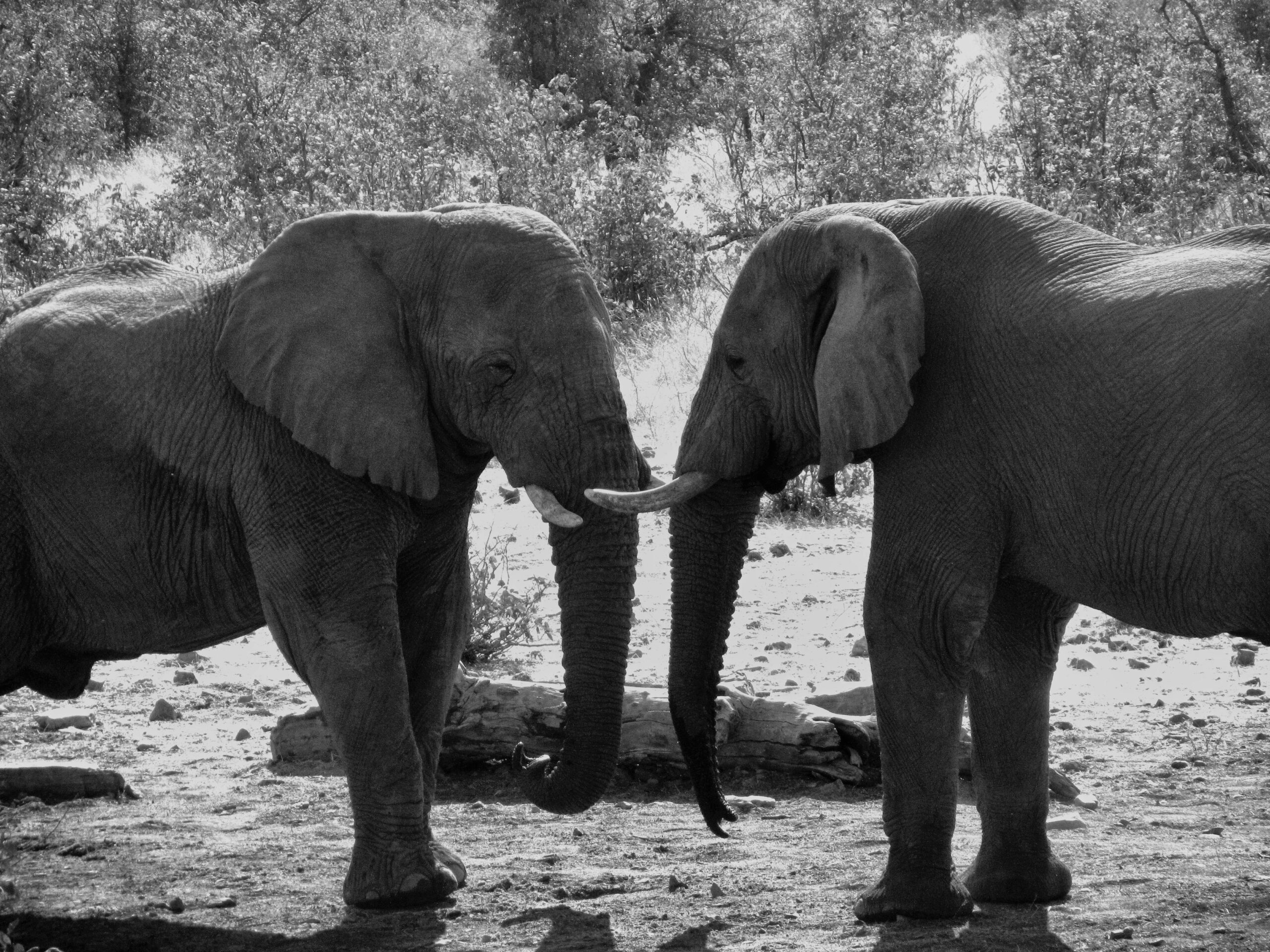
A groundbreaking study reveals that African savannah elephants use gestures with clear intention to communicate desires—particularly when engaging with attentive humans.

Beyond Instinct: The Power of Intentional Gestures
Elephants displayed goal-directed behavior by gesturing—like pointing with their trunks—toward a human holding food. They:
- Gestured only when someone was watching,
- Persisted if ignored,
- Changed tactics when their appeal failed.
These behaviors check the boxes for intentional communication—a level of cognitive control once thought unique to humans and some apes. Elephants now firmly join the small group of animals known to gesture with purpose.
What This Tells Us About Elephant Cognition
- Expanding Animal Communication Science
This discovery moves elephants into rarified territory—showing skills in goal-directed social communication previously confirmed only in primates. - Complex Intelligence at Work
Earlier findings, like their ability to understand human pointing or name each other (through individual rumble-like calls), already hinted at their cognitive sophistication. Now, their intentional gestures further underline their problem-solving ability and social intelligence. - Rich Multimodal Dialogue
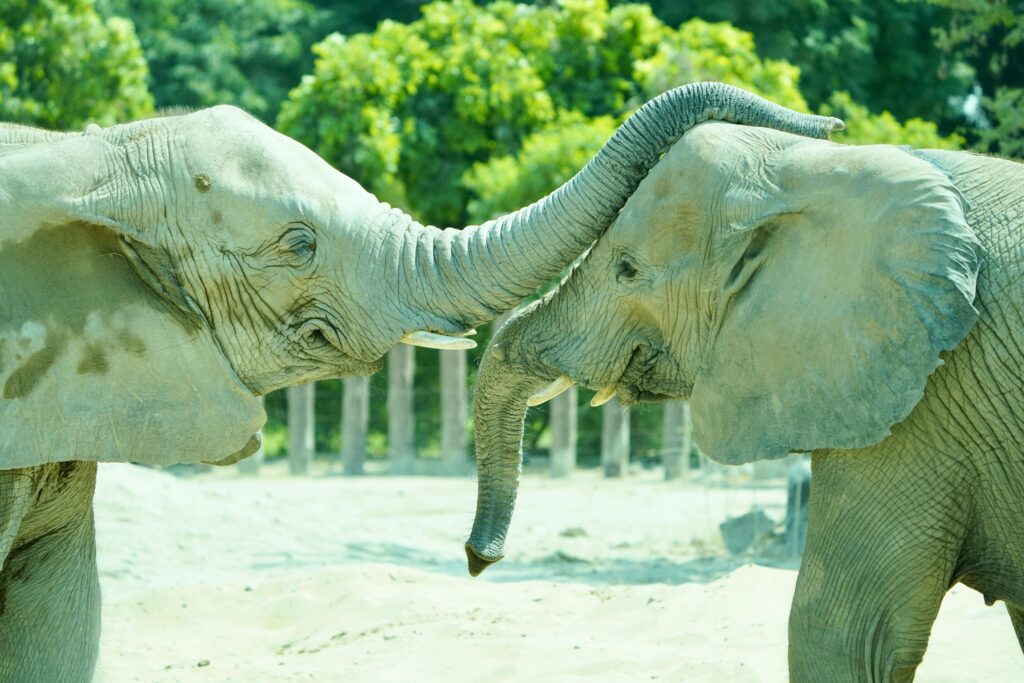
Beyond gestures, elephants communicate through touch, seismics (vibrations underfoot), strong scent signals, and infrasonic vocalizations—some capable of traveling miles underground. They use every sense available to coordinate, bond, and navigate. - Impact on Human–Elephant Interaction
If elephants gesture intentionally, training and compassion when interacting become more meaningful. Behavior scientists suggest gestures can be treated as requests—not noise—especially in conservation, rescue, or veterinary settings.
Studies and Methods in Focus
Researchers observed 17 semi-captive African elephants. Across experimental scenarios—successful food-request, failure, partial success—they recorded over 38 gesture types and found patterns consistent with first-order intentionality: audience sensitivity, persistence, and adaptability. Inter-rater reliability was high, ensuring the findings are robust. Sampling everyday behavior and analytics ensured the results reflect real cognition.
FAQs: Elephants and Intentional Communication
1. What do we mean by “intentional communication”?
It refers to gestures made deliberately to influence an attentive recipient. It requires awareness of the recipient’s attention and adjustment if the message fails. Elephants met these criteria in experiments.
2. Do wild elephants gesture like this too?
This remains to be seen. Current findings are from semi-captive elephants. Expanding research to wild herds is a natural next step.
3. How do they communicate beyond gestures?
Elephants use a rich mix: tactile signals (trunk touching), visual displays, chemical cues via glands, infrasound, seismic vibrations, and complex vocalizations.
4. Can elephants recognize names?
Yes—studies using machine learning showed that elephants respond more strongly when their “name”, embedded in a low-frequency rumble, is played.
5. What does this mean for elephant intelligence?
Their use of intentional gestures, names, and language-like behavior reflects a deep cognitive complexity—comparable to primates and dolphins.
6. Why is this valuable for conservation and welfare?
Acknowledging elephants’ intentionality helps create compassionate, responsive care in reserves, sanctuaries, and human-elephant interface zones.
7. Could this inform AI and robotics?
Yes—understanding how intentional gestures function may inspire more adaptive, context-aware AI systems that respond to human attention cues.
Final Thoughts
This breakthrough reshapes our understanding of elephant communication, demonstrating their deliberate, goal-oriented gestures—a hallmark of cognition previously considered human or primate-exclusive. As we learn more, we reaffirm elephants’ rich emotional and social lives—and the importance of treating them as sophisticated beings with intentional voices.
Sources earth.com

