
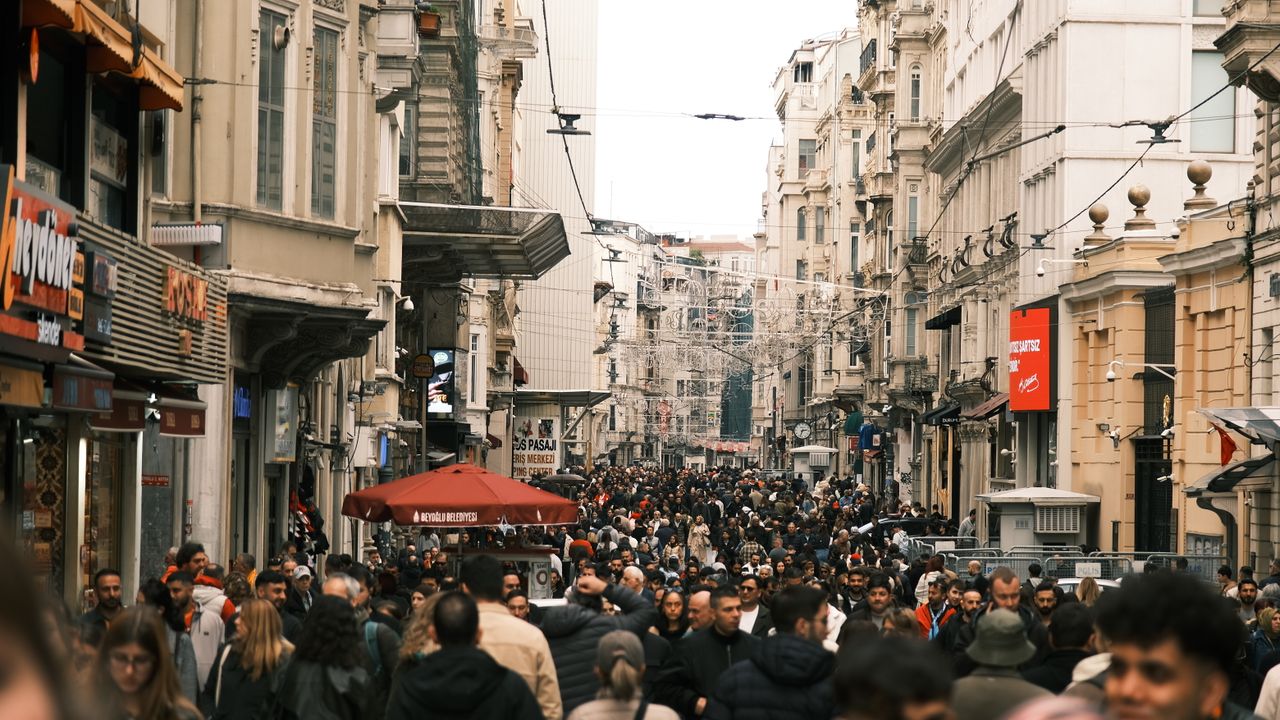
Europe has an airport paradox.
In one direction, cities and islands are introducing tourist taxes, restricting short-term rentals, limiting cruise traffic and promoting off-season travel because residents are increasingly concerned about overcrowding.
In the other direction, major airports serving some of those same destinations are expanding.
Venice is enlarging Marco Polo Airport.
Athens International Airport is preparing for substantially higher passenger capacity.
Amsterdam’s Schiphol is adding terminal space.
Barcelona’s El Prat is considering a major development program.
Lisbon is expanding its existing airport while advancing plans for a new airport.
Mallorca’s airport is preparing for continuing growth.
To travelers, these policies can appear contradictory.
To airport operators and national governments, however, they can represent a different calculation: aviation infrastructure has to accommodate demand, modernize aging facilities and maintain connectivity even when local authorities are trying to control the effects of tourism after visitors arrive.
That tension is becoming one of the defining questions of European travel in 2026.
The New York Times recently examined the contradiction, focusing on Venice, Barcelona, Mallorca and other destinations where airport expansion is advancing while local governments grapple with overtourism.
The story becomes even more complex when the latest passenger numbers, infrastructure plans, housing pressures and climate analysis are considered together.
Europe Is Still Seeing Strong Tourism Demand
The first fact to establish is that Europe is not experiencing a collapse in tourism.
During the first half of 2026, tourist accommodation across the European Union recorded about 1.321 billion overnight stays, up 1.7% from the same period in 2025. Foreign visitors accounted for 48.9% of all nights, and nights spent by international visitors increased 2.5% year over year.
Air travel demand is also strong.
September 2026 scheduled-capacity data show Spain with more than 18 million departing seats during the month, up 5.4% from September 2025. Italy had about 14.2 million seats, up 9.9%, while Greece had roughly 6.15 million, up 4.9%.
Spain’s airport network illustrates the scale particularly clearly. The country’s airports handled about 34.9 million passengers in August 2026, 4.7% more than a year earlier.
This is the fundamental reason airport operators are still investing.
The demand has not disappeared.
In many markets, it is increasing.
The Problem Is That Tourism Demand Is Geographically Concentrated
Europe does not have a shortage of tourist destinations.
It has a concentration problem.
Visitors overwhelmingly favor a relatively small number of iconic places: Barcelona, Venice, Amsterdam, Lisbon, Athens, Mallorca, the Greek islands, Paris, Rome and other established tourism hubs.
That concentration creates very different experiences for residents.
A city may have plenty of unused capacity in one region and severe overcrowding in another.
An island may have enough hotel rooms overall but insufficient water during peak weeks.
A historic center may be overwhelmed by day visitors even though the wider metropolitan area has spare hotel capacity.
That is why airport expansion is controversial in some locations.
An airport does not exist in isolation.
It is a gateway into a specific urban or regional economy.
More airport capacity can therefore translate into greater potential visitor demand for the destination it serves.
Venice Shows the Contradiction Clearly
Venice is perhaps the clearest example.
The city has experimented with an access fee for day visitors, designed partly to influence tourist flows and discourage unplanned day trips.
For 2026, the access-fee trial applied on selected days and charged €5 when paid early or €10 closer to the visit date. The city’s stated objectives include managing visitor flows and supporting public services.
At the same time, Marco Polo Airport is pursuing a development program designed to accommodate more passengers.
Venice Airport says its master plan aims to handle more than 15 million passengers annually by 2030 and more than 20 million by 2037, compared with 11.6 million passengers cited by The New York Times as the airport’s earlier traffic level. The plan includes 45 new boarding gates, expanded terminal space and a future rail connection.
The airport argues that the expansion is also about infrastructure quality, intermodality, water conservation, environmental protection and modernization rather than simply increasing tourist numbers.
That distinction is important.
A bigger airport does not mean every additional square meter is intended to become additional tourism capacity.
Some construction replaces obsolete infrastructure.
Some creates more efficient passenger processing.
Some accommodates new border procedures.
Some improves baggage, security and accessibility.
But when a facility’s stated long-term capacity rises from roughly 11.6 million to more than 20 million passengers, the potential for additional traffic is clearly part of the picture.
Amsterdam Has Its Own Version of the Problem
Amsterdam is another example of competing objectives.
The Netherlands has been attempting to address aircraft noise and quality-of-life concerns around Schiphol.
The Dutch government has proposed a system that would eventually allow commercial movements to rise toward 500,000 annually, with the increase linked to noise-reduction requirements.
At the same time, Schiphol is expanding passenger facilities.
The New York Times reported that a new boarding-gate area of about 592,000 square feet is under construction.
The airport’s argument is that infrastructure has to cope with the reality of passenger growth and improve the passenger experience, even if the number of aircraft movements is not increased in direct proportion.
That argument has some factual support.
Schiphol says passenger traffic has grown from around 42 million to about 70 million over the past two decades, creating pressure to modernize facilities.
So the disagreement is partly about what airport capacity means.
For an airport, more space can mean better handling of existing passengers.
For a city concerned about overtourism, more space can also mean fewer physical barriers to future growth.
Both observations can be true simultaneously.
Athens Is Preparing for Much Larger Passenger Volumes
Athens provides another important example.
Athens International Airport reported 23.71 million passengers during the first eight months of 2026, 4.4% more than the corresponding period of 2025. Flight movements rose 3.9%.
The airport is accelerating an expansion program aimed at reaching 40 million passengers annually by 2032. The program includes expansion of the main terminal and satellite terminal, additional aircraft parking, a new VIP terminal and other infrastructure.
The airport’s financial reporting says the accelerated expansion is being driven by strong traffic growth, with an investment program of roughly €1.3 billion.
Greece has simultaneously been dealing with tourism concentration on islands and at major attractions.
That raises a question similar to the one facing other European destinations:
Should infrastructure expand because travelers are already coming, or should limited capacity be used to constrain demand?
There is no single answer across all airports.
It depends on whether the primary problem is airport congestion, local overcrowding, environmental capacity, housing or some combination.
Barcelona’s Expansion Is Especially Sensitive
Barcelona is perhaps the most politically and economically complicated example.
Barcelona-El Prat already handled 57.5 million passengers in 2025, compared with 52.7 million in 2019. The airport is a major western Mediterranean hub with extensive international connections.
Aena’s longer-term development concept has involved the possibility of handling around 70 million passengers annually. The increase would rely substantially on long-haul and connecting traffic rather than simply adding more point-to-point tourists.
That distinction is important because connecting passengers do not necessarily stay in Barcelona.
A passenger flying through Barcelona from one international destination to another is different from a tourist who stays several nights in the city.
However, long-haul connectivity can also make Barcelona easier to reach, potentially increasing the overall attractiveness of the region.
As of September 2026, Spain’s newly approved 2027-2031 airport investment framework includes nearly €13 billion for the Aena network. Of the roughly €1.96 billion allocated to Catalonia, around €1.76 billion is directed toward El Prat-related investments. The plan also includes about €191 million for preparatory work associated with a possible runway-extension project and environmental compensation.
So the El Prat debate is not simply theoretical.
Money and planning are already moving.
Airport Managers See Infrastructure Differently From City Governments
Much of the apparent contradiction comes from a division of responsibilities.
National governments generally regulate aviation.
Airport companies operate infrastructure.
Municipal governments handle many of the consequences of tourism growth: housing, waste, public spaces, local mobility and neighborhood planning.
That division can produce conflicting incentives.
A municipality may decide it wants fewer tourist apartments.
An airport authority may need to accommodate increasing passenger demand.
A national government may value aviation connectivity and airport revenue.
A resident may be most concerned about rent, traffic or noise.
A hotel operator may want more visitors.
All of these interests can be legitimate at the same time.
The challenge is coordination.
Spain’s Record Airport Investment Shows the Scale of the Issue
Spain provides an unusually clear example because its airport network is so large.
The Spanish government approved the DORA III regulatory framework for 2027-2031 with nearly €13 billion of planned investment across Aena’s airport network. The government says the airport sector represents almost 6% of GDP and about 600,000 direct and indirect jobs, while airports account for the entry point of about 80% of tourists.
That helps explain why national policymakers remain interested in airport development.
Aviation is not simply a tourism service.
It supports trade, business travel, employment, regional connectivity and economic activity.
This is one reason airport policy cannot be reduced to a simple “tourism is too high” argument.
Mallorca Shows Why Local Governments Feel They Lack Control
Mallorca is one of Europe’s most visible tourism-pressure cases.
Palma Airport handled 33.8 million passengers in 2025, compared with 29.7 million in 2019. More than 14 million passengers passed through the airport in the first six months of 2026.
That growth exists alongside strong local concern about tourism pressure.
Mallorca has been debating housing affordability, visitor numbers, cruise traffic and the environmental limits of an island destination.
The airport therefore becomes a symbol of a broader question:
Who controls tourism demand?
Regional authorities can regulate some accommodation.
They can introduce tourism taxes.
They can attempt to control cruise arrivals.
They can invest in water infrastructure.
But they cannot independently determine how many flights airlines schedule.
That is one of the issues highlighted in The New York Times report.
Airport Expansion Is Not Always About More Flights
This point is easy to miss.
An airport can expand because its existing facilities are inefficient.
A larger terminal can shorten queues.
New baggage systems can improve reliability.
Additional gates can separate passenger flows.
Border technology can speed processing.
Larger security areas can reduce bottlenecks.
Energy-efficient buildings can lower operating emissions per passenger.
Rail connections can reduce road traffic around airports.
These are not automatically tourism-growth measures.
Venice Airport, for example, explicitly includes intermodality, water saving, biodiversity and digitalization among the objectives of its 2037 master plan.
Copenhagen Airport similarly says its terminal redevelopment is intended to improve passenger flow and modernize the airport, noting that passenger numbers have doubled since the 1990s even while flight numbers have remained broadly similar.
The distinction is therefore between capacity for passengers and capacity for aircraft movements.
They are related, but not identical.
Yet Better Capacity Can Still Support More Tourism
At the same time, more efficient facilities can eventually make additional traffic easier to handle.
This is why environmental and tourism advocates remain concerned.
Transport & Environment, a Brussels-based environmental organization, analyzed planned expansion at 20 major European airports and concluded that projected traffic growth would push all 20 beyond their calculated 1.7°C-aligned carbon budgets, even after accounting for sustainable aviation fuel and more efficient aircraft. It estimates the expansion plans would add 225 million tonnes of CO₂ relative to today’s capacity.
These are T&E’s calculations, based on its own carbon-budget methodology. They are not a consensus forecast shared by all airport operators or governments.
But they provide an important counterpoint to the infrastructure argument.
If efficiency gains are accompanied by enough traffic growth, total emissions can still increase even as each individual passenger or flight becomes somewhat more efficient.
That is a classic rebound effect.
The Climate Debate Is More Than Carbon From Aircraft
Airport expansion can also affect nearby communities through noise and local air pollution.
The Dutch government, for example, is explicitly targeting a 20% reduction in the number of people experiencing severe aircraft noise around Schiphol compared with its November 2024 baseline, with a separate nighttime objective.
The climate and local-quality-of-life debates therefore overlap but are not identical.
A person living next to an airport may care primarily about nighttime noise.
A climate policymaker may care about cumulative aviation emissions.
A city tourism authority may care about visitor numbers.
A national transport ministry may care about international connectivity.
A single airport can become the point where all four objectives collide.
Housing Is Part of the Airport Debate Too
Airport traffic does not create housing pressure by itself.
But air connectivity can strengthen tourism demand, which can influence accommodation markets.
The European Commission’s recent housing analysis notes that tourism-related short-term rentals can reduce the stock of housing available to local residents in places where housing supply is already tight. It says entire-property short-term rentals can represent more than 20% of dwelling stock in some tourism hotspots, with some municipalities reaching even higher levels.
The European Commission has also proposed a framework allowing more evidence-based local action on short-term rentals in areas experiencing housing pressure. The proposal remains subject to the EU legislative process.
This creates another chain:
More flights can improve accessibility.
Improved accessibility can increase demand.
In high-pressure markets, additional demand can influence accommodation prices.
Accommodation pressures can affect residents.
Local authorities then attempt to regulate housing.
That makes aviation policy indirectly relevant to housing policy.
The Answer May Be Better Distribution, Not Simply Less Air Travel
There is another way to resolve the contradiction.
Instead of forcing every traveler toward the same destinations, Europe can spread tourism across a wider network.
This could mean:
More inland tourism.
More regional airports connected by rail.
More promotion of smaller cities.
Longer stays.
Off-season travel.
Tourism products based around nature, food and culture rather than single iconic landmarks.
Spain’s broader tourism strategy is already emphasizing geographic diversification and resident well-being.
Other European countries are moving in similar directions.
The objective becomes less:
“How do we stop people flying?”
and more:
“How do we avoid concentrating everyone in the same place at the same time?”
That does not eliminate the aviation question.
But it changes the tourism-management problem.
Rail Can Become Part of the Solution
Europe has a particularly useful tool that many other regions lack: extensive rail infrastructure.
High-speed trains can redistribute visitors after they arrive at major gateways.
A tourist landing in Madrid can travel to smaller Spanish cities.
A visitor landing in Paris can take rail into other regions.
Travelers arriving in Copenhagen can continue into Sweden.
Venice’s airport plans explicitly include a rail connection to the national network.
The more effectively airports connect with rail, the less dependent visitors become on private cars and concentrated airport-city corridors.
That can help address both congestion and regional tourism distribution.
New Airport Connections Can Also Create New Tourist Corridors
The Dalsland example from Sweden’s 2027 travel trends illustrates this principle in another form.
When a previously inconvenient destination gains better rail or air connectivity, it becomes easier for travelers to reach places that were previously overlooked.
The same logic applies to airports.
A new route does not have to send passengers directly into the most crowded tourist center.
It can also connect visitors with secondary destinations.
That is why transport policy and destination-management policy should ideally be planned together.
Europe Is Increasingly Measuring Tourism by Value, Not Just Volume
The airport debate also fits another change in European tourism policy.
Tourism authorities increasingly distinguish between:
Visitor numbers.
Overnight stays.
Average spending.
Seasonality.
Geographical distribution.
Environmental impact.
Local employment.
Resident satisfaction.
A visitor who arrives for a few hours and spends €30 is not economically identical to someone who stays for 10 nights and spends €2,500.
Similarly, 10 million visitors spread across 12 months may produce less pressure than 8 million visitors concentrated into eight peak weeks.
Airport planning therefore needs to be connected to tourism statistics that go beyond annual passenger totals.
A Full Plane Does Not Automatically Mean an Overcrowded City
There is another important nuance.
Airport passenger numbers include residents, business travelers, connecting passengers, visiting friends and relatives, and tourists.
Not everyone becomes a tourist in the city.
This is especially relevant for hub airports.
Barcelona, for example, explicitly argues that additional passenger growth could include more connecting traffic.
So a direct equation between airport passengers and hotel nights in the surrounding city is inaccurate.
But it would also be inaccurate to assume that none of the growth affects local tourism.
The challenge is separating those flows statistically.
Airports Could Become Tourism-Management Tools
This suggests an interesting future.
Airports do not necessarily have to be passive gateways.
They could become part of destination management.
For example, airport systems could provide:
Real-time information about crowded destinations.
Rail connections to alternative cities.
Pricing incentives for off-season travel.
Information about sustainable transportation.
Visitor reservations for capacity-limited attractions.
Digital warnings when certain destinations are experiencing extreme congestion.
That would allow the airport to become part of the solution rather than simply the mechanism through which additional arrivals occur.
Pricing Could Also Influence Demand
European destinations are increasingly using prices as a tourism-management tool.
Venice charges day visitors on selected days.
Hotels can use seasonal pricing.
Airports can have differentiated landing charges.
Governments can adjust tourist taxes.
Rail operators can offer incentives during off-peak periods.
These mechanisms do not necessarily reduce annual tourism.
They can change when visitors arrive.
That may be just as important as controlling the absolute number.
The Real Policy Question Is Who Decides the Ceiling
The central governance problem identified by the airport debate can be summarized simply:
Who decides how much tourism a destination should handle?
The airport?
The national government?
The city?
The regional government?
Local residents?
The tourism industry?
There is no universal answer under Europe’s current governance structures.
Different jurisdictions divide authority differently.
But the contradiction becomes sharper when decision-making is fragmented.
A city may impose strict hotel controls while airlines continue adding routes.
A national government may prioritize connectivity while municipalities struggle with housing.
An airport may modernize infrastructure while climate organizations calculate that the resulting traffic growth exceeds carbon budgets.
Without coordination, these policies can work against one another.
The European Union’s Role Is Becoming More Important
The EU is increasingly involved in some of the underlying issues.
The bloc regulates aviation and transport at the European level.
It is developing common rules around short-term rentals.
It has climate targets.
It supports rail and transport infrastructure.
And it is attempting to improve border processing through systems such as the Entry/Exit System.
Those policies affect tourism even though the EU does not control tourism in the same way a national tourism ministry does.
This makes European destination management a multilevel policy problem.
The EES Example Shows Why Airport Expansion Is Also About Border Capacity
The EU’s Entry/Exit System adds another reason airports may need new space.
Several EU countries requested further delays in September 2026 because some airports and border points were struggling with the infrastructure needed for biometric processing. Spain has fully implemented the system, while other countries cited capacity constraints.
This illustrates why building more airport space is not always synonymous with attracting more tourists.
An airport can need larger border-processing areas because immigration procedures are becoming technologically more complex.
Yet once that additional physical capacity exists, it can also support passenger growth.
Again, both things can be true.
The Pandemic Changed How Airports Think About Capacity
Another factor is the experience of the COVID-19 period.
Airports discovered how quickly demand can collapse.
Airlines became cautious about long-term fleet and route planning.
Infrastructure projects were delayed.
Then tourism rebounded faster than many expected.
The result has been a renewed emphasis on resilience.
An airport designed precisely for yesterday’s passenger volume may become inadequate when travel demand rises unexpectedly.
That provides one argument for building infrastructure ahead of demand.
Opponents argue that building for indefinite growth can lock in demand that climate and local-quality-of-life policies are attempting to manage.
The difference is essentially a dispute about future assumptions.
Climate Technology Is Not the Only Variable
Airport expansion debates often include arguments about sustainable aviation fuel, more efficient aircraft and eventually zero-emission aviation.
Those technologies could reduce emissions per passenger.
But their deployment is constrained by cost, availability, infrastructure and aircraft technology.
T&E’s September 2026 analysis argues that expected efficiency gains and sustainable aviation fuel are insufficient to offset the emissions associated with projected traffic growth.
Airports and airlines generally take a more technology-focused position, emphasizing fleet modernization, operational efficiency and lower-emission fuels.
The outcome will depend on how quickly those technologies develop relative to traffic growth.
The Tourist of 2030 May Travel Differently
The future may not be defined by fewer travelers.
It may be defined by different travelers.
Longer trips instead of short weekends.
More shoulder-season travel.
More rail.
More regional exploration.
More interest in local culture.
Less reliance on crowded landmarks.
More digital reservation systems.
More capacity-controlled attractions.
And greater awareness of the effects of travel on residents.
That would allow airport growth to coexist more comfortably with destination-management policies.
But it requires tourism to become more distributed.
The Airport of 2030 May Also Look Different
The future airport may be less about adding raw passenger capacity and more about becoming a multimodal transport hub.
It could integrate:
Air travel.
High-speed rail.
Regional trains.
Public buses.
Electric ground transport.
Digital border processing.
Biometric systems.
Energy-efficient terminals.
Water-saving systems.
Real-time visitor management.
Venice’s long-term plan already includes several of these ideas, including rail connectivity, water conservation, accessibility and digitalization.
That is a fundamentally different concept from simply building a bigger terminal and hoping for more passengers.
What Does This Mean for Travelers?
For travelers, the practical effect will probably be gradual.
Airports will continue to expand.
Some destinations will introduce more visitor fees.
Others will tighten short-term-rental rules.
Some cruise ports will impose limits.
Rail alternatives will become more attractive.
Popular sites may require reservations.
Travelers may be encouraged toward shoulder seasons and less crowded regions.
And some airport journeys may involve more biometric processing.
The European travel experience is therefore likely to become more managed.
But it is not necessarily becoming less accessible.
What Does This Mean for Residents?
For residents, the impact will depend heavily on how tourism growth is distributed.
An airport expansion accompanied by better rail, stronger housing policy, noise controls and investment in public infrastructure may produce different outcomes from one accompanied only by additional flights.
This is why the airport itself should not be treated as the entire problem.
It is one component of a much larger system.
Housing policy.
Tourism policy.
Transportation.
Environmental regulation.
Local planning.
Airport governance.
Airline scheduling.
All interact.
The Big Contradiction May Be a Governance Problem, Not an Airport Problem
The apparent contradiction between overtourism controls and airport expansion is real.
But it is partly produced by the way tourism is governed.
Airports serve national and international connectivity goals.
Cities deal with local consequences.
Tourism businesses benefit from demand.
Residents experience housing and congestion pressures.
Environmental authorities measure emissions.
The infrastructure decisions and the quality-of-life decisions are often made by different institutions.
That means the most important change may not be deciding whether airports should expand.
It may be creating better mechanisms for coordinating airport capacity with destination capacity.
Europe Is Entering a New Tourism Equation
For much of modern tourism history, the equation was straightforward:
More flights → more visitors → more spending → more growth.
The new equation is more complicated:
More flights can mean more economic activity.
But they can also mean more pressure on housing.
More airport space can improve passenger experience.
But it can also enable higher traffic.
More visitors can create jobs.
But they can also strain local services.
Tourism taxes can fund infrastructure.
But they can also raise the cost of travel.
Short-term-rental restrictions can protect housing.
But they can reduce accommodation supply.
There is no single measure that resolves all of these trade-offs.
The Future Could Be About Matching Capacity
Perhaps the most useful concept for European tourism is not “more” or “less.”
It is matching.
Match airport capacity with destination capacity.
Match visitor numbers with water availability.
Match tourism employment with housing supply.
Match flight growth with climate budgets.
Match tourist demand with public transport.
Match tourism revenue with community investment.
That approach accepts that tourism is an important economic activity while also recognizing that destinations have physical and social limits.
The Airport Debate Is Really a Debate About Europe’s Future
The controversy surrounding Venice, Barcelona, Mallorca, Amsterdam, Athens, Lisbon and Copenhagen is therefore about more than construction projects.
It is about what kind of tourism Europe wants over the next decade.
A system based primarily on ever-growing passenger numbers?
A system based on higher visitor spending and longer stays?
A system that shifts travelers toward less-visited regions?
A system that uses prices and reservations to manage peak demand?
A system that prioritizes rail and lower-carbon transport?
In reality, European countries are experimenting with combinations of all of these approaches.
The results will vary by destination.
What Happens Next
Airport expansion is unlikely to stop across Europe.
Demand remains strong.
Infrastructure requires modernization.
Airports support significant employment and economic activity.
And many governments continue to see international connectivity as strategically important.
At the same time, overtourism pressures are also unlikely to disappear.
Housing shortages remain.
Climate constraints are becoming more important.
Residents are increasingly demanding a say.
Tourism authorities are measuring value as well as volume.
That means the airport debate will probably become more sophisticated.
Instead of simply asking:
“Should this airport expand?”
the more useful questions will be:
How much additional traffic is compatible with the destination?
How much is connecting traffic rather than local tourism?
What environmental limits apply?
What happens to housing?
Who receives the economic benefits?
What transportation is available after arrival?
How will residents be affected?
Those questions are harder than counting passengers.
But they are probably the questions Europe needs to answer.
The Future of European Travel May Depend on What Happens After Landing
An airport is only the beginning of a journey.
What matters to a destination is what happens after the passenger walks out of the terminal.
Where do they stay?
How long do they remain?
How do they move around?
Where do they spend money?
How much water do they consume?
Do they crowd the same attractions?
Do they contribute to local businesses?
Do residents benefit?
And can the destination absorb them without losing the qualities that made people want to visit in the first place?
Europe’s airport expansion projects are therefore not necessarily proof that policymakers have abandoned overtourism concerns.
Nor do visitor-management policies mean airports no longer expect growth.
They reflect two realities operating simultaneously.
Europe still wants the economic and social benefits of international connectivity.
And many European destinations are reaching the point where unrestricted growth creates costs that can no longer be ignored.
The challenge for the next decade will be making those two realities work together.
The future of European tourism may depend less on how many people can fit through an airport terminal—and more on whether the cities, islands and communities beyond those terminals are ready for them.
5 Frequently Asked Questions
1. Why are European airports expanding while cities complain about overtourism?
Different institutions are responsible for different parts of the system. Airports and national governments focus on connectivity, infrastructure, aviation operations and economic activity, while cities and regions deal more directly with housing, public spaces, sanitation and local tourism pressure. Airport expansion can also involve modernization and border-processing improvements rather than simply adding flights.
2. Does a bigger airport automatically mean more tourists?
No. More terminal space or gates can be used to handle existing passenger demand more efficiently, improve security, modernize baggage systems or introduce new border technology. However, higher airport capacity can also make additional flights and passenger growth easier to accommodate. The effect depends on airline scheduling, demand and the destination’s wider transport and tourism system.
3. Which major European airports are expanding?
Examples discussed in current 2026 plans include Venice Marco Polo, which expects to accommodate more than 15 million passengers by 2030 and more than 20 million by 2037; Athens International Airport, which is expanding toward 40 million annual passengers by 2032; and Barcelona-El Prat, where Aena has a longer-term development concept involving potentially 70 million passengers.
4. How is Europe trying to manage overtourism at the same time?
Cities and regions are using several tools, including day-visitor fees, short-term-rental regulation, cruise limits, tourism taxes, promotion of off-season travel and campaigns encouraging tourists to visit less-concentrated destinations. Venice’s 2026 access-fee trial, for example, was designed partly to manage day-trip flows. The EU is also developing a more evidence-based framework for dealing with short-term rentals in areas experiencing housing pressure.
5. What is the biggest unresolved issue in Europe’s airport expansion debate?
Coordination. Airport infrastructure, airline capacity, tourism policy, housing, climate policy and local quality of life are often governed by different institutions. Environmental groups argue that planned growth at major European airports could exceed climate limits, while airport operators emphasize connectivity, modernization and the need to accommodate existing demand. These positions involve different assumptions about future travel, technology and environmental limits.
Sources The New York Times