

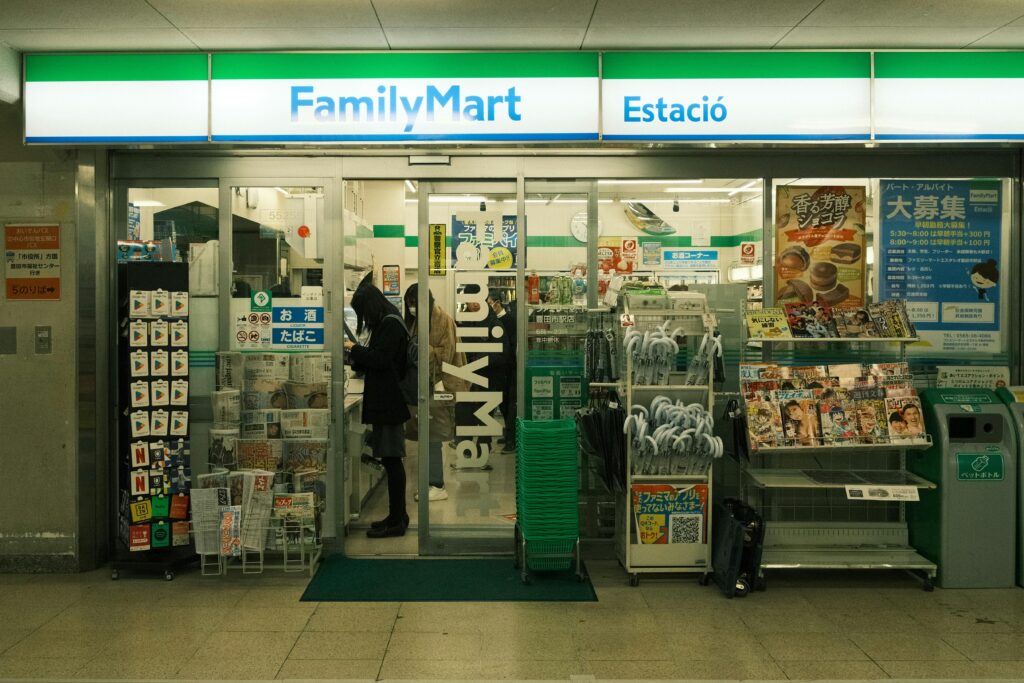
As international travel rebounds and global mobility increases, businesses are rethinking how they serve a more diverse, multilingual customer base. In Japan—where tourism is rapidly recovering—convenience store giant FamilyMart is testing an AI-powered translation system designed to help staff communicate with foreign customers more effectively.
This initiative reflects a broader shift in retail and service industries: leveraging technology to break down language barriers, improve customer experience, and support frontline workers in an increasingly global marketplace.

Why Language Barriers Matter in Retail
Japan has long been a popular destination for international tourists, but language differences can create challenges in everyday interactions—especially in convenience stores, which are central to daily life.
Common issues include:
- Difficulty explaining product details
- Miscommunication during checkout
- Challenges handling special requests
- Confusion over payment methods or services
For tourists, even simple transactions can become stressful. For staff, language barriers can slow service and create frustration.
What FamilyMart’s Translation System Does
FamilyMart’s new system uses AI-driven translation technology to facilitate communication between store employees and foreign customers.
Key features include:
- Real-time translation of spoken or typed language
- Support for multiple languages commonly used by tourists
- User-friendly interface for quick interactions
- Integration into store operations without requiring advanced technical skills
The system is designed to assist in everyday situations such as:
- Asking for directions or product locations
- Explaining promotions or discounts
- Clarifying payment options
- Handling customer inquiries efficiently
How the Technology Works
The translation system relies on a combination of:
- Natural Language Processing (NLP) to understand speech or text
- Machine learning models trained on multilingual datasets
- Speech recognition and synthesis for real-time interaction
In practice, a customer may speak into a device or app, which then translates their request into Japanese for the staff—and vice versa.
This creates a smoother, two-way communication flow.
Supporting Frontline Workers
One of the most important aspects of the system is its role in supporting employees.
Retail workers often face pressure to provide fast and accurate service, even when dealing with language differences.
The AI tool helps by:
- Reducing stress and uncertainty
- Improving confidence in handling foreign customers
- Allowing staff to focus on service rather than translation
This is particularly valuable in convenience stores, where transactions are quick and frequent.
Enhancing the Tourist Experience
For international visitors, convenience stores are often one of the first points of contact in a new country.
Japan’s convenience stores offer:
- Food and beverages
- ATM services
- Ticket purchases
- Parcel delivery and other services
By improving communication, FamilyMart can:
- Make these services more accessible
- Reduce misunderstandings
- Enhance overall customer satisfaction
A positive experience at a convenience store can influence how tourists perceive a destination as a whole.
The Broader Trend: AI in Retail and Hospitality
FamilyMart’s initiative is part of a larger global trend.
Businesses across industries are adopting AI translation tools in:
- Hotels and tourism services
- Airports and transportation hubs
- Restaurants and retail stores
- Healthcare and public services
As international travel increases, multilingual communication is becoming a competitive advantage.
Japan’s Tourism Strategy and Language Accessibility
Japan has been actively working to make itself more accessible to international visitors.
Efforts include:
- Multilingual signage in public spaces
- Translation apps and services
- Staff training in basic foreign language skills
- Digital tools for navigation and communication
AI translation systems in retail represent the next step in this evolution.
Challenges and Limitations
While promising, AI translation systems are not without challenges.
Accuracy Issues
Complex phrases, slang, or cultural nuances may not always be translated perfectly.
Dependence on Technology
Systems require reliable internet connectivity and proper maintenance.
Privacy Concerns
Handling spoken or typed data raises questions about data security and user privacy.
Human Interaction
Some customers may still prefer human interaction over digital tools.
The Future of Multilingual Retail
As AI continues to improve, translation systems are likely to become more advanced and widely adopted.
Future developments may include:
- More natural and context-aware translations
- Integration with wearable devices or smart glasses
- Voice-based assistants embedded in store environments
- Personalized language support based on customer profiles
Retail environments may become increasingly language-neutral spaces, where communication barriers are minimized.
Frequently Asked Questions
What is FamilyMart’s translation system?
It is an AI-powered tool that helps store staff communicate with foreign customers through real-time language translation.
Why is this system important?
It improves customer experience and helps employees handle multilingual interactions more efficiently.
How does the system work?
It uses AI technologies like natural language processing and speech recognition to translate conversations in real time.
Which languages are supported?
The system typically supports major international languages, especially those commonly used by tourists.
Does it replace human communication?
No. It is designed to assist, not replace, human interaction.
Are there any limitations?
Yes. Accuracy may vary depending on context, and technical issues can affect performance.
Will other companies adopt similar systems?
Yes. AI translation is becoming increasingly common across retail, hospitality, and service industries.
Conclusion
FamilyMart’s adoption of AI translation technology highlights a growing shift in how businesses approach customer service in a globalized world. By breaking down language barriers, the company is not only improving efficiency but also creating a more welcoming environment for international visitors.
As travel continues to recover and diversify, the ability to communicate across languages will become an essential part of the customer experience. Innovations like this suggest a future where language is no longer an obstacle—but an opportunity for connection.
In that future, even a simple visit to a convenience store can become a seamless, inclusive experience for people from anywhere in the world.
Sources Nikkei Asia

