
For 15 years, Daisuke Fujii pursued what looked like the perfect engineering career: designing aircraft.
Today, his work has little to do with airplanes.
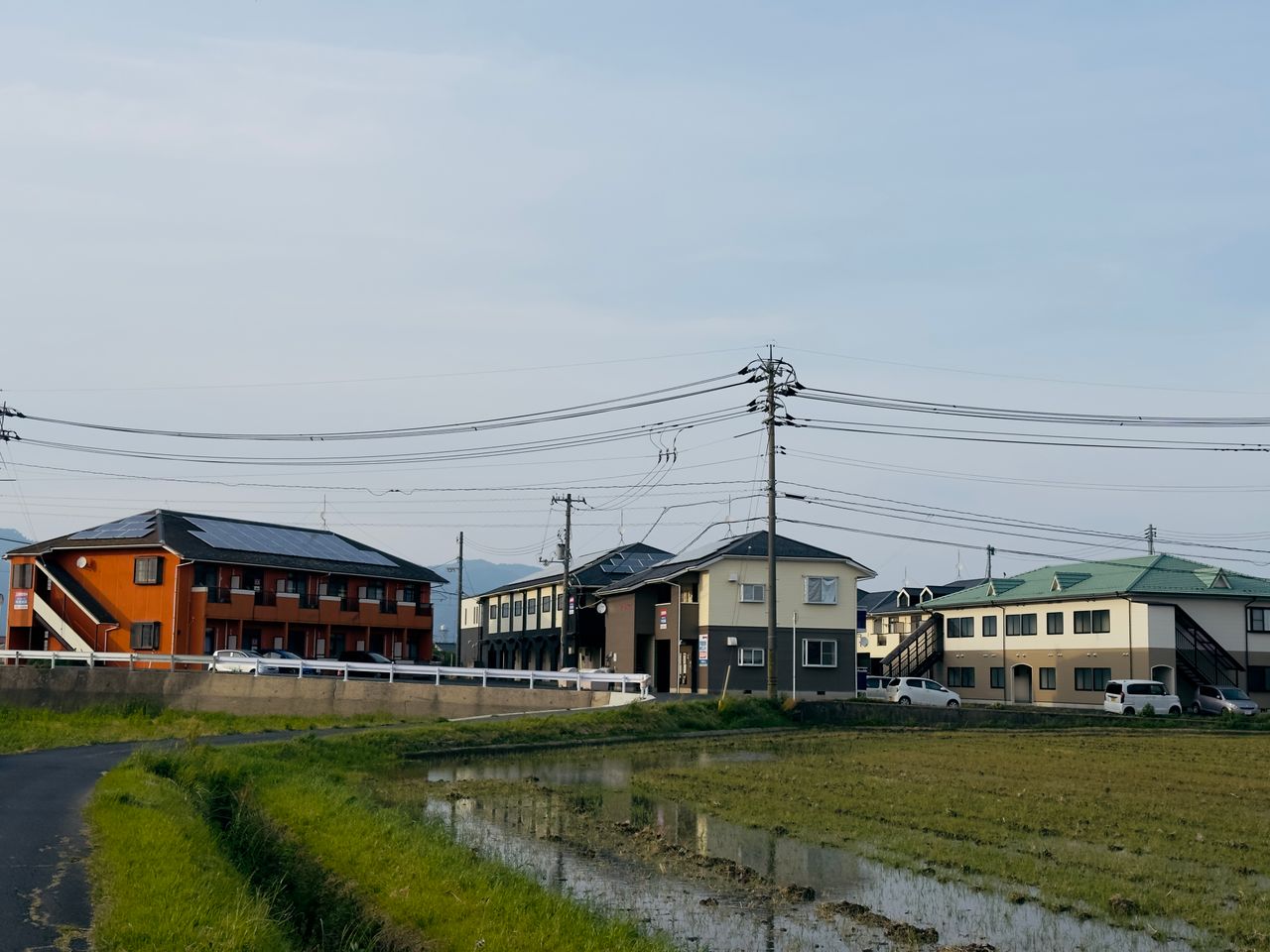
Instead, Fujii is trying to solve one of Japan’s most difficult regional problems: how to keep rural communities economically and culturally alive as populations age, young people move to cities, farms struggle to remain profitable, and thousands of traditional homes sit empty.
His answer is surprisingly simple: turn rural Japan itself into an economic asset.
Through Farm & Firm, the company he founded in 2009, Fujii has worked with farmers, local governments, and communities to develop agritourism, farm-to-table businesses, hospitality projects, and new uses for abandoned homes known as akiya. One of his projects transformed an empty historic residence into a boutique hotel, helping dramatically increase international tourism to the surrounding area.
But Fujii’s story is bigger than one entrepreneur or one hotel. It illustrates a potentially important strategy for rural Japan: rather than trying to make the countryside imitate Tokyo, make the countryside valuable precisely because it is different.

The Rural Japan Problem Is Bigger Than Empty Houses
The word akiya—literally meaning an empty or vacant house—has become internationally associated with Japan’s rural housing problem.
The phenomenon is closely connected to Japan’s demographic transformation.
Japan’s population is aging rapidly. In 2024, people aged 65 and over represented 29.3% of the country’s population, while 45 of Japan’s 47 prefectures recorded population declines.
That demographic pressure is particularly visible outside the country’s largest metropolitan areas.
As younger generations move toward cities for education and employment, rural communities can lose not only residents but also customers, workers, entrepreneurs, schoolchildren, and eventually essential services.
The result is a vicious cycle:
fewer residents → fewer businesses → fewer jobs → more young people leave → even fewer residents.
Empty houses are one visible consequence.
Japan’s official housing statistics have recorded a long-term increase in vacant dwellings, with the number reaching about 8 million in 2018. The government’s subsequent 2023 Housing and Land Survey was designed to track the continuing evolution of the problem.
But an empty house isn’t necessarily the real problem.
The deeper problem is an empty economic role.
A house that once belonged to a farming family may have provided accommodation, employment, food production, community participation, and a place for relatives to gather. When that household disappears, the building may remain—but much of the economic activity surrounding it disappears too.
That is where Fujii’s approach becomes interesting.
From Aerospace Engineering to Rural Entrepreneurship
Fujii grew up in Saitama, north of Tokyo, and became fascinated by planes and space as a teenager.
Coming from a large family, paying for university wasn’t straightforward. He therefore attended Japan’s National Defense Academy, which offered tuition support and a monthly allowance.
Later, he studied aerospace engineering at the University of Texas at Austin.
His time in the United States changed how he viewed regional economic development.
From Texas, he observed American cities growing through entrepreneurship and venture investment. He returned to Japan and saw a very different pattern: economic growth was heavily concentrated in major metropolitan areas while many regional communities were losing population.
He initially followed his childhood ambition, working as an aircraft engineer. But limited funding eventually pushed him toward the automotive sector.
At a Japanese automaker, he led major projects and earned Japan’s Small and Medium Enterprise Management Consultant certification.
Eventually, however, Fujii became convinced that conventional corporate structures were not the best place for him to create the kind of regional economic change he wanted.
So he quit.
The irony is hard to miss: after spending years acquiring specialized engineering expertise, he eventually applied those same problem-solving skills to agriculture, tourism, and rural development.
Why Agriculture Became the Starting Point
Rather than inventing an entirely new industry, Fujii looked at what rural Japan already had.
The answer was agriculture.
Japan’s countryside possesses something that cities cannot manufacture: farmland, traditional food production, historic homes, local crafts, landscapes, seasonal experiences, and generations of accumulated cultural knowledge.
The challenge is that producing agricultural goods alone can be economically difficult for small producers.
Fujii’s strategy was to add value around the farm.
Instead of simply selling vegetables, for example, a farmer could potentially sell:
- accommodation
- meals
- farm experiences
- educational programs
- local products
- cultural activities
- guided tours
- direct-to-consumer food
- seasonal experiences
The farm becomes not merely a production site but part of a broader tourism ecosystem.
This is the basic logic of agritourism.
Farm Stays Turn Everyday Rural Life Into an Experience
When Otawara City asked Fujii’s company to work on an agritourism project, he initially faced an unexpected obstacle.
The farmers themselves weren’t convinced that tourists would want to visit.
This is understandable.
For someone who has spent decades working in a field, eating locally produced food, maintaining an old house, or walking through rice paddies may feel completely ordinary.
To a visitor from a major city—or from another country—it can be exactly the opposite.
That difference in perspective is one of the most important assets rural tourism can exploit.
The goal isn’t necessarily to manufacture an attraction.
It can be about revealing the value of things that already exist.
Fujii established Ohtawara Tourism and began developing farm-stay experiences, initially attracting groups such as Japanese students.
That model created a connection between visitors and farmers while demonstrating that rural life itself could have tourism value.
But accommodation presented another challenge.
Farmers needed to invest money into their properties.
And that brought Fujii to one of Japan’s most famous—and misunderstood—real-estate phenomena.
The Akiya Opportunity
An akiya isn’t automatically a charming traditional Japanese home waiting for a foreign buyer.
Some are beautiful historic buildings.
Others require extensive structural work.
Some lack convenient access to transportation, shops, hospitals, or schools.
Others may have complicated ownership histories or require substantial renovation.
That distinction matters because the headline-grabbing image of a ¥0 or extremely cheap Japanese house can obscure the real economics of rural property.
The purchase price is only one part of the equation.
Renovation, utilities, taxes, maintenance, insurance, transportation, permits, property management, and operating costs can quickly turn an apparently cheap property into a serious investment.
The more important question is therefore not:
“How cheaply can I buy an akiya?”
It is:
“What productive purpose can this building serve?”
Fujii’s work offers one answer.
Tourism.
Turning an Empty House Into a Destination
In Nakagawa, a small town near Otawara, Fujii was approached about an abandoned house that had belonged to a prominent local family.
Instead of leaving the building vacant, he transformed it into Iizukatei, a boutique hotel.
The project had two objectives.
The first was straightforward: attract visitors.
The second was more ambitious: change how local residents viewed their own buildings and community.
Before the project, only around 10 to 15 international tourists reportedly visited the town each year.
Afterward, Fujii said international visitor numbers increased to approximately 400 to 500 annually.
That is still tiny compared with Japan’s famous tourism destinations.
But rural revitalization doesn’t necessarily require millions of visitors.
In a small community, hundreds of visitors spending money locally can have a disproportionately large effect.
A visitor who stays overnight might pay for accommodation, eat at a local restaurant, purchase agricultural products, hire a guide, visit another attraction, and buy souvenirs.
One tourist can therefore generate revenue across multiple businesses.
The Real Goal Isn’t Tourism—It’s Local Circulation
This is where rural tourism becomes more sophisticated than simply attracting visitors.
Imagine a traveler arriving in a rural Japanese town.
They stay in a renovated traditional home.
They eat breakfast made with local ingredients.
They visit a nearby farm.
They buy vegetables or regional products.
They visit a craft workshop.
They eat dinner at a locally owned restaurant.
They return to their accommodation.
The same visitor has now generated income for several different parts of the community.
This is known as the local economic multiplier effect.
The more money that remains inside the community, the more powerful tourism can become.
That is fundamentally different from a tourism model where visitors arrive, take photographs, sleep in a large chain hotel, and leave without contributing much to local businesses.

Why Akiya Renovation Can Become More Than Real Estate
An empty house is usually considered a liability.
It may deteriorate.
It can become an eyesore.
Its owner may still have to deal with taxes and maintenance.
The surrounding neighborhood may lose population and activity.
Adaptive reuse changes that equation.
An old home can potentially become:
- a boutique hotel
- a guesthouse
- a restaurant
- a café
- a farm stay
- a craft studio
- a coworking space
- a cultural center
- a small retail shop
- a cooking school
- a wellness retreat
- a community facility
The building doesn’t have to become another suburban house.
Its historical character can actually become part of the product.
That is one reason the akiya issue intersects with tourism so naturally.
Japan’s Rural Challenge Is Also a Cultural Preservation Challenge
There is another dimension that deserves more attention: cultural continuity.
When rural populations decline, Japan risks losing more than buildings.
Traditional farming practices, local recipes, festivals, crafts, dialects, agricultural landscapes, and community customs depend on people.
A traditional house without people is simply architecture.
A traditional house where visitors can eat, sleep, learn, and interact with residents becomes a living cultural asset.
This distinction is crucial.
Preservation doesn’t necessarily mean freezing a village in the past.
It can mean finding new economic uses for old assets while keeping their cultural identity intact.
Why Foreign Tourists Could Matter
Japan has become one of Asia’s most popular international tourism destinations, but visitor flows are not distributed evenly.
Tokyo, Kyoto, Osaka, Mount Fuji, Hiroshima, and other internationally recognized destinations attract enormous attention.
Rural communities face the opposite problem.
They may have beautiful landscapes and deep cultural traditions but lack international visibility.
That creates an opportunity.
Some travelers increasingly want experiences beyond famous landmarks.
They want to cook with locals, stay in traditional houses, work on farms, discover regional food, hike lesser-known landscapes, or experience everyday life.
Rural Japan can provide those experiences.
The challenge is turning them into products that are easy for travelers to discover and book.
That requires marketing, multilingual communication, transportation planning, digital booking systems, customer service, and hospitality training—areas where rural communities may not traditionally have had strong capabilities.
Technology Can Help—but It Can’t Replace Community
Digital tools could make rural tourism substantially easier.
Online booking platforms can make small accommodations discoverable.
Maps and translation tools can reduce language barriers.
Social media can showcase destinations that previously had almost no international exposure.
AI can help small operators create multilingual marketing materials, answer routine customer questions, analyze reviews, and develop travel itineraries.
But technology cannot manufacture the most important ingredient: authentic local participation.
A village cannot sustainably become a tourist attraction simply because somebody uploads beautiful drone footage to Instagram.
There must be something worth experiencing—and people willing to make that experience possible.
That is why Fujii’s model focuses heavily on working with farmers and local residents.
The Biggest Risk: Turning Rural Japan Into a Theme Park
There is also a danger in rural tourism.
If every community starts chasing the same tourist, authenticity can disappear.
A rural village that replaces its traditional character with standardized souvenir shops and generic tourist attractions may simply become another commercial destination.
The strongest model is arguably the opposite.
Let each community identify what makes it different.
One town might emphasize agriculture.
Another might focus on traditional architecture.
Another could build around pottery.
Another might specialize in forestry, fishing, cuisine, sake, hiking, or historical traditions.
The objective should not be:
“How do we make this village look attractive to tourists?”
It should be:
“What is already valuable here, and how can we create a sustainable business around it?”
That distinction could determine whether rural revitalization succeeds or fails.
Cheap Akiya Houses Are Not a Magic Solution
The international fascination with Japan’s inexpensive abandoned houses sometimes creates the impression that anyone can buy a cheap property, renovate it, open an Airbnb, and make money.
Reality is considerably harder.
Akiya properties can involve:
- Major renovation requirements
Old buildings may require structural, electrical, plumbing, insulation, roofing, or seismic upgrades. - Location problems
A cheap house may be cheap because very few people want to live there. - Transportation limitations
Rural properties can be difficult to reach without a car. - Ownership complications
Some properties have complicated inheritance or registration histories. - Operating costs
Renovated buildings still require ongoing maintenance. - Tourism regulations
Short-term accommodation is subject to Japanese rules, and requirements vary depending on the operating model and location. - Local relationships
Rural businesses depend heavily on community trust.
The last point is particularly important.
A foreign investor—or even a Japanese outsider—cannot necessarily succeed by treating an akiya as a piece of cheap real estate.
The building exists within a community.
Government Policy Is Part of the Equation
Japan’s government and local authorities have increasingly treated vacant houses as a policy issue rather than simply a private-property problem.
Japan’s housing policy includes measures designed to discourage the creation of vacant properties and encourage appropriate management or transfer.
Local governments have also experimented with akiya banks, renovation incentives, relocation programs, and rural entrepreneurship initiatives.
But subsidies alone cannot reverse demographic decline.
A town cannot sustainably attract residents simply by giving away houses if there are no jobs, schools, healthcare services, transportation, or social networks.
This is why Fujii’s approach is particularly notable.
He isn’t simply trying to fill houses.
He is trying to create economic reasons for people to use them.
A New Definition of Career Success
Perhaps the most interesting part of Fujii’s story has nothing to do with tourism.
It is the idea that a successful career doesn’t necessarily mean staying on the path you chose at 14.
He achieved the engineering career he had dreamed about.
Then he walked away from it.
The skills didn’t disappear.
Engineering taught him how to solve complicated problems, manage projects, work with different specialists, challenge assumptions, and experiment with new approaches.
Those skills were transferred from aircraft to agriculture and tourism.
In that sense, Fujii didn’t really abandon engineering.
He applied an engineer’s mindset to a completely different system.
And rural Japan became the system he wanted to redesign.
What Fujii’s Story Reveals About Rural Japan
Japan’s rural crisis is frequently described in terms of decline.
Population decline.
Business closures.
Empty houses.
Aging communities.
Shrinking schools.
Fewer farmers.
But decline is only half of the story.
The other half is the question of what happens when old assets are given new economic purposes.
An empty farmhouse can become accommodation.
A rice field can become part of an educational experience.
A family recipe can become a restaurant concept.
A traditional building can become a hotel.
A farmer can become a host.
A quiet village can become a destination.
That doesn’t mean every rural community will be saved.
Some places are simply too remote or too far along the demographic decline curve.
And tourism cannot replace every lost industry.
But Fujii’s experience demonstrates that revitalization doesn’t always require building something entirely new.
Sometimes the opportunity is sitting inside an old house that everyone else has stopped seeing.
The Bigger Lesson for Japan—and Beyond
Japan isn’t the only country facing rural depopulation.
Across Europe, North America, and parts of Asia, smaller communities are confronting similar pressures: young people leave, populations age, services disappear, and historic buildings become vacant.
The Japanese experience offers a useful lesson.
Rural revitalization is not fundamentally a real-estate problem. It is an economic ecosystem problem.
Buying an abandoned house is easy compared with creating a reason for people to visit, work, invest, and stay.
The most successful rural projects will therefore probably combine several elements:
housing + entrepreneurship + tourism + agriculture + culture + digital connectivity + community participation.
Fujii’s career shift is compelling because it connects all of those pieces.
He once wanted to help build the machines that would carry people into the sky.
Now he is helping build reasons for people to return to the places they left behind.
And perhaps that is an even more difficult engineering problem.

Sources Business Insider

