
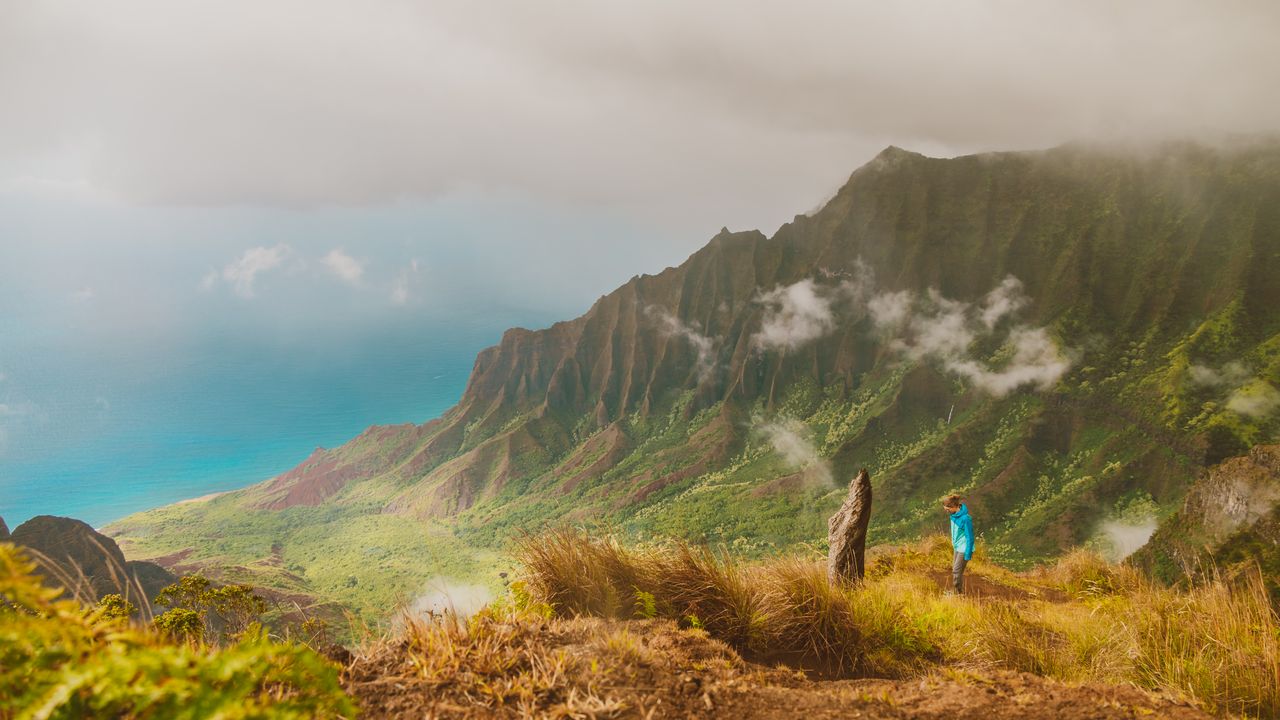
Kauai is famous for dramatic cliffs, lush valleys, coral reefs and some of Hawaii’s most celebrated beaches.
But in September 2026, another side of the island is dominating the headlines.
Hurricane Lowell caused extensive damage across Kauai after passing close to the island, leaving large parts of the island without electricity, damaging roads and coastal properties, disrupting airport operations and forcing tourism officials to ask visitors to postpone nonessential trips while recovery work continues.
The storm’s effects have been particularly visible around Poipu, one of Kauai’s best-known resort areas on the South Shore. Storm surge and powerful waves damaged oceanfront resorts, pushed sand and debris into properties, and affected homes and businesses around the shoreline.
Yet the story is more complicated than images of damaged hotels might suggest.
Kauai has not been uniformly devastated. Some areas suffered much less damage, while some accommodations are preparing to reopen relatively quickly. The island’s tourism infrastructure is therefore operating in a patchwork of closures, repairs and limited services rather than simply being completely shut down.
For travelers planning a Kauai vacation, that distinction matters.
The island remains a major tourism destination, but conditions immediately after a hurricane are very different from normal vacation conditions. Roads may be blocked, public parks may remain closed, electricity and communications may be unreliable, and emergency crews need access to affected communities.
The central question is no longer whether Kauai is beautiful enough to visit.
It is whether the island is ready to host visitors while it is still recovering.
Hurricane Lowell Was a Major Test for Kauai
Hurricane Lowell developed into an extremely powerful Pacific hurricane before turning toward Hawaii.
The National Hurricane Center recorded Lowell with maximum sustained winds of up to 160 mph while it was well south of the Hawaiian Islands. As the storm approached the state, warnings and watches were issued for Kauai County, including Kauai and Niihau.
By September 7, Lowell was passing near the western Hawaiian Islands, with the National Hurricane Center warning of dangerous conditions around Kauai.
Although the center did not make a direct landfall on Kauai, that distinction provided little comfort to residents in areas exposed to the storm’s winds, rainfall and ocean surge.
Tropical-storm-force winds and hurricane-force gusts were recorded on the island, while high surf and storm surge battered coastal areas.
For a place like Kauai, where much of the tourism economy depends on coastline access, that combination can be particularly destructive.
Poipu Became One of the Most Visible Damage Zones
Poipu sits on Kauai’s southern coastline and is one of the island’s major resort concentrations.
It is known for beaches, hotels, vacation rentals, restaurants and easy access to recreational activities.
That concentration of tourism infrastructure also means that a coastal storm can create an outsized economic impact.
Reports from the aftermath showed waves and storm surge entering portions of oceanfront properties, with sand, rocks and debris pushed into resort grounds and structures.
Some properties experienced particularly dramatic impacts.
At Ko’a Kea Resort in Poipu, images showed significant storm damage, and management said guests who needed to cancel could receive refunds rather than rescheduling. The resort expected normal operations to resume within roughly two weeks, although timelines can change as inspections and repairs continue.
The Sheraton Kauai Resort also sustained storm-related damage, including impacts associated with coastal surge.
Not Every Resort Was Damaged in the Same Way
One of the most important points for travelers is that “Poipu was hit” does not mean every hotel in the area suffered catastrophic structural damage.
The extent of damage varied according to location, elevation, building design and exposure to waves.
Some businesses experienced severe flooding and debris impacts.
Others lost electricity but avoided major structural damage.
The Sheraton Kauai Coconut Beach Resort, for example, was reported to have sustained no structural damage but still had to close temporarily because of the island’s broader power situation.
This illustrates how disaster recovery can affect businesses even when the building itself is intact.
A resort needs power.
It needs water.
It needs roads.
It needs employees.
It needs food deliveries.
It needs working communications.
If one of those systems fails, the hotel may be unable to operate normally.
Kauai’s Power Outage Was a Huge Problem
The electrical system was among the most heavily affected pieces of infrastructure.
Hawaii state officials reported that more than 36,000 customers, approximately 90% of Kauai Island Utility Cooperative customers, lost power following the storm.
For residents, that means refrigeration, communications, air conditioning and household services can become difficult.
For hotels, it is a business-critical problem.
A major resort cannot simply continue operating normally without dependable electricity.
Guest rooms, kitchens, elevators, telecommunications, security systems and water infrastructure may all depend on the grid.
That explains why some properties that remained physically intact still had to close.
Lihue Airport Is Operating, But Not Normally
Lihue Airport is the primary gateway for most visitors arriving on Kauai.
It remained operational after Hurricane Lowell, but with significant limitations.
The Hawaii Department of Transportation reported that the airport had been running on backup generators after the storm knocked out power, while one of its two backup generators was also damaged.
To reduce the load on the remaining generator, airport security screening was temporarily reduced to a single line.
That created long waits.
Airlines were maintaining flights but spacing them out so passengers had more time to get through security.
For a traveler, this means that even a technically operating airport can produce a very different experience from normal.
A flight might depart.
But getting through the terminal may take much longer.
Visitors Should Not Assume Airport Operations Mean Tourism Is Back to Normal
This is an important distinction.
An airport can reopen while roads, hotels and attractions remain impaired.
Tourists may be able to land but then discover that their rental car company is dealing with shortages, their hotel has limited services, or restaurants and attractions remain closed.
That is why Hawaii tourism authorities are asking visitors to postpone trips to Kauai while recovery efforts continue.
The message is not that Kauai will remain closed indefinitely.
It is that emergency recovery takes priority.
State Parks Across Kauai Remain Closed
Travelers who associate Kauai with hiking, waterfalls and wilderness should pay particular attention to state-park closures.
The Hawaii Division of State Parks reported on September 10 that all Kauai island parks remained closed until further notice because of damage from Hurricane Lowell.
Officials said assessments were being delayed by blocked roads and warned people not to enter park areas because of possible flash flooding, storm surge and other hazards. Camping on Kauai was also unavailable for the foreseeable future.
This is critical information for hikers.
A trail can look safe in a photograph while access roads, bridges or surrounding slopes remain unstable.
Storm damage can also create hazards that are not immediately visible, including fallen trees, washed-out trails and unstable terrain.
Hiking Is Not Simply a Question of Whether the Trail Looks Dry
Post-hurricane hiking requires more caution than an ordinary rainy-day hike.
Heavy rainfall can destabilize slopes.
Fast-moving water can undermine bridges.
Flood debris can block paths.
Rivers can rise rapidly after additional rainfall.
And emergency crews may be unable to reach a remote trail quickly.
Travelers should therefore respect official closures even if other visitors appear to be entering restricted areas.
Kauai’s Famous Natural Attractions Need Time to Recover
Kauai’s tourism appeal is built heavily on nature.
The Napali Coast.
Waimea Canyon.
Wailua River.
Poipu beaches.
Waterfalls.
Hiking trails.
Marine environments.
Those attractions cannot simply be reopened with the flip of a switch.
Officials must inspect infrastructure, trails, roads and public facilities.
Environmental damage may also require longer-term restoration.
A hurricane can reshape beaches, damage vegetation and move enormous amounts of sediment.
For a tourism-dependent island, protecting those natural assets is economically important as well as environmentally necessary.
Tourism Is the Backbone of Kauai’s Economy
Kauai is particularly vulnerable to tourism disruption because the sector plays an unusually large role in the island’s economy.
The Hawaii Tourism Authority says tourism supports roughly 40% of jobs on Kauai and more than half of the island’s real GDP. Visitor expenditures exceeded approximately $2.93 billion in 2025, while visitor arrivals reached about 1.42 million.
Those figures demonstrate why a major storm can become an economic crisis.
The effects spread beyond hotels.
Restaurants lose customers.
Tour operators lose bookings.
Rental-car companies lose business.
Retailers see fewer visitors.
Taxi and shuttle operators lose fares.
Guides lose work.
Local suppliers lose hotel and restaurant orders.
The effects can continue even after the roads reopen.
Kauai Was Already a High-Value Tourism Market
Before Hurricane Lowell, Kauai’s visitor economy was performing strongly.
Tourism data showed an average hotel daily rate of more than $416 during the first two months of 2025, while hotel occupancy was 78.5%. Visitor spending during that period was approximately $488 million.
That means every week of disrupted tourism represents substantial lost economic activity.
The island’s high accommodation prices also mean that travelers may have considerable amounts of money tied up in prepaid reservations.
That makes communication between hotels and guests especially important during disasters.
Why Tourism Officials Are Asking Visitors to Wait
At first glance, telling tourists not to come might seem strange for an island that depends on tourism.
But emergency recovery requires resources.
Road crews need clear access.
Utility workers need transportation routes.
Hospitals and emergency services need capacity.
Fuel and food deliveries need priority.
Hotel workers may be dealing with damage to their own homes.
Residents may be without electricity.
A large influx of tourists under those conditions can add pressure rather than provide immediate economic relief.
That is why Hawaii tourism officials are encouraging travelers to postpone visits and, where possible, consider shifting vacations to other Hawaiian destinations instead.
Other Hawaiian Islands May Be Better Alternatives
This distinction is useful for travelers with flexible plans.
Hawaii is not a single resort.
The state includes multiple major visitor destinations, each with different weather conditions, infrastructure and recovery situations.
Oahu, Maui and Hawaii Island may offer alternatives depending on current conditions and available flights.
However, travelers should not assume another island automatically has no storm impacts.
Hurricane Lowell affected multiple islands, and Hawaii officials have continued to issue park and hazard updates statewide.
The appropriate approach is to check the latest condition of the specific destination rather than simply changing the name on an itinerary.
Why Poipu Is So Vulnerable to Storm Surge
Poipu’s location is part of its appeal.
Oceanfront hotels and vacation rentals offer immediate access to beaches.
But coastal exposure also means vulnerability to elevated waves and storm surge.
When a powerful tropical system approaches, the ocean can become the primary destructive force even if the hurricane’s center remains offshore.
The result can be particularly damaging because saltwater, sand and debris are forced into buildings and mechanical systems.
Cleaning up can therefore be far more complicated than dealing with wind damage alone.
Saltwater Causes Problems That Continue After the Storm
Storm surge can damage electrical components, air-conditioning systems, elevators, vehicles and kitchen equipment.
Saltwater is corrosive.
Even when an item appears to be working after a flood, hidden corrosion can create problems later.
This is one reason hotel operators often need extensive inspections before reopening normally.
A reopening announcement does not necessarily mean that every amenity will immediately be available.
Local Restaurants Face a Difficult Choice
Restaurants in affected areas face a particularly complicated recovery process.
They require electricity for refrigeration.
They need water.
They need food deliveries.
They need workers.
And they need customers.
A restaurant may be physically undamaged but still have no ability to operate.
Some local businesses have chosen to prioritize the community rather than reopen immediately.
AP reported that food truck owner Kelly Kakalia was providing free meals and donating equipment to families affected by the storm.
That response illustrates the difference between economic recovery and community recovery.
Sometimes a business’s most important contribution is not serving tourists.
It is helping residents get through the emergency.
Recovery Can Strengthen Community Relationships
Natural disasters can expose the dependence between tourism businesses and local communities.
Hotels depend on residents as employees.
Residents depend on hotels and visitor spending for jobs.
Restaurants depend on both tourists and local customers.
Tour operators depend on functioning roads.
The recovery process can therefore bring businesses and communities together.
Local business owners may provide supplies.
Hotel workers may assist with cleanup.
Tourism companies may redirect resources to emergency needs.
These activities are rarely captured in tourism statistics, but they matter greatly to resilience.
The Federal Disaster Request Could Accelerate Recovery
Hawaii Governor Josh Green has requested a federal disaster declaration for the affected areas to help accelerate recovery and unlock additional assistance.
Federal assistance can help with infrastructure, emergency response and rebuilding.
For Kauai, speed matters.
Every additional week of unreliable infrastructure can extend the disruption to tourism and local commerce.
But rebuilding also requires careful prioritization.
Restoring the electrical grid may be more urgent than repairing a hotel pool.
Reopening emergency routes comes before restoring visitor amenities.
The Island’s Infrastructure Needs to Be Rebuilt With Future Storms in Mind
Hurricane Lowell also raises a larger question.
Should damaged infrastructure simply be replaced?
Or should it be rebuilt differently?
Kauai’s exposure to tropical storms means resilience needs to become part of infrastructure planning.
Potential improvements could include:
More resilient electrical systems.
Additional backup power.
Hardened communications infrastructure.
Improved drainage.
Stronger coastal defenses where appropriate.
More resilient roads and bridges.
Emergency supply storage.
Better evacuation procedures.
The objective should not be to pretend severe storms can be prevented.
It should be to reduce their consequences.
The 2026 Storm Season Adds to the Concern
Lowell was not an isolated weather event for Hawaii in 2026.
Tropical Storm Lala had already affected the state in August, causing landslides and destroying homes.
That creates additional recovery pressure.
Communities that are still repairing damage from one storm have less time and fewer resources to prepare for the next one.
Climate variability and increasingly intense weather therefore create a planning challenge that extends beyond any single hurricane.
What Does Hurricane Lowell Mean for a Kauai Vacation?
For someone already booked to visit Kauai, the most important action is to contact the hotel, vacation-rental manager and transportation provider directly.
Ask specific questions.
Is the property open?
Does it have electricity?
Is running water available?
Are restaurants operating?
Are pools and beaches accessible?
Is road access normal?
Are airport transfers operating?
Are planned tours actually running?
What happens to the reservation if conditions change?
Travelers should not rely entirely on photographs posted online.
The situation can change from one day to another.
Should Travelers Cancel or Postpone?
That depends on timing and the exact destination, but the current official message is significant.
Tourism officials are asking visitors to postpone trips to Kauai while recovery is underway.
That guidance should carry considerable weight, particularly for travelers whose trips are imminent.
A vacation is intended to provide relaxation and recreation.
Visiting during an active recovery operation can create a different experience entirely.
Even if a hotel is technically open, many attractions may remain closed.
What About Travelers Already on Kauai?
Visitors already on the island should follow local emergency instructions and accommodation guidance.
They should avoid entering closed parks or restricted areas.
They should conserve resources when asked.
They should stay away from downed power lines and unstable structures.
And they should avoid unnecessary driving if roads are being cleared for emergency crews.
Hawaii officials specifically emphasized keeping roads open so crews and emergency vehicles can operate efficiently during the storm recovery period.
The Difference Between “Open” and “Ready for Tourists”
This distinction deserves more attention.
A destination can technically be open while still being unsuitable for normal tourism.
Restaurants may have reopened but operate limited hours.
Hotels may accept guests but offer fewer amenities.
Roads may be passable but heavily congested.
The airport may operate with long security waits.
Trails may remain closed.
Public beaches may be inaccessible.
Medical services may be operating under unusual pressure.
Travelers should therefore ask not simply:
“Is Kauai open?”
They should ask:
“Is Kauai operating normally enough for the kind of trip I planned?”
Kauai’s Tourism Industry Will Need a Careful Recovery Strategy
Once immediate emergency needs are addressed, tourism officials will face a difficult balancing act.
They need visitors to return because tourism supports the local economy.
But a rapid return before infrastructure and communities are ready could create additional pressure.
The best recovery strategy may therefore involve staged reopening.
First, restore essential services.
Then reopen safe visitor infrastructure.
Then gradually restore outdoor recreation and attractions.
Finally, rebuild destination marketing.
The Risk of “Disaster Tourism”
There is also a question of ethics.
Storm damage can attract curiosity.
Some travelers may want to see the aftermath.
That can become a problem if visitors enter restricted areas, photograph residents without permission or interfere with recovery workers.
Kauai’s recovery should not become a tourist attraction.
Travelers should give crews space and respect residents who have experienced loss.
The Long-Term Tourism Story May Eventually Be One of Resilience
Kauai has endured serious natural disasters before.
Hurricane Iniki in 1992 remains the most famous modern example, causing widespread destruction across the island.
Hurricane Lowell is being described by local and regional observers as the most significant hurricane impact on Kauai since Iniki.
The island rebuilt after Iniki.
It will rebuild again.
The challenge is determining what lessons can be incorporated into the next generation of tourism infrastructure.
What Could Change After Lowell?
The storm could influence how Kauai approaches:
Coastal development.
Resort construction.
Emergency power.
Flood drainage.
Tourism capacity.
Environmental management.
Visitor communications.
Hurricane preparedness.
Insurance.
Infrastructure investment.
Vacation-rental policies.
The aftermath therefore has implications that extend well beyond September 2026.
A More Resilient Kauai Could Be Better for Residents and Visitors
Tourism resilience and community resilience are closely connected.
A stronger power grid helps hotels and residents.
Better roads help tourists and emergency vehicles.
Improved communications help visitors and local families.
Healthy beaches support residents and tourism.
Well-managed parks protect ecosystems and preserve visitor experiences.
Resilience is therefore not simply about protecting the tourism industry.
It is about protecting the island that the tourism industry depends on.
Final Takeaway
Hurricane Lowell has delivered a major shock to Kauai at a time when tourism remains one of the island’s most important economic pillars.
The storm damaged coastal properties, disrupted power, affected roads and transportation, closed state parks and created difficult operating conditions for hotels and businesses. Poipu, one of Kauai’s best-known resort communities, was among the areas where the damage was especially visible.
Yet the island’s recovery is not a simple story of total destruction.
Some properties suffered serious damage.
Others remained structurally intact but were forced to close because of utilities or broader infrastructure problems.
Lihue Airport remains operational but with extended security delays caused by power limitations.
Meanwhile, all Kauai state parks remain closed until further notice as officials assess storm damage and dangerous conditions.
For travelers, the most important message is therefore not that Kauai has disappeared as a vacation destination.
It has not.
It is that Kauai is currently a recovery zone rather than a normal resort destination.
Tourism will return.
The beaches will recover.
Hotels will reopen.
Roads will be rebuilt.
Trails will eventually reopen.
And visitors will once again fill the island’s restaurants, resorts and hiking routes.
But in the immediate aftermath of a disaster, residents and emergency workers must come first.
Kauai’s tourism economy is too important to abandon, but its future depends on rebuilding in a way that makes the island more resilient to the next major storm.
For travelers considering a visit, patience may be the best contribution they can make right now.
A postponed vacation is temporary.
A faster, safer recovery benefits everyone who calls Kauai home—and everyone who hopes to experience the island in the years ahead.
5 Frequently Asked Questions
1. Is Kauai open to tourists after Hurricane Lowell?
Kauai is not completely inaccessible, and Lihue Airport continues to operate, but the island is not operating normally. Tourism officials are asking visitors to postpone trips while recovery continues because infrastructure, accommodations, roads and attractions have been affected.
2. Was Poipu badly damaged by Hurricane Lowell?
Yes. Parts of Poipu’s South Shore experienced significant coastal impacts, including storm surge, high waves, flooding, sand and debris entering properties, and damage to several oceanfront hotels and businesses. The severity varied from property to property.
3. Are Kauai’s state parks and hiking trails open?
No. As of September 10, 2026, Hawaii’s Division of State Parks reported that all Kauai island parks remained closed until further notice because of Hurricane Lowell damage and ongoing hazards including possible flash flooding and storm surge. Camping on Kauai was also unavailable.
4. Are Kauai hotels reopening?
Some hotels and resorts are preparing to reopen while others remain closed because of storm damage, electricity problems or other infrastructure issues. Ko’a Kea Resort in Poipu said it expected normal operations to resume within roughly two weeks, while other properties have reported different recovery timelines. Travelers should contact their specific accommodation before traveling.
5. Should I cancel my Kauai vacation because of Hurricane Lowell?
For trips taking place soon, travelers should seriously consider postponing, especially given the Hawaii Tourism Authority’s request that visitors delay nonessential trips while Kauai recovers. Conditions can differ significantly by property and location, so anyone with an upcoming reservation should also check directly with their hotel, airline, rental-car company and tour operators before making a final decision.
Sources AP News