

Moving to Thailand changed the way I see travel. What once felt like a short-term adventure revealed itself as a complex, deeply layered country—one that rewards curiosity and humility, but quietly punishes assumptions.
Since relocating, I’ve watched millions of visitors pass through Bangkok, Phuket, Chiang Mai, and the islands. Most arrive excited and well-intentioned. Yet many repeat the same mistakes—mistakes that don’t just limit their experience, but sometimes make travel harder, more expensive, or less safe than it needs to be.
Here are the most common missteps tourists make in Thailand—and what long-term residents learn instead.

1. Treating Thailand as “cheap” instead of “good value”
Thailand can be affordable, but assuming everything should be cheap is one of the fastest ways to miss its best offerings.
Many tourists:
- Bargain aggressively in places where margins are already thin
- Choose the cheapest tours without checking safety standards
- Avoid mid-range local restaurants that offer far better quality
What residents learn:
- Thailand offers exceptional value, not unlimited discounts
- Paying a little more often means cleaner kitchens, better ingredients, and fair wages
- Over-bargaining can damage local relationships, especially in family-run businesses
Respectful spending supports the communities visitors rely on.
2. Eating street food without understanding how locals choose it
Street food is one of Thailand’s great joys—but tourists often approach it blindly.
Common mistakes:
- Choosing stalls with no line and pre-cooked food sitting out
- Eating street food during off-hours when turnover is low
- Assuming all street food is equally safe everywhere
How locals decide:
- Look for high turnover and food cooked to order
- Follow office workers, taxi drivers, and students
- Avoid seafood stalls without visible ice and refrigeration inland
Street food isn’t risky—but uninformed street food choices can be.
3. Overloading itineraries and underestimating travel fatigue
Thailand looks small on a map. It isn’t.
Tourists often try to:
- Visit Bangkok, Chiang Mai, Phuket, Krabi, and multiple islands in one week
- Rely on domestic flights without accounting for delays and transfers
- Forget heat, humidity, and jet lag
Residents learn:
- One city or region per trip allows deeper experiences
- Travel days are full days, not “half days”
- Slowing down reveals the country’s rhythm—and your own limits
Thailand rewards patience more than checklists.
4. Misunderstanding Thai politeness as passivity
Thailand’s famous friendliness can be misleading.
Tourists sometimes:
- Raise voices when frustrated
- Publicly confront staff or drivers
- Assume smiles mean agreement
What’s actually happening:
- Thai culture prioritizes calm, face-saving, and indirect communication
- Open confrontation is considered disrespectful and counterproductive
- Problems are often solved quietly—if approached politely
Keeping your composure gets results far faster than pushing harder.
5. Ignoring cultural and legal boundaries
Some mistakes go beyond inconvenience.
Tourists frequently underestimate:
- The seriousness of laws related to the monarchy
- Dress expectations at temples
- Local norms around public behavior
Long-term reality:
- What’s tolerated elsewhere can carry real consequences in Thailand
- Temples are sacred spaces, not photo sets
- Respect isn’t optional—it’s expected
Understanding boundaries isn’t about fear; it’s about coexistence.
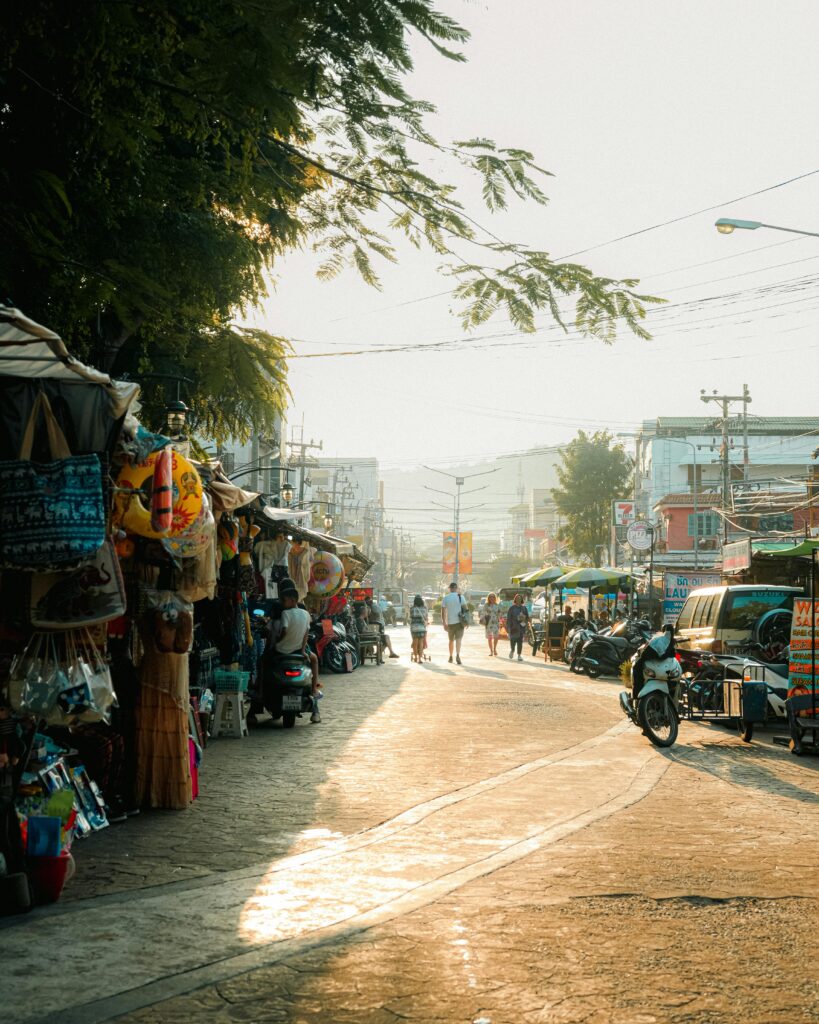
6. Staying only where other tourists stay
Tourist hubs are popular for a reason—but staying exclusively in them limits perspective.
Common patterns:
- Resort-only experiences
- International restaurant bubbles
- Guided tours without local interaction
What residents discover:
- Neighborhood markets reveal daily Thai life
- Smaller cities offer richer cultural immersion
- Local cafes, parks, and transit tell you how people actually live
You don’t need to avoid tourist areas—just don’t let them define your trip.
7. Assuming Thailand is the same everywhere
Thailand is not a monolith.
Differences tourists overlook:
- Northern vs southern food, climate, and customs
- Urban vs rural social norms
- Island culture vs mainland culture
Understanding regional diversity:
- Enhances respect
- Prevents miscommunication
- Deepens appreciation beyond stereotypes
Thailand is many countries inside one border.
8. Underestimating the emotional impact of long-term travel
Short visits feel effortless. Longer stays don’t always.
Visitors planning extended trips often aren’t prepared for:
- Cultural fatigue
- Language barriers
- Bureaucratic challenges
- Homesickness
Residents learn:
- Adjustment takes time
- Curiosity beats comparison
- Thailand doesn’t need to be “better” than home to be meaningful
Travel becomes richer when expectations soften.
Conclusion: Thailand isn’t hard — but it asks for awareness
Most tourist mistakes in Thailand don’t come from bad intentions. They come from speed, assumptions, and treating the country as a backdrop instead of a living place.
Slow down. Observe more. Spend thoughtfully. Listen carefully.
Thailand gives back what you bring into it.
Frequently Asked Questions (FAQ)
1. Is Thailand safe for tourists?
Yes, generally very safe. Most issues arise from traffic accidents, scams, or poor planning rather than crime.
2. Is street food really safe to eat?
Yes—if you choose busy stalls with fresh, cooked-to-order food and follow local habits.
3. How much money should I budget per day?
It varies widely. Budget travelers can spend little, but mid-range travel offers far better comfort and experiences.
4. Do I need to tip in Thailand?
Tipping is not required but appreciated in tourist-facing services. Rounding up or small tips are sufficient.
5. What should I wear at temples?
Cover shoulders and knees. Some temples provide wraps, but it’s best to dress respectfully from the start.
6. Can I bargain everywhere?
No. Bargaining is expected in markets, not in malls, convenience stores, or most restaurants.
7. Is English widely spoken?
In tourist areas, yes. Outside them, basic English is less common—learning a few Thai phrases helps enormously.
8. How long should I stay in one place?
At least 3–5 days per major destination. Longer stays offer deeper experiences and less stress.
9. Are Thai people always okay with photos?
Not always. Ask before photographing individuals, monks, or private spaces.
10. Is Thailand good for long-term living?
Yes—but it requires patience, cultural respect, and realistic expectations about visas, healthcare, and work rules.

Sources Business Insider

