

India is one of the world’s fastest-growing artificial intelligence (AI) markets. With more than 1.4 billion people, a thriving digital economy, and millions of new internet users coming online each year, the country has become a key battleground for global AI companies and homegrown innovators alike.
Yet beneath the excitement lies a major challenge: language.
While many of today’s most advanced AI models perform exceptionally well in English, they often struggle with India’s rich linguistic diversity. For a country where hundreds of millions of people communicate primarily in regional languages, this gap threatens to leave a large portion of the population behind.
If India hopes to become a true AI superpower, solving its language problem may be just as important as building faster computers or larger AI models.

Why Language Is Central to India’s AI Future
India is one of the world’s most linguistically diverse nations.
The country officially recognizes 22 scheduled languages, while more than 120 major languages and hundreds of regional dialects are spoken across different states and communities.
Some of the most widely spoken include:
- Hindi
- Bengali
- Telugu
- Marathi
- Tamil
- Urdu
- Gujarati
- Kannada
- Malayalam
- Punjabi
- Odia
- Assamese
Many Indians switch between multiple languages throughout the day, often mixing English with local languages in conversations, text messages, and social media.
This multilingual reality creates enormous challenges for AI systems.
The English Bias in Artificial Intelligence
Most leading large language models (LLMs) have been trained primarily using English-language data.
This gives them strong performance in:
- Writing
- Translation
- Programming
- Summarization
- Research
- Customer support
However, performance often declines significantly when users interact in many Indian languages, particularly in regional dialects, mixed-language conversations, or spoken formats. Experts warn that this could undermine India’s goal of making AI inclusive for all citizens.
Why AI Struggles with Indian Languages
Several factors contribute to the problem.
Limited Training Data
Compared with English, many Indian languages have far fewer digitized books, websites, academic papers, and online discussions available for AI training.
Multiple Scripts
Indian languages use several different writing systems, including:
- Devanagari
- Tamil
- Telugu
- Bengali
- Gurmukhi
- Gujarati
- Kannada
- Malayalam
- Odia
Each script introduces additional technical complexity.
Dialects and Regional Variations
Even within one language, pronunciation and vocabulary can vary considerably across different regions.
Code-Switching
Many Indians naturally mix English with their native language in everyday speech.
For example:
- Hinglish
- Tanglish
- Kanglish
- Benglish
Traditional AI systems often struggle to interpret these blended conversations accurately.
Why This Matters Beyond Convenience
Language limitations affect much more than casual chatbot conversations.
AI is increasingly being used in:
- Healthcare
- Education
- Banking
- Agriculture
- Government services
- Legal assistance
- Customer support
If these systems work well only in English, millions of people could receive lower-quality information or be excluded from AI-powered services altogether.
India’s AI Ambitions
The Indian government has made AI a national priority.
Its goals include:
- Expanding AI research
- Supporting domestic AI startups
- Improving digital public infrastructure
- Encouraging responsible AI development
- Building AI solutions for governance, healthcare, education, and agriculture
Government leaders have repeatedly emphasized that AI should promote inclusion rather than deepen digital inequality.
Homegrown AI Is Gaining Momentum
Several Indian organizations are developing AI models specifically designed for the country’s linguistic diversity.
These initiatives focus on:
- Indian-language datasets
- Speech recognition
- Voice assistants
- Translation
- Regional knowledge
- Multilingual search
Projects such as BharatGen and other indigenous AI efforts aim to improve support for Indian languages while reducing reliance on foreign AI models.
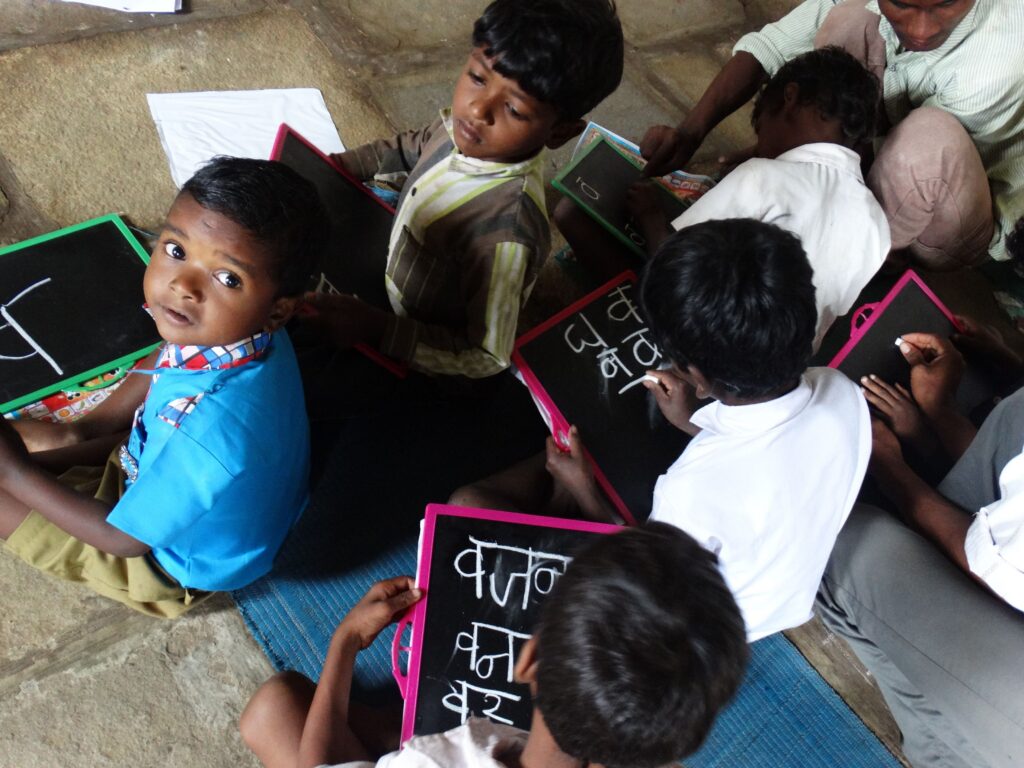
The Importance of High-Quality Language Data
Building multilingual AI requires much more than translating English text.
Developers need enormous collections of:
- Books
- Newspapers
- Government documents
- Educational materials
- Spoken conversations
- Local expressions
- Cultural references
The quality of these datasets largely determines how accurately AI understands each language.
Creating such resources takes years of collaboration between linguists, researchers, educators, and technology companies.
Speech Recognition Is an Even Bigger Challenge
Many Indians interact with smartphones primarily through voice rather than typing.
Voice AI must recognize:
- Different accents
- Regional pronunciation
- Background noise
- Mixed-language conversations
- Local vocabulary
Building accurate speech recognition across hundreds of dialects is considerably more difficult than supporting written text alone.
Why Global AI Companies Care About India
India has become one of the world’s largest AI user markets.
Millions of people use AI for:
- Homework
- Programming
- Business
- Content creation
- Translation
- Job applications
- Customer service
For international AI companies, improving Indian-language support represents one of the largest remaining growth opportunities.
Economic Opportunities
If India successfully develops multilingual AI, the benefits could extend far beyond domestic use.
Potential opportunities include:
- AI exports
- Software services
- Language technologies
- Education platforms
- Healthcare applications
- Government technology
- Digital inclusion solutions
Countries across Africa and Southeast Asia face similar multilingual challenges, creating opportunities for Indian-developed AI technologies.
The Risk of a Digital Divide
Without better multilingual AI, India could face a new form of digital inequality.
English-speaking users may receive:
- Better answers
- Faster services
- More accurate information
- Better educational tools
Meanwhile, speakers of regional languages could experience:
- Lower-quality AI responses
- More factual errors
- Reduced access to digital services
- Less participation in the AI economy
Ensuring equal access across languages is therefore both a technological and a social challenge.
Challenges Facing Indian AI Developers
Several obstacles remain.
Computing Infrastructure
Training advanced AI models requires expensive data centers and specialized chips.
Funding
Building large language models demands billions of words of carefully curated data and significant financial investment.
Talent
India has many AI engineers, but competition for experienced researchers is intense.
Open Datasets
Many Indian-language resources remain fragmented or unavailable for large-scale AI training.
Evaluation Standards
Researchers continue developing better benchmarks to measure AI performance across different Indian languages and dialects.
The Path Forward
Experts suggest several priorities.
These include:
- Expanding Indian-language datasets
- Supporting open-source AI projects
- Encouraging academic research
- Improving speech recognition
- Building multilingual benchmarks
- Increasing investment in domestic AI infrastructure
- Strengthening collaboration between government, universities, and industry
Rather than treating translation as an afterthought, many researchers believe multilingual capability should be built into AI systems from the beginning.
Why This Matters Globally
India’s language challenge is not unique.
Many countries in Africa, Southeast Asia, and Latin America also have multilingual populations underserved by English-centric AI.
If India succeeds in building AI that performs well across dozens of languages, it could provide a blueprint for more inclusive artificial intelligence worldwide.
Conclusion
India’s AI ambitions extend far beyond becoming another large technology market. The country hopes to build artificial intelligence that serves its own people while contributing to global innovation.
Achieving that vision requires solving one of AI’s most difficult problems: language.
Bridging the gap between English and India’s many regional languages will demand better datasets, stronger research, greater investment, and closer collaboration across government, academia, and industry.
If successful, India could demonstrate that the future of AI is not simply about creating larger models, but about creating smarter, more inclusive systems that understand the languages, cultures, and voices of everyone they are designed to serve.
Frequently Asked Questions (FAQs)
1. Why does AI struggle with Indian languages?
Most AI models are trained primarily on English-language data. Many Indian languages have fewer digital resources, multiple scripts, regional dialects, and mixed-language usage, making them more difficult for AI systems to understand accurately.
2. Why is multilingual AI important for India?
Multilingual AI ensures that people who primarily speak regional languages can access healthcare, education, banking, government services, and digital tools without needing advanced English skills.
3. Is India developing its own AI models?
Yes. Government-supported initiatives, research institutions, and private companies are developing multilingual AI models and language technologies tailored to India’s diverse linguistic landscape.
4. What is code-switching, and why is it difficult for AI?
Code-switching refers to mixing two or more languages in the same conversation, such as combining Hindi and English. Many AI systems find these blended conversations challenging because they require understanding multiple languages simultaneously.
5. Can India become a global leader in multilingual AI?
Yes. If India successfully develops high-quality multilingual AI systems, it could become a global leader in language technology, providing solutions for many other multilingual countries facing similar challenges.

Sources Bloomberg

