
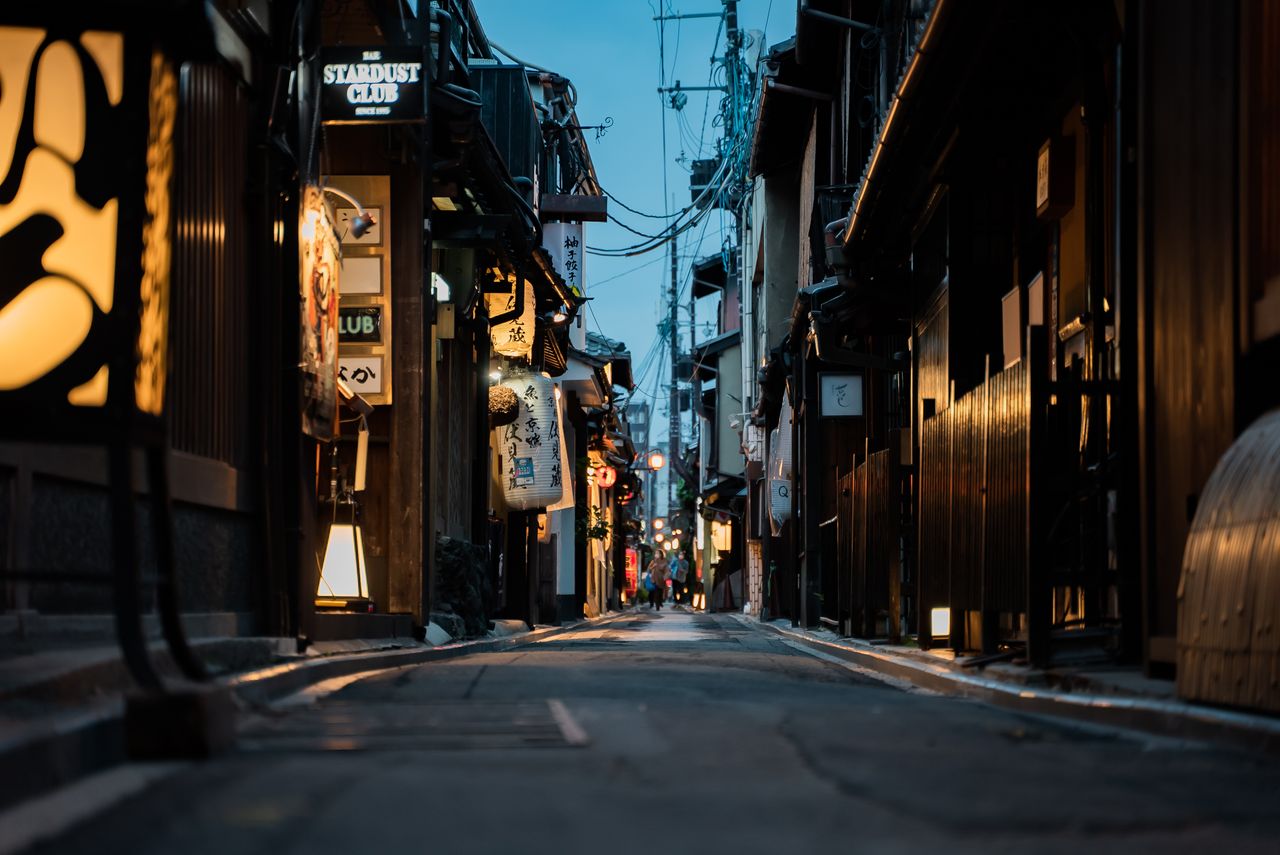
For decades, calling a Japanese town “Little Kyoto” was one of the easiest ways to tell travelers what they could expect.
Historic streets.
Wooden houses.
Traditional crafts.
Temples and shrines.
Old castle-town landscapes.
Japanese gardens.
A slower atmosphere.
The comparison made sense because Kyoto has long represented the international image of traditional Japan.
But Japan’s tourism industry has changed dramatically.
International visitors are arriving in record numbers. Travelers increasingly search for less-crowded destinations. Social media rewards distinctive experiences rather than generic descriptions. And regional governments are trying to encourage visitors to leave the country’s famous tourism centers.
Against that backdrop, a growing number of towns are reconsidering whether being known as a “Little Kyoto” is still useful.
Some have decided that it is not.
Kanazawa and Hida-Takayama, two Japanese destinations that have long been strongly associated with the nickname, have already moved away from the branding framework. Meanwhile, the organization that historically connected the country’s “Little Kyoto” municipalities now has far fewer members than at its peak. The trend reflects a broader shift from borrowing Kyoto’s reputation to promoting the unique history, culture and economy of each individual destination.
The change may seem like a marketing detail.
It is actually a window into the future of Japanese tourism.
What Does “Little Kyoto” Really Mean?
The phrase generally refers to Japanese towns and cities whose landscapes, history or cultural traditions have some resemblance or connection to Kyoto.
But the term has never meant that a place is literally a smaller version of Kyoto.
The All Japan Kyoto Committee, established in 1985, created a formal framework around the concept. Municipalities could participate if they met at least one of three conditions:
They had natural scenery, townscapes or structures resembling Kyoto.
They had a historical relationship with Kyoto.
Or they maintained traditional industries and folk culture.
The system was intended to promote tourism collectively while helping participating towns preserve and publicize their cultural resources.
At its peak, the association included 56 cities and towns.
As of April 2025, just 37 remained.
That decline is one of the clearest signs that the old branding strategy is losing momentum.
Why the Label Was So Powerful in the First Place
The original appeal was easy to understand.
For international travelers who knew little about Japan beyond Tokyo, Kyoto and Osaka, the phrase “Little Kyoto” instantly communicated something.
It suggested that a traveler could discover traditional Japan without going to Kyoto itself.
For domestic tourists, the association worked similarly.
A town could borrow some of Kyoto’s cultural prestige without needing to build a completely new tourism brand.
This was especially useful for smaller municipalities with limited marketing budgets.
Instead of explaining a town’s history from scratch, tourism officials could say:
“Think of us as a Little Kyoto.”
Visitors immediately had a mental picture.
The Problem With Borrowing Kyoto’s Image
The strength of the label eventually became its weakness.
If dozens of towns are “Little Kyoto,” what makes any individual one special?
The more places adopt the same description, the less distinctive the phrase becomes.
A traveler searching for historic Japan can encounter “Little Kyotos” across several regions.
Suddenly the marketing message becomes:
We are like Kyoto.
The more competitive message is:
Here is what only our town can offer.
That change is increasingly important in the era of experiential tourism.
Kanazawa Made the Break Years Ago
Kanazawa provides perhaps the clearest example.
The city joined the All Japan Kyoto Committee in 1988 and became known as the “Little Kyoto of Hokuriku.”
But Kanazawa left the organization at the end of fiscal 2008. Japanese reporting on the change says the city increasingly sought to build its own identity, particularly after being recognized as a historic city in 2009.
That decision did not mean Kanazawa rejected its traditional character.
Quite the opposite.
Kanazawa increasingly promoted exactly the things that made it distinctive:
Its samurai districts.
Its geisha quarters.
Its gardens.
Its gold-leaf industry.
Its castle history.
Its seafood and food culture.
Its contemporary art scene.
Its location on Japan’s Sea of Japan side.
Instead of saying, “We are like Kyoto,” the city could increasingly say:
“We are Kanazawa.”
Kanazawa Has Enough Identity to Stand Alone
This distinction is important.
Kanazawa is not simply a smaller Kyoto.
It developed under the Maeda clan and has its own history, cultural traditions and economic heritage.
The city became particularly famous for gold-leaf production, crafts and preserved historical districts.
Kenrokuen, one of Japan’s most celebrated landscape gardens, provides another major tourism asset.
The Higashi Chaya and other tea-house districts offer architectural and cultural experiences associated with geisha traditions.
The Nagamachi district preserves elements of the city’s samurai history.
And the 21st Century Museum of Contemporary Art gives Kanazawa a modern cultural dimension.
Those characteristics create a destination proposition that does not need Kyoto as a reference point.
Hida-Takayama Has Followed a Similar Path
Hida-Takayama is another famous example.
The city has long been described as a “Little Kyoto” because of its preserved Edo-period streets, wooden merchant houses, temples, shrines and historic townscape.
Even the Japan National Tourism Organization continues to use the term in describing Takayama to international travelers.
But Takayama’s actual tourism identity is much broader.
It sits in the Japanese Alps.
It is associated with Hida beef.
Its morning markets are major attractions.
Its Takayama Festival is internationally recognized.
The city provides access to the Hida Folk Village and surrounding mountain landscapes.
Its architecture reflects the region’s own history.
Calling it simply a smaller Kyoto can therefore undersell the destination.
What Takayama Has That Kyoto Does Not
This is the key marketing argument.
Kyoto has temples, gardens and traditional neighborhoods.
Takayama has those elements too.
But Takayama also has a distinctive mountain culture.
Its wooden merchant houses developed within a very different geographic and economic environment.
Its cuisine reflects Hida’s agricultural and mountain traditions.
Its festivals have their own history.
Its surrounding villages and alpine landscapes create an experience that Kyoto cannot reproduce.
A more effective marketing message might therefore be:
Come to Takayama to understand Hida.
Rather than:
Come to Takayama because it resembles Kyoto.
Japan Has Entered the Era of Destination Differentiation
The move away from “Little Kyoto” is happening at the same time that Japan is experiencing extraordinary tourism growth.
Japan welcomed a record 42.68 million international visitors in 2025, passing the 40-million threshold for the first time.
The country’s official tourism strategy for fiscal 2026 through 2030 retains the target of 60 million international visitors by 2030, alongside a goal of ¥15 trillion in inbound tourism spending. It explicitly promotes regional destinations and seeks to balance tourism growth with residents’ quality of life.
That creates a problem for the traditional tourism map.
If everyone wants to visit Tokyo, Kyoto and Osaka, overcrowding becomes concentrated.
Japan needs travelers to discover somewhere else.
Regional Tourism Is Becoming National Policy
The Japanese government increasingly sees regional tourism as part of its answer to overtourism.
The national tourism plan calls for strategically attracting visitors to regional areas, particularly encouraging repeat visitors who are interested in exploring beyond Japan’s biggest cities.
That is precisely where former “Little Kyoto” towns have an advantage.
They already possess historic environments.
They already have tourism infrastructure.
They already have recognizable cultural products.
What they need is a stronger individual identity.
Overtourism Is Changing What Travelers Want
Kyoto has become a symbol of Japan’s tourism success—and its problems.
Crowded buses.
Queues.
Full hotels.
Busy traditional districts.
Pressure on residents.
The Japan National Tourism Organization has explicitly promoted “Little Kyoto” towns as alternatives for travelers seeking traditional Japanese experiences with fewer crowds.
That creates an interesting paradox.
The label that once helped these towns market themselves as Kyoto alternatives may now prevent them from fully differentiating themselves.
Travelers Are Looking for “Japan,” Not Necessarily “Another Kyoto”
The modern traveler often wants something more specific.
They may be searching for:
A quiet historical town.
A local food tradition.
A craft workshop.
A rural festival.
A samurai neighborhood.
An old merchant street.
An onsen experience.
A mountain landscape.
A traditional inn.
The traveler may not care whether the destination resembles Kyoto.
They care whether it offers an experience they cannot get elsewhere.
Social Media Rewards Uniqueness
Instagram, TikTok, YouTube and travel blogs have transformed destination marketing.
A phrase such as “Little Kyoto” is immediately understandable but not particularly unique.
A specific visual or story can be much more powerful.
The red-and-black architecture of a particular historic street.
A mountain festival.
A distinctive local dish.
An old sake brewery.
A traditional craft workshop.
A secluded garden.
A centuries-old pilgrimage route.
Those things can create a destination’s identity in ways a broad nickname cannot.
“Authentic” Has Become a Valuable Tourism Word
Travelers increasingly search for authenticity.
The problem is that “authentic” has become overused.
Calling a place “Little Kyoto” can inadvertently frame its traditional culture as a copy of someone else’s.
Dropping the label lets local governments tell a different story.
This is not Kyoto.
This is our version of Japanese history.
That is a stronger proposition.
The Association Itself Was Never Simply a Marketing Club
It is important not to misunderstand the All Japan Kyoto Committee.
Its purpose was not merely to put “Little Kyoto” on tourism posters.
The organization was created to help participating towns cooperate and publicize their historical and cultural resources. Member destinations share promotional materials and hold an annual general meeting hosted by different municipalities.
In other words, there was a real community behind the label.
Leaving does not necessarily mean abandoning cooperation.
It means some municipalities increasingly want to promote themselves independently.
The Membership Decline Tells a Larger Story
The association grew from 27 municipalities at its creation to 56 at its peak in 1999.
Today, 37 remain.
That is roughly one-third fewer than the peak.
The decline has happened gradually, not because the participating towns suddenly lost their historic character.
Their problem is different.
The tourism environment changed.
The Rise of Individual Destination Brands
Modern destination marketing increasingly emphasizes strong individual brands.
A destination wants travelers to recognize a specific name.
Think of:
Kanazawa.
Takayama.
Hagi.
Matsue.
Tsuwano.
Ozu.
Each has its own narrative.
Each can appeal to a specific traveler.
That is much harder to accomplish when every town is presented as “a Little Kyoto.”
Ozu Shows How a Town Can Build Its Own Story
Ozu in Ehime is an interesting example of the alternative model.
Often called “Iyo’s Little Kyoto,” Ozu has used its historic townscape as the foundation for a much more distinctive tourism strategy centered on preservation and community revitalization.
Its Castle Stay program allows visitors to spend a night inside Ozu Castle, creating a premium cultural experience in which tourism revenue helps support preservation and local economic activity.
The program illustrates how a destination can move beyond a generic “traditional Japan” message.
Instead of simply being similar to Kyoto, Ozu sells something visitors cannot experience in Kyoto in the same way.
Tourism Can Finance Preservation
This is one of the biggest reasons destination identity matters.
Historic architecture is expensive to preserve.
Old houses need repairs.
Traditional buildings may otherwise become vacant or be demolished.
Local governments often lack enough money to preserve every structure.
Tourism can create revenue that supports maintenance.
Ozu’s preservation strategy explicitly links tourism revenue to conservation, demonstrating how visitor spending can become part of a town’s cultural infrastructure.
That model can potentially be adapted elsewhere.
But More Tourists Are Not Always the Answer
There is a danger in celebrating regional tourism without considering capacity.
A small historic town may be exactly what travelers want because it is quiet.
If marketing succeeds too well, the town can become crowded.
Parking fills.
Historic streets become congested.
Residents lose access to local services.
Traditional neighborhoods turn into tourist-only zones.
The town may eventually face the same problems as Kyoto.
That is why sustainable tourism must be part of the branding strategy from the beginning.
The Goal Should Be Higher-Value Tourism
Japan’s national strategy increasingly emphasizes high-quality tourism rather than simply maximizing visitor numbers.
That could mean attracting travelers who:
Stay overnight.
Spend locally.
Book guided experiences.
Visit outside peak periods.
Buy regional products.
Eat at independent restaurants.
Participate in cultural activities.
Respect local communities.
A smaller number of engaged visitors can sometimes provide greater economic value than a much larger number of day-trippers.
Overnight Visitors Are Especially Valuable
There is a major difference between a tourist who spends three hours in a destination and one who stays for two nights.
The overnight traveler pays for:
Accommodation.
Dinner.
Breakfast.
Transportation.
Activities.
Shopping.
Additional attractions.
This makes developing distinctive overnight experiences particularly important for smaller Japanese towns.
The “One-Night” Problem
Many regional Japanese towns are easy to visit as day trips.
That can limit their economic benefit.
A traveler might arrive in the morning, walk around an old street, eat lunch and leave.
The town receives some spending but not enough to support a large tourism ecosystem.
The solution is not necessarily more attractions.
It may be a stronger reason to stay.
Storytelling Can Create That Reason
A destination can package its identity into a multi-day experience.
For example:
Day one: historic town walk.
Day two: local craft workshop.
Day three: food and countryside experience.
Day four: festival or cultural performance.
Suddenly the traveler is not visiting a single attraction.
They are experiencing the destination as a whole.
Traditional Crafts Could Become Tourism Anchors
Many “Little Kyoto” towns have strong craft traditions.
These are potentially valuable because they connect tourism spending directly to local skills.
Visitors can:
Meet artisans.
Watch demonstrations.
Take workshops.
Buy products.
Learn the history of a craft.
That creates a more meaningful experience than buying mass-produced souvenirs.
Food Is Another Strong Differentiator
Regional Japanese cuisine is remarkably diverse.
Hida beef.
Kanazawa seafood.
Local sake.
Regional noodles.
Pickles.
Mountain vegetables.
Traditional sweets.
Fermented foods.
Tea.
Travelers increasingly plan trips around food.
A town that tells the story of its cuisine can attract visitors who might never have been interested in its traditional architecture alone.
Festivals Are Powerful Destination Brands
Japan’s regional festivals can be even more distinctive than its historic streets.
Takayama’s spring and autumn festivals provide a good example.
Ornate floats, traditional performance and centuries-old community traditions create an experience strongly associated with the city.
A traveler can say:
“I went to the Takayama Festival.”
They do not need to say:
“I went to the Little Kyoto festival.”
The specific name has greater branding power.
Nature Can Complete the Cultural Story
Many historic towns have landscapes that are inseparable from their identity.
Mountains.
Rivers.
Rice fields.
Forests.
Coastlines.
Gardens.
Hot springs.
These natural assets can help prevent a destination from becoming a purely architectural tourism product.
They also encourage longer stays.
Kanazawa Benefits From a Citywide Experience
Kanazawa’s strength is its ability to combine several tourism layers.
A traveler can explore a historic district in the morning, visit a garden and museum during the afternoon, eat regional seafood at night and shop for crafts the next day.
The city therefore offers a complete tourism proposition.
That is very different from simply being “a small Kyoto.”
Takayama Can Do the Same With the Alps
Takayama’s identity becomes stronger when the entire Hida region is included.
The city can be combined with:
Shirakawa-go.
Hida Folk Village.
Mountain communities.
Hot springs.
Local food.
Traditional architecture.
Outdoor activities.
That creates a broader regional itinerary.
The Regional Tourism Strategy Could Relieve Kyoto
This is one of the most promising possibilities.
If travelers interested in traditional Japan can find equally compelling destinations elsewhere, some pressure could move away from Kyoto.
That does not mean Kyoto loses.
It may actually improve the visitor experience.
A traveler could spend three nights in Kyoto and then another three in Kanazawa or Takayama.
That produces a richer journey while distributing spending across more communities.
The Real Competition Is No Longer Town Versus Town
The competition is increasingly between tourism models.
One model concentrates visitors in a small group of internationally famous cities.
Another distributes visitors across hundreds of regional destinations.
Japan’s government clearly favors the second model as part of its effort to tackle overtourism while maintaining tourism growth.
Transport Will Determine Whether the Strategy Works
Regional tourism cannot succeed through branding alone.
Travelers need convenient transportation.
This is particularly important in Japan because visitors often follow tight itineraries.
A destination that requires several difficult transfers may lose out to a more accessible alternative.
That is why high-speed rail, regional rail services, buses and tourism transport are crucial to destination diversification.
Better Transportation Can Create New Tourism Circuits
When regional destinations are connected efficiently, travelers can move beyond the Golden Route.
A visitor could travel:
Tokyo → Kanazawa → Takayama → Kyoto → Osaka.
That route gives international travelers several different versions of traditional Japan without forcing them to choose between “Kyoto or nowhere.”
The Golden Route Is Still Powerful
Tokyo, Kyoto and Osaka remain essential destinations for first-time visitors.
The goal is not to tell travelers to skip them.
The opportunity is to add destinations.
That is a more realistic strategy.
Repeat Visitors Are the Key Market
First-time travelers often prioritize famous attractions.
Repeat visitors have already seen the major landmarks.
They are more likely to say:
I want something different.
That makes them particularly important for regional Japan.
The national tourism plan specifically emphasizes attracting repeat visitors to local areas.
The Decline of “Little Kyoto” Could Be a Sign of Tourism Maturity
A country does not normally abandon a successful brand because it suddenly dislikes it.
It does so when the tourism market has evolved.
Japan no longer needs every town to explain itself through Kyoto.
There are enough international visitors to justify much more sophisticated destination marketing.
That is a sign of maturity.
Local Identity Is Becoming the Product
This may be the most important transformation.
The new question is not:
How can we look more like Kyoto?
It is:
What can visitors experience here that they cannot experience somewhere else?
That question forces communities to examine their own history.
Their food.
Their crafts.
Their landscapes.
Their people.
Their festivals.
Their architecture.
Their industries.
That process can strengthen local identity.
The Risk of Losing the Label Completely
There is also a counterargument.
“Little Kyoto” remains an effective shorthand.
International travelers understand it.
Travel companies can market it.
Search engines recognize it.
Travel guides use it.
Even some tourism organizations continue to promote it. JNTO, for example, still recommends destinations such as Takayama under the “Little Kyoto” concept.
So abandoning the phrase completely may not always be commercially rational.
A town can potentially use the label as a secondary descriptor while leading with its own identity.
A Hybrid Approach May Be the Future
The smartest strategy for some towns may therefore be:
“Discover our unique town—often called a Little Kyoto.”
The phrase provides search visibility.
The town’s own story provides differentiation.
That combines the benefits of familiarity and uniqueness.
The Future of Japanese Tourism May Be “Many Japans”
Japan is culturally diverse enough to support hundreds of tourism identities.
A traveler can experience:
The urban Japan of Tokyo.
The traditional Japan of Kyoto.
The mountain Japan of Takayama.
The craft Japan of Kanazawa.
The rural Japan of smaller prefectural towns.
The tropical Japan of Okinawa.
The northern Japan of Hokkaido and Tohoku.
The historical Japan of castle towns.
That diversity is one of the country’s greatest tourism assets.
What Happens to the Little Kyoto Association?
The All Japan Kyoto Committee continues to operate, with 37 participating cities and towns as of April 2025. Members still collaborate on promotional materials and maintain relationships around cultural tourism.
But its future may increasingly depend on adapting to the new tourism environment.
Rather than presenting member towns as miniature copies of Kyoto, the organization could emphasize the diversity among them.
The shared brand could become a gateway.
The individual destinations would remain the main attraction.
A More Sustainable Tourism Map
Japan’s tourism future is likely to involve a more distributed map.
Instead of:
Tokyo → Kyoto → Osaka
travelers may increasingly choose:
Tokyo → regional city → mountain town → Kyoto → coastal community.
That spreads accommodation demand.
It spreads spending.
And it gives travelers more variety.
The Economic Benefits Could Be Significant
Regional tourism can support communities facing population decline.
Japan has many small towns struggling with aging populations and the migration of younger residents to major cities.
Tourism cannot solve those demographic problems by itself.
But it can create income for:
Hotels.
Restaurants.
Guides.
Craftspeople.
Farmers.
Transport operators.
Cultural organizations.
Property owners.
Small retailers.
That can make it easier for local entrepreneurs to remain in or return to their hometowns.
Tourism Can Also Encourage New Residents
Ozu’s experience demonstrates another possibility.
Successful tourism development can attract entrepreneurs and younger people interested in opening restaurants, accommodations and shops in historic districts. Its townscape revitalization program was associated with new establishments and employment.
That creates a cycle:
Preserved buildings attract visitors.
Visitors create business demand.
Businesses create jobs.
Jobs attract people.
People keep the town alive.
Preservation and Tourism Need to Stay Balanced
But this model only works if tourism serves the community.
A historic neighborhood should not become a stage set.
Residents need homes.
Traditional businesses need customers.
Local children need schools.
Public services need to function.
Tourists should be welcomed as guests rather than treated as the sole users of the town.
The Strongest Destinations Will Let Locals Lead
The shift away from “Little Kyoto” is therefore not merely about branding.
It can also be about ownership.
When a town defines its tourism story from its own history, residents have more opportunity to shape what visitors see and how their culture is represented.
That produces a richer experience for everyone.
Final Takeaway
Japan’s “Little Kyoto” towns are not abandoning tradition.
They are increasingly abandoning the idea that they need Kyoto’s name to sell their own tradition.
The All Japan Kyoto Committee was established in 1985 to connect Kyoto with municipalities that shared similarities in townscape, history, traditional industries or culture. At its peak, the network grew to 56 municipalities. Today, 37 remain.
Kanazawa left the organization years ago and has increasingly emphasized its own identity as a historic and cultural city. Hida-Takayama has similarly been promoting the distinctive character of the Hida region rather than relying exclusively on its “Little Kyoto” reputation.
The timing is significant.
Japan welcomed a record 42.68 million international visitors in 2025, while the national tourism strategy aims for 60 million visitors and ¥15 trillion in inbound spending by 2030. At the same time, the government is explicitly pushing tourism beyond overcrowded major destinations.
That means regional towns have a once-in-a-generation opportunity.
But they cannot all win by looking like Kyoto.
They need to explain why travelers should visit them.
That could mean food.
Crafts.
Festivals.
Architecture.
Mountains.
Coastlines.
Hot springs.
Local history.
Family stories.
Traditional industries.
Or experiences that simply cannot be replicated anywhere else.
The “Little Kyoto” label helped introduce travelers to regional Japan.
The next stage may be about letting those destinations introduce themselves.
For travelers, that is good news.
It means Japan’s tourism map can become much larger than the Golden Route.
And for the towns themselves, it could mean something even more valuable:
Not becoming another Kyoto.
Becoming unmistakably themselves.
5 Frequently Asked Questions
1. What is a “Little Kyoto” town in Japan?
“Little Kyoto” generally refers to a Japanese city or town whose landscape, historical connections, traditional industries or cultural practices resemble or relate to Kyoto. The All Japan Kyoto Committee established criteria based on these characteristics and was created in 1985 to promote and preserve the heritage of participating communities.
2. Why are some Japanese towns dropping the “Little Kyoto” label?
Many towns increasingly believe that they can attract visitors more effectively by emphasizing their own distinctive history, culture, food and landscapes. The decline of the All Japan Kyoto Committee—from a peak of 56 municipalities to 37 as of April 2025—reflects this broader movement toward individual destination branding.
3. Which famous towns have moved away from the “Little Kyoto” identity?
Kanazawa and Hida-Takayama are two prominent examples. Kanazawa left the All Japan Kyoto Committee at the end of fiscal 2008 and has increasingly promoted its own identity as a historic city. Hida-Takayama has its own distinctive Hida mountain culture, preserved streets, festivals, food traditions and access to alpine destinations.
4. Can visiting a “Little Kyoto” town help travelers avoid overcrowding in Kyoto?
Yes. Japan has dozens of towns with historic architecture, traditional culture and landscapes that offer alternatives to Kyoto. JNTO specifically promotes “Little Kyoto” destinations as ways for travelers to experience traditional Japan away from the most crowded areas.
5. Will the “Little Kyoto” concept disappear completely?
Probably not. The term remains useful because travelers immediately understand what it suggests, and tourism organizations continue to use it for some destinations. However, the long-term trend is toward combining the familiar nickname with a much stronger emphasis on each town’s individual identity, allowing the label to function as an introduction rather than the entire tourism brand.
Sources Japan Forward